
Charred Leek and Butter Bean Braise
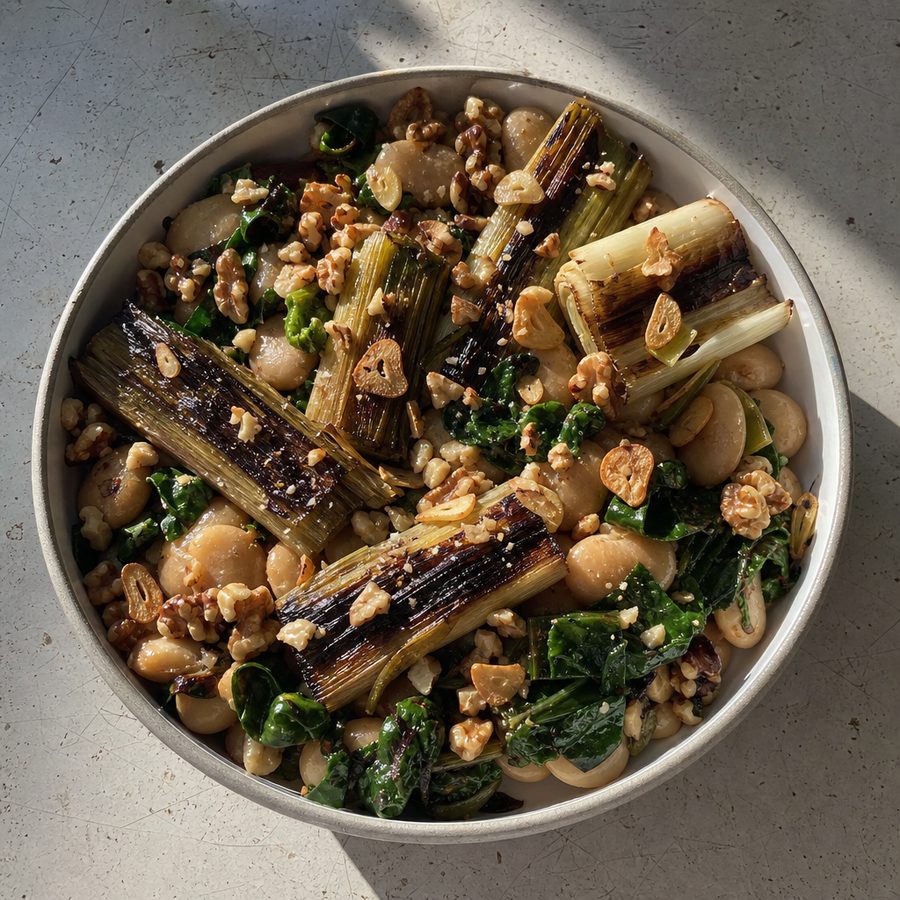
Leeks halved and charred cut side down in a hot pan, then braised with butter beans, garlic and thyme until the whole skillet goes silky.
Why You'll Love This Recipe
This is a one pan dinner for a night when you want something that tastes like it took much longer than it did. The leeks go into a hot skillet and stay there without being touched, which is most of the recipe, and the beans take care of the rest. It comes together in under an hour and it is the kind of thing you end up eating straight from the pan with a spoon.
Charring is not the same as sauteing, and the difference is doing nothing at all. Halved leeks laid cut side down in a hot, oiled skillet and left alone for six or seven minutes develop a genuinely blackened face, and that bitterness is the backbone of the whole dish. Underneath the char the layers go sweet and completely soft, so each leek half hands you two very different things in a single bite.
Butter beans are the right bean for this. They are big, flat and creamy, and their skins slip while the insides turn to velvet, which thickens the braising liquid on its own. Dijon and lemon go in at the end to cut the richness, the chard wilts into the pan for color and bite, and toasted walnuts over the top give an otherwise soft dish something to push against.
Ingredients
- 4 large leeks (about 2 lb untrimmed), white and pale green parts only, halved lengthwise
- 4 cups butter beans, drained and rinsed (about three 15-ounce cans)
- 1/4 cup olive oil, divided
- 8 garlic cloves, thinly sliced
- 1 1/2 cups vegetable broth
- 1 bunch swiss chard (about 6 oz), stems removed and leaves torn
- 1/2 cup walnuts, roughly chopped
- 2 tbsp lemon juice
- 2 tsp dijon mustard
- 1 tbsp fresh thyme leaves
- 1/4 cup chopped parsley
- 2 bay leaves
- 1/2 tsp black pepper
- 1/4 tsp salt
Instructions
- Prep the leeks: Trim the hairy roots and the dark green tops, halve each leek lengthwise, and rinse under running water while fanning the layers apart with your thumb. Grit hides deep inside a leek. Shake them off and pat the cut faces with a towel, because a wet face steams rather than chars.
- Char them: Heat 2 tablespoons of the olive oil in a large skillet over medium high heat until it shimmers. Lay the leeks cut side down in a single layer and leave them completely alone for 6 to 8 minutes. When you lift one, the face should be dark brown to black. Move them to a plate.
- Start the braise: Lower the heat to medium and add the remaining olive oil, the sliced garlic, the thyme and the bay leaves. Cook 1 to 2 minutes, just until the garlic turns pale gold and smells sweet. Garlic burns fast at this stage, so keep it moving in the pan.
- Add the beans and liquid: Stir in the butter beans, the black pepper, and the salt, then pour in the vegetable broth. Scrape the browned bits off the bottom of the pan as it comes up to heat. Return the leeks charred side up, cover, and simmer gently for 20 minutes.
- Wilt the chard: Uncover, tuck the torn chard leaves into the liquid around the leeks, and cook 4 to 5 minutes more, until they are limp and the braising liquid has reduced enough to coat the beans. Take the pan off the heat, fish out the bay leaves, and stir in the dijon mustard and the lemon juice.
- Toast the walnuts and serve: Toast the chopped walnuts in a dry pan over medium heat for 3 to 4 minutes, until they smell warm and a shade darker, then scatter them and the parsley over the skillet. Serve straight from the pan while everything is hot.
Variations
- Tomato braise: Add two tablespoons of tomato paste with the garlic for a deeper, redder pan with more acidity behind it.
- Fennel and orange: Add a sliced fennel bulb alongside the leeks and finish with orange zest for a sweeter, more perfumed version.
- Collard greens: Use chopped collard greens for the chard and give them ten minutes rather than five, since they need longer to go tender.
- Tahini finish: Whisk two tablespoons of tahini into the braising liquid at the end for a silkier, nuttier pan sauce.
- Chili and smoke: Add a teaspoon of smoked paprika with the garlic and a pinch of cayenne for a warmer, smokier braise.
Storage & Leftovers
Cooled and covered, this keeps in the refrigerator for four days and eats very well cold or barely warm. The beans keep drinking up the braising liquid overnight, so what looks saucy tonight will look closer to a stew tomorrow. That is fine; it simply wants a splash of broth on the way back to the stove.
Reheat it gently in a covered skillet over medium low heat with a few tablespoons of broth or water. High heat breaks the beans apart and turns the whole pan into a mash. Add the walnuts fresh each time, because once they have sat in the liquid they go soft and stop doing their job.
I would not freeze this one. Butter beans have thin skins and hold a lot of water, so they come back grainy and collapsed, and the charred leeks lose their texture as well. Make it in the amount you will actually eat within a few days and it rewards you far more.
Notes & Tips
- Rinse between the layers: Leeks grow in sandy soil and hold grit deep inside. Fan the halves under running water and check the innermost layers before they go anywhere near the pan.
- Dry the cut faces: Water is the enemy of char. A quick pat with a towel is the difference between a black face and a gray steamed one.
- Leave them alone: The urge to move the leeks around is strong and you have to resist it. Contact plus time is the only way to build that surface.
- Keep the root end: Trim off only the hairy root. The intact base is what stops each half from collapsing into a pile of rings.
- Rinse the beans: Draining and rinsing the butter beans washes off the starchy packing liquid and gives you a much cleaner tasting pan.
- Dijon off the heat: Stirred into a simmering pan the mustard turns bitter and splits. Off the heat it stays sharp and holds the sauce together.
Nutrition & Mindful Eating
- The leeks, the butter beans and the olive oil are what this dish is built from. The leeks bring the char and the sweetness, the beans go creamy and thicken the liquid on their own, and the oil carries all of it into one glossy pan.
- Butter beans are big and flat with thin skins, and they collapse into velvet at the center while holding their shape at the edge. They bring protein and a large amount of fiber, along with the potassium that most beans carry.
- Leeks turn into two things in the same pan. The face that meets the hot skillet goes dark and faintly bitter, and the layers behind it go sweet and soft. They are also a good source of the kind of fiber that feeds the bacteria in your gut.
- Toasted walnuts over the top are the only crunch in a soft dish, and they matter far more than their quantity suggests. Dijon and lemon stirred in at the end keep an oily braise from ever tasting heavy.
- Swiss chard wilts into the braising liquid in a few minutes and turns it faintly mineral and green, which is exactly what a pan of beans wants. A skillet of this eats like a full dinner, and the beans and olive oil together are what make it hold.
- As you eat, notice the bitter edge on the charred face of the leek against how sweet the layers underneath have gone, and let the pan in front of you slow you down for a few minutes.
Frequently Asked Questions
Can I use a different bean?
White beans are the closest match and behave almost identically, though they are smaller so the pan reads a little busier. Chickpeas work too but stay firm and will not thicken the liquid the way butter beans do, so mash a few against the side of the pan if you go that route.
My leeks fell apart in the pan. What went wrong?
Most likely the root end was trimmed too far back. That little core is what holds the layers together, so cut off only the hairy bottom and leave the base intact. Moving them around while they char loosens them too, so lay them down once and let them be.
Can I do any of this ahead?
Char the leeks up to two days early and keep them on a plate in the refrigerator; they lose nothing. The full braise also reheats well, so making the whole thing the day before is reasonable. Hold back the walnuts, the parsley and the lemon juice until you serve.
Does this stand up as a main course?
It does. Butter beans are substantial enough to carry the plate on their own, and between the beans, the leeks and the chard there is plenty in the pan. Everything here is a vegetable, a legume, an herb, or a nut, so it works on most tables exactly as written.