
Chermoula Chicken Thighs with Charred Cabbage and Fava Beans
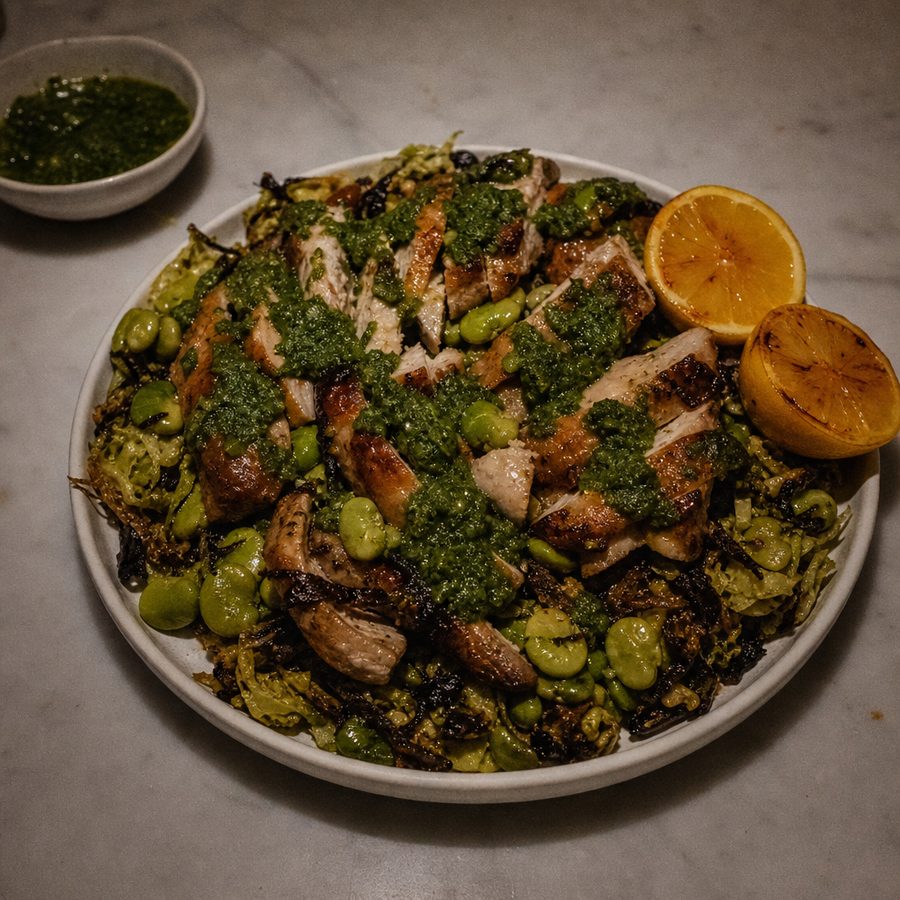
Chicken thighs marinated in a cilantro and parsley chermoula, seared hard, and served over cabbage charred in the same pan with fava beans, scallion, and the rest of the sauce spooned on cold.
Why You'll Love This Recipe
Chermoula is the sauce I reach for when I have a bunch of herbs on the turn and forty minutes of appetite. Cilantro, parsley, garlic, cumin, coriander, paprika, lemon, and olive oil go into a small processor and come out as a loose green paste, and the whole point of making a full cup of it is that it does two jobs. Half of it goes onto the chicken and cooks, turning dark and savory and losing its sharp garlic edge. The other half is kept back cold and spooned over at the table, where it tastes green and sharp and completely different.
Cabbage is the vegetable I am most likely to have and least likely to be excited about, and hard charring is what fixes that. Shredded thick, tipped into a dry hot pan, and left alone, it browns in patches and goes nutty and faintly sweet while the middle of each shred keeps a bit of snap. It takes about six minutes and it changes the whole character of the plate. The fava beans go in near the end, soft and grassy, and they are what makes this dinner rather than a side.
I like this at the end of a long week, partly because it uses one pan and partly because it is the kind of eating that wakes you up. The chicken is savory and slightly smoky, the cabbage is sweet, the beans are mild, and then the cold sauce hits and pulls everything sharply green and lemony. There is a whole thigh per person and a real pile of vegetables underneath, so nobody leaves the table wanting a second dinner. It also travels well in a container the next day.
Ingredients
- 1 lb boneless, skinless chicken thighs (4 thighs), opened out flat
- 1 small head green cabbage (about 18 oz), quartered, cored, and cut into 1/2-inch shreds
- 1 1/4 cups cooked or canned fava beans, drained and rinsed
- 1 small red onion, halved and sliced
- 6 scallions, cut into 1-inch lengths
- 1 packed cup cilantro leaves and tender stems
- 1 packed cup flat-leaf parsley leaves
- 5 garlic cloves
- 2 tsp ground cumin
- 1 1/2 tsp ground coriander
- 2 tsp sweet paprika
- 1/2 tsp cayenne
- 1 3/4 tbsp olive oil
- 2 1/2 tbsp lemon juice, from 1 large lemon
- 1/4 tsp fine sea salt
Instructions
- Make the chermoula: Put the cilantro, parsley, garlic, cumin, coriander, paprika, cayenne, lemon juice, olive oil, and salt into a small food processor and pulse to a loose green paste, scraping down once or twice. If you are chopping by hand, mince the herbs and garlic finely and stir everything together in a bowl. It should pour slowly off a spoon.
- Marinate the chicken: Open the thighs out flat and rub half the chermoula over both sides. Ten minutes on the counter while you shred the cabbage is enough, and longer in the refrigerator is better if you have it. Cover and refrigerate the other half of the sauce, which never sees heat.
- Sear the thighs: Heat a 12-inch skillet over medium-high. Lay the thighs in smooth side down and cook for five to six minutes without touching them, until the herb coating has gone dark and set. Turn and cook four to five minutes more, until an instant-read thermometer reads 175°F at the thickest part. Move them to a board to rest.
- Char the cabbage: Raise the heat, add the cabbage to the pan in one go, and press it down into whatever the chicken left behind. Leave it for three minutes without stirring so the underside blackens in places, then toss and repeat, five to seven minutes in total, until it is brown at the edges and just tender in the middle.
- Warm the beans and serve: Stir in the onion, the scallions, and the fava beans and cook for two minutes more, until the onion has lost its bite and the beans are hot through. Slice the rested thighs thickly, lay them over the cabbage, and spoon the reserved cold chermoula over the meat so it runs down into the pan.
Variations
- Chicken breast: Slice breasts into cutlets, coat them the same way, and give them two minutes a side to 165°F.
- Preserved lemon chermoula: Add the rinsed peel of a quarter preserved lemon to the processor and cut the lemon juice by half for a deeper, more perfumed sauce.
- Chickpeas or white beans: Both work in place of the favas, chickpeas for a firmer bite and white beans for something creamier against the char.
- Toasted almonds: Scatter a small handful of chopped toasted almonds over the finished pan for crunch against the soft beans.
Storage & Leftovers
This keeps four days in the refrigerator, though I store the reserved sauce in its own small jar rather than on the food. Chermoula spooned over hot chicken and then chilled turns a duller green and loses its lift, while the same sauce kept separate stays bright for the better part of a week and can go over eggs or fish in the meantime.
Reheat the cabbage and beans in a hot dry skillet for three minutes so the char comes back, and warm the sliced chicken on top for the last minute only. Cabbage that is reheated slowly gives up water and goes limp, so high heat and a short time are what you want. Add the cold sauce after the pan comes off the burner.
The chermoula itself freezes beautifully in an ice cube tray for three months, which is the real reason to make more than you need. Two cubes thawed on the counter give you the start of this dinner or a sauce for almost anything grilled. The cooked cabbage and beans freeze acceptably; the chicken is better fresh.
Notes & Tips
- Make a full cup of sauce and split it: Cooked chermoula and cold chermoula taste like two different sauces. Using both on one plate is the whole idea, so do not let all of it go into the pan.
- Open the thighs out flat: A thigh left folded cooks unevenly and takes twice as long. Flattened, it sits fully against the metal and browns in five minutes.
- Do not stir the cabbage: Every time you move it, the browning starts over. Three still minutes, one toss, three more still minutes is the rhythm.
- Rest the chicken before slicing: Five minutes on the board while the cabbage chars is exactly enough, and it is free time you are spending anyway.
Nutrition & Mindful Eating
- Chicken, cabbage, and fava beans divide the work on this plate. The thighs carry the protein and stay juicy through a hard sear, the cabbage brings the volume and most of the crunch, and the favas add fiber and a soft grassy sweetness that fills in around the char.
- Fava beans are among the oldest cultivated legumes and taste it, faintly bitter and green in a way other beans are not. They bring both fiber and plant protein, and they soak up the herb sauce better than a firmer bean would.
- Cabbage belongs to the same family as broccoli and mustard, which is where its peppery edge and its sulfur compounds come from, and charring converts a good deal of that sharpness into sweetness while the vitamin C and fiber stay put.
- Cilantro, parsley, and garlic are not garnish here, they are most of a cup of sauce, and eating herbs by the handful is how they contribute anything meaningful. Parsley in that quantity carries real vitamin K and a green bite the lemon sharpens further.
- Cumin, coriander, and paprika bloom in the heat of the pan on the chicken and stay bright in the spoonful of sauce that goes on cold, so the same spices arrive twice in two different registers, toasted and fresh.
- As you eat, see whether you can taste the difference between the chermoula that cooked into the chicken and the spoonful that went on cold, and let that small comparison keep you at the table a little longer.
Frequently Asked Questions
What is chermoula, exactly?
A North African herb and spice sauce built on cilantro, parsley, garlic, cumin, and lemon, most often used on fish. It sits somewhere between a marinade and a table sauce, and it is thinner and more lemony than a pesto. Every household makes it differently, and paprika, cayenne, and preserved lemon are all common additions.
Can I use dried fava beans?
Only if you have cooked them ahead. Dried favas need soaking and the better part of an hour, which does not belong in a weeknight. Canned favas, sold as ful medames in most groceries, need nothing but a rinse, and frozen shelled favas cook in three minutes if you would rather use those.
Can I make it without a food processor?
Yes. Chop the herbs and garlic together on a board until fine, then work them into the spices, lemon, and oil with a fork in a bowl. The texture is more rustic and slightly less emulsified, which some people prefer. A mortar and pestle gives the best result of all if you have the patience.
My cabbage steamed rather than charring. Why?
Too much cabbage in too small a pan, or a pan that was not hot enough when it went in. Cabbage holds a lot of water and needs room for that water to leave as steam. Use a twelve-inch skillet, add the cabbage all at once to a properly hot pan, and resist stirring for the first three minutes.