
Chicken alla Pizzaiola with Cannellini Beans and Blistered Peppers
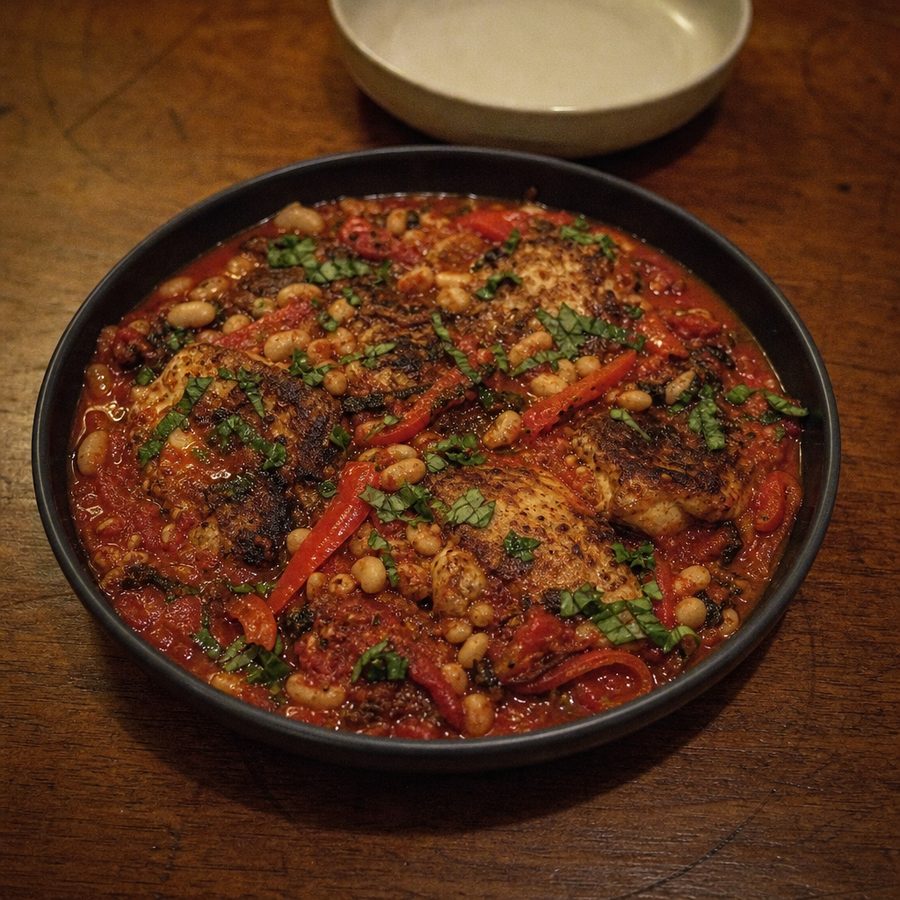
Thin chicken cutlets seared hard and finished in a fast Neapolitan sauce of crushed tomato, sliced garlic, and dried oregano, with blistered red peppers and cannellini beans cooked into the pan.
Why You'll Love This Recipe
Alla pizzaiola means in the style of the pizza maker, and the sauce is exactly that: crushed tomato, sliced garlic, dried oregano, olive oil, and nothing else. In Naples it usually goes over a slice of beef that has been cooked hard and needs rescuing. I make it with thin chicken cutlets because they cook in four minutes and because the sauce is the part I actually want. The oregano has to be dried rather than fresh, which is one of the few times I will say that, since dried oregano is what gives the sauce its particular pizzeria smell.
It eats fast and loud, in a good way. The tomato stays bright red and slightly raw-tasting, because it is only in the pan for about eight minutes, and that sharpness against the browned chicken is the whole appeal. The peppers go soft and sweet with blackened edges, the beans break down a little at their surfaces and thicken the sauce without any help, and a spoonful of vinegar at the end pulls everything up. Torn basil goes over at the table where the heat can still get at it but not cook it away.
A weeknight in my house, one skillet, on the table in about forty five minutes. It is also the recipe I hand to people who say they cannot cook, because thin cutlets are difficult to ruin and the sauce needs no judgment at all. If you want to stretch it further, the sauce and beans reheat beautifully and you can cook fresh cutlets into them a second night. Shallow bowls, plenty of sauce, and something to mop with if you eat bread.
Ingredients
- 1 1/2 lb boneless, skinless chicken breast, halved horizontally into 4 thin cutlets
- 1 1/2 cups canned crushed tomatoes, preferably San Marzano
- 2 red bell peppers, seeded and cut into wide strips
- 3/4 cup drained and rinsed canned cannellini beans
- 5 garlic cloves, sliced as thin as you can get them
- 1 small onion, halved and sliced thin
- 2 1/2 tbsp olive oil
- 1 1/2 tsp dried oregano, crumbled between your palms
- 1/2 cup basil leaves, torn at the last minute
- 1/4 tsp crushed red chile flakes, or a pinch of cayenne
- 1 tbsp red wine vinegar or cider vinegar
- 1/3 tsp fine sea salt
- 1/2 tsp freshly ground black pepper
Instructions
- Cut and season the chicken: Lay each breast flat, put your palm on top, and run a sharp knife horizontally through it to make two thin cutlets. Pat all four dry and season with the black pepper and half the salt. Thin and dry is the whole game here, since a cutlet at about half an inch cooks through in the time it takes to brown.
- Sear and remove: Heat 1 1/2 tbsp of the olive oil in a 12-inch skillet over medium-high until it shimmers. Lay in the cutlets without crowding, working in two batches if you need to, and cook 2 to 3 minutes on the first side until deeply golden, then 1 to 2 minutes on the second. Move them to a plate. They do not need to be cooked through yet.
- Blister the peppers: Add the remaining 1 tbsp of oil and the pepper strips to the same pan and leave them undisturbed for 3 minutes, until the undersides have dark spots. Add the onion and cook 4 minutes more, stirring, until the peppers are floppy and the onion has softened.
- Make the pizzaiola: Push the vegetables aside, add the sliced garlic, the oregano, and the chile flakes to the bare pan, and stir for 30 to 45 seconds, until the garlic is barely blond and the oregano smells toasted. Add the crushed tomatoes, the beans, and the rest of the salt, stir everything together, and simmer for 6 to 8 minutes. The sauce should stay bright red and loosen slightly rather than darkening.
- Finish the chicken in the sauce: Slide the cutlets back in along with any juices on the plate, spoon sauce over them, and simmer 3 to 4 minutes, until an instant-read thermometer in the thickest part reads 165°F. Take the pan off the heat, add the vinegar, and swirl it in. Tear the basil over the top and serve straight from the skillet.
Variations
- Olives and capers: Add a handful of chopped kalamata olives and a spoonful of rinsed capers with the tomatoes for a saltier, sharper pan.
- Mozzarella on top: Scatter torn mozzarella over the cutlets in the last two minutes and cover the pan so it melts into the sauce.
- Fish instead: Cod or halibut fillets can be lowered into the finished sauce and poached gently for 8 minutes, which is closer to how this sauce is used along the coast.
- Mushrooms: Brown 8 oz of sliced mushrooms with the peppers for a deeper, earthier version that eats well in cold weather.
Storage & Leftovers
This keeps four days in a sealed container in the refrigerator. Store the chicken sitting in the sauce so it does not dry at the edges, and expect the beans to have thickened everything overnight, which most people at my table consider an improvement.
Reheat covered in a skillet over medium-low for 5 or 6 minutes with a splash of water, turning the cutlets once. The microwave works but tightens the chicken noticeably. A fresh handful of basil and a few drops of vinegar at the end make day-three leftovers taste like day one.
The sauce with the peppers and beans freezes well for three months, and I would freeze it without the chicken. Thaw overnight, bring it to a simmer in a skillet, and cook fresh cutlets into it for the last four minutes. That gives you a dinner in fifteen minutes on a night when you have nothing left.
Notes & Tips
- Cut the cutlets yourself: Halving a breast horizontally takes twenty seconds and gets you an even thickness that pounded chicken never quite has. Chill the breast for ten minutes first and the knife will track straighter.
- Slice the garlic, do not chop it: Thin slices go golden and sweet and stay visible in the sauce. Chopped garlic scorches in a hot pan and turns the whole thing bitter.
- Leave the peppers alone: Three full minutes without stirring is what gets you blackened spots, and those spots are where the sweetness comes from. Stirred constantly, peppers only steam.
- Pull the chicken at 165°F: Thin cutlets go from juicy to stringy in under a minute. Check the first one early, and remember that the sauce keeps them warm on the way to the table.
Nutrition & Mindful Eating
- The chicken, the beans, and the tomatoes are doing three separate jobs in one pan. The cutlets carry the protein, the cannellini beans thicken the sauce and bring most of the fiber, and the tomatoes and peppers supply the sweetness and acidity that keep the plate lively.
- Chicken breast cut thin and seared hard stays juicy because it is out of the pan in minutes, and a cutlet this size delivers a large amount of protein along with the B vitamin niacin.
- Cannellini beans soften at their surfaces in a simmering sauce and give up starch that thickens it, and the soluble fiber doing that thickening is the same fiber that makes a bowl of this hold you.
- Red peppers blistered until their edges blacken turn markedly sweeter than they start, and they carry more vitamin C than most people expect from something that has been in a hot pan.
- Dried oregano, sliced garlic, and a spoonful of vinegar at the end are the whole seasoning here. The oregano is what makes it smell the way it does, and the vinegar off the heat is what stops a tomato sauce from tasting flat.
- As you eat, notice how loud the oregano and garlic are against the plain seared chicken, and let yourself finish the sauce slowly rather than chasing the last of it in a hurry.
Frequently Asked Questions
Can I use chicken thighs?
Yes. Boneless thighs need about 5 minutes a side to brown and should be cooked through to 175°F, so add them back to the sauce a little earlier. The dish comes out richer and more forgiving, though you lose the speed that makes cutlets worth the knife work.
Why dried oregano and not fresh?
Because they are almost different herbs. Drying concentrates the compounds that make oregano smell like a pizzeria, and fresh oregano is greener and softer and disappears into the tomato. Crumble the dried leaves between your palms as you add them, which wakes up the oils.
My sauce turned dark and thick. What happened?
It cooked too long or too hot. Pizzaiola is a fast sauce and it is supposed to taste of fresh tomato rather than of long simmering. Eight minutes at a gentle bubble is plenty, and if it tightens before the chicken goes back in, loosen it with a few tablespoons of water.
Can I make it without the beans?
You can, and it is the more traditional version. The beans are there because they thicken the sauce and make the skillet a whole dinner rather than something that needs a side. If you leave them out, add a second pepper so the pan still feels full.