
Chicken and Chayote Breakfast Skillet
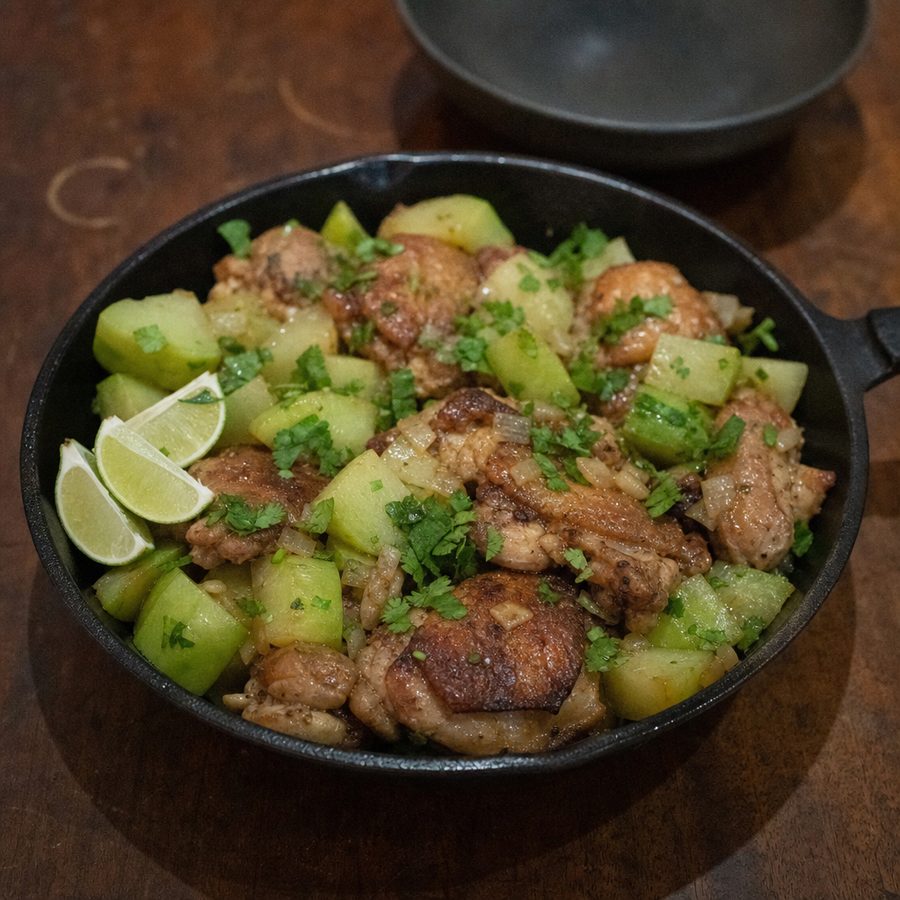
Seared chicken thigh with chayote, onion, and garlic in one pan, seasoned with oregano and finished with lime and cilantro for a savory morning skillet.
Why You'll Love This Recipe
This is the skillet I make when I want breakfast to taste like somewhere warm. Chayote is sold in most Latin American markets and increasingly in ordinary supermarkets, usually for very little, and it is one of the most useful vegetables you can learn during an elimination phase because it holds its shape and stays mild. The whole thing is one pan and about forty minutes, most of that unattended, and it makes enough that two people can eat it twice. It is a good Sunday cook for a week that is going to be busy.
Chayote behaves unlike any other squash, which is what makes it worth knowing. Where zucchini collapses into water within minutes, chayote keeps a faint crispness at the center even after twenty minutes in a hot pan, and its flavor is so mild that it takes on whatever it is cooked with. Peel it, because the skin stays tough, and cut out the flat seed in the middle. Then give the cubes a hot pan and let them sit still until they are golden on one face, which is where their faint sweetness comes from.
Chicken thigh is the right cut here for a simple reason. It has enough fat running through it to stay juicy at the 165°F (74°C) poultry needs to reach, where breast meat goes dry and stringy in the same pan. Sear the pieces hard first, take them out while the vegetables cook, and return them at the end so they warm through without overcooking twice. The oregano goes in with the garlic so the heat opens it up, and the lime and cilantro go on off the burner, which is what makes the finished skillet taste bright rather than merely rich.
Ingredients
- 1 1/2 lb boneless, skinless chicken thighs, cut into 3/4-inch pieces
- 2 medium chayote (about 1 lb), peeled, seeded, and cut into 1/2-inch cubes
- 1 medium onion, sliced thin
- 4 cloves garlic, minced
- 1 1/2 tbsp coconut oil, divided
- 1 tsp dried oregano
- 2 tbsp fresh lime juice
- 1/4 cup chopped fresh cilantro
- 1 tsp fine sea salt, divided
Instructions
- Prep the chayote: Peel the chayote with a vegetable peeler, halve each one lengthwise, and cut out the flat central seed. Cut the flesh into half-inch cubes. If your hands feel tacky afterward, that is the sap and it rinses off with soapy water.
- Sear the chicken: Pat the chicken pieces dry, since a wet surface steams rather than sears, and season them with half the salt. Heat 1 tablespoon of the coconut oil in a large skillet over medium-high until it shimmers, add the chicken in one layer, and leave it undisturbed for 4 minutes, until the underside is deep golden. Turn and cook 3 minutes more, then move it to a plate.
- Brown the chayote: Add the remaining oil to the same pan, then the chayote with half the remaining salt. Spread it into a single layer and leave it for 5 minutes, until the undersides are golden, because chayote pushed around a pan gives up its water and simmers instead of browning. Toss and cook 6 to 8 minutes more, until the cubes are tender at the edges and still slightly firm at the center.
- Soften the onion, then the garlic: Stir in the onion and cook 4 minutes, until it turns soft and translucent and lifts the browned bits off the bottom of the pan. Add the garlic and oregano and cook 30 seconds more, until the garlic smells sweet and the oregano smells warm.
- Finish the skillet: Return the chicken and any juices from the plate, toss well, and cook 2 to 3 minutes until an instant-read thermometer in the largest piece reads 165°F (74°C). Take the pan off the heat, add the lime juice, cilantro, and last of the salt, and serve straight from the skillet.
Variations
- Greens in the pan: Wilt a few handfuls of spinach or Swiss chard into the skillet in the last minute for color and a little iron.
- Pork version: Swap the chicken for cubed pork tenderloin, seared the same way and pulled at 145°F (63°C).
- Avocado and lime: Slice half an avocado over each bowl at the table for a richer plate and a cool contrast to the hot skillet.
- Ginger and scallion: Trade the oregano for a tablespoon of grated fresh ginger and finish with sliced scallions for a completely different accent.
- Sheet pan version: Toss the chayote and onion with the oil and roast at 425°F (220°C) for 25 minutes while you sear the chicken, then combine, which frees the skillet for a crowd.
Storage & Leftovers
Leftovers keep in a sealed container in the fridge for up to four days. Chayote is unusually good at holding its texture, so unlike most cooked squash this does not turn to mush overnight and the cubes still have some bite on day three.
Reheat in a skillet over medium-high for three or four minutes, spread out rather than piled, so the cut faces catch again. The microwave works if you are pressed, though it softens the chayote and dries the chicken, so add a fresh squeeze of lime after either method.
This freezes acceptably for up to two months, better than most vegetable skillets because chayote holds so much structure. Cool it completely, freeze in flat portions, and thaw overnight in the fridge. Expect softer squash and refresh it with lime and fresh cilantro.
Notes & Tips
- Peel the chayote properly: The skin stays tough no matter how long it cooks and it is the main reason people decide they dislike chayote. A vegetable peeler and a minute takes care of it.
- Cut out the center seed: The flat seed in the middle is edible but soft and slightly odd against the firm flesh. Halve the squash and flick it out with the tip of a knife.
- Dry the chicken: Wet thigh meat steams gray in the pan instead of searing. A paper towel over the cut pieces takes seconds and gives you the golden crust the dish is built on.
- Sear, remove, return: Cooking the chicken all the way through in one go leaves it dry by the time the vegetables are done. Take it out, cook the chayote, and bring it back at the end.
- Let the chayote sit still: Golden faces come from contact with hot metal. Five undisturbed minutes gives you color that constant stirring never will.
- Lime after the heat: Citrus simmered in a hot pan turns dull and slightly bitter. Off the burner it stays sharp and the whole skillet tastes seasoned.
Nutrition & Mindful Eating
- Chicken thigh, chayote, and onion make a plate with real staying power. The meat carries the protein and the fat, the squash brings bulk and fiber for very little, and the browning across both is where the flavor comes from.
- Chicken thigh has enough fat marbled through it to stay juicy and tender at the temperature poultry has to reach, and it carries protein along with iron and zinc in the darker meat.
- Chayote is mild, firm, and mostly water, and it brings folate along with the fiber that gives the skillet its volume. It is the rare cooked squash that still has a little bite left in it.
- Garlic and onion soften into the pan and sweeten as they cook, and both feed the bacteria living in your gut with the prebiotic fiber they carry.
- Lime and cilantro land right at the end where they stay sharp and green, and that hit of acid is what makes a simple pan of chicken and squash taste finished rather than plain.
- As you eat, find the bite the chayote holds onto against the soft chicken, and give yourself a moment midway down the bowl to taste the lime rather than simply finish it.
Frequently Asked Questions
What does chayote taste like?
Very mild, faintly sweet, and somewhere between a cucumber and a firm summer squash. That blankness is the point, because it takes on the garlic, the oregano, and the browned bits from the chicken. If it tastes like nothing on its own, it is behaving correctly.
Can I use chicken breast?
You can, though watch it closely. Cut the breast into slightly larger pieces, sear it for two minutes a side, and return it to the pan only in the last minute so it reaches 165°F (74°C) without going past it. Thigh meat is far more forgiving here.
What can I substitute for chayote?
Kohlrabi is the closest in texture and stays just as firm. Zucchini works but cooks in about a third of the time and gives up more water, so add it near the end. Turnip or celeriac both work if you want something denser and earthier.
Does this fit an AIP elimination phase?
It does. There are no peppers, no cumin, and no chili powder in it, which is where most Latin American seasoning would normally come from, so the flavor is built on garlic, oregano, lime, and cilantro instead. Nothing in the pan is a grain, dairy, egg, nut, or seed.