
Chicken & Roasted Vegetable Bowl
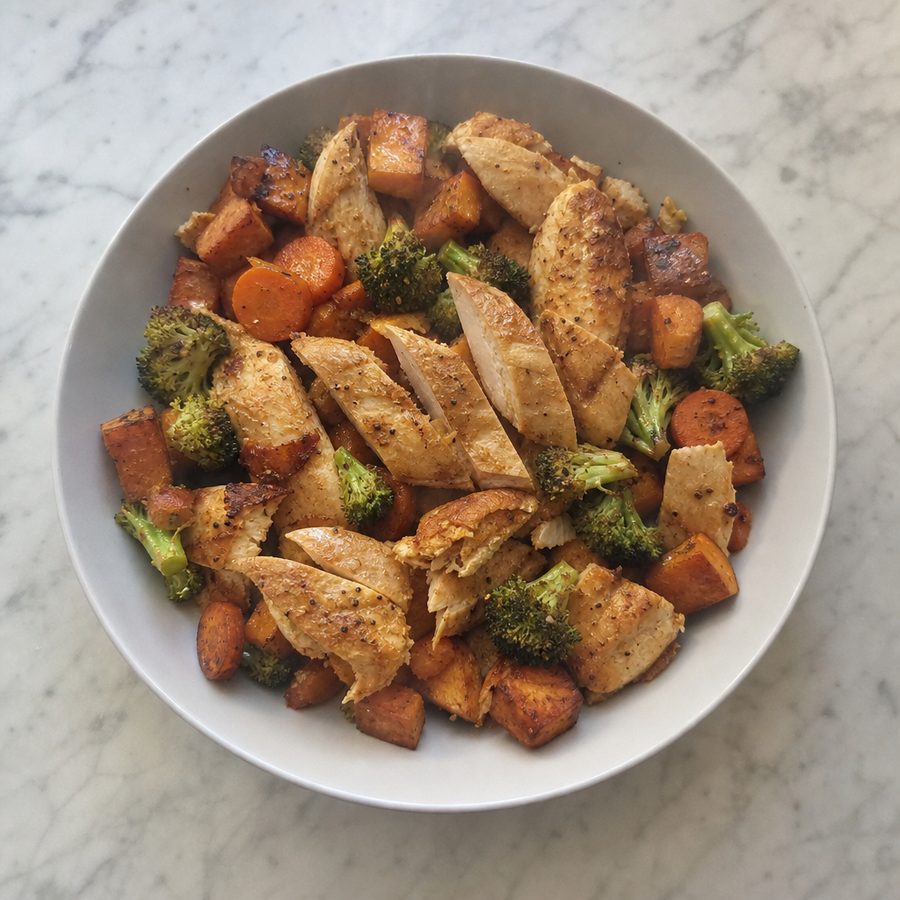
Juicy roasted chicken with caramelized sweet potato, broccoli, and carrots tossed in garlicky olive oil, a make-ahead AIP lunch bowl that reheats like a dream.
Why You'll Love This Recipe
A lunch bowl built on one sheet pan: chicken breast with sweet potato, broccoli, and carrots roasted around it, then divided into four boxes while it is still warm. Make it on a Sunday and four lunches are already decided, which is most of what makes lunch fall apart in the first place. This is the bowl for anyone who has opened a refrigerator at noon and found nothing but ingredients. Twenty-five minutes in the oven, one pan to wash, and the only real skill in it is cutting the sweet potato smaller than instinct says.
Cut the sweet potato smaller than feels necessary, around half an inch. Broccoli and carrot cook faster than dense root vegetables, and matching the sizes is what gets everything off the pan at the same moment rather than leaving you with charred florets around hard cubes. The other half of that is space: a sheet pan holds only so much before the vegetables start steaming each other, and a crowded pan is the single most common reason roasted vegetables come out pale and wet instead of browned at the edges.
Chicken breast is mild enough to take on whatever it is roasted with, and the garlic and olive oil on the vegetables end up seasoning it from underneath as everything cooks together. The vegetables bring the fiber and the sweet potato brings the kind of carbohydrate that releases slowly, which is what keeps a lunch from fading a couple of hours later. Between them, one pan covers protein, produce, and a starch without anything else needing to be cooked. Our Baked Chicken With Butternut Squash builds the same bowl around squash.
Ingredients
- 1 1/2 lb chicken breast
- 2 cups cubed sweet potato
- 3 cups broccoli florets
- 2 carrots, sliced
- 3 tbsp olive oil
- 3 cloves garlic, minced
- 1/2 tsp fine sea salt
Instructions
- Heat the oven hot and cut everything to size: Heat the oven to 425°F (220°C). Cube the sweet potato to about half an inch, cut the broccoli into florets, slice the carrots, and mince the garlic. Cut the sweet potato smaller than instinct says: it is denser than the other two and it is the piece that decides how long the pan stays in, so matching the sizes is what gets everything off the pan at the same moment.
- Oil the vegetables and the chicken, and give them room: Toss the vegetables with two tablespoons of the olive oil, the garlic, and the salt right on a large sheet pan, then spread them into a single layer with space between the pieces. Rub the chicken with the remaining oil and set it on the pan. Crowded vegetables steam in the moisture they release and never brown, so if the pan looks tight, use two.
- Roast 22 to 25 minutes, stirring once: Roast for 22 to 25 minutes, stirring the vegetables once at the halfway mark so the faces that were pointing up get their turn against the hot metal. The sweet potato should take a fork with no resistance and be browned at the corners by the end.
- Check the breast where it is thickest: Test the chicken at the thickest part rather than the tapered end: 165°F (74°C), or juices running clear with no pink at the center. A breast pulled at that moment stays good through four days of lunches, and one left in for an extra five minutes is the reason people believe meal-prep chicken has to be dry.
- Rest, slice, and portion while it is warm: Let the chicken rest for 5 minutes before slicing, then divide it and the vegetables among four bowls. If they are going straight into the refrigerator, portion them while everything is still warm but leave the lids off until the steam stops rising, because a lid trapped over hot food condenses and turns roasted vegetables soft by morning.
Variations
- Add more vegetables: Cauliflower and parsnip roast on the same schedule as the sweet potato, so add them at the start rather than partway through.
- Make it spicy: Toss the vegetables with grated fresh ginger and a little turmeric before they go in. Roasted-in warmth tastes deeper than heat added at the table, and neither one is a nightshade.
- Change the protein: Boneless thighs stay juicier than breast and roast in about the same time. Chickpeas tossed with the vegetables make it meatless, though chickpeas are a legume and take the bowl off the autoimmune protocol.
- Add a sauce: A lemon-tahini drizzle or a yogurt and herb sauce pulls the whole bowl together, keeping in mind that tahini is a seed and yogurt is dairy, so either one takes it off the autoimmune protocol. Add it at the table, not on the pan.
- Build it on a base: Spoon everything over quinoa or brown rice for a bigger meal, which adds grains and takes the bowl off the autoimmune protocol, or over greens if you want the bowl lighter on carbohydrate.
Storage & Leftovers
Four days, and this is one of the few dishes here genuinely built for it, because nothing on the pan is crisp and so nothing has anything to lose sitting in a box. The chicken breast is the part to watch: it goes from juicy to dry faster than anything else on the pan once it is heated twice. Slice it thick and stop the reheat the moment it is warm through rather than hot.
A skillet over medium for three or four minutes is best, though the microwave is honest enough here, since there are no crisp edges to ruin. If you use one, cover the bowl and go in short bursts, and stop while the sweet potato is still a little cool in the middle. It will even out on the walk back to your desk.
Sweet potato and carrot freeze well, broccoli comes back soft, and cooked chicken breast comes back dry, so the tray as a whole freezes at about half its quality. Worth knowing before you double the batch for the freezer. Four days in the refrigerator is where this one is actually at its best.
Notes & Tips
- Cut it evenly: Cut the sweet potato into similar-sized pieces so everything roasts through at the same rate.
- Even out the chicken: Breasts taper, and the thin end is dry by the time the thick end is done. Pound them to a similar thickness first and that stops happening.
- Use a thermometer: Pull the chicken at 165°F (74°C). Breast goes from juicy to dry in a very short window, and the clock will not warn you.
- Let the chicken rest: Give it a few minutes before slicing so the juices settle back into the meat rather than onto the board.
- Use two pans if it is crowded: Vegetables piled on top of each other steam instead of roasting, and you lose the browned edges that make this worth doing.
- Meal prep it properly: Portion the chicken and vegetables into containers but keep any sauce separate, and reheat gently so the chicken does not cook a second time.
Nutrition & Mindful Eating
- Chicken, sweet potato and the vegetables around them give this bowl its shape. Protein, whole food carbohydrate and fiber land on the same plate, which is why it eats like a real lunch and why it reheats without falling apart.
- Sweet potato is the anchor. Roasted until the edges go dark and sticky, it turns softer and sweeter than it is raw, and the fiber and potassium arrive right along with that sweetness.
- Chicken breast is close grained and mild, so it takes on the garlic and the oil around it, and it gives the bowl protein dense enough to hold you through a long afternoon.
- Carrots and sweet potato are both full of beta-carotene, the pigment behind their color, and the olive oil on the pan is what lets you absorb it, so the fat here is doing more than crisping edges.
- Broccoli behaves differently in a hot oven than in water. The florets brown at the tips and turn nutty and a little crackly, the stems stay firm, and more of the vitamin C stays in the vegetable itself.
- As you eat, look for the darkest caramelized edges on the sweet potato and the crisp tips of the broccoli, and give the bowl your attention long enough to catch the point where you feel satisfied.
Frequently Asked Questions
Is sweet potato AIP-compliant?
Yes. Sweet potato is not a nightshade and is fully allowed on the Autoimmune Protocol, unlike white potato.
Can I meal-prep this for the whole week?
It holds well for 4 days refrigerated, so it is built for Sunday prep and grab-and-go lunches.
How long does it keep?
Four days, and it does not mind. There is nothing crisp to lose, so the only thing worth protecting is the chicken: warm it rather than heating it, or eat the whole bowl cold, which is better than it sounds.
Can I make it ahead?
This is the recipe to point at for exactly that. Roast it Sunday, divide it into four boxes while it is still warm, and leave the lids off until the steam stops rising, or the broccoli sweats itself soft overnight.