
Chicken Shawarma Plate with Chickpeas, Cabbage, and Tahini
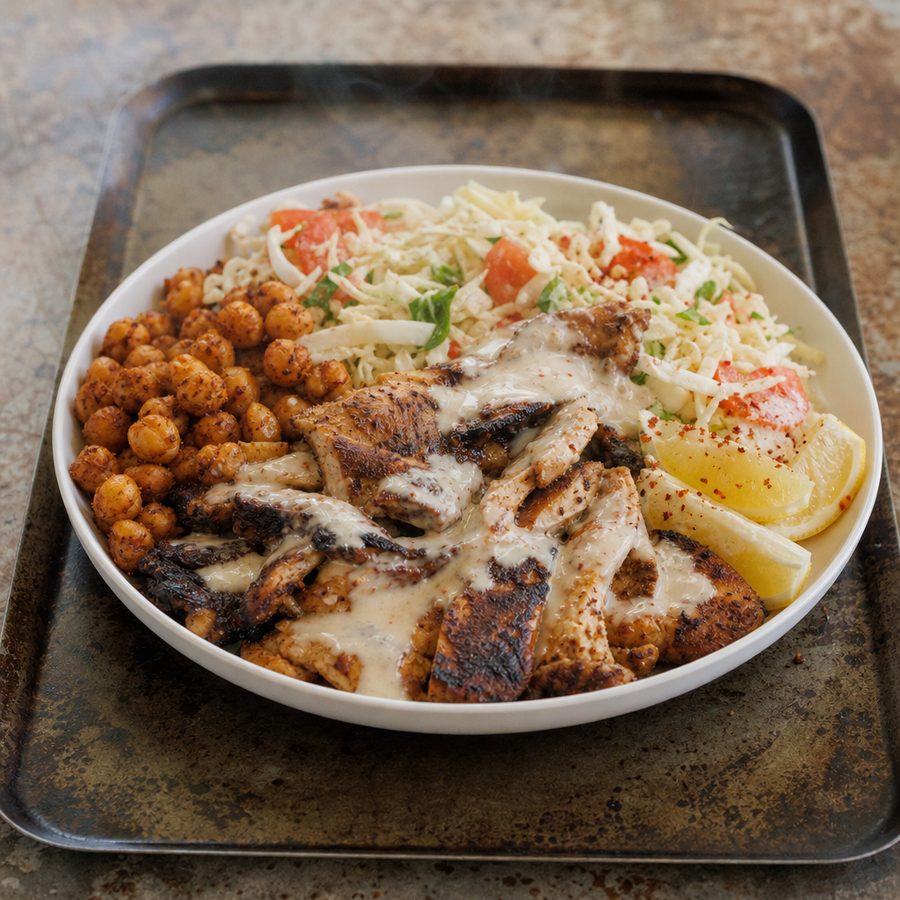
Spice-marinated chicken thighs roasted over onions, sliced thin and crisped again, piled with roasted chickpeas, cold cabbage salad, and a loose lemon tahini sauce.
Why You'll Love This Recipe
This is the plate I make when somebody in the house has been talking about the shawarma shop down the road. A vertical spit is what gives the real thing its character, and no home kitchen has one, so the trick is to roast the thighs whole, slice them thin once they are cooked, and send the slices back to the hot pan for a few minutes under the broiler. That second pass is where the crisp brown edges come from, and it is the entire difference between roasted chicken with spices on it and something that actually eats like shawarma.
The spice mix is the other half. Cumin and coriander do the heavy lifting, paprika and turmeric bring the color, and half a teaspoon of cinnamon sits underneath everything and is the thing nobody can name when they taste it. Give the chicken an hour in that paste if you have one, or overnight if you are organized, because the vinegar and lemon in it work their way well past the surface. The chickpeas share the pan and roast in the drippings, which is the least amount of effort I have ever put into making chickpeas taste good.
What comes together at the table is hot and cold at once, which is how these plates are eaten across the Levant. The chicken and chickpeas come off the pan still sizzling, and the cabbage is cold, sharp with lemon, and cut fine enough to collapse under the weight of the meat. Tahini goes over the whole thing, loose enough to run. I like it eaten with a fork straight off the plate, though it packs into a container just as happily and is the lunch I look forward to most the next day.
Ingredients
- 1 1/4 lb boneless, skinless chicken thighs, opened out flat
- 1 1/2 tbsp extra-virgin olive oil
- 2 tsp ground cumin
- 1 1/2 tsp coriander seeds, cracked in a mortar
- 2 tsp sweet paprika
- 3/4 tsp ground turmeric
- 1/2 tsp ground cinnamon
- 1/4 tsp cayenne
- 1 tbsp cider vinegar
- 3 garlic cloves, grated on a microplane
- 1 small red onion, halved and sliced thin
- 1 1/4 cups canned chickpeas, drained, rinsed, and patted dry
- 4 cups green cabbage (about 10 oz), shredded as fine as you can
- 1 cup cherry tomatoes, quartered
- 1 cup chopped flat-leaf parsley, thin stems included
- 3 tbsp tahini, stirred smooth in the jar first
- 3 tbsp lemon juice, from 1 1/2 lemons, plus wedges to serve
- 3/4 tsp coarsely ground black pepper
- 3/4 tsp fine sea salt
Instructions
- Mix the paste and marinate the chicken: Stir the cumin, cracked coriander, paprika, turmeric, cinnamon, cayenne, half the salt, half the black pepper, the grated garlic, the vinegar, 1 tbsp of the lemon juice, and 1 tbsp of the olive oil into a thick paste. Rub it over the opened-out thighs, working it into every fold, and leave them at room temperature for an hour or covered in the refrigerator overnight.
- Set up the pan: Heat the oven to 425°F. Scatter the sliced onion across a heavy rimmed sheet pan, lay the chicken on top in one layer, and toss the dried chickpeas with the remaining 1/2 tbsp of oil in one corner of the pan. The onions underneath the chicken will soften and take on the drippings rather than burning.
- Roast: Roast for twenty two to twenty five minutes, until an instant-read thermometer pushed into the thickest thigh reads 175°F and the chickpeas have gone golden and split at the seams. Give the chickpeas a shake halfway. Move the chicken to a board and let it sit for five minutes so the juices settle back into the meat.
- Whisk the tahini sauce: Whisk the tahini with 1 1/2 tbsp of the lemon juice in a small bowl. It will seize into a stiff, pale paste almost at once, which is exactly what it is supposed to do. Add cold water a tablespoon at a time, whisking hard after each, until it loosens into a sauce that ribbons off the whisk, usually four or five tablespoons in total.
- Dress the cabbage: Toss the shredded cabbage, quartered tomatoes, and parsley with the last of the lemon juice, the rest of the salt, and the rest of the black pepper. Work it with your hands for a few seconds so the cabbage softens slightly at the edges. Leave it in the bowl while you finish the chicken so the salt draws a little water out and the shreds go floppy rather than crunchy.
- Slice, crisp, and build: Cut the rested thighs across the grain into thin strips, return them to the hot pan with the onions and chickpeas, and slide the pan under the broiler for three to four minutes, until the tips of the slices darken and frizzle. Pile the chicken and chickpeas onto plates, heap the cold cabbage salad beside them, spoon the tahini over the meat, and put lemon wedges on the table.
Variations
- Cauliflower on the pan: Add a small head of cauliflower cut into small florets alongside the chickpeas, tossed in a little of the spice paste.
- Yogurt garlic sauce: Swap the tahini for thick yogurt whisked with grated garlic and lemon for a cooler, tangier finish.
- Pickled onion: Cover the sliced onion in lemon juice with a pinch of salt for twenty minutes and serve it on top rather than roasting it.
- Lamb version: Use the same paste on thin slices of lamb leg, roasted hot and fast, for something closer to the meat on the spit.
- Herb-heavy salad: Push the parsley up to two cups and add torn mint, which turns the cabbage salad into something much closer to a Levantine herb salad.
Storage & Leftovers
The chicken and chickpeas keep four days in a sealed container in the refrigerator, and the spice paste settles deeper into the meat overnight. Store the cabbage salad separately, since it will keep releasing water and will be swimming by morning if it sits with the hot food. Drain it before you eat it the next day and it is still good.
The tahini sauce keeps a week in a jar and will thicken up hard and pale in the cold. Whisk in a tablespoon of water and a squeeze of lemon to bring it back to a pourable sauce. Do not try to reheat it, since warm tahini splits and turns grainy on you.
Reheat the chicken in a dry skillet over medium-high for three minutes, spread flat and left alone, so the edges crisp again rather than steaming. The microwave will get it hot but the frizzled tips go soft and that is the best part. The chickpeas will never crisp back up fully, and they are fine as they are.
Notes & Tips
- Crack the coriander rather than buying it ground: A few seconds in a mortar gives you fragments that pop against the meat, and the smell is a different thing entirely from the powder in the jar.
- Dry the chickpeas thoroughly: Chickpeas straight from the can carry enough water to steam themselves. Roll them in a towel until they squeak and they will split and go golden instead.
- Open the thighs out flat: Thighs come folded and cook unevenly that way. Opened out, they roast in one even layer and slice into strips that are all the same thickness.
- Rest before you slice: Five minutes on the board is enough. Cut straight out of the oven and the juices run onto the board rather than staying where you want them.
- Salt the cabbage early: Ten minutes with salt and lemon is what turns hard shreds into something soft enough to eat under a pile of hot chicken.
- Use cold water in the tahini: Cold water loosens tahini into a smoother, paler sauce than warm water does, and it whips up thicker at the same time.
Nutrition & Mindful Eating
- The chicken, the chickpeas, and the cabbage are three different textures doing three different jobs. The thighs carry the protein and the spice, the chickpeas roast dry and nutty and bring most of the fiber, and the cold cabbage keeps a plate this warm and savory from feeling heavy.
- Chicken thigh is a darker, looser-grained cut than breast, which is why it stays juicy through a hot oven and takes a spice paste so well. It brings a generous amount of protein along with zinc and the B vitamins that make dark poultry meat what it is.
- Chickpeas roasted until their skins split go crisp outside and floury inside, and they hold onto their fiber through all of it. That fiber is the slow kind that feeds the bacteria in your gut, which is one reason a plate built around them sits so comfortably.
- Tahini is nothing but ground sesame, and it turns from stiff paste to pourable sauce with cold water and lemon. Sesame is one of the better plant sources of calcium, and it brings the fat that makes this sauce feel like a sauce.
- Cumin, coriander, cinnamon, and paprika are the whole character of the dish, and the hour they spend on the meat is what carries them past the surface. Cumin and coriander have been studied for their effects on digestion, and cinnamon underneath them is the note most people taste and cannot place.
- As you eat, notice how the cold cabbage changes each forkful of hot chicken and how the tahini quiets the spice, and let the plate slow you down enough to feel when you have had enough of it.
Frequently Asked Questions
Can I use chicken breast?
You can, though thighs are the cut that suits this. Breast dries out in the time the chickpeas need, so if you use it, pull it at 165°F and slice it thicker. Cutting the breasts horizontally into two thin pieces before marinating also helps them cook evenly.
Do I really need to marinate it?
Thirty minutes is the shortest I would go, and an hour is better. The vinegar and lemon in the paste need time to carry the spices past the surface, and chicken rubbed and roasted straight away tastes spiced on the outside and plain in the middle. Overnight is best of all.
My tahini sauce turned into cement.
That is normal and it means you are doing it right. Tahini always seizes the moment acid hits it. Keep whisking and keep adding cold water a spoonful at a time, and it will suddenly loosen into a smooth, pourable sauce. Cold water works better than warm.
How do I get more of those crisp edges?
Slice the chicken thinner and spread it out so no piece overlaps another, then give it the full four minutes under the broiler with the rack near the top. A crowded pan steams. If your broiler is weak, a very hot skillet with the slices pressed flat does the same job.