
Chicken Thigh Adobo with Bay and Black Pepper
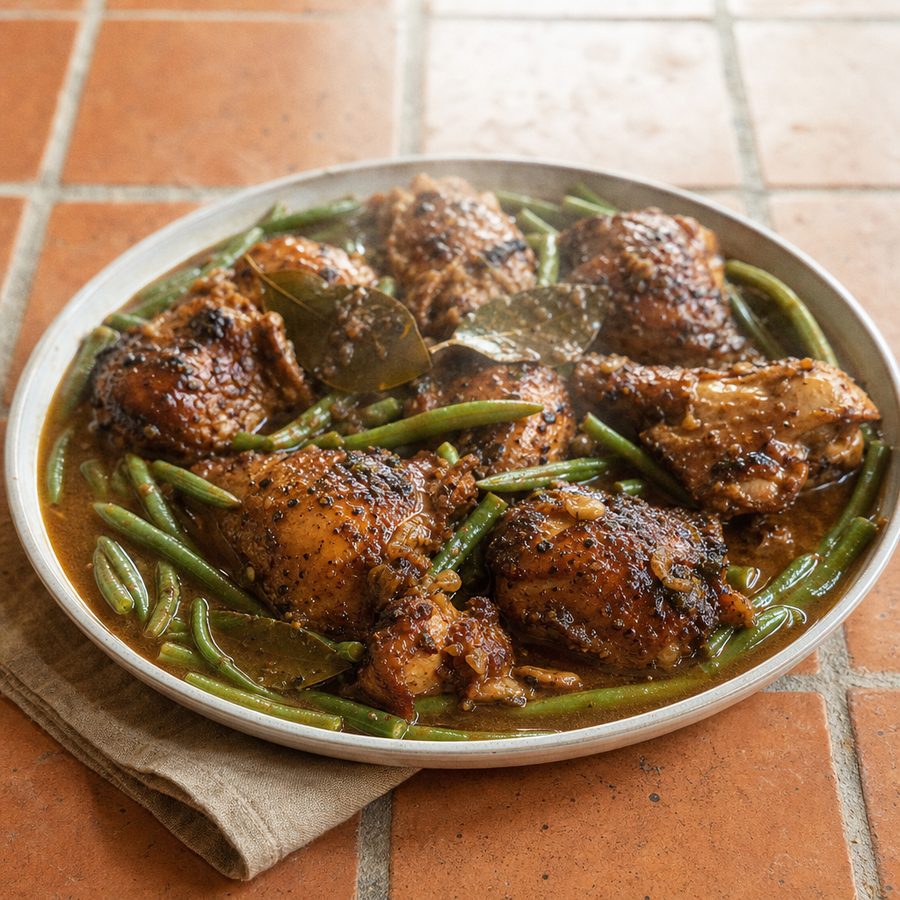
Bone-in chicken thighs simmered in vinegar, tamari, bay, and cracked pepper, then broiled until the skin lacquers while green beans finish in the reduced sauce.
Why You'll Love This Recipe
Twenty minutes of attention and nothing else is what this asks of you. Adobo is a Filipino way of cooking meat in vinegar and salt that started as a means of keeping it edible in a hot climate, and the reason it is still made is that it tastes extraordinary for the effort it asks. Eight thighs, a pot, and a short list of things you already own. My version goes under the broiler at the end so the skin lacquers, which is not strictly traditional but is what makes people stand at the stove picking at the pan before it reaches the table.
The rule that matters is this: once the vinegar goes in, leave the pot alone for the first several minutes and do not stir it. Stirring raw vinegar through hot fat drives that harsh top note into everything, while letting it boil quietly first cooks it into something mellow and almost fruity. Bay is the other half of the flavor, and five leaves is not a mistake. Adobo wants far more bay than feels reasonable. The cracked peppercorns stay whole rather than ground so they perfume the sauce slowly rather than clouding it, and garlic-infused olive oil covers the ground that garlic would usually hold in this dish.
By the time the sauce reduces it goes glossy and dark and coats the back of a spoon, salty and sour and just barely sweet from a spoonful of maple. Green beans go in for the last few minutes and come out squeaky and deep green, which stops the plate from being brown on brown. Serve it straight from the pan with all the sauce, because the sauce is the point and there is never quite enough. Leftovers are better than the first night, which is the one thing every cook who grew up with this dish agrees on.
Ingredients
- 8 bone-in, skin-on chicken thighs (about 3 lb)
- 1/2 cup apple cider vinegar
- 1/3 cup certified gluten-free tamari
- 1 cup chicken broth
- 12 oz green beans, trimmed
- 1 tbsp garlic-infused olive oil
- One 1-inch piece fresh ginger, sliced into thin coins
- 5 dried bay leaves
- 1 tbsp black peppercorns, cracked under a pan
- 1 tbsp maple syrup
- 2 tbsp chopped fresh chives
Instructions
- Marinate briefly: Put the chicken thighs in a bowl with the vinegar, tamari, ginger coins, bay leaves, and cracked peppercorns, turn them to coat, and leave them for 30 minutes at room temperature or up to overnight in the refrigerator. Lift the thighs out and pat the skin dry, since wet skin will not brown, and keep every drop of the marinade.
- Brown the skin: Heat the garlic-infused olive oil in a wide braising pan over medium-high. Lay the thighs in skin-side down and cook for 6 to 7 minutes without moving them, until the skin is deep brown and releases from the pan. Turn them and give the undersides 2 minutes.
- Add the marinade and do not stir: Pour in the reserved marinade with all the bay and pepper, then the broth. Bring it to a boil and let it bubble for 3 minutes without stirring, which cooks the sharpness out of the vinegar. Then lower the heat, cover, and simmer for 25 minutes, until the meat is tender at 175°F (80°C).
- Reduce the sauce: Move the thighs to a foil-lined sheet pan, skin-side up, so the skin dries out while the sauce reduces rather than sitting in liquid. Stir the maple syrup into the pan, raise the heat, and boil the sauce hard for 6 to 8 minutes, until it has reduced by about half and coats a spoon. It should taste sharp, salty, and slightly sweet all at once.
- Lacquer the skin: Heat the broiler. Brush the thighs with a few spoonfuls of the reduced sauce and broil them 6 inches from the element for 3 to 4 minutes, until the skin darkens and shines. Watch them closely, since the sugar in the glaze goes from mahogany to burnt in under a minute.
- Finish the green beans: Drop the green beans into the simmering sauce, cover, and cook for 4 to 5 minutes, until they are bright green and still have a snap. Return the thighs to the pan, scatter the chives over the top, and serve with the bay leaves left in for looks.
Variations
- Coconut adobo: Stir half a cup of canned coconut milk into the sauce as it reduces for the creamy southern Filipino version.
- More heat: Add a sliced jalapeno or a good pinch of cayenne with the marinade for a sauce that bites back.
- Pork belly or shoulder: Cubed pork takes the same treatment and wants about 90 minutes of simmering rather than 25.
- Cabbage in place of the beans: Wilt wedges of napa cabbage in the reduced sauce for 5 minutes for something softer and sweeter alongside.
- Turmeric adobo: A teaspoon of turmeric with the marinade turns the sauce gold and gives it an earthy, faintly bitter edge.
Storage & Leftovers
Adobo keeps for 5 days in the refrigerator, longer than most braises, because the vinegar and salt are doing what they were originally meant to do. Store the thighs sitting in the sauce in a sealed container. The flavor deepens noticeably by the second day and the sauce sets to a soft jelly when cold.
Reheat in a covered skillet over medium-low with a splash of water, about 8 minutes, spooning the sauce over the meat as it loosens. If you want the skin back, run the reheated thighs under the broiler for 2 minutes. The green beans dull on the second day, so cook a fresh handful if it bothers you.
It freezes well for 3 months in the sauce, though freeze the beans separately or leave them out. Thaw overnight in the refrigerator and reheat gently. Shredded off the bone, the meat and sauce also freeze flat in a bag and make the fastest weeknight dinner in the freezer.
Notes & Tips
- Why the garlic oil works: The parts of garlic that trouble sensitive stomachs are water-soluble and never make it into oil, so an infused oil gives you the flavor with none of what follows it.
- Do not stir the vinegar: The first 3 minutes of hard boiling are what take the raw edge off. Stirring during that window spreads the sharpness through the meat and it never fully leaves.
- Crack the peppercorns, do not grind them: Whole cracked pepper releases its heat slowly over 25 minutes. Ground pepper turns the sauce cloudy and slightly bitter.
- Stand at the broiler: Three minutes is right and five minutes is charcoal. The maple in the glaze catches fast, so do not walk away from the oven.
- How it keeps and reheats: Five days in the refrigerator and better on day two. Reheat covered on the stove with a splash of water, then broil for 2 minutes if you want the skin back.
- Feeding people who are not on the plan: Six smashed garlic cloves and a halved onion can go into their half of the pot, or into a small saucepan of the sauce, and the dish they get is the traditional one.
Nutrition & Mindful Eating
- Vinegar, tamari, bay, and pepper are the entire seasoning here, and between them they turn plain chicken and a pan of green beans into something with a long, savory finish.
- Bone-in thighs are the cut this dish was built for. Dark meat stays juicy through a long simmer and carries more iron and zinc than white meat, along with the protein that makes two of them a full dinner.
- Green beans go into the sauce at the very end so they stay squeaky and bright, and they bring fiber and vitamin K to a pan that is otherwise all meat and seasoning.
- Fresh ginger sliced into coins gives the sauce a warm, faintly peppery note underneath the vinegar, and it has been studied for its effect on unsettled stomachs for a very long time.
- Cracked peppercorns and five bay leaves are what make people ask what is in this. Neither one carries much nutrition, and both are the reason a sauce this simple tastes like it was cooked all afternoon.
- As you eat, let the first bite sit long enough to catch the sour edge under the salt and the perfume the bay left behind, and notice how little you need on the plate for it to feel like plenty.
Frequently Asked Questions
Can I use boneless, skinless thighs?
You can, and the timing drops to about 18 minutes of simmering, but you lose the skin that thickens the sauce and the bone that flavors it. Add a tablespoon of butter at the end to make up some of the body, and skip the broiling step entirely.
Why five bay leaves?
Adobo is one of the few dishes where bay is a main flavor rather than background, and one or two leaves simply disappear into that much vinegar and tamari. If your jar has been open for two years, use six, since dried bay fades badly with age.
What do I serve with it?
Rice is the traditional answer and it soaks up the sauce properly. Roasted potato, mashed rutabaga, or a bowl of the green beans alone all work if you would rather skip the grain. Whatever you choose, put it under the meat so it catches what runs off.
Does this work for a low-FODMAP plan?
It does. Traditional adobo is heavy on garlic, and here that job goes to garlic-infused olive oil, which carries the flavor into the fat and leaves the fructans behind. Certified gluten-free tamari stands in for soy sauce, and green beans and ginger sit well at this portion.