
Chimichurri Halibut over Smashed Potatoes and Charred Broccoli
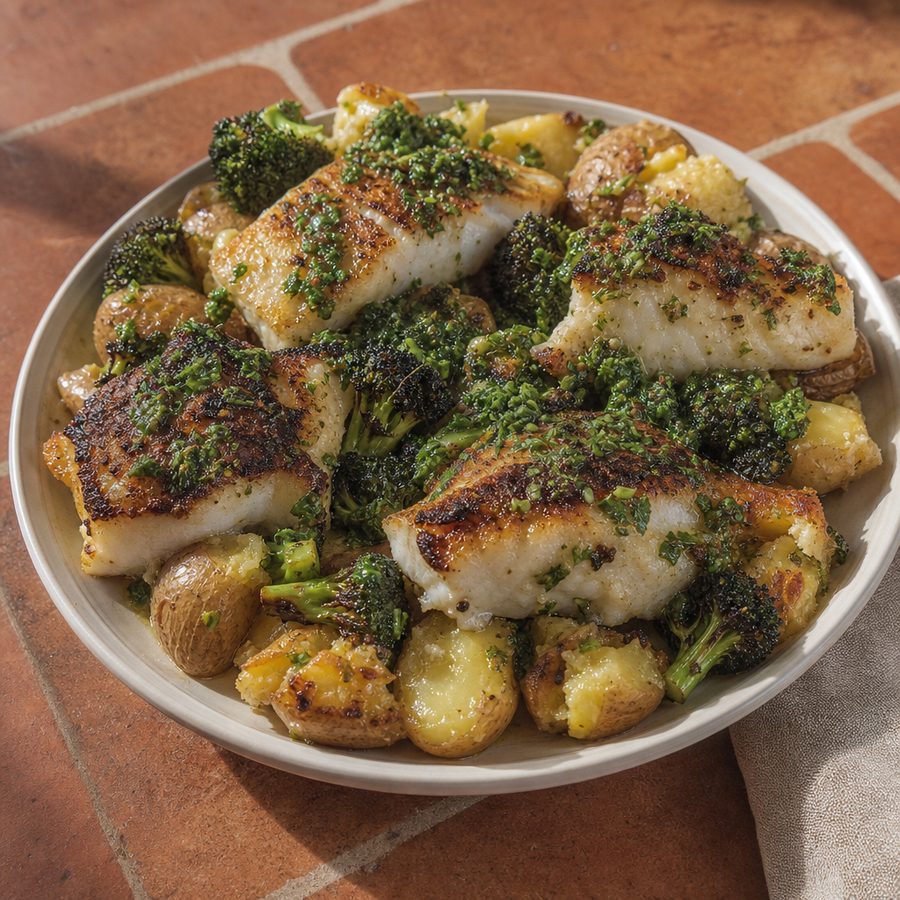
Halibut seared hard in a dry skillet, set over gold potatoes boiled then crushed flat, with broccoli charred in the same pan and a raw parsley, garlic, oregano, and vinegar chimichurri poured over everything.
Why You'll Love This Recipe
Chimichurri is the sauce I make when there is nothing in the refrigerator but a bunch of parsley and I need dinner to taste like something. It is raw, it takes four minutes, and it is mostly herbs held together with vinegar and oil. Argentinians put it on beef, and it is very good on beef, but a firm white fish gives it somewhere quieter to land. Halibut is dense and slightly sweet, and it can carry that much garlic and oregano without disappearing under it. I make the sauce first so it has fifteen minutes to sit and go pungent.
The potatoes are the part people go back for. You boil them until a knife slides in, then press each one flat with the base of a glass so the skin splits and the inside comes through in shaggy pieces. Those torn surfaces are what hold the sauce. The broccoli goes into the hot skillet without crowding and is left alone until the florets have real black at the tips, which turns them nutty and slightly bitter in a way that suits vinegar. Everything ends up on one platter, the fish on top, the sauce poured over the whole thing.
This is a Thursday dinner in my house, and it is what I cook when I want a proper plate of food in half an hour. The cooking is nearly all unattended: the potatoes boil while you chop, the skillet does the broccoli while the potatoes drain, and the fish takes seven minutes at the end. Make double the chimichurri, because it keeps a week and turns eggs, beans, and roasted vegetables into something worth sitting down for.
Ingredients
- 1 1/2 lb small gold potatoes, halved if larger than a walnut
- 1 large head broccoli (about 14 oz), cut into small florets with the stems sliced
- 1 1/4 lb halibut fillet, cut into 4 portions and patted very dry
- 1 1/2 cups packed flat-leaf parsley leaves, finely chopped
- 1/2 cup cilantro leaves, finely chopped
- 5 cloves garlic, minced
- 1 tbsp dried oregano
- 1/4 tsp cayenne
- 5 tsp apple cider vinegar
- 3 tbsp olive oil, divided
- 1 tbsp lemon juice
- 1 tsp coarsely ground black pepper
- 1/2 tsp fine sea salt, divided
Instructions
- Boil the potatoes: Put the potatoes in a pot, cover them with cold water by an inch, add a quarter teaspoon of the salt, and bring to a boil. Cook twelve to fourteen minutes, until a paring knife slides into the largest one with no resistance. Drain them well and let them steam dry in the colander for a minute, since a wet potato will not take up the chimichurri you are about to spoon over it.
- Make the chimichurri: While the potatoes boil, chop the parsley, cilantro, and garlic as fine as you have patience for and put them in a bowl with the oregano, cayenne, black pepper, vinegar, lemon juice, two tablespoons of the olive oil, and a quarter teaspoon of salt. Stir and leave it. It should look loose and very green, not like a paste.
- Char the broccoli: Heat a large skillet over medium-high with the remaining tablespoon of oil. Add the broccoli cut side down in one layer and leave it undisturbed for three minutes, until the flat faces are properly black in patches, because the char only happens where a cut face is touching hot metal. Toss once, add two tablespoons of water, cover for ninety seconds, then tip it onto the platter.
- Sear the halibut: Wipe the skillet, set it back on medium-high, and let it get properly hot and dry, since halibut grips a cool pan and tears when you try to turn it. Lay the halibut in and leave it for four minutes without moving it, until the underside is gold and releases on its own. Turn once and give it two to three minutes more, until the center reads 130°F (54°C) and the flakes just begin to separate at the thickest part, which is halibut at medium-rare. The FDA number for seafood is 145°F (63°C), and a fillet cooked that far will not flake the way this plate wants it to.
- Smash and assemble: Set the potatoes on the platter and press each one flat with the bottom of a glass until the skin splits. Tuck the broccoli around them, lay the halibut on top, and spoon the chimichurri over everything while the potatoes are still hot enough to drink it in. Serve straight away.
Variations
- Red chimichurri: Add a teaspoon of smoked paprika and a tablespoon of tomato paste to the sauce for the deeper, rustier version served with grilled meat.
- Shallot and mint: Swap the cilantro for chopped mint and add a minced shallot, which pushes the sauce sweeter and softer against the char on the broccoli.
- Charred lemon: Halve two lemons and sear them cut side down in the dry skillet before the fish goes in, then squeeze them over at the table.
- Sweet potato: Use sweet potatoes cut into chunks in place of the gold potatoes for a sweeter base that plays hard against the vinegar.
Storage & Leftovers
The chimichurri keeps a week in a sealed jar in the refrigerator and gets rounder and less raw after the first day as the garlic softens. Bring it back to room temperature before using, since the olive oil sets solid in the cold and the sauce looks broken until it warms up.
Potatoes and broccoli keep three days and reheat best spread on a sheet pan under a hot broiler for four or five minutes, which crisps the torn potato edges again. The microwave leaves them soft, and the crisp edges are most of the pleasure.
Cooked halibut keeps two days and is better cold than reheated. Flake it over the leftover potatoes with a fresh spoonful of chimichurri and eat it at room temperature, which is honestly how I prefer the second night. Reheated halibut tightens and goes dry no matter how gently you handle it.
Notes & Tips
- Let the sauce sit: Fifteen minutes in the bowl is the difference between a sauce that tastes like chopped parsley and one that tastes like chimichurri. The vinegar needs time to pull the garlic and oregano into the oil.
- Steam-dry the potatoes: A minute in the colander off the heat lets the surface moisture evaporate. Wet potatoes smash into mush; dry ones split into the craggy shapes you want.
- Dry the fish, hot the pan: Halibut releases a lot of water. Blot both sides with paper towel and put it into a pan that is genuinely hot, or it will poach in its own liquid and never brown.
- Pull the halibut at 130°F: It carries on cooking on the platter. Halibut is close-grained and unforgiving once it goes past done, and a thermometer is worth more here than any amount of poking.
Nutrition & Mindful Eating
- The halibut, the potatoes, and the herb sauce are doing three separate jobs. The fish carries the protein and the meaty texture, the potatoes and broccoli bring the bulk and most of the potassium and fiber on the plate, and the raw sauce is what keeps a dinner this plain from tasting plain.
- Halibut is a firm, close-grained fish that holds together in big flakes, and it carries protein along with selenium and magnesium. It is milder than oily fish, which is why it can sit under a sauce this assertive and still taste like something.
- Gold potatoes cooked with their skins on keep their fiber and a good deal of their potassium, and potatoes are one of the more potassium-dense things you can put on a dinner plate. Boiling then crushing rather than mashing leaves the structure intact, so they eat like potatoes rather than puree.
- Broccoli charred at the tips goes nutty and faintly bitter, and the same florets bring vitamin C, folate, and the sulfur compounds that give the cabbage family its character. Quick high heat keeps more of that vitamin C in the vegetable than a long boil does.
- Parsley, oregano, and raw garlic are the whole personality of the sauce. Parsley is unusually rich in vitamin K for a leaf used in such small handfuls, and the vinegar and lemon that carry it are what make the fish taste bright rather than heavy.
- As you eat, look for the potato edges that soaked up the most sauce and notice how the raw garlic keeps arriving after each bite, and let the platter sit in the middle of the table so the meal takes as long as it takes.
Frequently Asked Questions
Can I use dried parsley?
No, and this is the one place I will not budge. Chimichurri is a raw herb sauce and dried parsley has none of the grassy sharpness the whole thing depends on. If you cannot get parsley, use all cilantro, or basil and mint together, but keep them fresh.
Should I use a food processor for the sauce?
You can, in short pulses, but it is easy to go too far. A processor run continuously turns the herbs to a dark green puree that tastes muddy and looks like pesto. Chopping by hand keeps the pieces distinct and the sauce loose.
What if my halibut sticks to the pan?
It was moved too early. Fish releases itself when the crust has formed, so if it resists the spatula at three minutes, give it another thirty seconds and try again. A properly hot, properly dry pan and dry fish are the other two halves of it.
Can I make this with another fish?
Cod, haddock, and thick tilapia all work, though they are softer and need a gentler hand when you turn them. Swordfish and salmon take the sauce well too. Whatever you use, pat it dry and give it a hot pan.