
Cider-Mustard Tempeh with Collard Slaw and Sesame Dressing
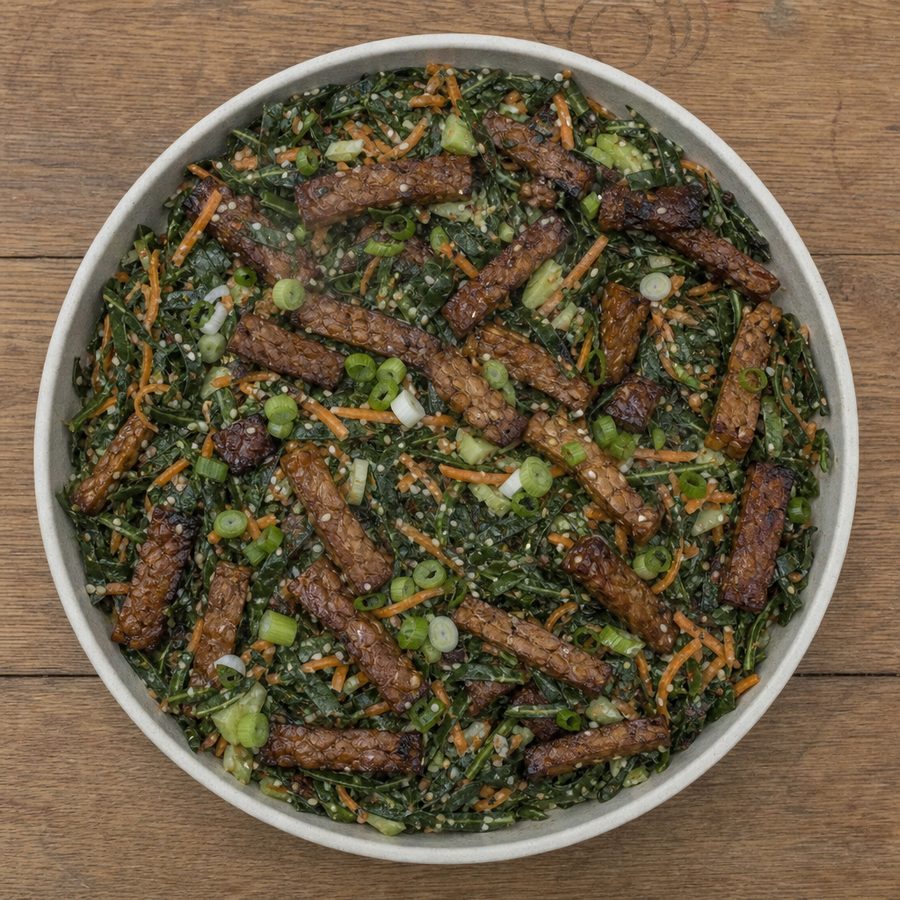
Tempeh fingers seared and glazed in cider vinegar and mustard, piled onto a slaw of hair-thin collard ribbons, carrot, and celery tossed in a sesame dressing sharpened with more vinegar.
Why You'll Love This Recipe
Collards do not have to be cooked to death, and this is the recipe I hand people who only know them boiled gray. Sliced hair-thin and tossed with an acidic dressing twenty minutes before dinner, they soften on their own into something between a slaw and a salad, with a mineral, cabbagey sweetness that no amount of simmering will give you. The dressing does the work while you cook the tempeh, so the timing takes care of itself. It is the fastest dinner in this group, twenty-five minutes start to finish, and most of that is knife work you can do sitting down.
Eating it is all contrast. The tempeh comes off the heat hot and glossy, the mustard glaze thick enough to cling, sharp and a little sweet from the vinegar reducing down. The slaw underneath is cold and crunchy, the celery snapping, the carrot sweet, the collard ribbons chewy in a satisfying way. Sesame runs through the middle of both and softens the edges of the mustard, which would be aggressive on its own. I like to cut through a tempeh finger and drag it through the dressing so each bite gets some of everything, hot and cold at once. It is a plate that keeps your attention all the way to the bottom.
This is my summer answer, the dinner I make when it is too warm to stand over a pot but I still want something substantial on the plate. It packs beautifully for lunch, since the slaw is the rare salad that gets better sitting in its dressing rather than collapsing in it. And it scales without any trouble: double the slaw for a cookout table, keep the tempeh as it is, and you have a side dish everybody asks about. Put extra cider vinegar within reach, because greens are personal and some people want more. I keep a small pitcher of the dressing back as well, since the slaw drinks it up as it sits.
Ingredients
- 14 oz tempeh, cut into fingers about 1/2 inch thick and 2 inches long
- 1 large bunch collard greens (about 14 oz of leaves), stems stripped and leaves rolled and sliced as thin as you can manage
- 2 medium carrots, coarsely grated
- 2 celery stalks, sliced thin on a long bias
- 4 scallions, thinly sliced
- 2 1/2 tbsp tahini, well stirred
- 4 tsp dijon mustard
- 3 tbsp apple cider vinegar, divided
- 1 1/2 tbsp olive oil
- 2 tsp smoked paprika
- 1/2 tsp cayenne
- 1 tsp coarsely ground black pepper
- 2 garlic cloves, grated
- scant 1/2 tsp fine sea salt
Instructions
- Slice the collards fine: Strip the leaves off the stems, stack them in piles of six or eight, roll each stack into a tight cylinder, and slice across as thinly as your knife allows, ideally under a quarter inch. Fluff the ribbons apart into a large bowl with the carrot, celery, and half the scallions.
- Make the dressing and dress the slaw early: Whisk the tahini, dijon mustard, 2 tbsp of the cider vinegar, the garlic, half the salt, and 3 tbsp of water until it is smooth and pourable, adding another spoonful of water if it seizes up. Pour it over the slaw and toss hard with your hands for a minute so every ribbon is coated. Leave it on the counter while you cook, since collard ribbons need that time in the acid to soften from stiff to pleasant.
- Season and sear the tempeh: Toss the tempeh fingers with the smoked paprika, cayenne, black pepper, and remaining salt. Heat the olive oil in a large skillet over medium-high until it shimmers, lay the fingers in without crowding them, since a packed pan steams tempeh instead of searing it, and cook three minutes a side, until both flat faces are dark golden and the edges have gone crisp.
- Glaze the pan: Turn the heat to low and add the remaining 1 tbsp cider vinegar to the skillet. It will hiss and reduce almost immediately. Turn the fingers through it for about a minute, until the liquid has gone syrupy and every piece looks lacquered. Take the pan off the heat before the glaze tightens further, because a vinegar glaze goes from lacquer to sticky varnish in about the time it takes to fetch a plate.
- Build the plate: Toss the slaw once more, taste it, and add a splash more vinegar if the greens still taste flat. Spread it over a wide platter or divide it among four shallow bowls, lay the tempeh fingers across the top while they are still hot, and finish with the remaining scallions.
Variations
- Apple in the slaw: Add a tart apple cut into matchsticks, which turns the whole bowl sweeter and plays into the cider vinegar already there.
- Toasted seeds on top: Scatter a handful of sunflower or pumpkin seeds toasted in the skillet before the tempeh goes in, for another layer of crunch.
- Hotter glaze: Stir a teaspoon of your favorite hot sauce into the vinegar before it goes into the pan for a glaze with real heat behind the sweetness.
- Herb-heavy: Fold a big handful of chopped parsley and dill into the slaw, which pushes it green and fresh and suits a spring table.
- Sandwich style: Pile the tempeh and a little slaw into a soft roll and let the dressing soak in, which is how the leftovers usually get eaten at my house.
Storage & Leftovers
The dressed slaw keeps three days in a sealed container and is genuinely better on day two, when the collard ribbons have gone fully tender and taken on the mustard. Store the tempeh separately so the glaze stays on the tempeh rather than bleeding into the greens.
Reheat the tempeh in a dry skillet over medium for two minutes a side, which brings the glaze back to a shine. Eat the slaw cold straight from the refrigerator. This is the rare dinner I actively plan to eat again at a desk the next day, packed in two containers.
The slaw does not freeze, since the collards go limp and the dressing separates. Seared tempeh freezes for up to two months in a sealed bag and reheats in a hot pan straight from frozen, so it is worth searing a double batch when you have the burner going.
Notes & Tips
- Thin is everything: The whole recipe rests on how finely you cut the collards. Thick ribbons stay tough and taste harsh no matter how long they sit. Roll the leaves tightly and take your time with the knife.
- Dress the slaw first, cook second: Those ten minutes on the counter are not idle time. The acid is softening the leaves while the tempeh sears, which is what makes this work as a quick dinner.
- Stir the tahini before you measure: A jar that has been standing separates, and the oil at the top makes a greasy dressing while the paste at the bottom makes a stiff one. Stir it all the way to the bottom first.
- Glaze over low heat: Mustard turns bitter on a screaming pan. Drop the burner before the vinegar goes in and the glaze stays sweet and sharp.
- Taste the slaw at the end: Collards vary in bitterness through the season and the dressing has to answer whatever you bought. A last splash of vinegar or a pinch of salt is usually the fix.
- Give the tempeh room: Fingers packed against each other steam instead of searing. Two batches in a crowded kitchen beat one flat gray pan.
Nutrition & Mindful Eating
- Tempeh, collards, and tahini are the backbone of this plate. The tempeh brings the protein and the chew, the collard ribbons bring bulk and most of the calcium, and the tahini turns a sharp mustard dressing into something round enough to eat by the forkful.
- Tempeh is made from whole soybeans bound by a culture, so it slices into fingers that hold their shape in a hot pan. Those intact beans are the reason it carries fiber and iron along with its protein, which is unusual in something this firm.
- Collard greens sliced thin and left to sit in acid go tender on the counter and keep their deep color, which is a good sign that the folate and vitamin K are still there. They are among the more generous plant sources of calcium, and this recipe uses a whole bunch of them.
- Tahini is nothing more than ground sesame, and that is where the dressing gets its body and its faintly bitter, toasted flavor. Sesame carries calcium and iron, so a few spoonfuls do more for the plate than their quiet color suggests.
- Mustard, cider vinegar, smoked paprika, and cayenne are the four flavors doing the talking. The vinegar reducing in the pan is what makes the glaze taste sweet even though nothing sweet went into it, and the cayenne turns up late, after the mustard has had its say.
- As you eat, notice the swing between the hot glazed tempeh and the cold slaw underneath it, and let that contrast be a reason to take the meal sitting down instead of on the move.
Frequently Asked Questions
Do the collards need to be cooked?
Not here. What softens them is the acid in the dressing plus twenty minutes of sitting, and the thin cut is what makes that possible. If you want them gentler still, dress them an hour ahead, or massage the ribbons with the vinegar and a pinch of salt for a minute before the dressing goes on.
My tahini turned into a paste when I added liquid.
That is normal and it comes back. Tahini seizes the moment water hits it, then loosens again as you keep whisking and adding water a spoonful at a time. Keep going and it will turn pale, smooth, and pourable. Warm water helps if it is stubborn.
Can I use a bagged slaw mix?
You can, and shredded cabbage works fine as part of the mix, though the collards are what give this its body and its faint bitterness. If you go the bagged route, use half cabbage and half thinly sliced collards so the plate keeps some backbone.
What else can I put the glaze on?
It is a Carolina-style mustard sauce at heart, so it goes on almost anything you can sear. Firm tofu planks, thick mushroom slices, or chicken thighs all take it well. Reduce it the same way, in the last minute over low heat, and never over a hot pan where the mustard turns bitter.