
Cinnamon and Ginger Noodle Broth with Mustard Greens and Bean Sprouts
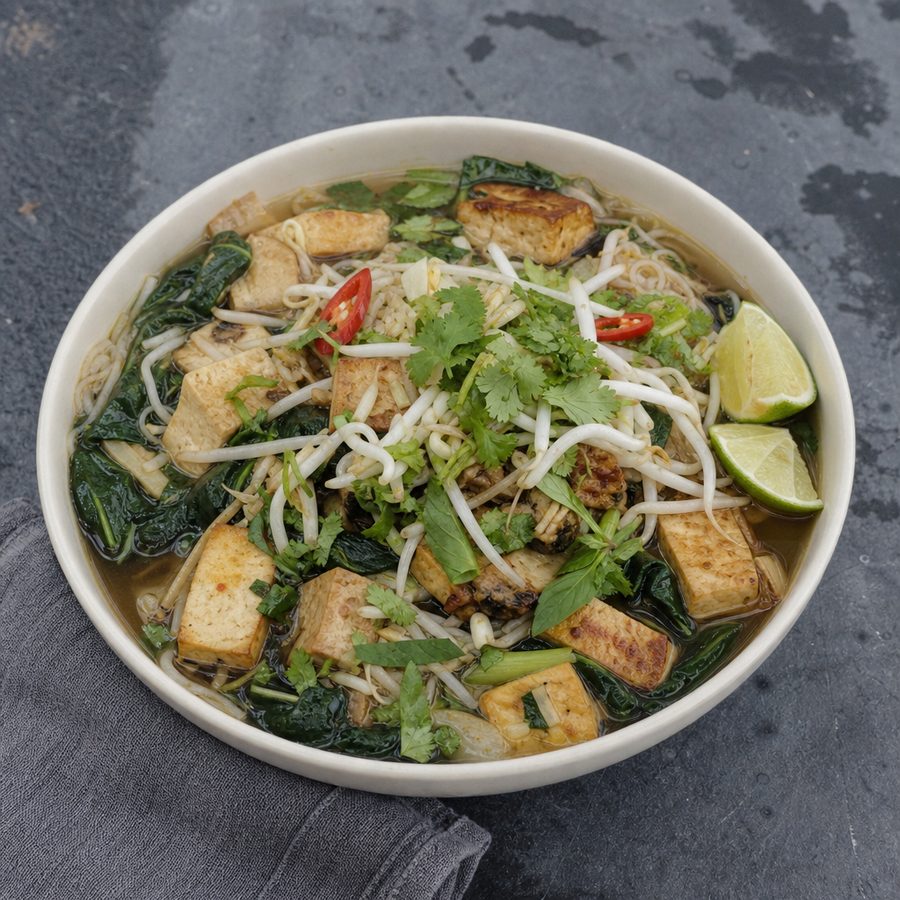
Onion and ginger blistered in a dry pan, then simmered with a cinnamon stick and toasted coriander into a fragrant broth, poured over noodles, mustard greens, tofu, and a mound of cold bean sprouts, basil, and lime.
Why You'll Love This Recipe
This is the bowl I build when I want something that tastes like it took all morning and did not. The aromatics are the whole recipe: an onion and a piece of ginger blistered on a dry pan until they are properly black in patches, a cinnamon stick, and a spoonful of coriander seeds toasted until they smell like orange peel. Twenty minutes of gentle simmering pulls all of that into the broth, and by the time the noodles are drained the liquid tastes round and warm and slightly sweet, the way a long-simmered pot does.
What I love is how much of the bowl goes in cold. The noodles, the greens, and the tofu are hot, and then a proper mound of bean sprouts, basil, cilantro, scallion, and chile goes over the top and stays crunchy and fresh for the first several bites. You push it under with your chopsticks as you go, so the bowl changes character halfway through. Squeeze the lime yourself at the table rather than stirring it in at the stove, and squeeze more of it than feels reasonable.
It belongs to a cold, gray weekday, or to any day when the refrigerator holds a bunch of greens going soft at the edges. Mustard greens are what I reach for because their pepperiness stands up to the cinnamon, but this recipe was built to absorb whatever is in the drawer. It also scales badly in a good way, meaning the broth is worth making in a double batch and keeping, so the second lunch of the week is nothing more than boiling noodles and tearing herbs.
Ingredients
- 1 large yellow onion, peeled and halved through the root
- A 3-inch piece of fresh ginger, halved lengthwise, no need to peel
- 1 cinnamon stick
- 2 tsp coriander seeds
- 4 1/2 cups vegetable broth
- 6 oz dry whole wheat spaghetti or linguine (about 3 cups cooked)
- 10 oz mustard greens, thick stems removed and leaves torn into wide pieces
- 5 oz firm tofu, drained and cut into 1/2-inch cubes
- 2 cups mung bean sprouts, rinsed and drained well
- 1 tbsp avocado oil
- 1 tbsp soy sauce
- 2 tbsp fresh lime juice, plus 1 lime cut into wedges for the table
- 1 cup Thai basil or sweet basil leaves, left whole
- 1 cup cilantro leaves and thin stems
- 6 scallions, sliced thin on a long slant
- 1 jalapeno, sliced into thin rings
Instructions
- Blister the onion and ginger: Set a heavy pot over high heat with nothing in it. Lay the onion halves cut side down and the ginger flat beside them and leave them without moving for four to five minutes, until the cut faces are blackened in patches and smell sweet and singed. This is the flavor of the whole bowl, so let them go further than looks comfortable.
- Toast the spices and simmer: Push the onion aside, add the oil, the cinnamon stick, and the coriander seeds, and stir for forty five seconds until the coriander smells like orange peel. Pour in the broth along with two cups of water, bring it to a boil, then drop to a steady simmer for twelve minutes with the lid off.
- Cook the noodles: While the broth simmers, cook the noodles in a separate pot of unsalted water until just tender, then drain them and rinse under cold water so they stop cooking and do not glue together. Divide them among four wide bowls. Keeping them out of the broth is what stops the soup going cloudy and starchy.
- Wilt the greens and warm the tofu: Fish out the onion, ginger, and cinnamon stick with tongs. Add the mustard greens to the broth and simmer for two minutes, until the leaves have collapsed and gone deep green but the stems still have some bite. Turn the heat to low, slide in the tofu cubes and the soy sauce, and give them a minute to warm through.
- Build the bowls: Ladle the greens, tofu, and hot broth over the noodles. Pile the bean sprouts, basil, cilantro, scallion, and jalapeno rings on top in a heap rather than stirring them in, and put the lime wedges on the table. Each person squeezes lime over their own bowl and pushes the herbs under as they eat.
Variations
- Mushroom heavy: Simmer eight ounces of sliced shiitake or cremini in the broth for the last five minutes for a darker, meatier bowl.
- Bok choy and snow peas: Swap the mustard greens for halved baby bok choy and a handful of snow peas, both added in the final two minutes.
- Star anise version: Add two star anise pods with the cinnamon stick for a rounder, more licorice-scented broth.
- Extra tofu: Pan-fry the tofu cubes in a little oil until golden on two sides before they go in, so they stay firm under the hot broth.
Storage & Leftovers
Keep the broth in one container and the noodles in another, both sealed, for up to four days in the refrigerator. Noodles left sitting in broth swell, soften, and drink most of the liquid overnight, and there is no rescuing them once that happens. The herbs and sprouts go in a separate bag with a dry paper towel and stay crisp for two or three days.
To reheat, bring the broth back to a simmer in a saucepan for three or four minutes, then pour it over noodles you have refreshed for ten seconds in hot water. It tastes better on day two than day one, since the cinnamon and coriander keep working their way through the liquid while it sits in the cold.
The broth freezes beautifully for up to three months, which is the real reason to make it. Strain it, cool it, and freeze it flat in portions. Thaw overnight in the refrigerator or straight into a saucepan over low heat, and you are eight minutes from lunch. Freeze the noodles, greens, and herbs and you will be disappointed, so leave those to the day of.
Notes & Tips
- Blister on a dry pan, not in oil: Oil will smoke and burn long before the onion blackens. Dry high heat gives you clean char, and the oil goes in with the spices afterward.
- Rinse the noodles cold: Cold water stops them cooking and washes off the surface starch that would otherwise cloud your broth and clump the nest.
- Pull the aromatics before the greens: Twelve minutes is when the onion, ginger, and cinnamon have given everything they have. Left in longer the cinnamon starts to taste medicinal.
- Serve the bowls very hot: The cold herb pile drops the temperature fast. Warm the bowls under hot tap water before you ladle and the soup stays hot to the last spoonful.
Nutrition & Mindful Eating
- The broth, the noodles, the greens, and the cold herb pile are four separate layers doing four jobs. The noodles give the bowl its weight, the mustard greens give it bite and body, the tofu gives it substance, and the sprouts and herbs on top keep something this warming from feeling heavy.
- Mustard greens are the peppery member of the cabbage family, and that mustardy bite is the same family of compounds that makes broccoli taste like broccoli. The leaves collapse fast in hot broth and carry calcium, vitamin K, and folate down with them.
- Whole wheat noodles keep the bran and the germ, so they hold their shape in liquid and bring a nutty chew along with fiber and B vitamins. That chew is what lets the bowl stand up to twenty minutes of sitting in front of you.
- Bean sprouts go in cold and stay squeaky, which is most of the pleasure of the last third of the bowl, and they carry vitamin C that a long simmer would have driven off.
- Cinnamon, coriander seed, ginger, basil, and lime are the whole seasoning here, and none of them arrives as a background note. Toasted coriander smells of orange peel, the cinnamon stick turns the broth faintly sweet, and lime squeezed at the table lifts all of it at once.
- As you eat, watch the sprouts and basil sink slowly into the broth and change as they go, and use that slow collapse to set your pace rather than finishing the bowl in the first three minutes.
Frequently Asked Questions
Can I use rice noodles?
Yes, and they give you a softer, more slippery bowl. Soak flat rice noodles in hot water until pliable rather than boiling them hard, since they go from firm to falling apart in about a minute. Drain and rinse them the same way, and pour the hot broth over them at the last second.
My broth came out pale and thin.
The onion did not get dark enough. A blistered onion is doing the work that a long simmer would otherwise do, so you want real black patches on the cut faces, not a golden tan. A dry pan on high heat and four full minutes without touching it will get you there.
How spicy is this?
Mild as written, since the chile sits on top and you decide how much you push under. Mustard greens carry their own peppery heat, which is a different sensation from the chile and sits further back in your mouth. For a hotter bowl, add half the jalapeno to the simmering broth.
Do I have to keep the herbs separate?
It is worth it. Basil and cilantro stirred into hot broth at the stove go dark and limp within a minute, and the whole point of the pile on top is the contrast between the cold, crisp, fragrant layer and the hot soup beneath. Serve the heap and let it sink slowly.