
Cinnamon Apple & Coconut
Apples cooked down with cinnamon until they slump, finished in a coconut milk pan sauce for a warm, naturally sweet AIP snack.
Why You'll Love This Recipe
Two apples, a spoonful of canned coconut milk, and half a teaspoon of cinnamon, cooked down in a skillet until the apples slump and the coconut milk thickens around them. That is the entire list and about fifteen minutes, most of it the pan doing the work while you stand nearby. Raw apple with something poured over it is a plate of fruit. Ten minutes of heat turns the same three things into a warm, spiced compote with a sauce of its own, and it is the difference between a snack you eat out of duty and one you look forward to at four o'clock.
Use canned coconut milk rather than the kind sold in a carton for drinking, because in a hot pan the difference is not subtle. Canned coconut milk runs between seventeen and twenty-two percent fat, and fat is what lets it reduce into a glossy sauce that coats the apples in ninety seconds. The carton version is mostly water and it boils away to nothing, leaving the fruit dry in a gray pan. Look for a can whose label reads coconut and water, which is also what keeps it usable on an autoimmune protocol.
Apples bring fiber and the coconut milk brings fat, and between them they stop this being the kind of sweet snack that leaves you hungrier an hour later. Cooking changes nothing about that and improves the eating: warm fruit tastes sweeter than cold fruit at the same sugar, so a dish with no added sweetener of any kind still lands like dessert. For a snack that goes the other way, savory and cold, there is our Avocado Guacamole with Jicama Dippers.
Ingredients
- 2 apples, sliced
- 1/2 tsp cinnamon
- 3 tbsp canned coconut milk
Instructions
- Cut the apples thick enough to survive the pan: Quarter the apples, cut out the cores, and slice each quarter into wedges about a quarter of an inch thick, leaving the skin on for the fiber and the color. Thin slices are right for a plate of raw apple and wrong for a skillet: they break down into applesauce within a couple of minutes. Wedges this size soften through while still holding their shape when you lift them with a spoon.
- Cook them down with the cinnamon: Put the apples in a dry skillet over medium heat with the cinnamon and a tablespoon of water and cook for six to eight minutes, turning them every couple of minutes. The water steams them at first and then cooks away, at which point the cut faces start to catch and caramelize against the pan. Add another splash if the pan runs dry before the apples give. They are ready when a knife slides in with slight resistance still left.
- Pour in the coconut milk and let it reduce: Stir the can first so the thick cream and thin liquid come back together, then pour the three tablespoons over the hot apples. Let it bubble for a minute to a minute and a half, stirring, until it thickens and coats the wedges in a pale, glossy sauce. Canned coconut milk splits if you boil it hard, so keep the heat at medium and take it off as soon as it clings to the fruit.
- Stop before it becomes applesauce: Take the pan off the heat while the wedges are still distinct pieces, since they carry on cooking in the residual heat of the skillet. They carry on softening in the pan for another minute, and the difference between cooked apples in a coconut sauce and a bowl of spiced mush is about ninety seconds of inattention. If a few pieces have collapsed, stir them through; they thicken the sauce and are no loss at all.
- Serve warm, with the sauce spooned over: Divide the apples between two bowls and scrape every bit of the sauce out of the pan over them. Warm is how this is best, five minutes off the heat, when the apples have stopped being scalding and the sauce has thickened a little further as it cooled. It is also good cold from the refrigerator the next morning, stirred into yogurt or eaten with a spoon straight from the container.
Variations
- Add more protein: A spoonful of nut butter turns this from fruit into something that holds you, and Greek yogurt underneath makes it spoonable. Nuts and dairy both take this off the autoimmune protocol.
- Add crunch: Toasted walnuts or pecans, or a scattering of hemp seeds, give it something to chew against the soft coconut milk, though nuts and seeds take this off the autoimmune protocol.
- Warm it: Slump the slices in a dry pan for a few minutes, or bake them until they soften, then spoon the coconut milk over the warm fruit.
- Change the fruit: Pear behaves exactly like the apple. Banana works too, though it goes soft quickly, so slice it last.
- Change the spice: Cardamom, a scrape of nutmeg, or a pinch of ground ginger all suit apple as well as cinnamon does.
Storage & Leftovers
Cooked, this keeps in a way the raw version never could. Let it cool, then refrigerate it in an airtight container for four days. The apples go on softening slightly and the sauce thickens around them, and by the second day the cinnamon has spread all the way through the fruit rather than sitting on the surface of it. Browning stops being a problem the moment the pan is involved, because heat shuts down the enzyme that causes it.
The can is the other half of the storage question, since three tablespoons leaves most of it behind. Scrape what is left into a jar rather than refrigerating the open can, and use it within four days. It separates and firms up in the cold, which is normal and not spoilage; a stir with a fork, or a few minutes on the counter, brings it back to something you can pour.
Reheat it in a small pan over low heat for two minutes, or eat it cold from the container with a spoon, which is how most of it disappears in my house. It also freezes for three months in single portions, and thawed it is looser than it was, closer to a spiced apple sauce, which is no bad thing stirred through yogurt or spooned over oatmeal in the morning.
Notes & Tips
- Do not crowd the pan: Two apples fit a ten-inch skillet in one layer. Piled up they steam instead of catching, and the caramelized edges are what make this taste cooked rather than stewed.
- Pick a crisp apple: Honeycrisp, Pink Lady, and Fuji hold their shape when sliced thin and are sweet enough that nothing else is needed. Softer varieties go mealy.
- Leave the peel on: Most of the fiber sits in and just under the skin, and thin slices with the peel are pleasant to eat.
- Stir the coconut milk: Canned coconut milk separates in the tin. Stir the thick cream back into the thin liquid, or spoon off just the cream if you want a richer drizzle.
- Double it while the pan is out: The time barely changes for four apples in a wide skillet, and cold compote waiting in the refrigerator is a better answer to Wednesday afternoon than an apple and good intentions.
- Do not waste the can: This uses only a few spoonfuls. Freeze the rest of the coconut milk in an ice cube tray and pull out what you need next time.
Nutrition & Mindful Eating
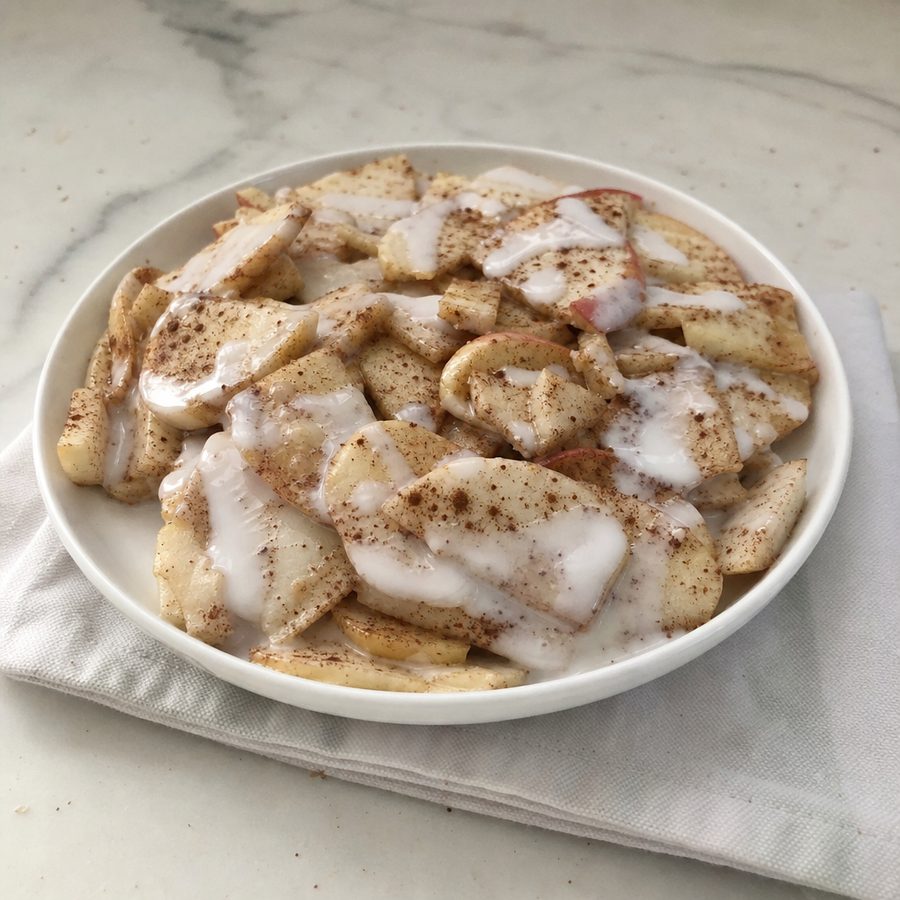
- Fruit, spice and cream is the whole idea. The apple stays crisp and juicy, the coconut milk pools around the slices and gives them richness, and the cinnamon sits over the top so each bite tastes warm and cool at once.
- Apples eaten with the skin on give you the snap this snack is built around, and that skin is where most of the fiber sits along with the polyphenols that color it red or gold.
- Canned coconut milk is thick enough to cling to a slice rather than run off it, and the fat it carries is what makes a piece of fruit feel like a real snack that stays with you.
- Cinnamon smells sweet before you have tasted anything, and that alone changes how the apple reads on your tongue, rounder and warmer than it is on its own.
- Sliced thin, the apple stays cold and loud under your teeth while the coconut milk goes soft and creamy around it, so there are two textures running through every bite.
- As you eat, listen for the snap of the apple and notice how the cinnamon lingers after the fruit is gone, and give the last few slices the same attention you gave the first.
Frequently Asked Questions
Is canned coconut milk AIP-compliant?
As long as it is free of additives like guar gum, look for one made from just coconut and water.
Is it better warm or cold?
It is warm already, straight from the pan, and that is when it is best. Cold from the refrigerator is the other good way to eat it: the sauce sets a little and the whole thing firms up into something closer to a compote you would spoon over yogurt.
How long does it keep?
Four days in an airtight container in the refrigerator, and it is arguably better on day two, once the cinnamon has worked all the way into the fruit. It also freezes for three months. Any coconut milk left in the can keeps four days in a jar of its own.
Can I make it ahead?
Yes, and it is worth doubling while the pan is out. Cook it through the night before, cool it, and refrigerate it in portions. Two minutes in a small pan over low heat brings it back, or eat it cold with a spoon.