
Coconut, Guava, and Chicken Breakfast Skillet
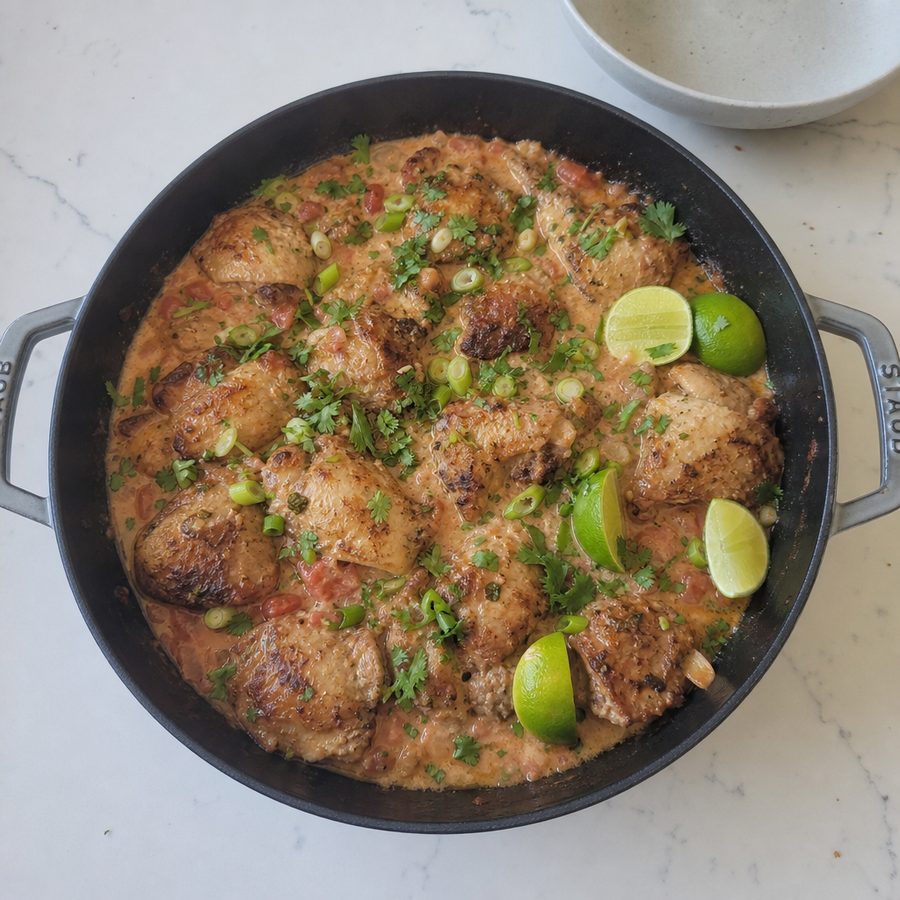
Browned chicken thighs simmered briefly in coconut milk with ripe guava, ginger, and garlic, finished with lime, scallion, and a handful of cilantro.
Why You'll Love This Recipe
This is what I make when the elimination-phase breakfast rotation has gone gray and I want something that tastes like somewhere else. It is a saucy, tropical skillet, done in about forty minutes, and it works as well at seven in the morning as it does at seven at night. Guava is the reason to try it. If you have only met it as a paste in a bakery window, the fresh fruit is a revelation: floral, sweet, faintly tart, and completely unlike anything else in the produce section. Chicken thighs give it enough substance to be a real breakfast.
Thighs are the right cut here, and not only for flavor. They have enough fat to stay tender through browning and a short simmer, where breast meat would tighten and go stringy in the same pan. Brown them hard first, in a single layer, so they build a crust and leave fond behind. Ginger and garlic go in for less than a minute, then the coconut milk lifts everything off the bottom of the skillet, and the guava goes in last and needs only a few minutes to slump into the sauce and tint it pink.
The sauce is the point of the dish. Coconut milk on its own is rich and slightly flat, and guava fixes both problems at once by adding sweetness, perfume, and enough acid to keep the richness in check. Lime at the end takes it further, and the raw scallion greens and cilantro give you something fresh to bite against all that softness. It is a warm, fragrant bowl with real chicken in it, and it holds you through a morning far better than anything sweet and spoonable does. Make it once and the smell alone will bring you back to it.
Ingredients
- 1 1/4 lb boneless, skinless chicken thighs, cut into 1-inch pieces
- 3 ripe guavas (about 9 oz), halved, seedy centers scooped out, flesh diced
- 3/4 cup full-fat canned coconut milk, well stirred
- 4 scallions, sliced, white and green parts kept separate
- 4 cloves garlic, minced
- 1 1/2 tbsp grated fresh ginger
- 2 tbsp fresh lime juice, plus wedges to serve
- 1/3 cup chopped fresh cilantro
- 1 tbsp coconut oil
- 3/4 tsp fine sea salt, divided
Instructions
- Prepare the guava: Halve each guava and scoop out the seedy core with a teaspoon, since those seeds are hard enough to be unpleasant to bite. Dice the remaining flesh, skin and all, into half-inch pieces. Ripe guava gives slightly under your thumb and smells strongly through the skin.
- Brown the chicken: Pat the chicken pieces dry and season them with half the salt. Melt the coconut oil in a large skillet over medium-high heat and add the chicken in a single layer. Leave it undisturbed for four minutes so the underside turns deep golden, then toss and cook three minutes more. Move it to a plate.
- Build the aromatics: Lower the heat to medium and add the scallion whites, the garlic, and the ginger to the pan. Cook for about a minute, stirring constantly, until the pan smells sweet and sharp and the garlic has lost its raw edge but taken no color.
- Make the sauce: Pour in the coconut milk and scrape the browned bits off the bottom of the skillet with a wooden spoon. Bring it to a gentle simmer, add the guava and the remaining salt, and cook for three to four minutes, until the fruit softens and the sauce turns faintly pink and thickens slightly.
- Finish the chicken in the sauce: Return the chicken and any collected juices to the pan and simmer for four to five minutes, until the pieces are cooked through and an instant-read thermometer reads 175°F, which is where thigh meat goes tender rather than tough. Take the pan off the heat, stir in the lime juice, and scatter the scallion greens and cilantro over the top.
Variations
- Warmer and rounder: Add half a teaspoon of turmeric and a pinch of cinnamon with the ginger for a spiced version that leans closer to a curry.
- Pineapple and mango: Swap the guava for diced pineapple or mango when guava is out of season, keeping the lime and adding it at the same point.
- Shrimp in place of chicken: Stir cooked shrimp into the finished sauce off the heat and warm it through for a minute, which turns this into a fifteen-minute skillet.
- Greens in the sauce: Wilt two handfuls of spinach or swiss chard into the coconut milk before the chicken goes back in for color and bulk.
- Something underneath: Spoon it over mashed taro or roasted plantain on a morning when you want the meal to carry you a long way.
Storage & Leftovers
Sealed in the refrigerator this keeps four days, and the sauce thickens as it chills because coconut fat firms up cold. That is normal and it loosens again the moment it warms. The guava flavor deepens overnight, so day two is genuinely a good day for this one.
Reheat it gently in a skillet over medium-low with a splash of water, stirring until the sauce comes back together, about four minutes. High heat can make coconut milk look grainy. Add fresh lime and cilantro at the end of reheating rather than reheating the herbs you added yesterday.
It freezes for up to three months, though the sauce may separate a little on thawing. Thaw overnight in the refrigerator and warm it slowly, stirring, and it will come back together. Freeze it in single portions so a busy morning only needs one container out of the freezer.
Notes & Tips
- Buy guava by smell: A ripe guava perfumes the whole bag. If you cannot smell it through the skin, leave it on the counter for a day or two before you cook with it.
- Keep the skin on: Guava skin is thin, edible, and holds much of the fragrance. Peeling it wastes both flavor and the fiber that comes with it.
- Stir the coconut milk in the can: The thick cap and the watery layer underneath need to be combined before you measure, or your sauce will be either greasy or thin.
- Brown in one layer: Chicken piled into the pan releases water and stews. Give the pieces space, or brown them in two batches, and you will taste the difference in the sauce.
- Thighs want 175°F: Unlike breast meat, thigh is better a little past the safety line. The connective tissue needs the extra heat to soften, and the meat stays juicy.
- Save the scallion greens: The whites go in early to soften into the sauce and the greens go on raw at the end. Using both parts at different points gives you two flavors from one bunch.
Nutrition & Mindful Eating
- Chicken thigh, coconut milk, and guava make a bowl that is soft, rich, and sweet all at once, with the lime and raw scallion cutting back through it. The meat brings the protein, the coconut brings the fat, and the fruit brings both the sweetness and most of the fiber.
- Guava carries real fiber in its soft flesh and thin skin, along with a striking amount of vitamin C. Cooked briefly it collapses into the sauce and gives the whole pan its perfume.
- Chicken thigh has more fat than breast and more flavor with it, and it holds on to iron and zinc better than the paler meat does. That fat is also why it stays tender through browning and a simmer.
- Coconut milk gives the sauce its body. The fat in it is largely saturated and largely medium-chain, which is what makes it thicken the way it does and what carries the fat-soluble vitamins out of the fruit and aromatics.
- Ginger and garlic go in before the liquid so their oils bloom in the heat, and ginger in particular has been studied for how it settles the stomach, which is worth knowing for anyone whose mornings start unsteadily.
- As you eat, breathe in the guava and the ginger before the first bite, and let a breakfast that smells like this be something you sit down with rather than carry around the kitchen.
Frequently Asked Questions
Where do I find fresh guava, and what if there is none?
Look in Latin, Caribbean, and Asian markets, usually near the mangoes, and buy fruit that smells strongly and gives a little. Frozen guava pulp works well in the sauce. Failing both, ripe mango or papaya with an extra squeeze of lime gets you close in spirit.
Do I have to remove the guava seeds?
It is worth it. The seeds are edible but genuinely hard, and biting one is unpleasant enough to spoil a mouthful. A teaspoon scoops the seedy center out in seconds, and the flesh and skin around it are the parts you actually want in the pan.
Can I use chicken breast?
You can, with two adjustments. Cut it into slightly larger pieces, brown it for less time, and add it back for only two to three minutes at the end, pulling it at 165°F. Breast meat has less fat to protect it and turns dry quickly in a simmering sauce.
Does this fit an AIP elimination phase?
It does. Chicken, guava, coconut milk, ginger, garlic, scallion, lime, and cilantro are all compliant, and the seasoning here is aromatics and fruit rather than a spice blend. Check that your canned coconut milk contains only coconut, water, and perhaps guar gum.