
Cod in Acqua Pazza with Artichokes and White Beans
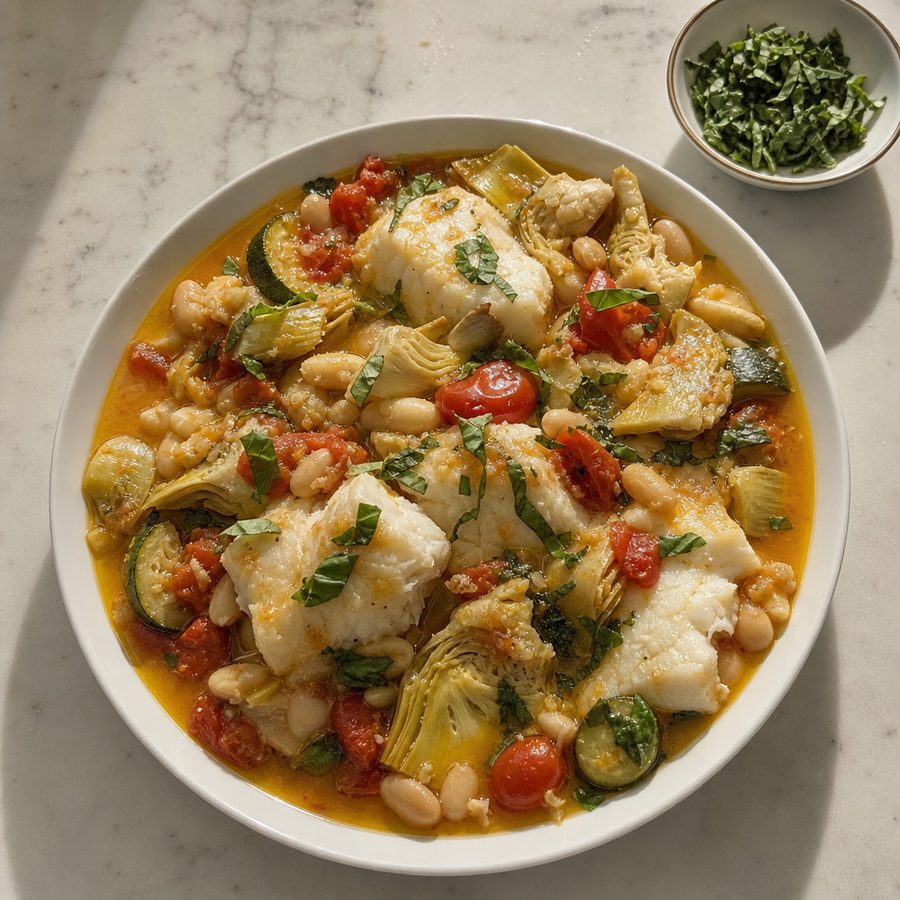
Cod poached in a loose garlicky broth of burst cherry tomatoes and olive oil, with artichoke hearts, cannellini beans, zucchini, and green beans cooked in around it and torn basil at the end.
Why You'll Love This Recipe
Acqua pazza means crazy water, and the story goes that fishermen off the Amalfi coast cooked their catch in seawater with whatever tomatoes and garlic were around. What makes it worth cooking two thousand miles from there is the technique: fish poached gently in a shallow, well-flavored liquid stays far more tender than fish that has been seared hard, and the liquid becomes a broth you would happily drink on its own. I have added artichokes, white beans, and two green vegetables so it eats as a whole lunch, and it comes together in a little over forty minutes.
The broth is built before the fish ever touches it, and that order is the entire trick. Onion and garlic soften in a generous amount of olive oil, the tomatoes go in and get pressed against the pan until they collapse, then broth goes in and everything boils hard for a few minutes so the oil and water emulsify into something cloudy and unified rather than separating into slicks. Only then does the heat come down and the cod go in, half submerged, with the lid on. Eight minutes of quiet poaching later it is opaque through and just barely holding together.
It eats light and deeply savory at the same time, which is a combination I do not know how to get any other way. The cod is silky rather than firm, the beans have taken on the tomato, the artichokes bring their particular sourness, and the broth underneath is worth a spoon. I make this in high summer when the zucchini are ridiculous and the tomatoes are cheap, and again in February with a jar of artichokes and a box of tomatoes, and the winter version is nearly as good.
Ingredients
- 3 tbsp extra-virgin olive oil, plus a little for the bowls
- 1 small yellow onion, halved and sliced thin
- 6 garlic cloves, thinly sliced
- 1/4 tsp cayenne, or a crumbled dried red chile
- 1 pint cherry tomatoes (about 10 oz), halved
- 1 1/4 cups vegetable broth, or water
- 1 cup jarred artichoke hearts, drained, rinsed, and quartered
- 1 scant cup canned cannellini beans, drained and rinsed
- 1 1/2 cups green beans (about 5 oz), topped and snapped in half
- 2 medium zucchini (about 10 oz), cut into 1/2-inch coins
- 1 1/3 lb skinless cod loin, cut into 4 even pieces and patted dry
- 1 tsp dried oregano, crumbled between your palms
- 2 tbsp lemon juice, from 1 lemon, plus wedges for the table
- 1/2 cup basil leaves, torn at the last minute
- 1/2 cup chopped flat-leaf parsley
- 3/4 tsp coarsely ground black pepper
Instructions
- Start the base: Warm the olive oil in a large, deep skillet over medium heat. Add the sliced onion and cook for five to six minutes until soft and translucent, then add the garlic and the cayenne and cook one minute more, until the garlic is pale gold and smells sweet. Do not let it brown, since a bitter edge here will follow the dish all the way to the table.
- Burst the tomatoes: Add the halved cherry tomatoes with a good pinch of the black pepper and cook for five minutes, pressing on them with the back of a wooden spoon so they split and release their juice. When most of them have collapsed and the pan is a loose orange mess, add the oregano and stir it through.
- Make the crazy water: Pour in the broth and turn the heat to high. Boil hard for three to four minutes, stirring, until the liquid turns cloudy and slightly thickened rather than sitting in separate layers of oil and water. That emulsion is the whole point of acqua pazza, and you can see it happen when the surface stops looking greasy and starts looking like one thing.
- Cook the vegetables in: Add the green beans and cook two minutes, then add the zucchini coins, the artichoke hearts, and the cannellini beans and cook three minutes more. The vegetables should be nearly tender by the time the fish goes in, since everything from here on is cooked at a bare simmer for the sake of the cod.
- Poach the cod: Turn the heat down until the broth is barely trembling, season the cod pieces with the rest of the pepper, and lower them into the pan so they are about half submerged. Spoon some broth over the tops, cover, and cook for seven to nine minutes, until the fish is opaque all the way through and the flakes separate when you press gently with the back of a spoon.
- Finish and serve: Take the pan off the heat and add the lemon juice, the parsley, and most of the basil, shaking the pan rather than stirring so the fish stays whole. Lift a piece of cod into each of four wide shallow bowls, spoon the vegetables and plenty of broth around it, and finish with the last of the basil, a thread of olive oil, and a lemon wedge.
Variations
- Olives and capers: A handful of torn green olives added with the artichokes takes the pan in a puttanesca direction.
- Fennel: A sliced fennel bulb softened with the onion adds an anise note that suits white fish particularly well.
- Chickpeas: Chickpeas in place of cannellini give a firmer bean that holds its shape through the whole simmer.
- Greens at the end: A few handfuls of spinach or chopped Swiss chard stirred in with the fish wilt into the broth in the same eight minutes.
- Saffron: A pinch of saffron crumbled into the broth turns the whole pan gold and pushes it toward the Spanish coast.
Storage & Leftovers
This keeps three days in a sealed container in the refrigerator, and I store the cod submerged in its broth so it does not dry out at the edges. The fish firms up overnight and the vegetables go on absorbing tomato, so the second day tastes more concentrated, though the basil will have gone dark and is worth replacing with a fresh handful.
Reheat it covered over low heat for five or six minutes, or in a low oven in a covered dish, just until the broth steams. A hard reheat boils the cod a second time and turns something silky into something chalky. Once it is warm, a squeeze of lemon and torn basil bring it most of the way back to where it started.
The broth and vegetables without the fish freeze well for up to three months and are worth making as a base on their own. Cod does not freeze happily after poaching, since it has already given up its water once and comes back stringy, so poach fresh fillets into the thawed broth and you will barely know the difference.
Notes & Tips
- Boil the broth before the fish goes in: The hard boil is what makes the liquid cloudy and unified. Once the cod is in the pan, nothing above a bare tremble should ever touch it.
- Press the tomatoes, do not wait for them: Left alone, cherry tomatoes take fifteen minutes to give up their juice. Pressed with the back of a spoon, they collapse in five.
- Cut the cod into even pieces: A thick loin end and a thin tail end will never finish at the same moment. Fold thin tails under themselves so every piece is about the same depth.
- Rinse the artichokes: Jarred artichokes carry a lot of their brine with them. A rinse and a good shake keeps their sourness in the background where it belongs.
- Tear the basil, do not chop it: A knife bruises basil and turns the cut edges black within minutes. Torn leaves added off the heat stay green and smell like far more than they are.
- Use a pan wide enough for one layer: The four pieces of cod should sit side by side without touching. Stacked or crowded, they steam unevenly and break apart when you lift them out.
Nutrition & Mindful Eating
- The cod, the white beans, and the pile of green vegetables each take a turn here. The fish carries almost all of the protein, the cannellini beans bring the fiber and the body, and the zucchini, green beans, and artichokes make it a bowl with real volume rather than a fillet sitting in liquid.
- Cod is mild, close-grained, and forgiving, and poaching keeps it silky in a way that hard searing never does. It brings a lot of protein for very little fat, along with the selenium and iodine that white fish is a reliable source of.
- Cannellini beans go soft and faintly sweet in tomato broth and thicken it slightly as they sit. Their soluble fiber is what gives a bowl that is mostly liquid the staying power of a full plate.
- Artichoke hearts bring a sourness that nothing else in the pan offers, and they carry both fiber and folate in a piece of vegetable that eats like something richer. Rinsing them takes the brine down so their own flavor comes through.
- Olive oil, garlic, and basil are what make this taste of the coast it comes from. The oil is not just a cooking medium here, it is beaten into the broth and carries the flavor of everything else, and the basil torn in at the end is the smell that reaches the table first.
- As you eat, take a spoonful of the broth on its own before you touch the fish, and let that first taste set the pace for the rest of the bowl.
Frequently Asked Questions
What other fish works here?
Any firm white fish that likes gentle heat. Halibut is excellent and needs a minute or two longer, tilapia is thinner and needs a minute or two less, and thick fillets of any kind should be checked at seven minutes. Shrimp work too, added for the last three minutes only.
My broth separated into oil and water. What happened?
It did not boil hard enough or long enough at the crazy water stage. Three or four minutes at a full rolling boil is what forces the olive oil and the tomato liquid together into something cloudy. If it splits later, take the pan off the heat, lift out the fish, and boil the liquid hard for another minute.
Can I use frozen cod?
Yes, and it is what I usually have. Thaw it overnight in the refrigerator, then pat it very dry and let it sit at room temperature for ten minutes before it goes in the pan, since fish straight from the cold drops the broth temperature and cooks unevenly. Frozen-at-sea cod is often better than the fillets sitting in the case.
Does this need bread?
It is very good with a piece of bread for the broth, and just as good with a spoon, which is how I usually eat it. The beans and the vegetables give it enough body to stand as lunch on its own, and there is more than enough broth for spooning.