
Cod and Roasted Beet Breakfast Bowl with Orange
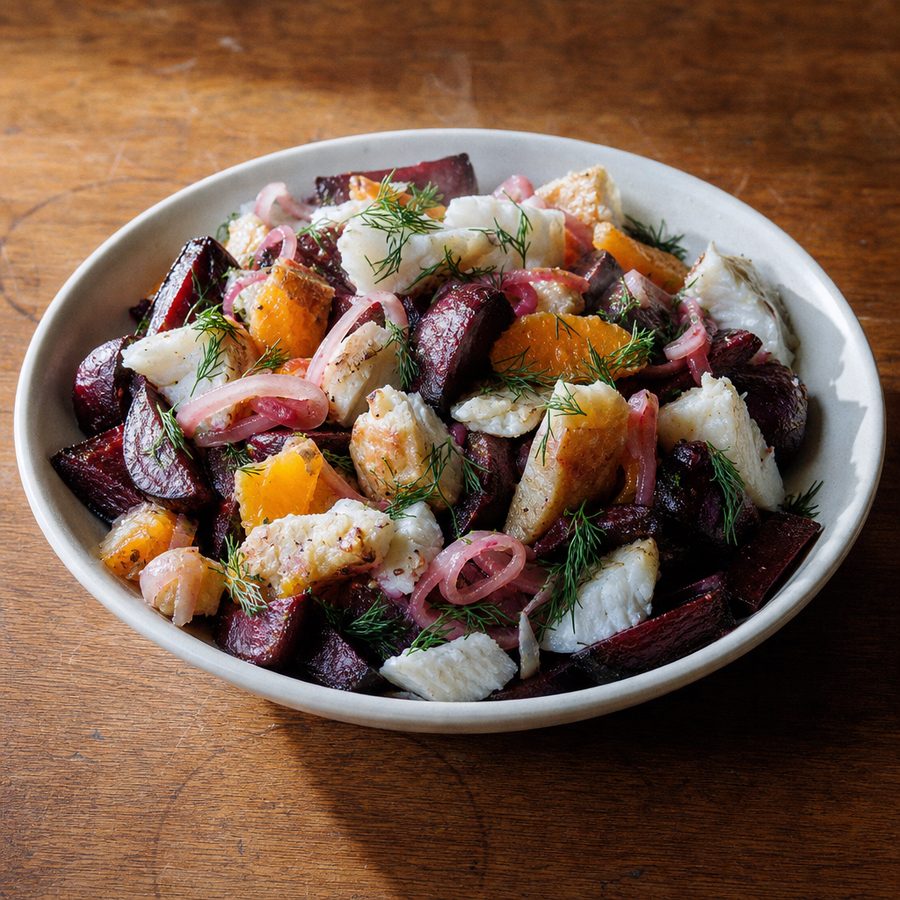
Roasted beets, flaked cod, and fresh orange segments in a bright breakfast bowl, finished with quick-pickled shallots, dill, and good olive oil.
Why You'll Love This Recipe
Color on the plate before you have had anything to drink is the point here. An elimination phase strips out most of what people reach for at breakfast, and what tends to be left is beige, so a bowl built on crimson beets, white fish, and orange segments is a genuine relief to look at. I make it on a Sunday when the oven is already on, and then eat the leftovers cold on Monday and Tuesday, which is honestly when it tastes best. It is also the sort of plate you can put in front of someone who does not think they like fish for breakfast.
The beets are what make this work, and they need a hot oven rather than a pot of water. Roasting at high heat drives off moisture and concentrates the sugar in them, so the cut faces caramelize and the earthy note that puts people off boiled beets turns sweet and almost meaty. The cod goes onto the same pan for the last ten minutes, where it takes on a little of the beet juice and steams gently under its own moisture. Meanwhile the shallot sits in cider vinegar and orange juice, losing its raw bite and turning bright pink, and that spoonful of sharp liquid is what keeps the finished bowl from tasting flat and sweet.
What arrives at the table has four things going at once, which is the whole point of a bowl. There is the soft give of the beet, the large clean flakes of cod, cold orange segments that burst against the warm vegetables, and the pickled shallot cutting through underneath. Cod is close grained and holds a lot of protein for how light it eats, so the bowl carries you into the afternoon rather than leaving you rummaging at ten. If you have been eating sweet breakfasts for two weeks, this one resets your palate in a single sitting.
Ingredients
- 4 cod fillets (about 1 1/3 lb total), skin removed
- 4 medium beets (about 1 1/4 lb), peeled and cut into 3/4-inch wedges
- 2 oranges, one segmented and one juiced
- 1 large shallot, sliced paper thin
- 3 tbsp olive oil, divided
- 1 tbsp apple cider vinegar
- 3 tbsp chopped fresh dill
- 3/4 tsp fine sea salt, divided
Instructions
- Heat the oven and cut the beets: Heat the oven to 425°F. Peel the beets and cut them into three-quarter-inch wedges, keeping them even so they finish together. Toss on a sheet pan with one tablespoon of the olive oil and half the salt, then spread them into one layer with space between the pieces.
- Roast the beets: Roast for 30 to 35 minutes, turning once at the halfway mark, until the cut faces are dark at the edges and the tip of a knife slides into a wedge with no resistance. Undercooked beet is chalky, so go by the knife rather than the clock.
- Pickle the shallot: While the beets roast, slice the shallot as thinly as you can and put it in a small bowl with the cider vinegar, the juice of one orange, and a pinch of salt. Stir once and leave it. In about 20 minutes it will turn bright pink and lose its raw edge.
- Roast the cod: Pat the cod dry and season it with the remaining salt. Push the beets to the edges of the pan, lay the fillets in the middle, drizzle with one tablespoon of oil, and roast for 10 to 12 minutes, until the fish is opaque through and flakes when you press the thickest part, around 130°F to 135°F (54 to 57°C) on a thermometer, which leaves it moist. The FDA gives 145°F (63°C) for seafood if you would rather cook it through completely.
- Segment the second orange: Cut the top and bottom off the remaining orange, stand it up, and cut the peel and white pith away in strips following the curve. Cut each segment free from its membrane over a bowl so you catch the juice that runs out.
- Build the bowls: Divide the beets between four bowls. Break the cod into large flakes with a fork and lay it over the top, then add the orange segments, the pickled shallot with a little of its liquid, the dill, and the last of the olive oil. Serve warm.
Variations
- Golden beets: Use golden or Chioggia beets for a milder, sweeter bowl that does not stain the fish pink, which matters if you are feeding someone suspicious of colored food.
- Smoked instead of roasted: Skip the fish roasting step and flake in smoked trout or smoked salmon cold at the end, which turns this into a ten minute breakfast once the beets are done.
- Grapefruit and mint: Trade the orange for pink grapefruit and the dill for torn mint, which makes the whole bowl sharper and better suited to a warm morning.
- Add a green: Fold a few handfuls of watercress or arugula into the warm beets just before serving so they half wilt and give the bowl a peppery edge.
- Bigger appetite: Roast a peeled, cubed sweet potato alongside the beets from the start, which adds a soft, sweet element and makes the bowl carry a hungrier morning.
Storage & Leftovers
Keep leftovers in a sealed container in the fridge for up to three days. Store the dill and any extra orange separately if you can, since the herb goes dull overnight and the fruit softens in the beet juice. The beets themselves get better on day two.
This is one of the rare breakfasts I actually prefer cold. Take the container out ten minutes before you eat so the olive oil loosens and the fish comes off the fridge chill, then add a squeeze of fresh orange to wake it back up. No reheating and no rubbery fish.
If you do want it warm, use a low oven at 300°F for eight minutes rather than the microwave, which drives water out of the cod and turns it stringy. Freezing does not suit this one, because beets go soft and weeping and the cod falls apart entirely on thawing.
Notes & Tips
- Cut the beets evenly: Beet is dense and cooks from the outside in, so a pan of mixed sizes gives you burnt tips next to chalky centers. Three-quarter-inch wedges hit 30 minutes together.
- Give the pan room: Crowded beets steam in their own moisture and never caramelize. Use the largest sheet pan you own, or split them across two, and you will taste the difference at the cut faces.
- Pat the cod dry: Wet fish sits in a puddle and poaches instead of roasting. Thirty seconds with a paper towel is what buys you clean flakes rather than a watery pan.
- Slice the shallot thin: Thick rings stay harsh no matter how long they sit in the vinegar. A sharp knife and slices you can almost see through will be sweet and pink in 20 minutes.
- Save the orange juice: Segment the orange over a bowl and pour the caught juice into the shallots. It is the best dressing in the recipe and it costs you nothing.
- Do not overcook the fish: Cod goes from silky to cottony in about two minutes. Pull it when the center just turns opaque, since it keeps cooking on the hot pan while you build the bowls.
Nutrition & Mindful Eating
- Beets, cod, and citrus make an unusual breakfast on paper and a very balanced one on the plate. The fish brings the substance, the beets bring sweetness and fiber, and the orange keeps the whole bowl from feeling like something you have to work through.
- Cod is close grained and mild, and it holds more protein than its lightness suggests. That protein is what turns a bowl of vegetables and fruit into a breakfast that actually holds you through a morning.
- Beets are one of the better food sources of dietary nitrate, which has been studied for its effects on blood flow and exercise, and their crimson betalain pigments are antioxidants in their own right. Roasting concentrates all of it along with the sweetness.
- Orange goes in twice, as juice in the shallots and as cold segments on top, and it brings the vitamin C with it. That matters right here, because vitamin C helps your body take up the non-heme iron that the beets are carrying.
- The pickled shallot is the part people remember. Twenty minutes in cider vinegar takes the burn out and leaves a sweet, sharp crunch that resets your palate between bites of soft roasted beet.
- As you eat, notice the temperature contrast between the warm beets and the cold orange, and let that be a reason to slow down and finish the bowl sitting rather than standing.
Frequently Asked Questions
Can I use a different fish?
Yes. Haddock, pollock, and halibut all behave the same way and go in at the same weight and the same oven time. Salmon works and gives a richer bowl, though it wants a couple more minutes. Whatever you use, judge it by the flake at the thickest point rather than the timer.
Do I have to roast the beets, or can I buy them cooked?
You can buy plain cooked beets and skip straight to the fish, and on a weekday I would not blame you. Check the package for vinegar and added spices first. The roasted ones taste sweeter and keep a firmer edge, which is the difference you notice in a bowl this simple.
How do I stop the beets from staining everything?
Peel and cut them on a plate or a sheet of parchment rather than a wooden board, and rinse your hands with cold water before soap, since hot water sets the color. On the plate the staining is the point, so let the crimson run into the fish.
Does this fit an AIP elimination phase?
It does. There are no grains, legumes, dairy, eggs, nuts, seeds, or nightshades here, and the seasoning is fresh dill, orange, cider vinegar, and salt rather than a spice blend. Shallot is an allium, so go by your own tolerance if alliums have been an issue for you.