
Cod and Snap Pea Breakfast Bowl with Mint
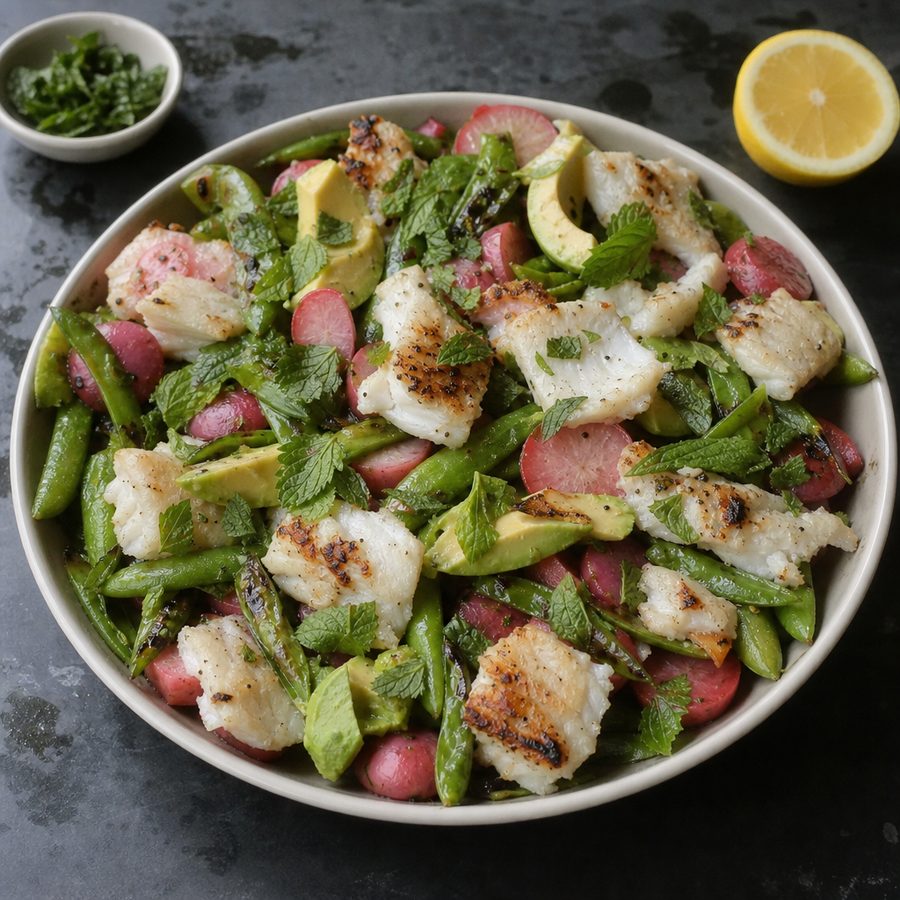
Seared cod broken over blistered snap peas, sliced radish, and avocado, with torn mint and lemon poured on last so the bowl eats bright and cool at once.
Why You'll Love This Recipe
Something green in the morning that still counts as a meal is a narrow ask. It takes about half an hour start to finish, most of which is the fish, and it lands somewhere between a hash and a salad, which is a useful place for a breakfast to sit. I make it in late spring when snap peas are cheap and sweet, and I make it again in the middle of winter with frozen ones because the shape of the meal is worth having year round. If you are someone who cannot face a heavy plate before nine, this is your bowl.
The trick is the order and the heat. Snap peas go into a very hot, nearly dry pan for two or three minutes, long enough to blister and take a few dark spots and no longer, so they stay sweet and keep their snap. They come out while the cod goes in. Cod wants a hot pan and then patience: press the fillets down, leave them, and let a crust form before you turn them. When the flesh turns from glassy to opaque and the flakes separate under gentle pressure, it is done. Break it into big pieces over the peas so it stays in flakes rather than shredding into them.
Everything cold arrives at the end, and that is what makes the bowl work. Radish coins and scallion go on raw for pepper and bite, avocado slices sit against the warm fish and turn soft at the edges, and the mint and lemon get poured over at the table. Cod carries most of the protein here and it is filling in a clean, undemanding way, so you finish the bowl feeling fed rather than weighed down. That combination of hot fish, cool herbs, and something crunchy in every bite is what keeps this one in my rotation.
Ingredients
- 4 cod fillets (about 1 1/2 lb total)
- 3 cups sugar snap peas (about 12 oz), strings pulled
- 6 radishes, sliced into thin coins
- 4 scallions, sliced on the diagonal
- 1/2 large avocado, sliced
- 3 tbsp olive oil, divided
- 2 tbsp fresh lemon juice
- 1/4 cup torn fresh mint leaves
- 1/2 tsp fine sea salt
Instructions
- Prep everything first: This cooks fast, so have it all ready. Pull the strings from the snap peas, slice the radishes thin, cut the scallions on the diagonal, and tear the mint leaves rather than chopping them so the edges do not bruise and blacken.
- Blister the snap peas: Heat a large skillet over high until a drop of water skitters. Add one tablespoon of the olive oil and the snap peas in one layer with a pinch of the salt. Cook for two to three minutes without stirring much, until they take dark blistered spots and turn a deeper green, then tip them into a bowl.
- Sear the cod: Pat the fillets very dry, since a wet surface steams and never releases the crust you are after, and season them with the remaining salt. Add another tablespoon of oil to the same pan over medium-high heat and lay the fish in, presentation side down. Press each fillet flat for a few seconds and then leave it for three to four minutes, until the edges turn opaque and a golden crust releases from the pan on its own.
- Finish the fish: Turn the fillets and cook another two to three minutes, until the flesh is opaque all the way through and separates into large flakes under light pressure from a fork. An instant-read thermometer in the thickest part should read 130 to 135°F (54 to 57°C), which gives you large, moist flakes. The FDA figure for seafood is 145°F (63°C), and cod carried that far breaks into smaller, drier pieces. Take the pan off the heat.
- Build the bowls: Divide the snap peas among four bowls and scatter the radish and scallion over them. Break the cod into big flakes and lay it on top, keeping the pieces large, because small ones disappear into the vegetables underneath. Add the avocado, then spoon over the lemon juice and the last tablespoon of olive oil, and finish with torn mint.
Variations
- Green on green: Add a handful of watercress or arugula to the warm peas so it half wilts under the fish and adds a peppery edge.
- Ginger and lime: Grate fresh ginger into the pan with the snap peas and swap the lemon for lime to push the bowl in a brighter, sharper direction.
- Smoked and cold: Skip the searing and lay smoked trout or smoked salmon over the warm peas for a version that needs five minutes of cooking in total.
- Fennel and orange: Shave half a fennel bulb over the top raw and finish with orange juice rather than lemon for a sweeter, more aromatic bowl.
- Something starchy underneath: Spoon the whole thing over warm mashed taro or diced roasted sweet potato on the mornings when you need the meal to carry further.
Storage & Leftovers
Cooked cod keeps in the refrigerator for two days and no longer, sealed and away from anything you do not want smelling of fish. Store it separately from the vegetables so the peas do not go limp under it, and keep the avocado out of the container entirely.
There is no good way to reheat this bowl hot, so do not try. Bring the fish to room temperature on the counter for fifteen minutes and eat it cold over the peas with a fresh squeeze of lemon. It is genuinely good that way and takes no work at all.
Nothing here freezes. Cod turns to cotton on thawing, snap peas go slack, and avocado does what avocado always does. This is a make-and-eat bowl, so cook only what is going on the table and buy the fish the day you need it.
Notes & Tips
- Buy thick fillets: Thin tail pieces overcook before they color. Ask for the loin end, or fold a thin tail under itself so the fillet cooks at one even thickness.
- Dry the fish twice: Pat once when it comes out of the fridge and again right before it goes in the pan. Surface water is the single reason home-cooked fish steams rather than browns.
- Keep the peas moving less: Blistering needs contact and stillness. Shake the pan once halfway through and resist the urge to stir, or you will end up with bright green peas and no char at all.
- Tear the mint: A knife bruises mint and turns the cut edges dark within minutes. Torn leaves stay green and give off more scent as you eat.
- Slice the radish thin: Paper-thin coins go peppery and crisp against the fish. Thick chunks read as a raw vegetable you have to chew through.
- Dress at the table: Lemon juice on hot food goes dull within a few minutes. Spoon it over the assembled bowls just before they leave the counter.
Nutrition & Mindful Eating
- Cod, snap peas, and avocado balance each other neatly in this bowl. The fish brings the protein that makes it a meal, the pods bring fiber and something to chew, and the avocado adds the fat that carries all of it and keeps the plate satisfying.
- Cod is a mild white fish with a lot of protein behind it, and it flakes into big soft pieces that hold their shape if you break them by hand. It also brings iodine and selenium, which sea fish carry and most land food does not.
- Snap peas are eaten pod and all, which is where the fiber and the crunch both come from, and they hold their vitamin C well because they spend so little time in the pan. Two or three minutes is the whole cooking time.
- Avocado slices laid on hot fish soften at the edges and turn almost buttery, and the fat in them is what makes a bowl this green feel like breakfast rather than a side dish.
- Mint and lemon go over at the last moment because both lose their edge with heat. What they give you is lift, the thing that makes you notice a bowl of pale fish and green pods rather than simply eating it.
- As you eat, pay attention to the snap of the peas against the softness of the cod, and let the contrast keep you at the table a few minutes longer than usual.
Frequently Asked Questions
What other fish can I use?
Haddock, pollock, and halibut all slot in at the same weight and cook the same way. Salmon works and gives you a richer bowl, though it wants a minute or two longer. Whatever you use, go by the look of the flesh rather than the clock, since fillet thickness varies more than recipes admit.
My cod fell apart in the pan. What went wrong?
Almost always one of three things: the fish was wet, the pan was not hot enough, or you moved it too early. Dry the fillets properly, wait for the oil to shimmer, and do not touch them until the crust lets go by itself. A thin fish spatula helps more than a wide one.
Can I use frozen snap peas?
Yes, and they are a good pantry standby. Do not thaw them first. Put them straight into the hot dry pan, let the water cook off for a minute, then add the oil and blister them. They will be a little softer than fresh but they still hold their shape.
Is this suitable during an AIP elimination phase?
Yes. Snap peas are eaten pod and all, which puts them with the vegetables rather than with the beans and lentils that are set aside in that phase, and there are no grains, dairy, eggs, nuts, seeds, or nightshades anywhere in the bowl.