
Cod and Taro Stew with Turmeric and Dill
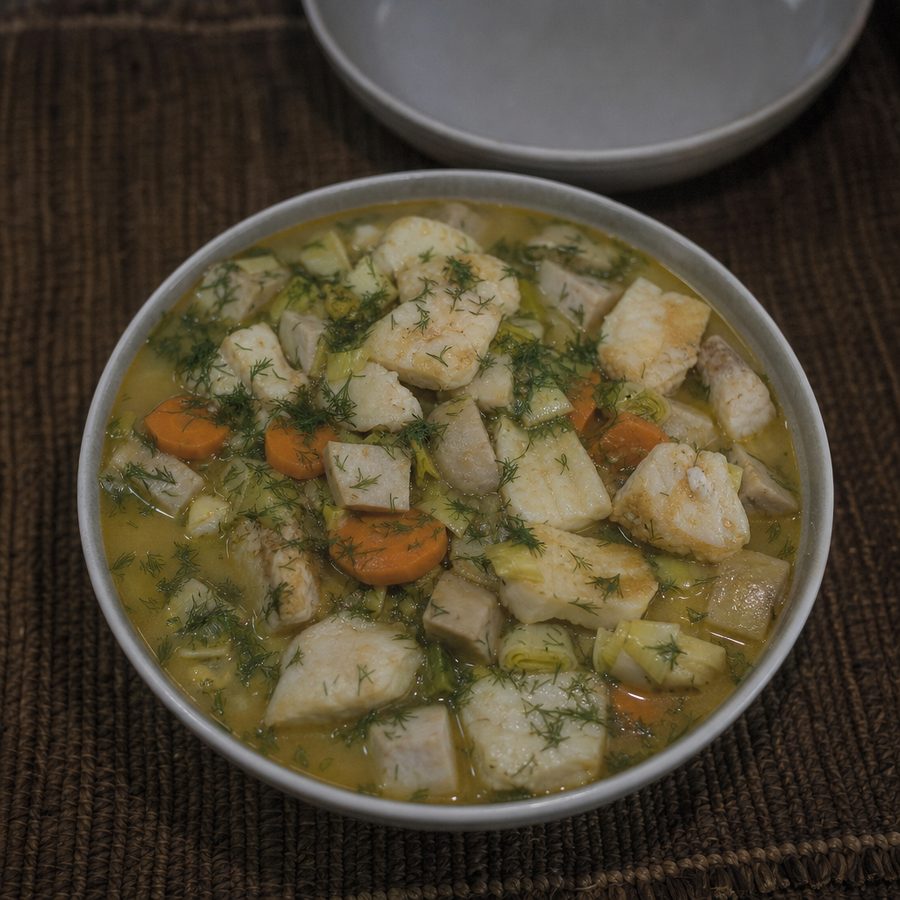
Big pieces of cod poached in a golden broth of taro, leeks, and carrot, thickened by the taro itself and finished off the heat with lemon and a lot of fresh dill.
Why You'll Love This Recipe
The broth is better on the second day than it is on the first, which is why I make this on a cold Sunday afternoon and carry it to work for the next three days. It goes into a wide-mouth thermos with no fuss at all, which is the real reason it earns a place in a lunch rotation rather than a dinner one. If the last two weeks of your lunches have been cold plates and salads eaten standing at a counter, this is the bowl that fixes that. It takes about an hour from a cold stove, and most of that is the taro softening while you do something else in the next room.
Taro is the reason this works. It is a starchy tropical root with white flesh flecked in gray or lilac, and as it simmers it goes creamy at the edges and sheds enough starch into the pot to thicken the broth on its own. That is the whole answer to how you get a stew with body and no cream in it. Peel it with a knife rather than a peeler, and do it under running water or with gloves on, since the raw surface leaves some people's hands itchy. It also has to be cooked all the way through, which the twenty minute simmer handles without any thought from you.
The cod is last and it barely cooks at all. You cut the heat, lay the pieces on the surface of the stew, put the lid on, and let the residual heat take them through in about seven minutes, which is the one step people rush. Boiled cod shreds into threads and goes chalky, while cod poached this gently stays in big white sheets you can lift out whole. Lemon juice and a quarter cup of dill go in at the very end, off the burner, where they stay sharp and green against all that soft starch. It is a light bowl that still carries you through a long afternoon.
Ingredients
- 1 1/2 lb skinless cod fillets, cut into 2-inch pieces
- 1 1/4 lb taro, peeled and cut into 3/4-inch cubes
- 2 large leeks, white and pale green parts only, halved and sliced
- 2 medium carrots, cut into 1/4-inch coins
- 5 cloves garlic, thinly sliced
- 3 tbsp olive oil
- 5 cups chicken bone broth
- 1 tsp ground turmeric
- 2 bay leaves
- 2 tbsp fresh lemon juice
- 1/4 cup chopped fresh dill
- 1 tsp fine sea salt, divided
Instructions
- Prep the taro and leeks: Peel the taro with a paring knife, taking off the hairy skin and the fibrous layer just under it, and work under running water or wear gloves, since the raw root makes some hands itch. Cut it into 3/4-inch cubes. Halve the leeks lengthwise, fan the layers under cold water to wash out the grit, and slice them a quarter inch thick.
- Soften the leeks and carrot: Warm the olive oil in a heavy pot over medium heat until it loosens. Add the leeks, the carrot, and a quarter teaspoon of the salt and cook for 7 to 8 minutes, stirring now and then, until the leeks slump and smell sweet. Do not let them take on color, since this stew wants them silky rather than browned.
- Bloom the turmeric and garlic: Stir in the garlic and the turmeric and cook for 45 seconds, just until the oil turns gold and the spice smells warm rather than dusty. Turmeric added later, straight into the broth, stays chalky, and this half minute is what keeps that from happening.
- Simmer the taro: Add the taro, the bone broth, the bay leaves, and half the remaining salt, and bring it to a gentle simmer. Cook uncovered for 20 to 22 minutes, until a knife slides through a cube with no resistance and the broth has thickened enough to coat the back of a spoon. Press four or five cubes against the side of the pot with a spoon if you want it thicker still, then fish out the bay leaves.
- Poach the cod: Pat the cod dry, season it with the last of the salt, and lay the pieces on the surface of the stew in a single layer. Turn the heat off entirely, cover the pot, and leave it for 7 to 9 minutes. The fish is done when it is opaque all the way through and separates into thick sheets under gentle pressure, or reads 130°F (54°C) at the center of the biggest piece. The FDA number for seafood is 145°F (63°C), and cod taken there falls apart into the stew instead of sitting in it in pieces.
- Finish and serve: Add the lemon juice and the dill, then tilt the pot and fold once, very gently, so the cod stays in pieces. Taste the broth and adjust the salt. Ladle the taro and broth into bowls first and set the fish on top, so it does not break up on the way there.
Variations
- Firmer fish: Swap the cod for halibut cut the same size and give it 2 extra minutes under the lid off the heat.
- Shellfish finish: Add a pound of scrubbed mussels to the simmering broth, cover for 5 minutes until they open, then add the cod.
- Cassava base: Use cassava in place of the taro for a sweeter, chewier root that thickens the pot the same way.
- Greens at the end: Stir a few handfuls of watercress or spinach into the hot broth off the heat so they wilt but keep their color.
- Ginger and lime: Grate a tablespoon of fresh ginger in with the turmeric and finish with lime rather than lemon for a sharper, warmer bowl.
Storage & Leftovers
The stew keeps in a sealed container in the refrigerator for up to 3 days, and it thickens noticeably overnight as the taro starch sets. Loosen it with a splash of broth or water when you reheat. Cool it uncovered for about 20 minutes before the lid goes on, so the cod is not sitting in trapped steam.
Reheat it in a saucepan over low heat until it steams, about 6 minutes, stirring gently so the thickened base does not catch on the bottom. Take it off before it bubbles, since cod brought back to a boil goes chalky and falls into threads. If you are carrying it, warm the thermos with boiling water first.
It freezes reasonably well if you leave the fish out, though the taro softens further on thawing. Make the base through the simmering step, freeze it flat in bags for up to 3 months, then thaw it overnight and poach fresh cod in the reheated broth in about 8 minutes.
Notes & Tips
- Peel taro under running water: The raw surface is slippery and leaves some people's hands itching for an hour. Running water or a pair of gloves solves it, and a paring knife takes the skin off cleanly where a peeler slides.
- Cook the taro through: Taro is a root that has to be fully cooked, never eaten raw or barely warmed. A knife should meet no resistance at all before the fish goes anywhere near the pot.
- Cut the cod big: Two-inch pieces hold their shape through poaching. Anything smaller disappears into the broth as threads within a few minutes.
- Turn the heat off before the fish goes in: The stew holds far more than enough heat to cook cod through. A simmer that keeps moving is what breaks it apart.
- Bloom the turmeric in the oil: Forty-five seconds in hot fat is the difference between a warm, earthy broth and one that tastes faintly like dust.
- Salt in stages: Bone broth concentrates as it simmers and the taro absorbs a fair amount of it, so hold back the last of the salt until the fish is in and taste then.
Nutrition & Mindful Eating
- Cod, taro, and the bone broth do three different jobs in the same bowl. The fish brings the substance, the taro brings the starch and the body, and the carrot and leeks give the broth its sweetness, so a brothy lunch still eats like a full meal.
- Cod is mild and close-grained and comes apart in thick white sheets, and it is almost entirely protein once it is cooked. It carries selenium, iodine, and vitamin B12 as well, which is part of why a bowl of this holds you longer than a soup usually does.
- Taro is a starchy root with a mild, faintly nutty flavor, and the starch it sheds is what thickens the broth here. It carries a good amount of fiber and potassium, and some of its starch is the resistant kind that feeds the bacteria in your gut.
- Leeks cooked slowly go silky and sweet, and they bring the kind of fiber those same gut bacteria feed on. Cooking them this thoroughly is also what makes them sit gently on people who find raw onion difficult.
- Turmeric bloomed in oil is what turns the broth gold, and the curcumin behind that color has been studied for its effect on inflammation. Lemon and a quarter cup of dill go in off the heat, where they stay sharp and keep a soft, starchy pot from tasting flat.
- As you eat, watch how easily the cod gives way against the side of the spoon, and let this be a bowl you sit down with for ten minutes rather than something you hold over the sink.
Frequently Asked Questions
I cannot find taro. What else works?
Cassava gives you the same thickening and a slightly sweeter, chewier cube. Turnip and rutabaga both hold their shape but will not thicken the broth, so the stew stays thinner and more soup-like. Whatever you use, keep it at 3/4-inch cubes and check for tenderness at 20 minutes.
My fish fell apart into the broth. What went wrong?
Either the pot was still simmering when the cod went in, or the pieces were cut too small. Cod holds together only when it is poached in still, off-the-heat liquid, and 2-inch chunks survive where 1-inch cubes do not. Stirring after the fish goes in will break it up as well.
Can I make it ahead for the week?
Make the base through step four on Sunday and refrigerate it. Each morning, bring a portion to a bare simmer, drop in a piece of raw cod, cover, and turn the heat off while you get ready. It is ready in under 10 minutes and the fish is never cooked twice.
Does this fit an AIP elimination phase?
It does. There are no grains, legumes, dairy, eggs, nuts, seeds, or nightshades in it, and the seasoning is turmeric, bay, garlic, lemon, and dill. Read the label on your bone broth, since many boxed ones carry black pepper or paprika that does not show up in the name.