
Cold Turkey and Asparagus Plate with Radishes and Lemon
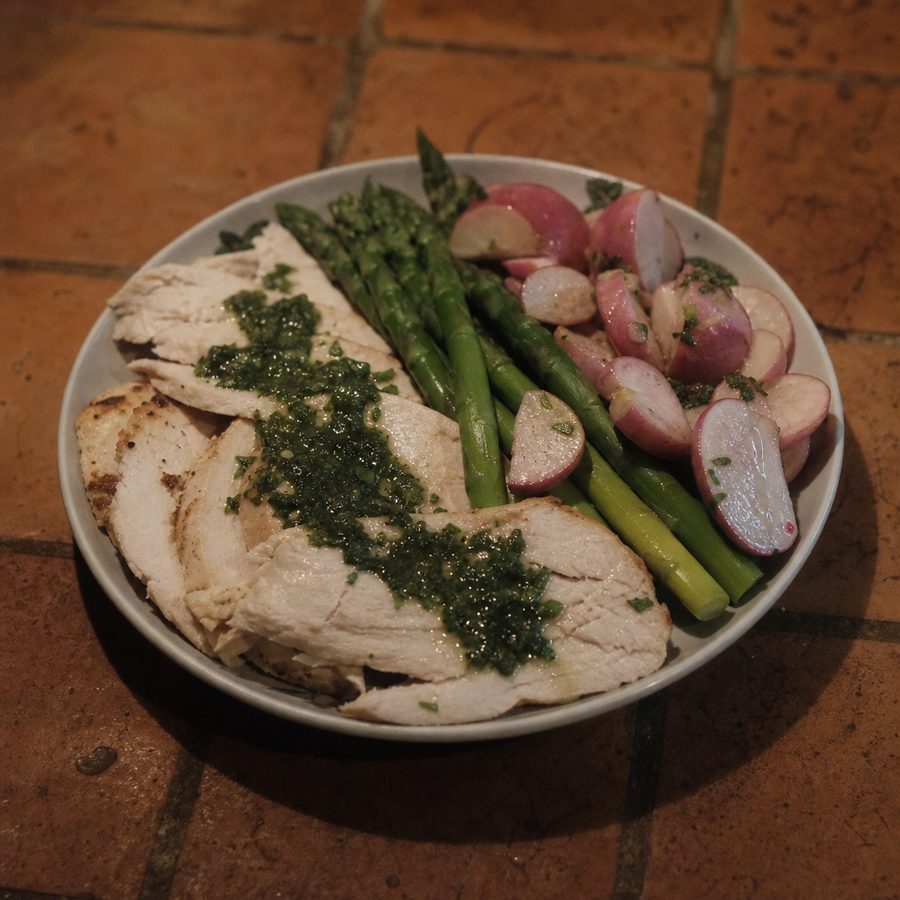
Roasted turkey breast chilled and sliced thin, cold blanched asparagus, and quick-pickled radishes, with a lemon and dill dressing carried alongside to pour on at the table.
Why You'll Love This Recipe
Some weeks are the kind where lunch happens standing at a desk, and this gets built on the Sunday evening before one. Everything on it is meant to be cold, which sounds obvious until you have carried a reheated chicken bowl to work and found it sad by noon. A whole turkey breast roasts in a little over half an hour, chills overnight, and then carves into four days of lunches, and the asparagus and radishes take fifteen minutes between them. If you like the idea of opening a container and finding an actual plate rather than a stirred-together salad, this is the one.
The roast is the only real cooking, and the only place to go wrong is leaving it in too long. Turkey breast has almost no fat running through it, so the difference between juicy and chalky is about seven minutes in a hot oven. Take it out at 160°F (71°C), let it rest, and it carries up to a safe 165°F (74°C) while the juices settle back through the meat, then chill it whole rather than sliced so it does not dry at the cut faces. The asparagus wants two minutes in boiling salted water and then an immediate plunge into ice, which is what fixes the color and stops the spears going limp in the container.
The dressing is a plain one, lemon, olive oil, grated garlic, dill, and parsley, and it stays in its own small jar until you eat. Dressed vegetables sitting in a container from eight in the morning turn dull and weepy by one in the afternoon, and pouring it on at the table costs nothing. The radishes are the piece people are surprised by: sliced thin into cider vinegar with a little honey, they lose the raw pepper and keep their crunch all week. What you get is a plate with a lot of protein on it, something green with real bite, and something sharp, which is the combination that keeps a cold lunch interesting.
Ingredients
- 1 1/2 lb boneless, skinless turkey breast, in one piece
- 1 lb asparagus, woody ends snapped off
- 1 bunch radishes (about 6 oz), sliced into thin coins
- 1/4 cup extra virgin olive oil, divided
- 3 tbsp fresh lemon juice, plus the zest of 1 lemon
- 1 tbsp apple cider vinegar
- 1 tsp honey
- 3 tbsp chopped fresh dill
- 3 tbsp chopped fresh parsley
- 1 clove garlic, grated
- 1 1/4 tsp fine sea salt, divided
Instructions
- Roast the turkey: Heat the oven to 375°F (190°C). Pat the turkey breast dry, rub it with 1 tablespoon of the olive oil and 3/4 teaspoon of the salt, and set it on a small sheet pan. Roast for 30 to 40 minutes, until the thickest part reads 160°F (71°C). Let it rest on the pan for 15 minutes, then refrigerate it whole for at least 2 hours or overnight.
- Pickle the radishes: Slice the radishes into thin coins and put them in a jar with the cider vinegar, the honey, and a pinch of salt. Shake it, then leave it on the counter for at least 20 minutes. They soften slightly at the edges and stay crisp in the middle.
- Blanch the asparagus: Bring a wide pot of salted water to a boil and set a bowl of ice water beside it. Drop the asparagus in for 2 to 3 minutes depending on thickness, until the spears turn deep green and bend without snapping, then lift them straight into the ice water. Drain and dry them well on a towel.
- Make the dressing: Whisk the lemon juice and zest with the grated garlic and the remaining 1/2 teaspoon salt, then whisk in the remaining olive oil until it thickens slightly. Stir in the dill and parsley last so they stay bright green.
- Slice the turkey: Take the cold breast out of the refrigerator and slice it across the grain about a quarter inch thick. Cold meat slices far more cleanly than warm meat, and cutting across the grain is what keeps each slice tender rather than stringy.
- Compose the plate: Lay the turkey slices along one side of each plate or container, set the asparagus beside them, and add a heap of drained radishes. Spoon the dressing over at the table, or carry it in a small jar and pour it on just before you eat.
Variations
- Green beans or snap peas: Blanch a pound of green beans or snap peas in place of the asparagus when asparagus is out of season or expensive.
- Cucumber and mint: Add sliced cucumber to the plate and scatter chopped fresh mint over it for a cooler, more summery version.
- Avocado on the side: Add half a sliced avocado to each plate, which adds enough fat to carry the meal through a long afternoon.
- Roast the asparagus: Roast the spears at 425°F (220°C) for 10 minutes rather than blanching them for a nuttier, browner plate that eats well at room temperature.
- Pickled fennel: Slice half a fennel bulb thin and pickle it alongside the radishes for an anise note against the lemon.
Storage & Leftovers
The components keep separately in the refrigerator for up to 4 days. Store the turkey in one container, the asparagus in another with a paper towel underneath to catch condensation, and the radishes in their pickling jar. Assembled and dressed plates hold about a day before the asparagus dulls and the herbs go dark.
Keep the turkey in one piece and carve what you need each morning. A whole roasted breast holds its moisture for days, while pre-sliced meat dries at every cut face within about 24 hours. It takes an extra minute at the counter and it is the difference between juicy slices and papery ones.
Freezing works for the turkey alone. Wrap the cold breast whole, freeze for up to 2 months, and thaw overnight in the refrigerator before slicing. Do not freeze the asparagus or the radishes, since both go soft and watery on thawing and there is no way back from it.
Notes & Tips
- Use a thermometer: Turkey breast is the cut least willing to forgive a guess. At 160°F (71°C) out of the oven it rests up to a safe 165°F (74°C) and stays juicy, and at 175°F (80°C) it is chalky.
- Chill it whole: Slicing meat while it is hot lets the juices run out onto the board. Refrigerate the breast in one piece and carve it cold, and the slices stay moist.
- Ice water, not the counter: Blanched asparagus left to cool in air keeps cooking from its own heat and turns olive-colored and floppy. The ice bath stops it dead and locks the green in.
- Dry everything before it goes in a container: Water clinging to asparagus thins the dressing and makes the whole box taste washed out. A towel and thirty seconds solves it.
- Dressing travels separately: Herbs sitting in acid all morning go dark and lose their smell. A small jar on the side keeps the plate tasting like it was just made.
- Slice across the grain: Find the direction the muscle fibers run and cut at ninety degrees to them. The same piece of turkey eats tender one way and stringy the other.
Nutrition & Mindful Eating
- Turkey, asparagus, and radishes eat as three separate textures on one plate. The meat carries the protein, the asparagus brings fiber and green freshness, and the lemon dressing poured over at the table is what pulls the three together.
- Turkey breast roasted whole and chilled slices into clean pale sheets, and it is by a wide margin the most protein-dense thing here, along with the selenium and B vitamins that poultry carries.
- Asparagus given two minutes in boiling water and then dropped into ice stays deep green and squeaky, and that short cook is what keeps its folate and vitamin K in the spear rather than in the water.
- Radishes sliced thin and left in cider vinegar go from peppery to sweet while keeping their crunch, and they are a cabbage-family vegetable that carries vitamin C in a form you get to eat raw.
- Lemon, garlic, dill, and parsley whisked into olive oil are the whole seasoning, and a cold plate needs that sharpness more than a hot one does, which is why the dressing goes on at the last moment.
- As you eat, notice the cold snap of the asparagus against the soft turkey and the sharpness the radishes bring after it, and give the meal enough of a break in your day to actually taste all three.
Frequently Asked Questions
Can I use chicken rather than turkey?
Yes. A pound and a half of boneless chicken breasts roasts in about 25 minutes at the same temperature, so start checking early and pull them at 160°F (71°C) as well. The slices will be smaller and a little softer, and everything else about the plate stays the same.
My turkey came out dry. What went wrong?
It went past 165°F (74°C). Turkey breast carries very little fat through the muscle, so there is nothing to cover for extra minutes in the oven. Use a thermometer, pull it at 160°F (71°C), and trust the resting period to carry it the rest of the way.
Can I roast the turkey further ahead than one night?
Two days ahead is fine and the meat is arguably better on day two, once it has firmed up and seasoned through. Blanch the asparagus the same day you roast, and start the radishes whenever you like, since they only improve over the first few days in the vinegar.
Does this work for an AIP elimination phase?
It does. There are no grains, legumes, dairy, eggs, nuts, seeds, or nightshades on the plate, and the seasoning is lemon, garlic, dill, parsley, cider vinegar, and salt. Buy a plain turkey breast rather than a seasoned or brined one, since those usually carry pepper.