
Coriander Roast Chicken Carved over Artichokes and Endive
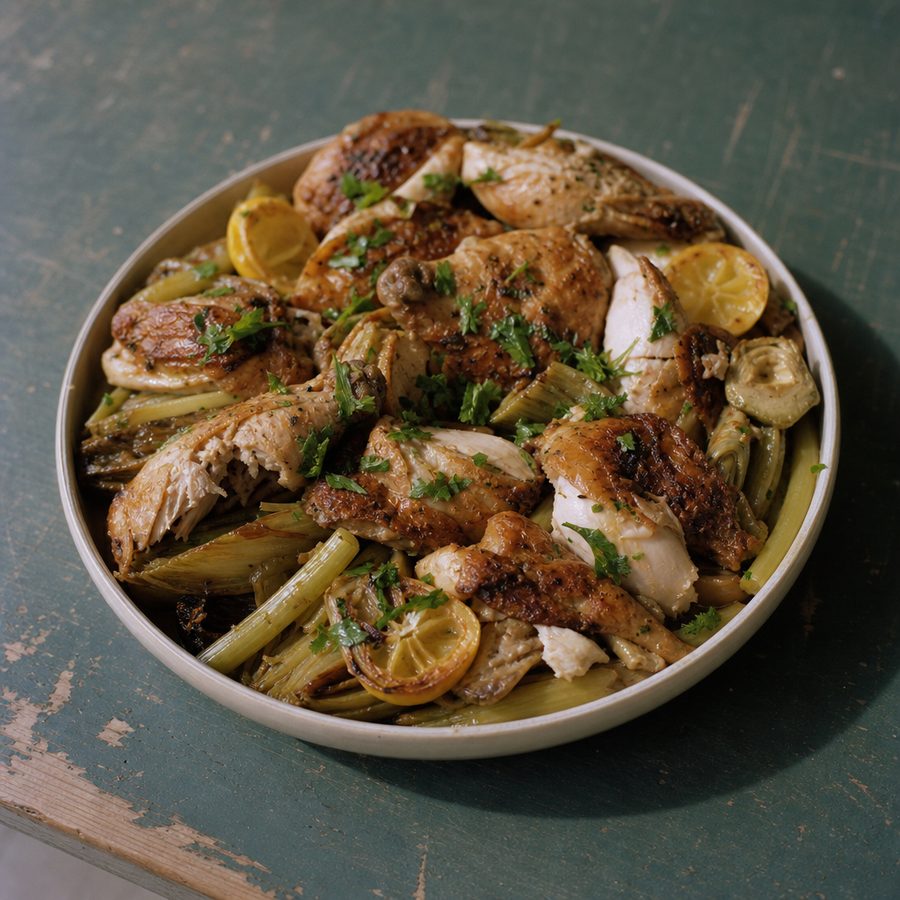
A whole chicken rubbed with crushed coriander seed and roasted on a bed of artichoke hearts, endive halves, and celery, then carved straight onto the vegetables with lemon and pan juices.
Why You'll Love This Recipe
I cook a whole chicken this way when I want one pan on the table and nothing else. The bird sits directly on the vegetables, so everything underneath spends an hour in dripping fat and pan juices, and by the end the endive has collapsed into something closer to a braise than a roast. Carving at the table over the vegetables rather than plating in the kitchen is half the pleasure, since the juices that run out of the bird go straight where you want them. It takes about ninety minutes start to finish, most of it the oven working alone.
Coriander seed is the flavor that makes people ask. Crushed coarsely rather than ground, it stays in visible flecks on the skin, toasts as the chicken browns, and gives off a citrus smell that reads as lemon before you have even squeezed any. Endive brings a clean bitterness that stands up to all that fat, artichoke hearts go creamy and slightly sweet, and celery, which almost nobody roasts, turns out to be excellent when it does. The lemon juice goes in twice, once into the pan and once over the carved meat, and the second pour is the one you actually taste.
This belongs on a Sunday, or on any night you want the house to smell good for hours. It carves into four generous plates with the vegetables spooned around, and the carcass makes a pot of broth the next morning if you are inclined. I like it in the cold months best, when a bitter, lemony pan of vegetables is a welcome change from anything roasted sweet. One pan goes to the table and everyone helps themselves, which is most of the appeal on a night when you have already done enough. Serve it in shallow bowls so the juices stay with the food rather than running off the edge of a flat plate, and put a spoon on the table as well as a knife.
Ingredients
- 1 whole chicken, 3 1/2 to 4 lb, patted very dry inside and out
- Two 14-oz cans artichoke hearts, drained, rinsed, and halved through the stem
- 4 heads Belgian endive, halved lengthwise through the root
- 4 celery stalks, cut on a sharp angle into 2-inch lengths
- 2 large shallots, peeled and quartered through the root
- 4 garlic cloves, smashed and left in their skins
- 2 tsp whole coriander seed, coarsely crushed in a mortar
- 1 tsp cracked black pepper
- 2 tbsp olive oil
- 3/4 cup chicken broth
- 3 tbsp lemon juice, from 1 large lemon, halves saved
- 6 sprigs fresh thyme
- 1/4 cup chopped flat-leaf parsley
- 1/4 tsp fine sea salt
Instructions
- Dry the bird and rub it: Take the chicken out of the refrigerator forty minutes ahead and pat it dry with paper towel, inside the cavity as well. Do it thoroughly, since wet skin steams and never browns. Rub the crushed coriander, the cracked pepper, the salt, and one tablespoon of the olive oil over the whole bird, working some under the breast skin where you can loosen it with a finger.
- Build the bed: Heat the oven to 425°F (220°C). Toss the artichoke halves, endive halves, celery, shallot, and garlic with the remaining tablespoon of oil in a shallow roasting pan or a large ovenproof skillet. Spread them into a single layer, turning the endive cut side down so those faces sit against the hot metal, and tuck the thyme sprigs in among them.
- Roast: Set the chicken breast side up on top of the vegetables and slide the squeezed lemon halves into the cavity. Roast at 425°F (220°C) for twenty minutes, until the skin has taken color, then pour the broth around the edge of the pan rather than over the bird, so the skin you just set stays dry, and lower the heat to 375°F (190°C). Roast another forty five to fifty five minutes.
- Know when it is done: The chicken is ready when a thermometer in the thickest part of the thigh, not touching bone, reads 175°F (80°C) and the juices at the joint run clear. The skin should be mahogany and tight, and the endive underneath should be soft enough to give under a spoon. If the breast is browning faster than the thighs cook, lay a loose piece of foil over it.
- Rest, then carve over the pan: Lift the chicken onto a board and let it rest fifteen minutes, which is not optional if you want the juices in the meat rather than on the board. While it rests, stir the vegetables around in the pan juices and taste. Carve the bird into legs, thighs, wings, and thick slices of breast, lay everything back over the vegetables, pour in any board juices, and finish with the lemon juice and the parsley.
Variations
- Fennel and orange: Swap two of the endive heads for a bulb of fennel cut into wedges, and finish with orange juice rather than lemon for a rounder, sweeter pan.
- Mustard rub: Whisk a tablespoon of dijon mustard into the oil before rubbing the bird, which gives the skin a deeper color and a sharper edge against the artichokes.
- Green olive and caper: Scatter a handful of pitted green olives over the vegetables in the last twenty minutes for a saltier, more southern French version.
- Whole roasted garlic: Add two whole heads of garlic halved crosswise, cut side down, and squeeze the soft cloves into the pan juices before serving.
Storage & Leftovers
Pull the meat off the bones before it goes into the refrigerator and it keeps four days in a sealed container with the vegetables and juices. Left on the carcass, the meat dries out and picks up a refrigerator flavor by the second day. The endive and artichokes actually improve overnight, since they go on absorbing the coriander and lemon while they sit.
Reheat gently, covered, in a 325°F oven for twelve to fifteen minutes with a splash of broth or water in the dish. High heat is what makes leftover chicken stringy. A microwave works for a single plate if you cover it and stop at seventy percent power, though the skin will not come back crisp whatever you do.
The picked meat freezes for three months in its juices, and the vegetables freeze acceptably though the endive softens further. Thaw overnight in the refrigerator. Do not freeze the carcass and the meat together; simmer the bones into broth within a day or two instead, since that is where most of the flavor left in the bird has gone.
Notes & Tips
- Salt the bird ahead if you can: Rubbed and left uncovered on a rack in the refrigerator overnight, the skin dries out and roasts noticeably crisper. Same recipe, better result, no extra work.
- Crush the coriander, do not grind it: A mortar or the flat of a knife gives you cracked pieces that hold their perfume through an hour in the oven. Preground coriander goes dusty and flat by the time the chicken is done.
- Endive cut side down: The flat face is the only part that will caramelize, so give it contact with the metal and leave it alone. Turned partway through, the endive steams and stays pale.
- Use a shallow pan: A deep roasting pan traps steam around the vegetables. A rimmed sheet pan or a shallow skillet lets the moisture escape, which is the difference between browned artichokes and soggy ones.
- Add the broth after the first twenty minutes: Poured in at the start it steams the skin before it can set. Twenty minutes of dry heat first, then the liquid goes in around the edge, away from the bird.
Nutrition & Mindful Eating
- The chicken, the artichokes, and the endive each do something the others cannot. The bird carries the protein and the fat that seasons everything below it, the artichoke hearts bring most of the fiber in the pan, and the endive supplies the bitterness that keeps an hour of dripping chicken fat from tasting heavy.
- Artichoke hearts are unusually fibrous for something that eats this creamy, and much of what they carry is inulin, a soluble fiber that feeds the bacteria in your gut. They also hold their shape through a long roast, which is why they can sit under a bird for an hour and still come out in recognizable halves.
- Endive is grown in the dark, which is why the heads are pale, and the bitterness that comes with it is worth having on a plate this rich. It brings folate along with a good amount of fiber for a vegetable that cooks down to so little.
- Celery is mostly water and gets treated as a background note, but roasted long enough it turns sweet and takes on a texture closer to a cooked leek. It carries potassium and vitamin K, and the strings soften completely at this heat.
- Coriander seed, cracked rather than ground, is what gives the skin its citrus smell. Whole spices hold their aromatic oils far longer than preground ones, and toasting them in the oven under a chicken is about the gentlest way to wake them up.
- As you eat, notice how differently the bitter endive and the creamy artichoke read against the same forkful of chicken, and let carving and serving at the table slow the meal down enough that you can tell when you have had enough.
Frequently Asked Questions
Can I use chicken pieces rather than a whole bird?
Yes, and it is faster. Use four bone-in, skin-on leg quarters or a mix of thighs and breasts, set them skin side up on the vegetables, and roast at 400°F for thirty five to forty five minutes. You lose the carving at the table and the carcass for broth, and you gain half an hour.
My endive tasted harshly bitter. What went wrong?
Two likely things. Endive that has been sitting in the light at the store turns green at the tips and greens are where the bitterness concentrates, so choose heads that are pale yellow and tightly closed. The other cause is not enough time, since the bitterness mellows as the sugars caramelize. Give the cut faces real contact with the pan.
Are jarred artichoke hearts fine here?
Canned or jarred both work, and I use whichever is cheaper. Rinse them well and dry them on a towel before they go in the pan, because the packing brine is salty and wet artichokes will not brown. Frozen artichoke hearts are the best option of all if your store carries them, thawed and squeezed dry first.
Do I really need to rest it fifteen minutes?
Yes. Cut into a chicken straight out of the oven and a puddle runs onto the board that should have stayed in the meat. Fifteen minutes lets the muscle fibers relax and reabsorb it, and the bird stays plenty hot because the vegetables underneath hold heat well.