
Crab and Avocado Breakfast Salad with Watercress
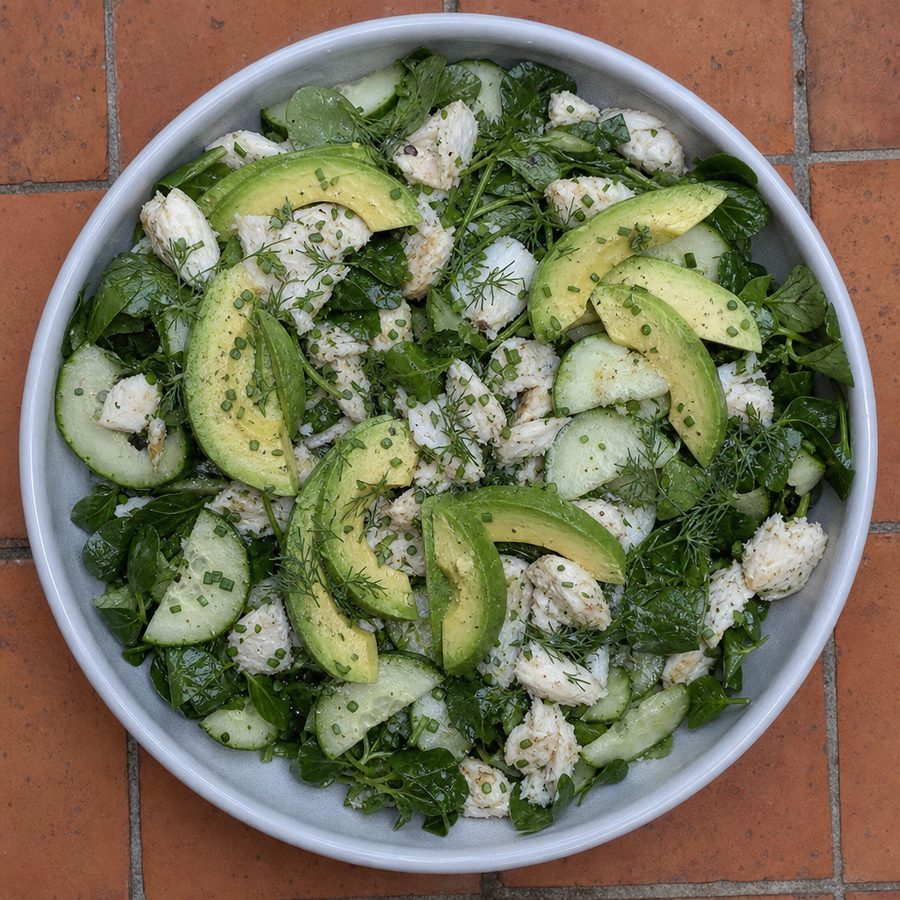
Cold lump crab tossed with lemon and chives, spooned over peppery watercress, cucumber, and thick slices of avocado for a breakfast that needs no stove.
Why You'll Love This Recipe
Some mornings you do not want to stand at a stove, and on an elimination phase that usually means eating fruit again. This is the plate I put together instead. Crab is sold cooked and picked, so the only real work is opening the tub and running your fingers through the meat for shell, and everything else is a knife and a bowl. I make it in summer when turning on a burner feels like a bad idea, and I make it after a big weekend when I want something cold and clean that still counts as a meal rather than a snack.
The plate works because three cold textures land differently in the same bite. Crab comes in soft sweet threads, cucumber is watery and crisp, and avocado is thick and creamy enough to coat everything it touches. Watercress underneath is the piece people skip and should not, since its peppery bite is what keeps all that richness from going flat. Lemon juice goes on the crab first and the greens last, so the meat has a few minutes to take on the acid while the watercress stays crisp instead of collapsing under the dressing.
What surprises people is how well a cold plate holds them. Crab is mostly protein and very little else, so the meat gives you a lot of substance for how light it eats, and the fat in the avocado is what turns that into a breakfast that lasts rather than a starter. Chives, dill, and scallion are doing the seasoning that a sauce would normally do, which is why this tastes finished with nothing more than lemon and oil. It takes 15 minutes and reads as something you would be served rather than something you threw together.
Ingredients
- 15 oz cooked lump crab meat, drained and picked over
- 2 ripe avocados, halved, pitted, and sliced
- 4 packed cups watercress, thick stems trimmed
- 1 large cucumber, halved lengthwise and sliced into half moons
- 3 tbsp fresh lemon juice, plus zest of 1 lemon
- 2 1/2 tbsp extra virgin olive oil
- 3 tbsp finely chopped chives
- 2 tbsp chopped fresh dill
- 2 scallions, thinly sliced
Instructions
- Pick over the crab: Tip the crab into a bowl and drain off any liquid. Run your fingers through the meat and feel for shell and cartilage, which even good lump crab carries a little of. Keep the pieces as large as you can and refrigerate the bowl while you cut the vegetables.
- Dress the crab: Add 2 tablespoons of the lemon juice, the lemon zest, the chives, the dill, and the scallions to the crab. Fold it two or three times with a rubber spatula rather than stirring, so the lumps stay whole, then let it sit for 5 minutes while the acid works in.
- Prep the vegetables: Trim the thick stems from the watercress and keep the tender sprigs. Halve the cucumber lengthwise, scrape out the seedy center with a spoon if it is watery, and slice it into half moons about a quarter inch thick.
- Build the plates: Toss the watercress and cucumber with the olive oil and the remaining tablespoon of lemon juice, using your hands so every leaf gets a little. Divide the greens among four wide plates and spread them out rather than piling them up.
- Finish with avocado and crab: Halve, pit, and slice the avocados just before serving so they stay green, and fan the slices over the greens. Spoon the dressed crab on top, then taste one bite and add lemon if it needs lifting. Serve straight away while everything is cold.
Variations
- Herb swap: Trade the dill for chopped mint and add a little lime alongside the lemon for a brighter, more summery plate.
- Fennel crunch: Shave half a fennel bulb over the greens for an anise crunch that suits the sweetness of the crab.
- Radish and cress: Add thinly sliced radish for color and a sharper bite against the avocado.
- Warm version: Fold the crab through the greens in a hot skillet for 60 seconds so they just wilt, then top with avocado for a plate that works better in winter.
- Shrimp and cucumber: Use cooked shrimp in place of crab and double the cucumber for a cleaner, crunchier plate.
Storage & Leftovers
Dressed crab keeps in a sealed container in the refrigerator for up to 2 days and is genuinely good on the second morning, though the herbs dull a little. Keep the greens, the cucumber, and the avocado separate and build the plate only when you are ready to eat it.
Sliced avocado browns within a few hours no matter how much lemon goes on it, so cut only what you are serving. A whole unpeeled half with the pit left in holds its color overnight in a sealed container better than any slice will.
Nothing here freezes. Crab turns stringy and weeps water on thawing, cucumber collapses, and avocado goes gray and grainy. This is a plate to make in the amount you plan to eat, which is part of why it takes 15 minutes.
Notes & Tips
- Pick the crab twice: Shell fragments hide in even the best tub, and finding one mid-bite ruins the plate. Two minutes with your fingers is the whole job.
- Fold, never stir: Lump crab falls apart into threads the moment you beat it with a spoon. Two or three gentle turns with a spatula keeps the pieces you paid for.
- Trim the watercress stems: The thick lower stems are fibrous and stringy. Keep the top few inches and the leaves and the salad eats far better.
- Choose the avocado a day early: It should give slightly under your thumb at the stem end. A rock-hard one will not ripen by breakfast and a soft one turns to paste when you slice.
- Salt the plate lightly or not at all: Crab is already salty from the sea and from pasteurizing. Taste before you reach for the shaker, because lemon usually does what you were about to ask salt to do.
- Dress the greens with your hands: A spoon leaves half the watercress dry and drowns the rest. Fingers spread a small amount of oil over every leaf in about 10 seconds.
Nutrition & Mindful Eating
- Crab, avocado, and watercress balance each other. The crab is sweet and mild, the avocado is rich enough to coat the greens like a dressing, and the peppery watercress cuts through both so the plate stays bright from the first bite to the last.
- Crab meat is dense in protein and soft in texture at the same time, which is unusual, and it carries a good amount of calcium and B12 along with it. That density is why a cold plate like this holds you longer than it looks like it should.
- Avocado brings the fat that makes this a meal, mostly the monounsaturated kind, and the fiber in it is easy to forget about because it eats like butter rather than like a vegetable.
- Watercress has a peppery edge that fades the moment it is cooked, so eating it raw is the point. It is a small leaf with a lot in it, bringing vitamin K and calcium along with that mustard sharpness.
- Chives, dill, scallion, and lemon zest are the seasoning here, and they are why the plate tastes finished with nothing but oil and acid on it. Fresh herbs give you flavor you can taste immediately, which means the salt shaker stays where it is.
- As you eat, pay attention to the three temperatures and textures landing together, the cool crab, the crisp cucumber, and the soft avocado, and let a plate this simple be worth sitting down for.
Frequently Asked Questions
What kind of crab should I buy?
Refrigerated pasteurized lump or backfin crab from the seafood counter has the best texture for this. Shelf-stable canned crab works and costs less, though it is saltier and finer, so drain it well and rinse it if the smell is strong. Either way, pick it over for shell.
Can I use something other than crab?
Cooked shrimp, chopped into large pieces, is the closest match and needs no other change. Canned tuna or flaked smoked trout also work, though both are stronger and will want an extra squeeze of lemon to keep the plate bright.
How do I stop the salad going watery?
Drain the crab properly, scrape the seeds out of the cucumber, and dress the greens at the last minute. Watercress holds up better than most tender leaves, but nothing survives sitting in oil and lemon for an hour.
Is this enough for breakfast?
It is more filling than it looks, because crab is dense in protein and the avocado adds the fat that makes a cold plate last. If you have a big appetite or a long morning, add a second avocado or a side of sliced fruit and it carries further.