
Creole Tempeh and Okra Skillet with Mustard Greens
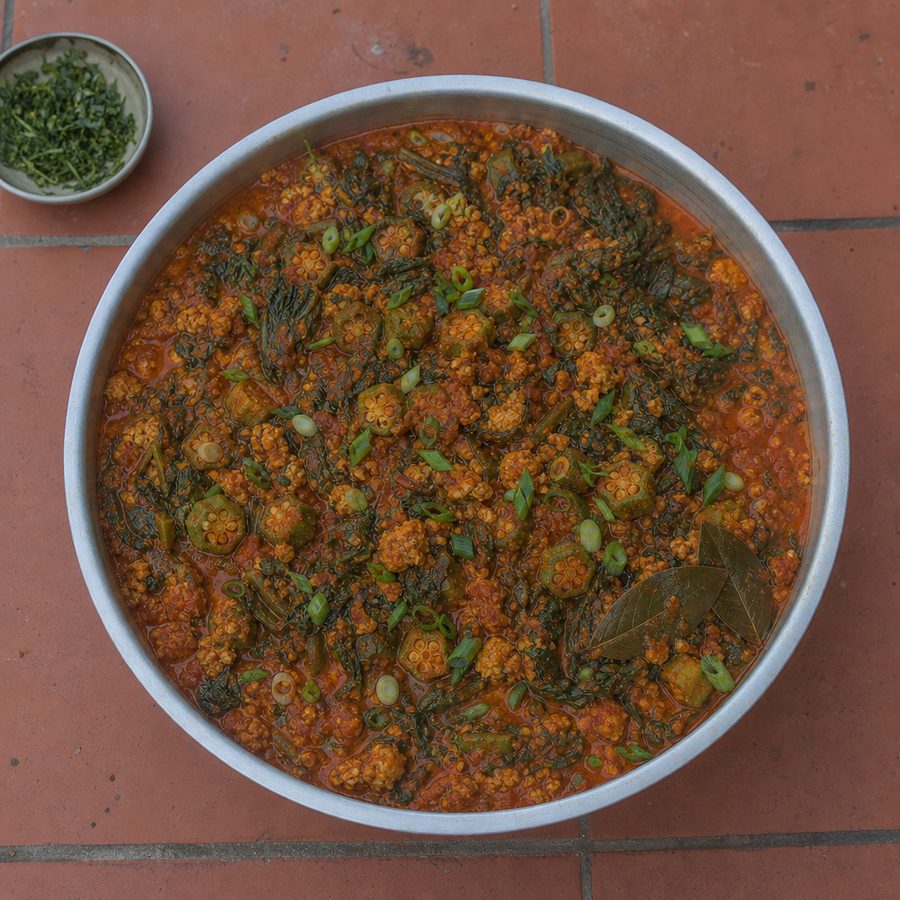
Crumbled tempeh browned with onion, celery, and bell pepper, then simmered with okra, tomato, thyme, and bay until thick, with mustard greens folded in at the end and a spoonful of cider vinegar over the top.
Why You'll Love This Recipe
This is my weeknight answer to the long Gulf Coast pot, the kind that usually starts with a roux and an hour you do not have. Browning the tempeh hard at the start does a lot of the same work, since the crumbles pick up color and a toasty flavor that reads as depth later on. Okra thickens the tomato on its own, so nothing needs flour, and the whole thing is done in under twenty minutes on the stove. I crumble the tempeh by hand rather than dicing it, because the ragged pieces catch more color and give the skillet a texture closer to a sausage-studded stew.
What I like most about eating it is the argument between the parts. The tomato and paprika are round and sweet, the cayenne comes in behind them with a slow heat, and then the mustard greens arrive with that horseradish sharpness that keeps the bowl from turning into one soft note. Okra cooked in acid stays firm and grassy, celery keeps a little snap, and the tempeh has the chew of something you have to bite through. A spoonful of cider vinegar off the heat pulls all of it forward, and the scallions on top stay cool and green. Nothing in the bowl tastes the same as the thing next to it.
I cook this most often in late summer, when okra is on every table around here and the mustard greens are just starting, but frozen okra makes it a year-round dinner and I use it without apology. It feeds four people in one skillet with nothing else needed on the stove, and it is one of the few dinners in my rotation that my family eats faster on the second day. If there is a pot of rice already going, spoon it over, and if not, eat it from a bowl with a spoon and do not think twice about it. The only thing I insist on is the vinegar bottle somewhere near the table.
Ingredients
- 14 oz tempeh, crumbled into rough 1/2-inch pieces with your hands
- 1 large bunch mustard greens (about 14 oz of leaves), stems stripped and leaves sliced into wide ribbons
- 3 cups okra (about 9 oz), stemmed and cut into 1/2-inch rounds, fresh or frozen
- 1 cup canned crushed tomatoes
- 1 medium yellow onion, finely diced
- 2 celery stalks, finely diced
- 1 red bell pepper, stemmed, seeded, and finely diced
- 5 garlic cloves, minced
- 2 tsp smoked paprika
- 1/2 tsp cayenne
- 2 tsp fresh thyme leaves, from about 6 sprigs
- 2 dried bay leaves
- 2 tbsp olive oil
- 4 tsp apple cider vinegar
- 4 scallions, thinly sliced
- scant 1/2 tsp fine sea salt
Instructions
- Get everything cut before the pan goes on: This cooks fast once it starts. Dice the onion, celery, and bell pepper small and keep them together, mince the garlic, slice the okra into rounds, and strip and slice the mustard greens. Crumble the tempeh into rough half-inch pieces with your fingers so the edges stay ragged.
- Brown the tempeh: Heat 1 tbsp of the olive oil in a large skillet over medium-high until it shimmers. Add the tempeh in one layer and leave it alone for three minutes, since the crust only forms where a piece is touching hot metal, then stir and cook three minutes more, until a good half of the pieces are deep golden and the pan smells nutty. Scrape it onto a plate.
- Soften the trinity: Add the remaining 1 tbsp oil, then the onion, celery, and bell pepper with the salt. Cook five minutes over medium, stirring now and then, until the onion turns clear and the celery has lost its stiffness. Add the garlic, smoked paprika, cayenne, and thyme and stir for forty seconds, until the spices smell toasted and coat everything.
- Add the okra, tomato, and bay: Stir in the okra rounds, the crushed tomatoes, the bay leaves, and 1/2 cup water. Bring it to a simmer and cook six to eight minutes uncovered, stirring twice, until the okra is tender at the center and the sauce has thickened enough to hold a line behind the spoon. Uncovered is the point, because the okra needs that time to give up its rope-like body into the sauce.
- Fold in the greens and finish: Return the tempeh with any juices, then add the mustard greens in two handfuls and stir until they collapse, which takes two to three minutes. They should be wilted and glossy but still distinctly green. Pull out the bay leaves, take the pan off the heat, stir in the cider vinegar, and scatter the scallions over the top.
Variations
- Corn and tomato: Add a cup of corn kernels with the okra for pockets of sweetness against the cayenne, which is how a lot of late summer skillets around here end up anyway.
- Beans in the pot: Stir a drained can of kidney beans in with the tomatoes for a heavier, redder bowl that stretches to six servings.
- Over grits or rice: Spoon it over anything soft and starchy you have going, which turns the sauce into the point of the dish rather than a coating.
- Extra smoke: Swap half a teaspoon of the smoked paprika for chipotle powder, which brings a darker, drier heat and pushes the pan toward the grill.
- Lemon and parsley: Finish with lemon juice rather than cider vinegar and a handful of chopped parsley, for a brighter, more herbal version in spring.
Storage & Leftovers
This keeps four days in a sealed container in the refrigerator and improves overnight. The tomato and the spices settle into the tempeh, the okra firms back up, and the greens hold their color better than you would expect from something braised in acid.
Reheat it in a skillet over medium with a splash of water, stirring, for four or five minutes, or in the microwave for about two minutes with a plate over the bowl. Either way, add a small splash of cider vinegar afterward, since the sharpness fades in the refrigerator and a few drops bring the whole bowl back.
It freezes for up to three months in flat sealed portions. Okra softens a little through a freeze, so if you know a batch is going into the freezer, cut the simmer a minute short. Thaw overnight in the refrigerator and reheat in a pan rather than from frozen.
Notes & Tips
- Crumble the tempeh, do not dice it: Torn pieces have more surface and more corners, so they brown faster and hold sauce better. Neat cubes look tidy and taste flatter.
- Leave the tempeh alone to brown: Three full minutes without stirring is what puts color on it. Every stir before then drops the pan temperature and you end up steaming rather than browning.
- Bloom the spices in the fat: Smoked paprika, cayenne, and thyme need forty seconds in hot oil before any liquid arrives. Added to a wet pan they taste dusty and stay that way.
- Cut the okra thick: Half-inch rounds hold their shape through the simmer. Thin coins break down and give up more of their liquid to the sauce.
- Greens go in last: Mustard greens need two or three minutes, not ten. Added early they lose their pepper and their color, which are the two things they are there for.
- Fish out the bay leaves: They have given everything they have after eight minutes and are unpleasant to bite into. Count them in and count them back out.
Nutrition & Mindful Eating
- The tempeh, the okra, and the greens each do a separate job in this skillet. The tempeh carries the protein and the chew, the okra thickens the tomato without anything else added to it, and the mustard greens bring both their pepper and a good share of the calcium here.
- Tempeh is fermented whole soybeans, which is why it crumbles into pieces that brown rather than dissolving into the sauce. Those whole beans are where its fiber and iron come from, and the fermentation is part of why it tastes savory and faintly nutty.
- Okra is one of the few vegetables that thickens a pot on its own, and the soluble fiber that does that work is the same thing that makes it feel silky. Cut thick and cooked in acid, it stays firm and grassy at the center.
- Mustard greens taste of horseradish when they hit the heat and settle into something rounder after a couple of minutes, and they carry calcium and vitamin K into a bowl that is otherwise mostly red. Folding them in late is what keeps that sharpness alive.
- Smoked paprika, cayenne, bay, and thyme give this the long-simmered character it gets in under twenty minutes. Cayenne in particular arrives slowly, a warmth you notice after you swallow rather than a sting at the front of the mouth.
- As you eat, pay attention to where the heat from the cayenne actually arrives and how the greens cut across it, and let the bowl take you a few minutes longer than you planned.
Frequently Asked Questions
Will the okra turn slimy?
Not the way this is built. Two things keep it in check: hot fat at the start, which sets the cut surfaces, and the acid from the tomatoes and vinegar, which does the rest. Slicing the rounds thick rather than thin helps as well. Stirring constantly is what causes trouble, so leave it alone between turns.
Can I use frozen okra?
Yes, and I do most of the year. Add it straight from the freezer without thawing, since thawed okra releases a lot of water into the pan. It may need an extra minute or two of simmering, and it comes out a shade softer than fresh, which nobody has ever complained about at my table.
What if I cannot find mustard greens?
Collard greens are the natural swap, though they take about four minutes longer to soften, so add them with the tomatoes rather than at the end. Turnip greens work too and are closer to the peppery bite of mustard. Whatever you use, slice the leaves into wide ribbons so they fold into the sauce.
Is this hot?
Half a teaspoon of cayenne across four servings gives a warm, building heat rather than a sharp one, and the tomato tempers it. Take it to a quarter teaspoon for a milder pan, or leave it as written and put hot sauce on the table for the people who want more.