
Crisp-Skinned Duck with Wilted Watercress and Pomegranate
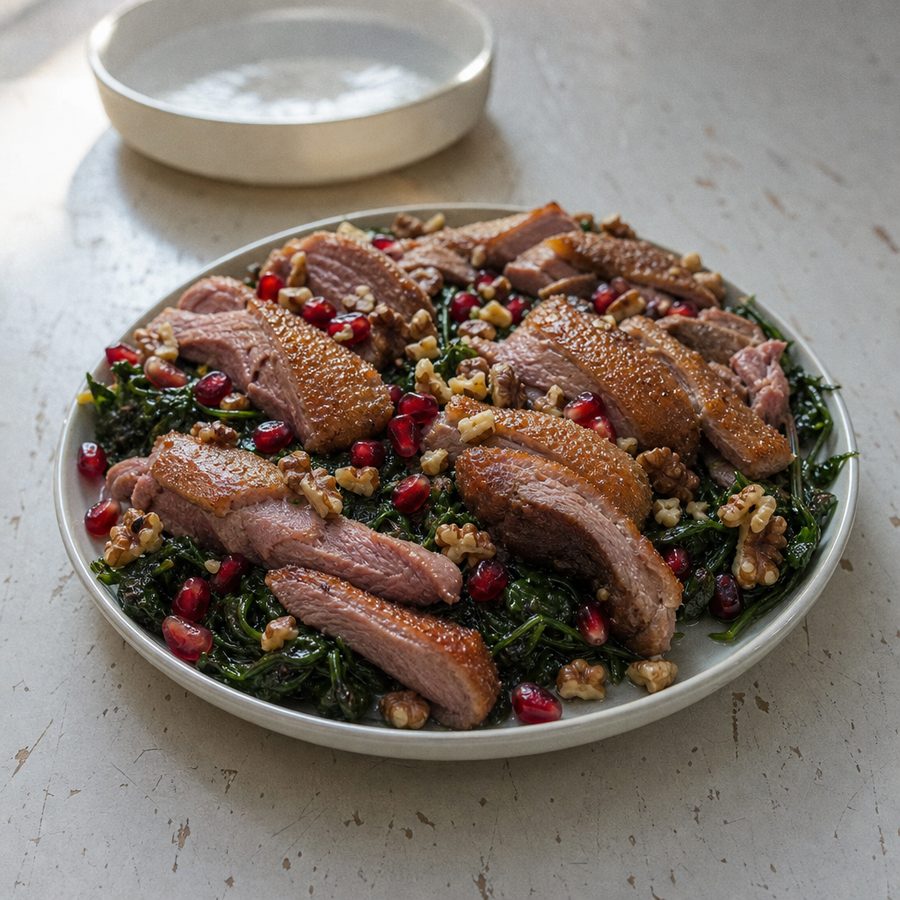
Duck breasts started in a cold pan so the skin renders golden and crisp, with watercress and walnuts wilted in the fat and pomegranate scattered over the sliced meat.
Why You'll Love This Recipe
Duck has a reputation as restaurant food, which is a shame, because a duck breast is easier to cook well than a chicken breast and takes about the same amount of attention. It goes into a cold, dry pan skin side down and then mostly looks after itself while the fat renders out. That rendering time is unhurried, which makes it a good lunch for a working morning. You can answer messages while it happens, so long as you are within earshot of the pan. Two breasts feed four people, which also makes it less of a splurge than it sounds.
A cold pan is the whole technique and it is the step people get wrong. Duck skin has a thick layer of fat under it, and that fat needs time at gentle heat to melt out and leave the skin thin enough to crisp. A hot pan seizes the surface before any of that happens and gives you a leathery skin over a layer of soft fat. Score the skin in a crosshatch first, going through the fat but not into the meat, salt it well, and start it cold. Pour off the fat as it collects and keep a spoonful back for the greens.
Watercress wilted in a spoonful of that rendered fat is one of my favorite things to eat. It is peppery raw, and heat turns it soft and mineral and slightly sweet, all in about forty seconds, so it goes in when everything else is finished. Pomegranate seeds go over at the end for sharp cold bursts against the rich meat, the walnuts add crunch, and lemon pulls the whole plate together. Duck is rich enough that half a breast is plenty, and the fat you poured off keeps in a jar in the refrigerator for weeks and makes the best roast potatoes you will cook all winter.
Ingredients
- 2 duck breasts, about 12 oz each, skin scored
- 2 large bunches watercress (about 7 oz), thick stems trimmed
- 1/2 cup pomegranate seeds
- 1/4 cup walnuts, roughly chopped
- 1 1/2 tbsp fresh lemon juice
- 1 tsp fresh thyme leaves
- 3/4 tsp fine sea salt, divided
- 1/2 tsp black pepper
Instructions
- Score and salt the duck: Pat the breasts very dry, since any water on the skin has to boil off before the fat can start rendering. With a sharp knife, score the skin in a crosshatch about half an inch apart, cutting through the fat but not into the meat. Season both sides with 1/2 teaspoon of the salt, pressing it into the cuts, and set them aside while you trim the watercress.
- Start them in a cold pan: Lay the breasts skin side down in a cold dry skillet and only then set it over medium-low heat. Cook for 12 to 14 minutes without moving them, pouring off the fat into a heatproof bowl every few minutes, until the skin is thin, deep golden, and crisp.
- Turn and finish the meat: Raise the heat to medium, turn the breasts, and cook 3 to 4 minutes on the flesh side, to 135°F (57°C) at the thickest point for medium. Move them to a board skin side up and rest for 6 minutes, which is not optional if you want the juices to stay in the meat.
- Toast the walnuts: Pour off all but 1 tablespoon of the duck fat, keeping the rest, because it is worth more than most things in the refrigerator and it keeps for weeks. Add the walnuts and the thyme to the pan over medium heat and toast for about 90 seconds, stirring, until they smell nutty and the thyme crackles.
- Wilt the watercress: Add the watercress and the remaining 1/4 teaspoon salt, and toss for 30 to 45 seconds, until it has just collapsed and turned dark green. Take the pan off the heat and stir in the lemon juice, scraping up anything stuck to the bottom.
- Slice and serve: Slice the duck across the grain about a quarter inch thick. Divide the watercress and walnuts among four plates, lay the duck over the top, scatter with the pomegranate seeds and black pepper, and spoon over any juices from the board.
Variations
- Orange in place of lemon: A squeeze of orange juice and some grated zest at the end makes the greens sweeter against the rich meat.
- Balsamic finish: A teaspoon of balsamic added with the lemon reduces into the pan fat and gives the greens a darker, sweeter edge.
- Pecans: Pecans toast in the same 90 seconds and are softer and sweeter than walnuts.
- Radicchio: Char a few radicchio wedges in the duck fat before the greens go in for something bitter on the plate.
- Cold version: Chill the sliced duck and serve it over raw watercress with the pomegranate and lemon for a warm-weather lunch box.
Storage & Leftovers
Leftovers keep in a sealed container in the refrigerator for up to 3 days. Slice only what you plan to eat and keep the rest of the breast whole, since a whole piece stays juicy while slices dry out and the cut faces go gray by the following morning.
Cold duck is genuinely good, so I rarely reheat it. If you want it warm, lay the slices in a dry pan over low heat for about 60 seconds a side. Any longer and the pink center goes brown and firm, and the crisp skin is already a first-day pleasure either way.
The rendered fat is the real leftover here. Strain it into a clean jar and keep it in the refrigerator for up to 3 months. It is worth more than the duck to some cooks, and roasted potatoes or parsnips cooked in it are the best possible second use.
Notes & Tips
- Score through the fat, not the meat: The cuts are what let the fat escape. Going too deep opens the meat and lets its juices run out into the pan.
- Cold pan, every time: This is the one rule of duck. Preheating the skillet is the single reason home-cooked duck skin usually disappoints.
- Pour the fat off as it collects: A breast sitting in a pool of its own fat is frying rather than rendering, and the skin browns unevenly.
- Use a thermometer: At 135°F (57°C) the meat is pink and tender, and by 155°F (68°C) it is gray and tight. That window is narrower than it looks by eye.
- Rest it skin side up: Resting it skin down puts the crisp surface into the juices on the board and softens it in about a minute.
- Add the watercress off the worst of the heat: It needs seconds, not minutes. Overcooked watercress turns bitter and loses the peppery note you wanted it for.
Nutrition & Mindful Eating
- The duck, the watercress, and the pomegranate work against each other in the best way. The meat is rich and deeply savory, the greens are peppery and mineral, and the seeds burst sharp and cold over the top of both.
- Duck breast is dark, close-grained meat with a distinct flavor, and it carries iron and B vitamins along with a good deal of protein for a piece this size.
- Watercress is one of the most peppery greens you can buy, and it collapses into something soft and mineral in seconds, bringing vitamin K and vitamin C with it.
- Pomegranate seeds are worth the small effort of scattering them on. They pop between the teeth, they carry the polyphenols that give them that deep color, and their sharpness cuts straight through rich meat.
- Walnuts toasted in the pan for ninety seconds turn sweet and resinous, and the plant omega-3 fats they carry ride along with the crunch they add to soft greens.
- As you eat, listen for the crack of the skin, then notice how the pomegranate bursts cold against the warm meat, and let a rich lunch like this one be eaten slowly and sitting down.
Frequently Asked Questions
Why start in a cold pan?
Because the fat under the skin needs slow, gentle heat to melt out. A preheated pan sets the surface immediately and traps that fat underneath, which is how you end up with rubbery skin. Cold pan, medium-low heat, and patience give you the thin, crisp result.
Can I use chicken thighs?
Yes, bone-in skin-on thighs, though they need to go all the way to 175°F (80°C), which takes about 25 minutes with the same cold-pan start. They render less fat, so you may need a teaspoon of olive oil for the watercress and walnuts.
What can I use in place of watercress?
Arugula wilts the same way in the same time and is peppery in a similar register. Spinach works but goes limp much faster, so give it about 20 seconds. Mustard greens need closer to 2 minutes and stay firmer.
Does this fit a low-FODMAP lunch?
It does. Duck, watercress, walnuts, and lemon are all comfortable, and pomegranate seeds sit well at a couple of tablespoons per serving. There is no onion or garlic in the pan, and the flavor comes from rendered fat, thyme, and acid.