
Crisp-Skinned Salmon Breakfast Plate with Sauerkraut and Dijon
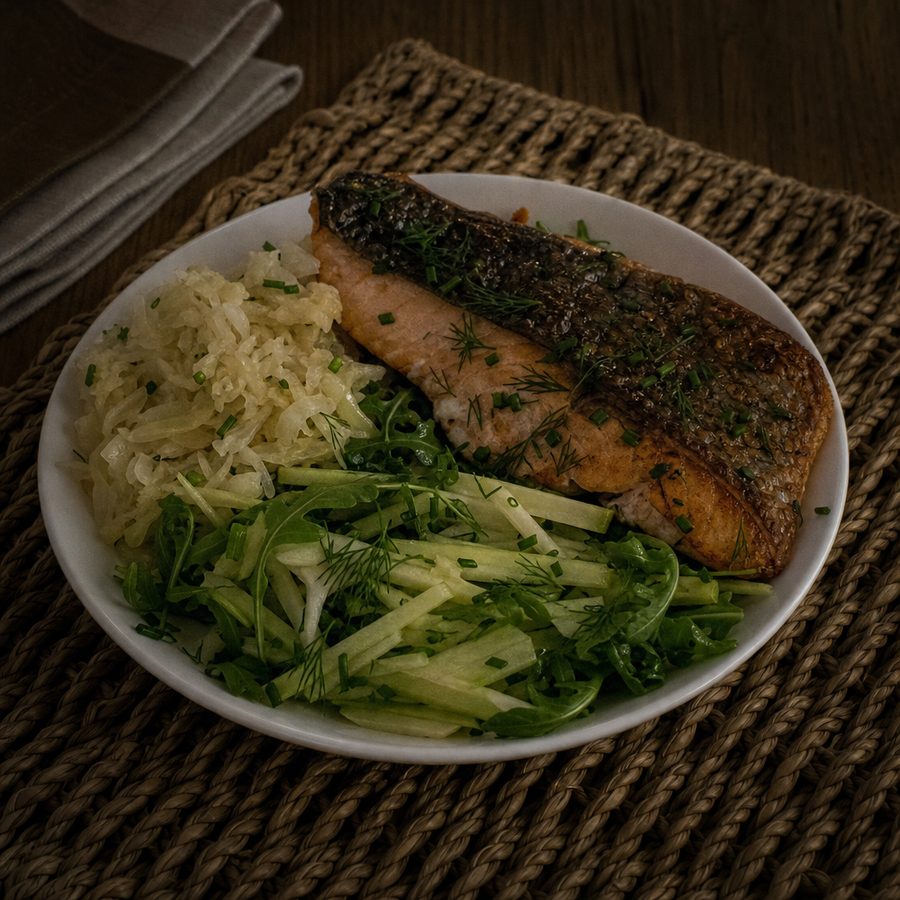
Salmon fillets seared hard on the skin until it crackles, set beside warm buttered sauerkraut, a cold kohlrabi and arugula salad, and a sharp dijon dressing.
Why You'll Love This Recipe
Savory, and not another skillet of the same thing, is the brief this one answers. It takes about half an hour, and most of that is the salmon sitting out on the counter losing its chill so it cooks evenly. A piece of fish first thing in the morning sounds like a lot until you have eaten it once, and then it becomes the plate you think about on the days you have something difficult ahead. It holds you through a long morning, and it comes together fast enough for a weekday if the fillets are already in the refrigerator. One pan, one bowl, four plates.
The skin is the whole point, so give it what it needs. Dry the fillets properly with paper towel, salt them, and put them skin down in oil that is already shimmering, then press each one flat with a spatula for the first thirty seconds so the skin stays in contact with the pan. After that, leave them alone. Salmon spends most of its cooking time on the skin side and only a minute on the flesh, which is what keeps the middle rosy while the skin turns to glass. Garlic-infused olive oil goes into the pan first and gives the fish a savory backbone as it cooks.
What makes it a plate rather than a fillet on a dish is the sour side of it. Sauerkraut warmed for two minutes in butter with crushed coriander stops being a pickle and starts being a vegetable, sweet at the edges and still sharp underneath. The kohlrabi and arugula stay cold and raw beside it, dressed with dijon and lemon, so every few bites there is something peppery and bright against the rich fish. Dill and chives go over everything at the last second. It is a breakfast with three temperatures on the plate, and that is what makes it feel like a proper meal at seven in the morning.
Ingredients
- 4 skin-on salmon fillets (about 6 oz each), patted very dry
- 2 tbsp garlic-infused olive oil, divided
- 1 cup sauerkraut, drained and squeezed dry
- 1 tbsp butter
- 1 tsp coriander seeds, lightly crushed
- 1 small kohlrabi (about 5 oz), peeled and cut into thin matchsticks
- 3 packed cups arugula
- 4 tsp dijon mustard
- 2 tbsp fresh lemon juice, plus wedges to serve
- 1/4 cup chopped fresh dill
- 2 tbsp thinly sliced chives
- 1 tsp fine sea salt, divided
- 1 tsp freshly ground black pepper
Instructions
- Take the chill off the salmon: Set the fillets on a plate on the counter for 20 minutes. Pat them very dry on both sides with paper towel, then season the flesh side with 1/2 teaspoon of the salt and half the black pepper. Dry fish is the difference between crisp skin and skin that sticks, so go over them twice.
- Make the dressing and the salad: Whisk the dijon, lemon juice, 1 tablespoon of the garlic-infused olive oil, the remaining black pepper, and a pinch of the salt in a small bowl until it thickens slightly. Put the kohlrabi matchsticks and arugula in a bowl and keep them in the refrigerator, undressed, until the fish is done.
- Warm the sauerkraut: Melt the butter in a small skillet over medium-low heat, add the crushed coriander seeds, and let them sizzle for 30 seconds. Add the drained sauerkraut and warm it through for 2 to 3 minutes, stirring once or twice, until it is hot and the sharpest edge has come off it. Slide it off the heat and cover it.
- Sear the skin: Heat the remaining 1 tablespoon garlic-infused olive oil in a heavy skillet over medium-high until it shimmers. Lay the fillets in skin down, away from you, and press each one flat with a spatula for about 30 seconds. Cook 5 to 7 minutes without moving them, until the skin releases on its own and the flesh has turned opaque two-thirds of the way up the sides.
- Turn and rest: Flip the fillets and cook 60 to 90 seconds more, until the center reads 125°F (52°C) for medium rare. The FDA figure for seafood is 145°F (63°C), and salmon cooked that far is firm and opaque rather than soft in the middle, so pick the one you want before the pan goes on. Move them to a plate skin side up and rest 3 minutes. Resting them skin up keeps steam off the crisp side, which is the only way it survives the trip to the table.
- Build the plates: Toss the kohlrabi and arugula with the dressing and the last of the salt right before serving. Spoon the warm sauerkraut onto each plate, add a handful of salad, and set a fillet beside them skin up. Scatter the dill and chives over everything and put a lemon wedge on each plate.
Variations
- Trout version: Use skin-on trout fillets and take about two minutes off the sear, since they are thinner and cook fast.
- Potatoes alongside: Roast halved baby potatoes at 425°F (220°C) while you prep, and put a few on each plate for a heartier morning.
- Brinier plate: Add halved kalamata olives to the salad when you want something saltier against the fish.
- A little heat: Whisk a pinch of cayenne into the dijon dressing, or add thin jalapeno rings to the salad.
- Herb swap: Use parsley and mint in place of the dill for a greener, less anise-leaning plate.
Storage & Leftovers
Cooked salmon keeps in a sealed container in the refrigerator for 2 days. The skin softens overnight no matter what you do, so plan on eating the leftovers cold and flaked rather than trying to bring the crackle back. Keep the kohlrabi and arugula undressed in a separate box or they will wilt by morning.
To warm a leftover fillet, put it on a small tray in a 275°F (135°C) oven for about 8 minutes, which heats it through gently and keeps it from drying out. A microwave turns salmon chalky and makes the kitchen smell for hours. If you want some crunch back, lay the fillet skin down in a dry skillet over medium heat for 2 minutes.
I would not freeze this once it is cooked, since salmon goes dry and stringy on thawing. Freeze the raw fillets and move one to the refrigerator the night before you want it. An opened jar of sauerkraut holds for weeks in the refrigerator, so buying it for a single breakfast is not a waste.
Notes & Tips
- Dry the fish, then dry it again: Water on the skin has to boil off before browning can start, and that is time the flesh spends overcooking. Two passes with paper towel is not too many.
- Press for the first thirty seconds: Salmon skin curls the moment it hits heat, which lifts the middle off the pan. Thirty seconds under a spatula holds it flat long enough to set.
- Why garlic-infused olive oil works: The part of garlic that gives it flavor dissolves into fat, and the part that troubles a sensitive gut does not. Leave garlic in oil and the taste moves across while the rest stays behind, so cooking with the oil gives you the savory note without the trouble.
- Warm the kraut, do not cook it: Two or three minutes in butter is all it wants. Left on the heat it goes dull and loses the sourness that makes it worth putting beside rich fish.
- Dress the salad at the last second: Arugula wilts within minutes of meeting lemon. Toss it while the fish is resting, not before.
- Rest it skin up: Set the fillets skin side up on the plate. Skin down on a warm plate steams itself soft in under a minute.
Nutrition & Mindful Eating
- Salmon, sauerkraut, and a cold raw salad make one plate between them. The fish brings the richness and most of the protein, the kraut brings a sour edge that keeps it from sitting heavy, and the kohlrabi and arugula bring the crunch.
- Salmon is an oily fish, which is why the flesh stays moist even when it is seared hard, and that fat is where its omega-3s and vitamin D come from. Cooked to just barely opaque it stays in large rosy flakes rather than tightening into dry layers.
- Sauerkraut is cabbage fermented in salt until it turns sour, and warming it briefly softens that sharpness rather than cooking it away. Fermented vegetables like this one have been studied for the live bacteria they carry, and a spoonful goes a long way on a plate.
- Kohlrabi cut into matchsticks eats crisp and faintly sweet, somewhere between a radish and the heart of a cabbage, and it brings vitamin C to the plate. Peppery arugula and a dijon and lemon dressing go on at the last moment so the leaves stay upright.
- A fillet of salmon this size holds you well into the afternoon, and the protein and the fat are doing that together. The dill, chives, and crushed coriander keep each bite tasting of something slightly different, which is a good reason to slow down over it.
- As you eat, listen for the skin giving way under your fork before you taste anything, and let the sour and the rich take turns rather than clearing the plate while you are reading something else.
Frequently Asked Questions
Can I use a different fish?
Yes. Skin-on trout, arctic char, and mackerel all sear the same way and all three carry enough fat to take a hot pan. Buy fillets of even thickness so they finish together, and buy them skin-on, since the skin is half of what makes this plate what it is.
The skin stuck to the pan and tore. What went wrong?
Almost always one of three things. The fillets were damp when they went in, the oil was not hot enough, or the fish was moved too early. Salmon skin releases on its own once it is crisp, so if it resists the spatula at four minutes, give it another minute and try again.
How much of this can I do the night before?
Cut the kohlrabi and whisk the dressing the night before and keep them in separate covered containers. Chop the dill and chives in the morning so they stay green. Do not dress the salad until the salmon is already in the pan, since arugula collapses within a few minutes of meeting acid.
Does this fit a low-FODMAP breakfast?
It does. The savory side of the plate comes from garlic-infused olive oil, crushed coriander, dijon, dill, and chives rather than from garlic or onion, so nothing gets stripped out of the recipe on its way to you. Keep the sauerkraut to about a quarter cup per plate, which sits in the comfortable range for most people.