
Crisp Tofu in Peanut-Lime Sauce with Charred Cabbage
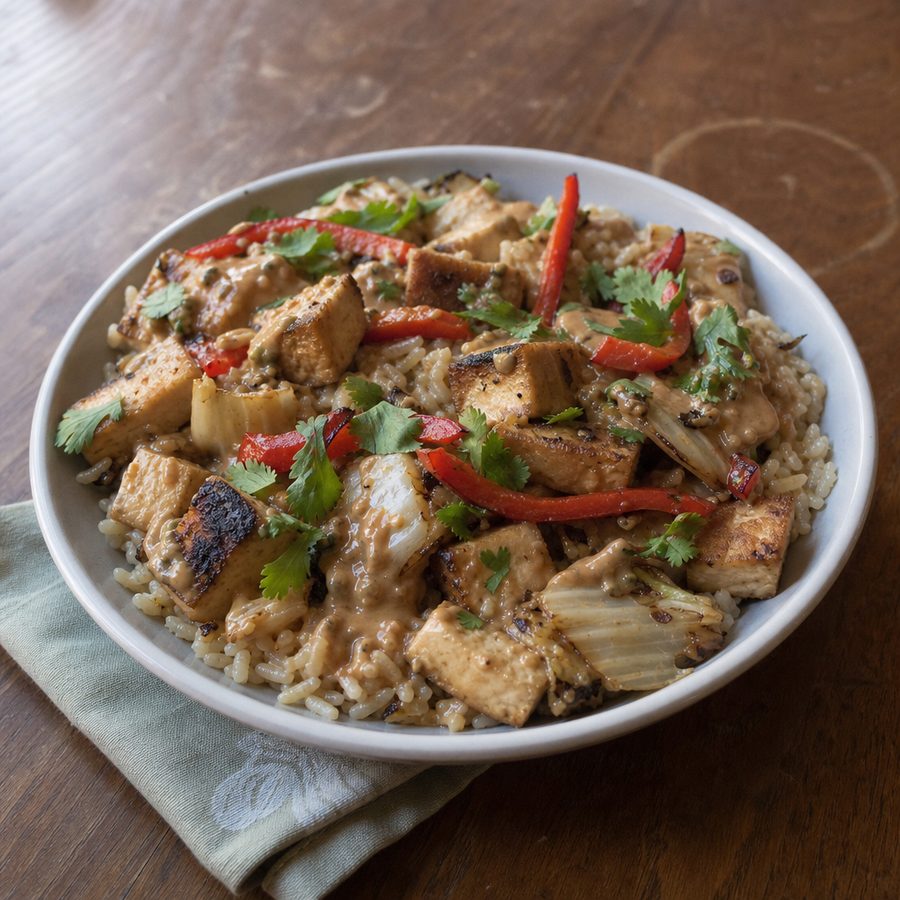
Firm tofu roasted until the corners crisp, then folded through a peanut, lime, and tamari sauce with charred cabbage and red pepper, and spooned over brown rice.
Why You'll Love This Recipe
Sunday, when I am cooking rice for the week anyway, is when this happens, because the tofu asks almost nothing of me once it is in the oven and the whole thing lands in about forty minutes. It is also one of the few bowls that is genuinely good cold, and better still after a minute back in a hot pan, so it is worth making more of than you want that night. If you have written tofu off as bland and wet, the problem was almost certainly moisture rather than the tofu itself. Press it properly, roast it hot, and you get something with a real chew to it.
Two things decide how this turns out and neither of them is subtle. The first is heat: a 425°F oven and a wide sheet pan give the cubes browned faces on at least three sides, which is where the chew comes from. The second is that the sauce goes on after roasting rather than before. Peanut butter scorches in a hot oven, so brushed on early it turns bitter and welds itself to the pan, while off the heat it loosens with the tamari and the lime into something that coats every cube. Whisk it in a bowl until it looks like thin cream before it ever meets the tofu.
A bowl this size holds me until dinner, and the tofu and the peanut butter are doing most of that work with the brown rice underneath filling in the rest. What I like about it is the range in one bowl: crisp corners on the tofu, tender rice, cabbage charred at the edges and still springy in the ribs, and strips of red pepper that stay sweet and firm. The jalapeno is where the heat comes from, and how much of it goes in is entirely yours to decide. Cilantro and a last squeeze of lime belong at the table rather than in the pan.
Ingredients
- 2 blocks (14 oz each) firm tofu, drained and pressed
- 3 cups cooked brown rice
- 6 cups napa cabbage (about 14 oz), cut into 1-inch ribbons
- 1 red bell pepper, cut into thin strips
- 5 tbsp natural peanut butter (1/3 cup)
- 3 tbsp certified gluten-free tamari
- 3 tbsp fresh lime juice (about 2 limes), plus wedges to serve
- 1 tbsp maple syrup
- 3 tbsp olive oil, divided
- 1 jalapeno, thinly sliced
- 3/4 cup chopped fresh cilantro
- 1 tsp fine sea salt, divided
Instructions
- Press the tofu for 20 minutes: Drain the tofu and set the blocks on a plate lined with paper towels, put a second plate on top with something heavy on it, and leave it for 20 minutes. Pour off the water, cut the tofu into 1-inch cubes, and pat the cut faces dry. The pressing is the whole difference between chewy tofu and wet tofu, since a block that goes into the oven full of water steams itself from the inside and never firms up.
- Roast it hot, 25 to 30 minutes: Heat the oven to 425°F (220°C). Toss the cubes with two tablespoons of the olive oil and half a teaspoon of the salt, spread them on a sheet pan with space between them, and roast 25 to 30 minutes, turning once halfway. Give them room, because tofu crowded on a pan steams in its neighbors' moisture. They are ready when the corners are deep gold and the cubes feel springy rather than soft.
- Whisk the sauce until it pours: While the tofu roasts, whisk the peanut butter, tamari, lime juice, and maple syrup together in a small bowl. It will seize into a stiff paste at first and then loosen, which is normal. Add warm water a spoonful at a time, 3 to 4 tablespoons in all, until it pours like thin cream, since a thick sauce clumps on the first cubes it touches and never reaches the rest.
- Char the cabbage, 3 minutes untouched: Heat the remaining tablespoon of olive oil in a large skillet over medium-high, add the cabbage in one layer, and leave it 3 minutes without stirring, until the edges are browned and blistered in patches. Leaving it alone is the point: cabbage stirred constantly releases its water and stews. Add the pepper strips and the jalapeno and cook 2 minutes more, until the pepper has softened slightly and still has a bite.
- Fold it together off the heat: Tip the hot tofu into the skillet off the heat, pour the sauce over everything, and fold gently until the cubes and the cabbage are coated. Keeping the pan away from the burner is what stops the peanut butter from splitting or scorching, and it happens fast enough that there is no recovering from it.
- Build the bowls and finish raw: Divide the brown rice among four bowls and spoon the tofu and cabbage over the top. Scatter the cilantro across everything, taste for the last of the salt, and serve with lime wedges. The cilantro and the last squeeze of lime belong at the table rather than in the pan, because both lose their edge within a minute of hitting anything hot.
Variations
- Almond version: Almond butter in place of the peanut butter gives a milder, slightly sweeter sauce.
- Other greens: Bok choy or shredded green cabbage char the same way in about the same time.
- Grain swap: Quinoa or buckwheat under the tofu when you want more chew than rice gives you.
- No heat at all: Leave the jalapeno out and add an extra squeeze of lime, which keeps the sauce lively on its own.
- Add crunch: A handful of chopped water chestnuts folded in at the end keeps their snap against the soft rice.
Storage & Leftovers
The tofu, rice, and vegetables keep in sealed containers in the refrigerator for up to 4 days. Store the sauced tofu apart from the rice if you have the containers for it, because the rice draws the sauce out overnight and the tofu turns soft exactly where it was crisp.
To reheat, spread the tofu and cabbage in a dry skillet over medium heat for 3 or 4 minutes to bring back some of the edge, and warm the rice separately under a lid with a splash of water. The sauce thickens in the cold and loosens again with a teaspoon of warm water stirred through it.
Tofu freezes strangely and usefully. A block frozen and thawed before you ever cook it comes out spongier and chewier, which some people love, so freeze it raw if that texture appeals. Cooked and sauced, it survives a month in the freezer but gives up its crisp corners for good.
Notes & Tips
- Press it longer than you think: Twenty minutes under a heavy skillet pulls out enough water that the tofu browns rather than steams. Ten minutes is not enough and you will taste the difference.
- Give the cubes room: Crowded tofu makes its own steam and comes out pale and soft on every face. Use two pans if the one you have is not wide enough.
- Sauce after, never before: Peanut butter and maple syrup scorch at 425°F (220°C). Folding the hot cubes through off the heat gives you a creamy coat where an early brushing gives you a burnt pan.
- Loosen the sauce with warm water: It will seize into a stiff paste the moment the lime hits it. Three or four spoonfuls of warm water bring it back to a pouring consistency.
- Leave the cabbage alone: Three minutes without stirring is what gives you char. Tossing it every thirty seconds gives you steamed cabbage and no color at all.
- Taste the jalapeno first: Heat varies wildly from one chili to the next. Take a sliver raw before you decide how much of it goes into the pan.
Nutrition & Mindful Eating
- Tofu, brown rice, and peanut butter make a full bowl between them. The tofu brings the protein and the chew, the rice gives it enough substance to be lunch, and the peanut butter turns a handful of ingredients into something that eats like a sauce.
- Firm tofu is pressed soybean curd, and driving more water out of it before it roasts is what gives you those chewy browned corners. It carries a complete set of amino acids along with calcium, which comes from the calcium sulfate used to set most blocks you will find at the store.
- Peanut butter does two jobs in the sauce. It thickens it so the sauce clings to every cube, and it brings its own protein and monounsaturated fat, which is part of why this bowl stays with you right through an afternoon.
- Napa cabbage charred at the edges goes sweet where it meets the pan while the white ribs keep their spring, and it brings vitamin C and folate along with a crunch that survives the sauce.
- Lime juice, sliced jalapeno, and cilantro are what keep a rich peanut sauce from sitting heavy. The lime goes in at the end where it stays sharp, the chili heat builds slowly behind it, and the cilantro lands cool over the top.
- As you eat, notice how the crisp corners of the tofu give way to the soft middle, and let the lime and the slow build of chili heat keep you at the table long enough to tell when you have had enough.
Frequently Asked Questions
Can I use extra-firm tofu?
Yes, and it is easier. There is less water in it, so 10 minutes of pressing is enough. Silken and soft tofu will not work at all here, since they break apart in the toss and never build an edge. Buy the block packed in water from the refrigerated case.
My tofu came out soft rather than crisp. What went wrong?
Almost always one of three things: not enough pressing, cubes crowded on the pan so they steamed one another, or the sauce going on before the oven. Give each cube an inch of room, press for the full 20 minutes, and hold the sauce until the pan comes out.
Can I make this ahead?
Yes, and it is one of the better make-ahead lunches. Roast the tofu and cook the rice up to 3 days ahead, keep the sauce in a jar, and char the cabbage fresh in about 5 minutes. Sauce the tofu after you reheat it rather than before it goes into the container.
Does this work on a low-FODMAP plan?
It does. There is no onion or garlic in it, so nothing gets pulled out of the recipe on you, and the savory side comes from tamari, peanut butter, and lime. Firm tofu is the form of soy that suits this plan, since pressing carries most of the FODMAPs off with the water.