
Crisped Tempeh with Charred Cauliflower and Pumpkin Seed Salsa
Cubes of tempeh browned hard in a skillet with blistered cauliflower, finished with a cold salsa of toasted pumpkin seeds, red pepper, lime, and cilantro.
Why You'll Love This Recipe
This is the skillet I make on a Tuesday when I want dinner to taste like it took longer than it did. Tempeh divides people, and almost every time somebody tells me they do not care for it, they have eaten it soft and steamed rather than browned hard in a hot pan. Cut into cubes and left alone on one face at a time, it develops a crust that is genuinely nutty and holds up under a spoonful of lime salsa. Cauliflower gets the same treatment in the same pan, and between the two of them the plate has real weight to it without anything simmering for an hour.
The method matters more than the ingredient list here. A wide pan, enough heat that the oil shimmers, and the discipline to leave things alone are what turn cauliflower from pale and squeaky into something dark, sweet, and almost meaty at the edges. I cook the tempeh first because it seasons the oil, then the cauliflower goes into that seasoned fat with the cumin and chipotle so the spices bloom against the metal rather than sitting raw on the surface. The salsa never sees the heat. Pumpkin seeds toasted dry, red pepper cut small, scallion, cilantro, and a good amount of lime juice, stirred together while the pan works.
It belongs in the middle of a week when you have been eating a lot of the same things. The flavors are loud in a way that has nothing to do with richness: smoke from the chipotle, sourness from the lime, sweetness out of the charred cauliflower and the raw pepper, and the green grassy note cilantro brings when there is enough of it. I serve it straight from the skillet with lime wedges and let people squeeze more over their own bowls. There is enough tempeh in every serving that nobody goes looking for something else afterward, which is the whole point of a one-pan dinner.
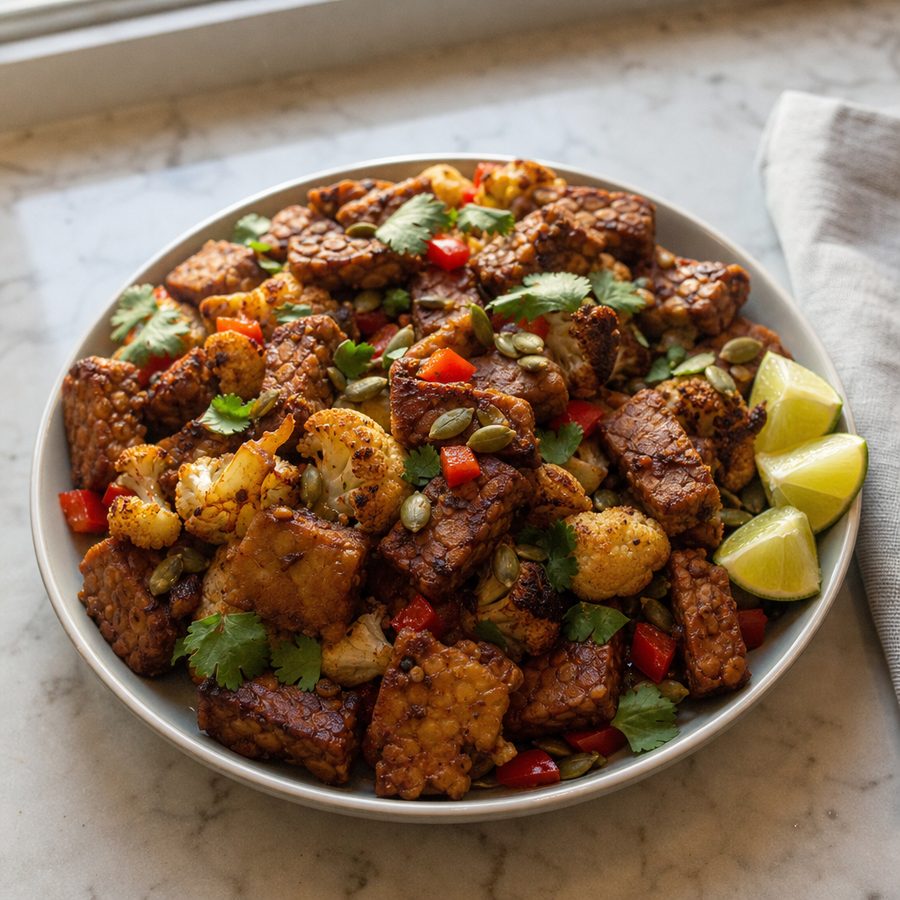
Ingredients
- 12 oz tempeh, cut into 3/4-inch cubes
- 1 medium head cauliflower (about 1 1/3 lb trimmed), broken into small florets
- 1 large red bell pepper, stemmed, seeded, and cut into 1/4-inch dice
- 1/3 cup pumpkin seeds (pepitas), hulled and untoasted
- 4 scallions, thinly sliced, white and green parts kept separate
- 3/4 cup cilantro leaves and tender stems, roughly chopped
- 4 garlic cloves, thinly sliced
- 3 tbsp lime juice, from about 2 limes, plus wedges to serve
- 2 tbsp olive oil
- 1 1/2 tsp chipotle powder
- 2 tsp ground cumin
- 1/2 tsp fine sea salt
Instructions
- Toast the pumpkin seeds: Put the pumpkin seeds in a dry twelve-inch skillet over medium heat and toast for three to four minutes, shaking the pan often. They will pop and swell and go a shade darker, and they smell like popcorn when they are ready. Tip them onto a plate right away, since they scorch in the pan's residual heat.
- Mix the salsa: In a bowl, stir together the toasted pumpkin seeds, the diced red pepper, the scallion greens, the cilantro, the lime juice, and a pinch of the salt. Leave it on the counter while you cook. The lime softens the pepper slightly and pulls a little juice out of it, which is what makes this a salsa rather than a sprinkle.
- Brown the tempeh: Return the skillet to medium-high with one tablespoon of the olive oil. When it shimmers, add the tempeh cubes in a single layer and leave them undisturbed for three minutes, until the underside is deep brown. Turn them and give them two to three minutes more, so most cubes are crusted on at least two faces. Move them to the plate.
- Char the cauliflower: Add the second tablespoon of oil, then the cauliflower florets, cut side down, with the remaining salt. Leave them alone for four minutes without stirring. They should be blackened in patches and smell toasty. Toss once, add the garlic, the scallion whites, the cumin, and the chipotle, and cook three to four minutes more until the florets are tender at the stem when you press one.
- Bring it together: Return the tempeh to the pan and toss for a minute, just long enough to warm it through and coat it in the spices. Take the skillet off the burner, spoon about half the salsa over the top, and toss once. Serve the rest of the salsa at the table with lime wedges so everybody can add more acid where they want it.
Variations
- Broccoli and cauliflower: Use half broccoli and half cauliflower so you get two textures, and add the broccoli a minute after the cauliflower since it chars faster.
- Smoked paprika: Swap the chipotle powder for smoked paprika when you want the smoke without the heat, which is how I make it for children.
- Sunflower seed salsa: Toasted sunflower seeds stand in for the pumpkin seeds and give a finer, sandier crunch that clings to the tempeh.
- Charred green beans: Trade the cauliflower for green beans blistered in the same hot pan for five minutes, which makes a lighter, greener version for summer.
- More heat: Add a sliced jalapeno to the salsa along with the red pepper, seeds included if you want the dish to bite back.
Storage & Leftovers
This keeps four days in a sealed container in the refrigerator, and I store the salsa separately when I know I am eating it later in the week. The tempeh and cauliflower settle and take on more of the chipotle overnight, which most people find is an improvement, while the pumpkin seeds soften once they sit in lime juice.
Reheat it in a dry skillet over medium-high for three or four minutes, spread out and left still for the first two so the tempeh crisps again. A microwave will heat it through, but everything goes uniformly soft and you lose the contrast between the crusted edges and the tender middles that makes the dish worth eating.
The cooked tempeh and cauliflower freeze for up to two months in flat, sealed portions. Thaw overnight in the refrigerator and crisp them in a hot pan rather than reheating from frozen, since cauliflower gives up a lot of water as it thaws. Make the salsa fresh on the day, because it does not survive freezing in any recognizable form.
Notes & Tips
- Toast the seeds first: Doing them in the dry pan before any oil goes in means one pan for the whole dinner, and the pan is then already hot when the tempeh arrives.
- Cut the tempeh into cubes, not slabs: Cubes give you six faces to brown and far more crust per bite. Slabs look tidier and taste noticeably flatter.
- Use the widest skillet you own: Tempeh and cauliflower both need contact with metal to brown. Two batches in a small pan beat one crowded batch every time.
- Bloom the spices in the fat: Cumin and chipotle go in with the cauliflower rather than at the end, so they toast in oil for a minute and lose their raw, dusty edge.
- Keep half the salsa off the heat: Spooning half over in the pan and half at the table gives you both a wilted, savory version and a bright, crunchy one in the same bowl.
- Cut the pepper small: Quarter-inch dice mixes into the salsa and lands on every forkful. Larger pieces sit apart from everything else and eat like a garnish.
Nutrition & Mindful Eating
- Tempeh, cauliflower, and pumpkin seeds each hold their own shape in this pan, and that is what makes the bowl work. The tempeh carries the protein and most of the substance, the cauliflower brings bulk and fiber, and the seeds add fat and crunch on top of both.
- Tempeh is whole soybeans fermented into a firm cake, so it browns like something solid rather than falling apart, and the fermentation is part of why many people digest it more comfortably than other soy foods. It carries protein and fiber together, which is unusual in a food this dense.
- Cauliflower turns sweet and almost nutty once the cut faces go dark, a completely different vegetable from the pale boiled version, and it holds vitamin C and fiber while staying light enough that a whole head disappears between four people.
- Pumpkin seeds toasted dry in the pan swell and pop and turn glossy, and they bring magnesium and zinc along with the crunch. Toasting is what unlocks that popcorn smell, so it is worth the three minutes at the start.
- Lime juice, chipotle, cumin, and a lot of cilantro are what keep this tasting alive from the first bite to the last. The acid goes on at the end rather than during the cooking, which is why the finished pan tastes sharp and green rather than merely spiced.
- As you eat, notice the difference between the pieces the salsa softened and the ones that stayed crisp, and let the sourness of the lime slow you down enough to finish the bowl at the table rather than over the sink.
Frequently Asked Questions
Do I need to steam the tempeh first?
Not for this recipe. Steaming is a trick for mellowing tempeh's bitterness before a marinade, and here the hard browning and the chipotle do that job instead. If your brand tastes especially assertive, steam the cubes for eight minutes and pat them very dry before they go in the oil.
My cauliflower steamed rather than charred. What went wrong?
Almost always a crowded pan or wet florets. A pound and a third of cauliflower needs a twelve-inch skillet, and if yours is smaller, char it in two batches. Dry the florets thoroughly after washing, and resist stirring for the first four minutes so the cut faces stay in contact with hot metal.
Can I make any of it ahead?
Yes. The salsa can be mixed up to a day ahead, though hold the cilantro until serving so it stays green, and the cauliflower can be broken into florets and the tempeh cubed the night before. With that done, the cooking is under twenty minutes from a cold pan.
Is there anything to watch if I am cooking this for someone avoiding soy?
Tempeh is a fermented soybean cake, so it is the one thing in the recipe that cannot stay. Firm tofu is also soy, so the honest swap is a can of chickpeas, drained, dried, and crisped in the same way, or cubed chicken thigh browned in the first step. Everything else on the list stands.