
Crispy Almond Flour Baked Cod
Flaky cod with a crunchy almond-flour and parmesan crust, baked golden. The gluten-free answer to breaded fish, no frying required.
Why You'll Love This Recipe
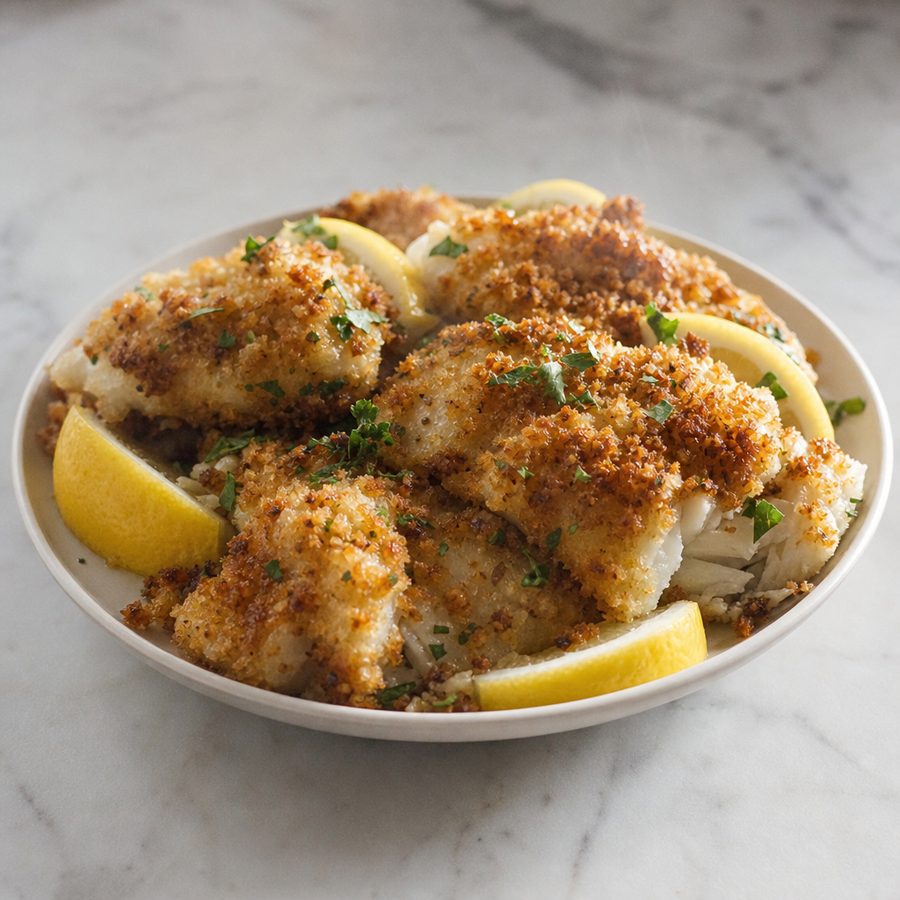
Baked cod under an almond flour and parmesan crust. It gives you the fish-and-chips texture out of a hot oven, with no pan of frying oil to deal with afterward and no wheat flour anywhere near it. Almond flour browns differently from breadcrumbs, more slowly and more deeply, and the parmesan mixed through it is doing real structural work: the cheese melts and then crisps, and that is what holds a coating onto a fish as flaky and delicate as cod. Eighteen minutes at high heat and dinner is done.
Press the crumb onto the fish rather than sprinkling it over, and drizzle olive oil across the top before the pan goes in. Those are the two habits that decide how this turns out. Almond flour has no gluten to grab with, so a coating that was patted on gently falls off in sheets, while one pressed on with the flat of your hand stays put. And a dry oven browns nothing on its own: fried food gets its color from the oil it sits in, so a baked crust needs its own supply on the surface to do the same work.
Cod is mild, flaky protein and the almond crust adds the richness that keeps a fillet from tasting like a diet dinner. The crust does something a breadcrumb one cannot, since almond flour browns from its own fat rather than needing a pan of oil to fry in, which is why this works in an oven at all. For cod with a sauce rather than a crust, there is our Baked Cod In Tomato-Herb Sauce.
Ingredients
- 4 cod fillets (about 6 oz each)
- 3/4 cup almond flour
- 2 large eggs
- 1/4 cup grated parmesan
- 1 tsp paprika
- 1/2 tsp garlic powder
- 1/2 tsp fine sea salt
- 2 tbsp olive oil
- 1 lemon
- fresh parsley
Instructions
- Set up the pan so air can get underneath: Heat the oven to 425°F (220°C) and line a sheet pan, or better still set a wire rack on top of it, which lets hot air reach the underside so the bottom of the crust is not sitting in liquid while the top browns. Pat the cod very dry on both faces with paper towel. A wet fillet sheds its coating in the oven, and cod holds a great deal of surface water, particularly if it was frozen and thawed on the way to you.
- Two dishes, and keep one hand dry: Beat the eggs in a shallow dish until they are completely smooth with no ropes of white left, and mix the almond flour, parmesan, paprika, garlic powder, and salt in a second dish, stirring until the cheese is spread evenly through the flour instead of sitting in clumps. Use one hand for the egg and the other for the crumb. The reason breading so often turns into gloves of paste is one hand doing both jobs.
- Press the crumb on rather than sprinkling it: Dip each fillet in the egg, let the excess run off for a second, then lay it in the almond flour mixture and press firmly with your palm on both sides so the crumb is compacted onto the fish rather than resting on top of it. Almond flour has no gluten to grip with, so pressure is the only thing making it stay. Set the fillets on the pan with space between them and drizzle the olive oil over the tops, which is what browns a coating in a dry oven.
- Bake until golden and the fish just flakes: Bake for sixteen to eighteen minutes without turning the fillets, until the crust is deep golden and the fish flakes under gentle pressure from a fork, which is 145°F at the thickest point. Almond flour browns faster than breadcrumbs do, so if the crust gets there before the fish does, lay a piece of foil loosely over the top for the last few minutes rather than pulling it out early.
- Lemon at the table, not in the oven: Let the fillets sit for a minute or two after they come out, because the crust firms as it cools, then squeeze the lemon over them at the table and scatter the parsley at the same moment. Acid landing on a crust that is still cooking softens it, and lemon juice added early loses its brightness to the heat and leaves only the sour part behind. Cut the lemon into wedges and let people add their own.
Variations
- Skip the dairy: Leave the parmesan out and add a spoonful of nutritional yeast plus a little extra salt. The crust browns a shade less but holds together the same.
- Add more vegetables: Roast asparagus or green beans on a separate sheet. Anything that gives off water next to the fish will undo the crust.
- Make it spicy: Work cayenne into the almond flour mixture so the heat lives in the crust instead of sitting on top of it.
- Change the fish: Haddock, pollock, or tilapia all take this coating. Thin fillets come out several minutes sooner, so start checking early.
- Turn it into tacos: Flake the baked fillets into warm tortillas or lettuce cups with shredded cabbage and a lemony yogurt sauce. The lettuce cups keep it grain-free, and if you reach for tortillas, choose corn or another certified gluten-free kind.
Storage & Leftovers
Refrigerate leftovers in an airtight container and eat them within three days. Cooked fish is safe in the refrigerator for four, but cod loses its sweetness quickly, and the crust starts softening the moment it goes in, since it is pressed against a fillet that keeps releasing moisture. Store the pieces in a single layer with the crust facing up rather than stacking them, and they hold up better than you would expect.
Reheat in a hot oven and never in a microwave. Ten minutes at 400°F (200°C) on a wire rack set over a sheet pan lets air reach the underside and takes the crust most of the way back to where it started, while a microwave hands you a wet coating and tight, rubbery fish in ninety seconds. An air fryer does the same job in six or seven minutes at the same temperature.
Freezing works far better before baking than after. Bread the fillets, freeze them flat on a tray until firm, then bag them for up to two months and bake straight from frozen with five or six minutes added to the time. A fillet that was baked and then frozen comes back watery, because the ice crystals break down the flesh and the crust has nowhere to send the water they leave behind.
Notes & Tips
- Pat the cod very dry: A wet fillet sheds its coating in the oven. This is the step that decides whether you get a crust at all.
- One hand wet, one hand dry: Use one hand for the egg and the other for the almond flour. Otherwise both hands end up breaded and the crumb goes clumpy.
- Press, do not sprinkle: Lay the fillet into the crumb and press it on firmly on both sides so it actually adheres.
- Watch the color: Almond flour browns faster than breadcrumbs. If the crust is dark before the fish flakes, lay a piece of foil loosely over the top.
- Do not overcook the fish: White fish is done as soon as it turns opaque and flakes easily. Pull it early to keep it moist.
- Use a rack if you have one: Set on a rack over the sheet pan, the underside crisps instead of steaming against the metal.
Nutrition & Mindful Eating
- The cod, the almond crust and the oven work as one thing here. The fish stays mild and moist while the coating around it toasts and hardens, so every forkful gives you crunch on top and soft flakes below.
- Cod is a mild, close-textured white fish that breaks into large clean flakes once it is done. It is dense in protein and carries iodine and selenium, two minerals that are hard to come by elsewhere on a dinner plate.
- Almond flour toasts rather than steams, which is what gives this crust its sandy crunch and deep gold color. Ground almonds also bring vitamin E and the fat that helps the coating brown so readily in a dry oven.
- Parmesan and egg are what make the coating stick and taste savory. The egg sets around the fish and holds the almonds in place, while the parmesan melts into the crust and leaves a salty, nutty edge along with the calcium hard cheeses carry.
- Olive oil drizzled over the top is what lets the oven crisp the crust, and the lemon squeezed on at the table cuts the richness and makes the fish taste more like itself.
- As you eat, listen for the crust breaking under your fork and notice how the lemon lifts each bite, and give yourself long enough at the table to let the meal settle.
Frequently Asked Questions
What makes it gluten-free?
The usual breadcrumb coating is swapped for almond flour and parmesan, so there's no wheat. This is a safe breaded fish for celiac and gluten-free diets.
Can I air-fry it?
Yes, 400°F for about 10–12 minutes gives an even crispier crust.
Is cod high in protein?
Very, it's a mild, high-protein fish, so this is a simple dinner that still keeps you full.
How long does it keep?
Three days, kept in a single layer with the crust facing up instead of stacked. Reheat at 400°F (200°C) for about ten minutes on a rack so the air can reach underneath, or six to seven minutes in an air fryer. The microwave will give you a wet coating and tight fish.