
Crispy Salt-and-Butter Chicken Wings
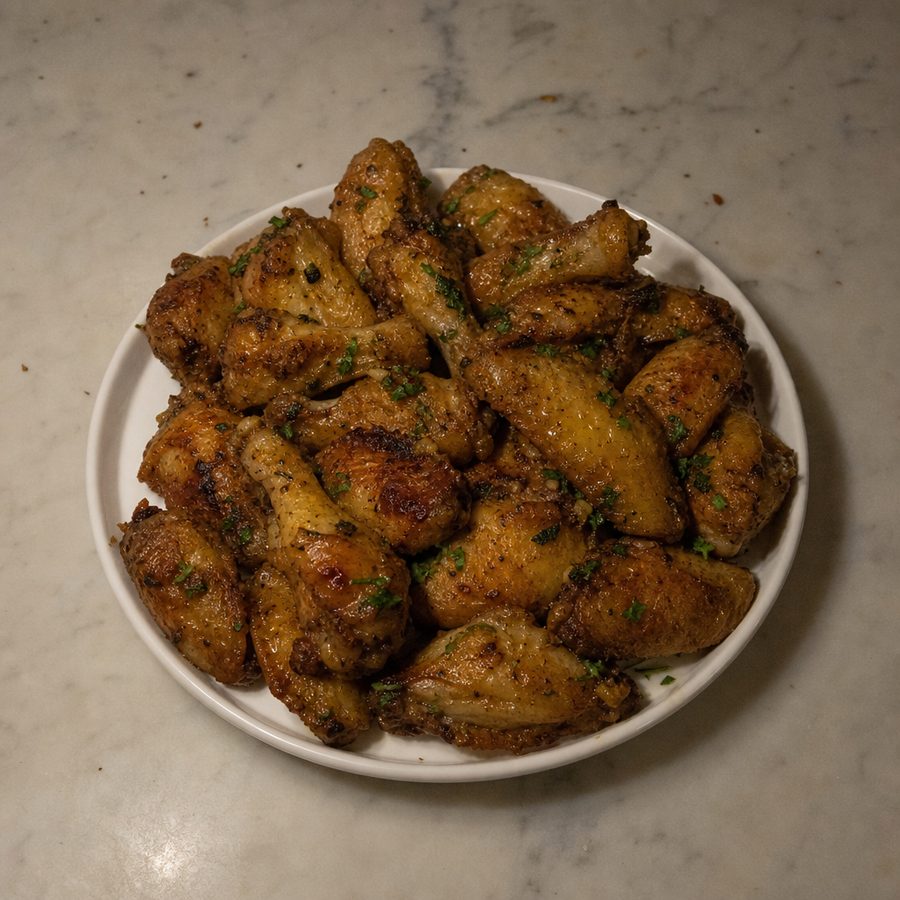
Oven-roasted wings baked until the skin is shatteringly crisp, then tossed in melted butter and salt.
Why You'll Love This Recipe
Wings with salt and butter and nothing else. No sauce, no coating, no flour, no dredging in anything. Done properly they genuinely do not need it, because the skin is the flavor: given dry heat and somewhere for the fat to drip away, it renders, tightens, and goes to glass. Most of what people put on wings is there to cover for skin that never got crisp. Get the skin right and the butter at the end is a finish rather than a rescue.
Two things make them crisp, and neither one is an ingredient. The first is drying the skin uncovered before they go anywhere near the oven, because water on the surface has to boil away before browning can start and that delay is what leaves wings pale. The second is the rack: wings laid flat on a pan sit in the fat they render and the undersides go soft in it, while a rack lets the hot air get all the way around and the fat fall away. Everything else in this recipe is salt, butter, and time.
This is straightforward protein and fat, which is what makes it a lunch that holds you rather than a snack that vanishes and leaves you hungry forty minutes later. Worth saying plainly, though: there is nothing green within sight of this plate, so if it is standing in as lunch rather than as something to eat off a board, put something raw and crunchy next to it. Our Bacon Cheeseburger Meatballs is the same instinct in meatball form.
Ingredients
- 2 lb chicken wings, split at the joint
- 2 tbsp butter, melted
- 1 tsp salt
Instructions
- Dry the wings and leave them uncovered: Pat the wings very dry with paper towels, then spread them out and leave them uncovered for at least 20 minutes. Dry skin is what crisps, because the oven has to boil off any surface water before browning can begin at all, and that borrowed time is exactly what leaves wings pale and slack. If you can leave them uncovered in the refrigerator for a few hours instead, better still.
- Salt them and set them on a rack: Toss the wings with half the salt and arrange them in a single layer on a rack set over a sheet pan, with a little space between each one. The rack is not optional: wings laid flat on a pan sit in the fat they render and the undersides stew in it, while a rack lets hot air reach the whole surface and the fat drip clear.
- Roast 40 to 45 minutes at 425°F: Roast at 425°F (220°C) for 40 to 45 minutes, turning them once around the halfway mark. The long stretch at a high heat is doing two jobs in sequence, first rendering the fat out from under the skin and then crisping what is left behind, so hurrying it gives you rubbery skin sitting on a layer of fat that never melted.
- Check the skin before they come out: Look for skin that has tightened and gone deep golden all over rather than only on the face that pointed up, and for the tips to be dark. If any wing still looks pale and slack, give the pan another five minutes. Underdone skin does not improve on the plate, and five more minutes will not dry out a wing this size.
- Toss with butter and eat them now: Tip the hot wings into a bowl, add the melted butter and the rest of the salt, and toss until every one is glossy. Do it the moment they leave the oven, while the skin is hot and dry enough to take the butter as a coating rather than soak it up, and serve them right away, because a crisp wing stays crisp for about ten minutes and there is no getting that back.
Variations
- Skip the dairy: Toss the hot wings in warm olive oil or in the fat rendered onto the pan instead of butter. They stay just as crisp.
- Add more vegetables: Roast broccoli or cauliflower on a second sheet at the same temperature. Adding it to the wing pan traps steam and softens the skin.
- Make them buffalo: Whisk hot sauce into the melted butter before you toss. That is all classic buffalo sauce has ever been.
- Garlic and parsley: Stir minced garlic and chopped parsley into the melted butter and toss the wings in that while they are still hot.
- Lemon pepper: Lemon zest and a lot of cracked black pepper into the butter. Sharper than the plain version and just as simple.
Storage & Leftovers
They keep four days and they are never again what they were in the first hour, and there is no trick that gets around it. The skin that took forty minutes to crisp starts pulling moisture back out of the meat the moment it is covered. Store them uncovered on a plate if you have the room, which keeps them drier than a sealed container does.
To bring them back, give them ten minutes at 400°F on a rack. Not on a plate, and not in a microwave. The rack matters as much the second time as the first, because wings sitting flat sit in their own fat and soften in it. They will not be quite what they were out of the oven, but they will be crisp.
These freeze better than most cooked food, for about a month, because there is nothing on them to go soggy. Spread them on a tray to freeze first so they do not weld into one block, then bag them. Reheat straight from frozen at 400°F for about fifteen minutes, on the rack again.
Notes & Tips
- Dry skin and space: Pat the wings completely dry and lay them out with room between them. Dry skin and moving air are the whole secret.
- Overnight beats twenty minutes: If you can, salt them and leave them uncovered in the fridge overnight. The skin dries out further and crisps better for it.
- The rack is doing real work: Air underneath is why the bottoms crisp instead of sitting in rendered fat. Wings straight on the pan come out soft on one side.
- Salt in two stages: Half before roasting so it draws moisture out of the skin, half after so there is salt you actually taste.
- Toss in a bowl, not on the pan: Butter poured over the sheet pools underneath and steams the skin you just spent forty minutes crisping.
- Reheat in the oven: A few minutes in a hot oven brings the skin back. The microwave turns it to leather every time.
Nutrition & Mindful Eating
- Three things are doing all the work here: the chicken, the butter, and the salt. The skin crisps in the oven, the butter goes over it hot so it soaks into the edges, and the salt lands last, when it will actually stick.
- Chicken wings are mostly skin and small muscles around the bone, which is exactly why they crisp the way they do, and the meat closest to the bone stays juicy while carrying complete protein along with selenium and the B vitamins that come with poultry.
- The skin is where the crisp lives, and roasting on a rack lets the heat get all the way around each piece so it dries and blisters rather than steaming against the pan.
- Melted butter tossed through at the end coats that crust and smells faintly toasted, and the fat in it brings vitamin A along for the ride.
- A plate of these eats like a main course, dense and rich, and the protein in the meat is what makes a few pieces hold you longer than their size suggests.
- As you eat, let the crack of the skin register before the meat gives way, and slow down between pieces so you can tell where your appetite actually settles.
Frequently Asked Questions
Do I need to fry these?
No, a hot oven and a rack give you crisp skin without any oil or deep frying.
Can I use whole wings?
Splitting them at the joint gives more crisp surface, but whole wings work with a few extra minutes.
How long does it keep?
Four days, though they are at their best in the first hour. Reheat them on a rack at 400°F for ten minutes rather than in a microwave, which turns crisp skin back to wet paper.
Can I make it ahead?
Half of it, and it is the half that matters. The drying is what takes planning, so pat the wings and leave them uncovered on a rack in the refrigerator for a few hours or overnight; they will crisp better than wings dried for twenty minutes on the counter. The roasting has to happen when you want to eat.