
Cuban-Style Picadillo with Sweet Plantain and Olives
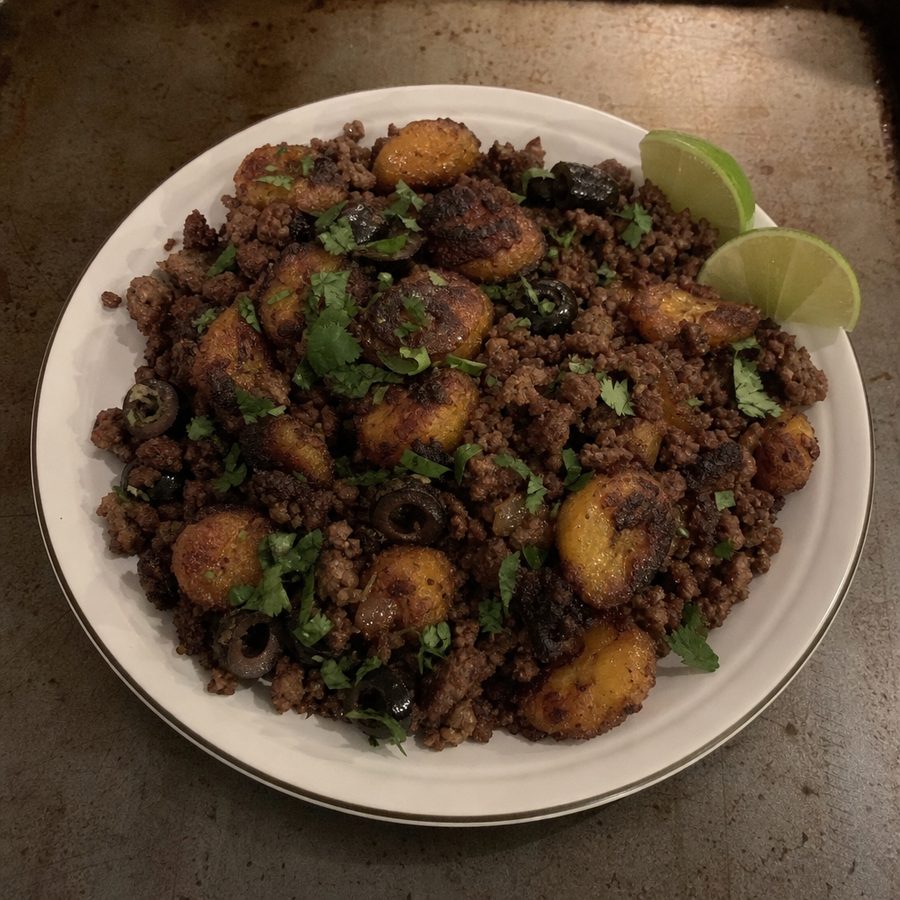
Ground beef browned hard with onion and garlic, folded together with pan-caramelized ripe plantain, halved olives, a whisper of cinnamon, and lime squeezed over at the end.
Why You'll Love This Recipe
Twenty five minutes, and dinner that tastes like it took an afternoon. Picadillo in most kitchens is a long, soft simmer, and this one gets its depth from hard browning instead. The beef goes into a properly hot pan and stays put until a crust forms, the onion softens in the fat left behind, and the plantain caramelizes on its own in a corner of the skillet. By the time everything comes together, the flavors have already gone where an hour of simmering would have taken them.
The plantain is the part people remember. Buy them when the skins are mostly black, which is when the starch has turned to sugar and the flesh smells faintly of banana bread. Cut into thick coins and given a hot pan, they go dark gold on both faces and stay creamy in the middle, and that sweetness is what the olives and the vinegar are pushing against. If your plantains are still yellow and firm, they will taste starchy, so give them two more days on the counter before you cook.
When the evenings have gotten away from you, this is what to make. It is one skillet, it feeds four generously, and the leftovers eat better than the first night. I serve it in shallow bowls with lime wedges and extra cilantro, and I keep half an avocado on the board to slice over the top when I want the plate a little richer. It also travels well in a lunch container, which is the real reason I usually double the beef.
Ingredients
- 1 1/4 lbs ground beef
- 2 ripe plantains (skins mostly black), peeled and cut into 1/2-inch coins
- 1 large onion, finely diced
- 4 cloves garlic, minced
- 1/3 cup pitted olives, halved
- 1 tbsp avocado oil
- 1 tbsp apple cider vinegar
- 2 tbsp lime juice, from 1 lime, plus wedges to serve
- 1/4 cup chopped fresh cilantro
- 1 tsp dried oregano
- 1/4 tsp ground cinnamon
- 1/2 tsp fine sea salt
Instructions
- Get everything cut before the pan goes on: This cooks fast enough that there is no time to chop midway. Dice the onion fine, mince the garlic, halve the olives, chop the cilantro, and peel the plantains by scoring the skin lengthwise and lifting it away in strips. Cut the plantains into coins a good half inch thick so they hold their shape.
- Caramelize the plantain: Heat the avocado oil in a large skillet over medium-high until it shimmers. Lay the plantain coins in a single layer and leave them alone for three minutes, until the undersides are deep gold and release from the pan without tugging. Turn each one, give them two minutes more, and move them to a plate.
- Brown the beef properly: Add the beef to the same skillet in one flat layer, break it only into four or five large pieces, and let it sit undisturbed for four minutes. You want a real crust, dark brown and slightly crisp at the edges. Then break it up with a spoon and cook two minutes more, until no pink remains.
- Build the base: Push the beef to one side, add the onion to the cleared space with the salt, and cook for three minutes, stirring, until it turns translucent and picks up the browned bits. Stir in the garlic, oregano, and cinnamon and keep everything moving for forty seconds, just until the garlic smells sweet rather than sharp.
- Bring it together and finish cold: Return the plantain to the pan with the olives and the cider vinegar, and fold everything together over medium heat for two minutes so the vinegar cooks off its edge. Take the skillet off the burner, add the lime juice and most of the cilantro, and stir once. Taste, add a pinch more salt if it needs it, and serve with the rest of the cilantro and lime wedges.
Variations
- Sweet potato: Swap the plantain for a small sweet potato cut into 1/2-inch dice, browned the same way but given eight to ten minutes with a lid on so it cooks through.
- Avocado and lime over the top: Slice half an avocado over each bowl at the table. It turns the plate creamy and makes the vinegar taste sharper by contrast.
- Shredded cabbage underneath: Pile the picadillo over a handful of thinly shredded green cabbage so the heat wilts it halfway and it keeps a little crunch.
- Herb-heavy finish: Double the cilantro and add a handful of chopped scallion off the heat for a fresher, greener version that suits warm weather.
Storage & Leftovers
Sealed in the refrigerator this keeps four days, and it is one of the few skillet dinners I actively look forward to eating again. The plantain softens overnight and gives up a little of its sweetness into the beef, so day two tastes rounder and less separated than the night you made it.
Reheat it in a dry skillet over medium-high, spread flat and left alone for the first two minutes so the beef crisps again at the edges. A fresh squeeze of lime at the end wakes the whole thing up, since the acid is the first thing to fade in the refrigerator. The microwave works when you are in a hurry, though everything goes uniformly soft.
It freezes for up to three months in flat, sealed portions. Thaw overnight in the refrigerator rather than on the counter, because the plantain releases water as it comes back and you want that to cook off in the pan instead of pooling. Add the cilantro fresh after reheating.
Notes & Tips
- Let the beef sit still: The single biggest difference between this and a gray skillet of meat is four undisturbed minutes at the start. Break the beef up too early and it steams in its own liquid rather than browning.
- Cook the plantain first, separately: Plantain browns at a different rate than meat and burns the moment it sits in beef fat too long. Doing it first in clean oil and returning it at the end keeps the coins distinct.
- Cut the coins thick: Thin slices collapse into mush by the time everything comes together. A full half inch gives you a crisp face and a creamy center.
- Add the lime with the burner off: Lime juice loses its perfume within seconds of hitting a hot pan. Off the heat, it stays sharp and floral and lifts everything under it.
Nutrition & Mindful Eating
- The beef, the plantain, and the olives are the three things doing the work here. The beef gives the skillet its body and most of its protein, the plantain brings the sweetness and the soft starch that makes it a full dinner, and the olives and vinegar keep something this rich from ever tasting heavy.
- Ground beef browns into the dark, savory backbone of the dish, and along with the protein it carries iron in the form your body absorbs most readily, plus the zinc and B12 that red meat is one of the few reliable sources of.
- Plantain cooked until the edges go dark is sweeter and creamier than it is firm, and that sweetness comes with real potassium and a soft starch that fills the bowl out. It is the ingredient that turns a pan of ground meat into a meal you do not need to build anything else around.
- Onion and garlic melt down into the fat and feed the bacteria in your gut, and cooking them until they turn translucent and sweet makes them gentle on stomachs that find them sharp when they are not cooked at all.
- Cider vinegar and lime juice both go in at the finish, one over heat and one off it, and that is where the brightness comes from. A skillet this savory needs acid at the very end, and it is why the last bite tastes as lively as the first.
- As you eat, hunt for the darkest plantain coins and notice how the sweetness and the brine land in different places on your tongue, and let the bowl take longer than the skillet did.
Frequently Asked Questions
My plantains were still yellow. Can I use them?
You can, though you will get a starchier, more potato-like coin than a sweet one. Give them a minute longer per side and add a squeeze of extra lime at the end to compensate. If you have two days to spare, leaving them on the counter until the skins go mostly black is worth the wait.
What can I use in place of the ground beef?
Ground turkey, ground bison, or ground lamb all work with no change to the method. Turkey browns paler and benefits from an extra minute of undisturbed contact with the pan, and lamb pushes the whole skillet richer, which the vinegar handles well.
Does this need to be spicy?
It does not. The warmth here comes from garlic, oregano, and cinnamon rather than heat, and the brightness comes from lime and cider vinegar going in at the end. That combination is what makes people ask what is in it.
Can I make it ahead for the week?
Yes, and I often do. Cook it through, cool it quickly, and portion it into containers. Hold the cilantro and the lime juice back and add them when you reheat, which keeps the herb green and the finish sharp.