
Cypriot Black-Eyed Peas and Chard with Seared Cod and Lemon
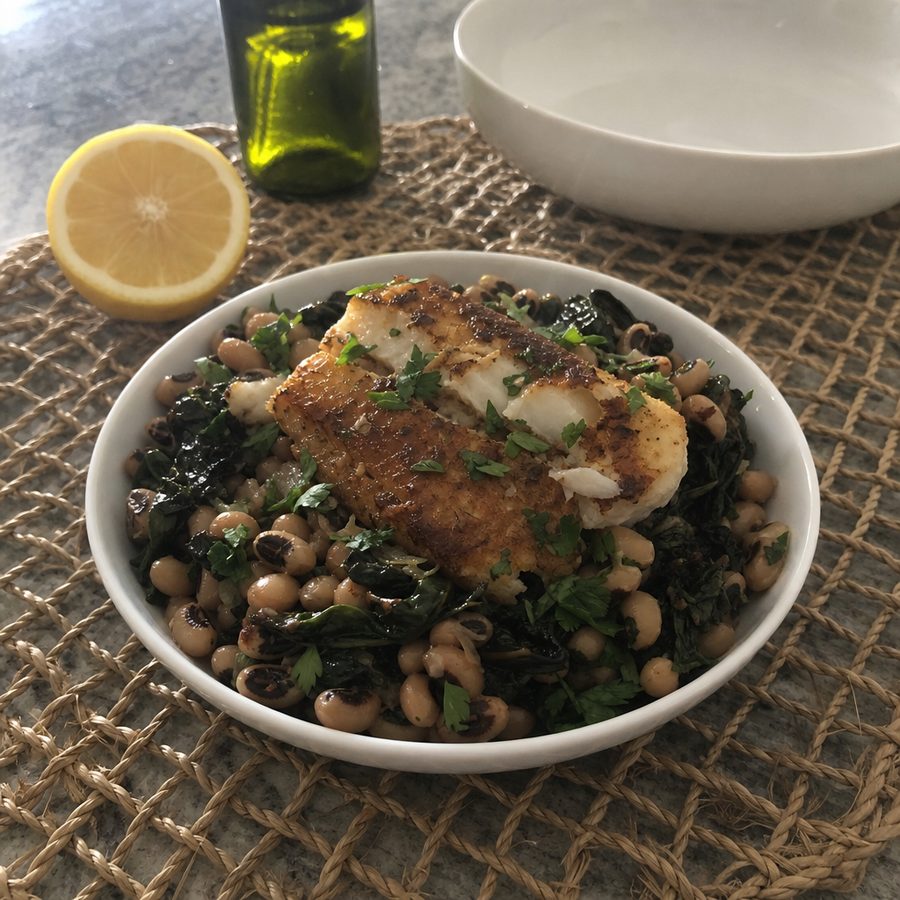
Black-eyed peas simmered soft with a whole bunch of chard, poured over with olive oil and lemon while hot, and topped with cod seared golden on one side.
Why You'll Love This Recipe
Louvi me lahana is what a Cypriot cook makes when the greens are good, and it is one of the plainest dishes I know: peas, a bunch of chard, water, and then olive oil and lemon poured over at the end with a generous hand. Almost nothing happens to it in the pot. Everything happens in the last thirty seconds, when the oil and the acid hit food that is still hot enough to drink them in. I have added a fillet of cod on top, which is how it turns up in the coastal villages, where a plate of louvi and a piece of fish is dinner.
The technique that matters is separating the chard stems from the leaves. Stems sliced thin go in with the peas and cook for six or seven minutes until they lose their squeak, while the leaves go in for the last three and stay dark and slippery. Put them in together and you end up with either woody stems or leaves cooked to nothing. The cod meanwhile gets its own dry, hot pan, pressed down for the first minute so the whole face of the fillet makes contact and browns properly rather than sitting in its own steam.
It tastes green, grassy, and sharply lemony, with the peas turning creamy where a few of them break up. Chard has a faint mineral edge that the olive oil rounds off, and the cod is sweet and clean against all of it. This is a dinner I make in early spring when the greens are worth eating, and I always make enough for a cold bowl the next day, because louvi eaten straight from the refrigerator with more lemon on it is arguably better than the hot version.
Ingredients
- 3 tbsp extra-virgin olive oil, divided, plus more to pour over
- 1 medium yellow onion, chopped
- 3 garlic cloves, sliced thin
- 2 cups canned black-eyed peas, drained and rinsed well
- 1 large bunch swiss chard (about 1 lb), stems sliced thin and leaves cut into wide ribbons
- 4 skinless cod fillets, about 5 oz each and at least an inch thick
- 3 tbsp lemon juice, from 1 1/2 lemons, plus wedges for the table
- 3/4 cup chopped flat-leaf parsley
- 1 bay leaf
- 3/4 tsp dried oregano, crumbled between your palms
- 3/4 tsp coarsely ground black pepper
- 1/4 tsp fine sea salt
Instructions
- Prepare the chard: Fold each chard leaf along the rib and cut the stem away in one strip. Slice the stems crosswise about a quarter inch thick and keep them in their own pile. Stack the leaves, roll them loosely, and cut across into wide ribbons. Wash both well and shake them dry, since chard from the market usually carries grit down in the folds.
- Start the base: Warm 2 tbsp of the olive oil in a wide pot over medium heat. Add the onion and cook for six minutes, stirring, until it is soft and translucent with no color on it. Add the sliced garlic and cook one minute more, until it smells sweet and is just turning pale at the edges.
- Simmer the peas and stems: Add the black-eyed peas, the chard stems, the bay leaf, the oregano, half the black pepper, and 1 cup of water. Bring it to a gentle simmer and cook, uncovered, for eight minutes, until the stems have lost their crunch and the liquid has reduced to a shallow pool around the peas rather than covering them.
- Wilt the leaves in: Add the chard leaves in two handfuls, stirring the first down into the hot peas before the second goes in. Cook for three minutes, until the ribbons have gone dark and slippery and collapsed to a fraction of their volume. Take the pot off the heat, fish out the bay leaf, and stir in the salt.
- Sear the cod: Pat the cod thoroughly dry and season both sides with the remaining black pepper. Warm the last 1 tbsp of oil in a skillet over medium-high heat until it shimmers, lay the fillets in what will be the presentation side down, and press each one flat with a spatula for the first thirty seconds. Cook undisturbed for four minutes, until the bottom is deep golden, then turn and give them two minutes more, until the fish flakes when you press it and reads 130°F (54°C) at the center. Cod goes to the FDA figure of 145°F (63°C) if you would rather, though at that point it flakes into smaller pieces than this plate is built for.
- Dress it and serve: Pour the lemon juice and a further generous slick of olive oil over the hot peas and greens and stir once, then add most of the parsley. Spoon into shallow bowls, set a cod fillet on each, scatter the rest of the parsley over, and take lemon wedges and the oil bottle to the table so people can add more of both.
Variations
- With zucchini: Add a diced zucchini with the chard stems, a very common addition on the island in high summer.
- Grilled fish instead: Grill the cod over hot coals rather than searing it, brushed with oil and oregano, for a smokier plate.
- Meatless bowl: Leave the fish off and top the peas with a soft-boiled egg or a spoonful of thick yogurt for a plainer supper.
- Tomato and onion salad: Serve a chopped tomato and red onion salad alongside, dressed with the same oil and lemon, which is the standard accompaniment.
- Coriander and cracked wheat: Add a teaspoon of cracked coriander seed with the garlic and serve the peas over a small scoop of bulgur for a heartier bowl.
Storage & Leftovers
The peas and greens keep four days in a sealed container in the refrigerator and are excellent cold, which is how half of Cyprus eats them anyway. They tighten up as they sit and the lemon fades, so taste before you serve and add a fresh squeeze and a fresh pour of oil. A cold bowl of this with bread makes a very good lunch.
Store any leftover cod separately and eat it within two days. Reheat it gently in a covered skillet over low heat with a spoonful of water for three minutes, or flake it cold straight into the peas, which I actually prefer. Fish reheated hard goes dry and chalky, and there is no rescuing it once it does.
I would not freeze this one. Chard leaves turn to slush after a spell in the freezer and cod thaws watery and loose. If you want to get ahead, cook the peas and stems up to two days in advance and add the leaves, the oil, and the lemon on the night you eat it.
Notes & Tips
- Split the stems from the leaves: They are two different vegetables with two different cooking times, and treating them as one is the reason chard so often ends up either squeaky or gray.
- Pour the oil over hot food: Olive oil added to a hot pot spreads and coats. Added once things have cooled it just sits on the surface, and this dish lives on that oil.
- Rinse the peas until the water runs clear: The liquid in the can is cloudy and tastes of the can. Thirty seconds under the tap keeps that out of a pot that has very little else in it.
- Keep the liquid shallow: You want the peas sitting in a puddle rather than swimming, so the lemon and oil at the end coat them instead of being diluted.
- Press the cod for the first thirty seconds: Fillets curl the moment they hit heat and only the middle touches the pan. A spatula held down flat gives you a crust across the whole face.
- Taste for lemon last: This dish takes far more acid than you expect. Add the three tablespoons, taste, and then usually add a little more.
Nutrition & Mindful Eating
- The peas, the chard, and the cod each pull in a different direction and the plate works because of it. The black-eyed peas bring the fiber and the creamy body, the chard brings the volume and the mineral edge, and the cod sits on top as a clean, sweet piece of protein that needs six minutes of attention.
- Black-eyed peas cook faster and softer than most beans, and a few of them always break down and thicken the pot. They carry folate in real quantity along with the fiber that makes a bowl of them feel like an actual meal rather than a side dish.
- Swiss chard is two vegetables in one bunch, and the slim stems cook up sweet while the leaves go dark and silky. The leaves are where the vitamin K and the magnesium sit, and the faint mineral taste you notice is part of the same package.
- Cod is mild, thick-flaked, and forgiving as long as you pull it in time, and it delivers a lot of protein for how little it asks of you. It also carries iodine and selenium, which is one of the quiet arguments for eating white fish on a regular weeknight.
- Olive oil and lemon poured over while the pot is still steaming are what make this dish itself. The heat opens up the grassy, peppery side of a good oil, the acid cuts the earthiness of the peas, and the two together are the reason a plate this plain tastes finished.
- As you eat, break the cod into the peas so the two go into the same forkful, notice how much brighter the first bite after the lemon tastes than the last one, and let a dish this simple have your full attention for a few minutes.
Frequently Asked Questions
Can I use dried black-eyed peas?
Yes, and they need no soaking, which is one of the nicest things about them. Simmer 1 cup of dried peas in unsalted water for thirty five to forty minutes until tender, drain, and carry on from there. Salt them once they are soft rather than at the start.
What other greens work here?
Almost any sturdy green. Spinach is the easy swap and needs only a minute at the end. Collard greens or kale want six to eight minutes in the pot rather than three. In Cyprus this is often made with wild greens, so treat it as a dish that welcomes whatever is good that week.
Which fish should I buy if cod looks poor?
Any thick white fillet will do. Halibut, haddock, and hake all sear the same way. Thickness matters more than species, since a thin fillet is cooked through before it has browned, and browning is where the flavor on top of the peas comes from.
How do I keep the cod from sticking?
Dry fish, hot pan, and patience. Blot the fillets well, let the oil shimmer before the fish goes near it, and then leave them completely alone for four minutes. Fish releases itself when the crust has formed, and every time you nudge it early you tear the surface you are trying to build.