
Cypriot Pork Afelia with Coriander Seed, Mushrooms, and Pourgouri
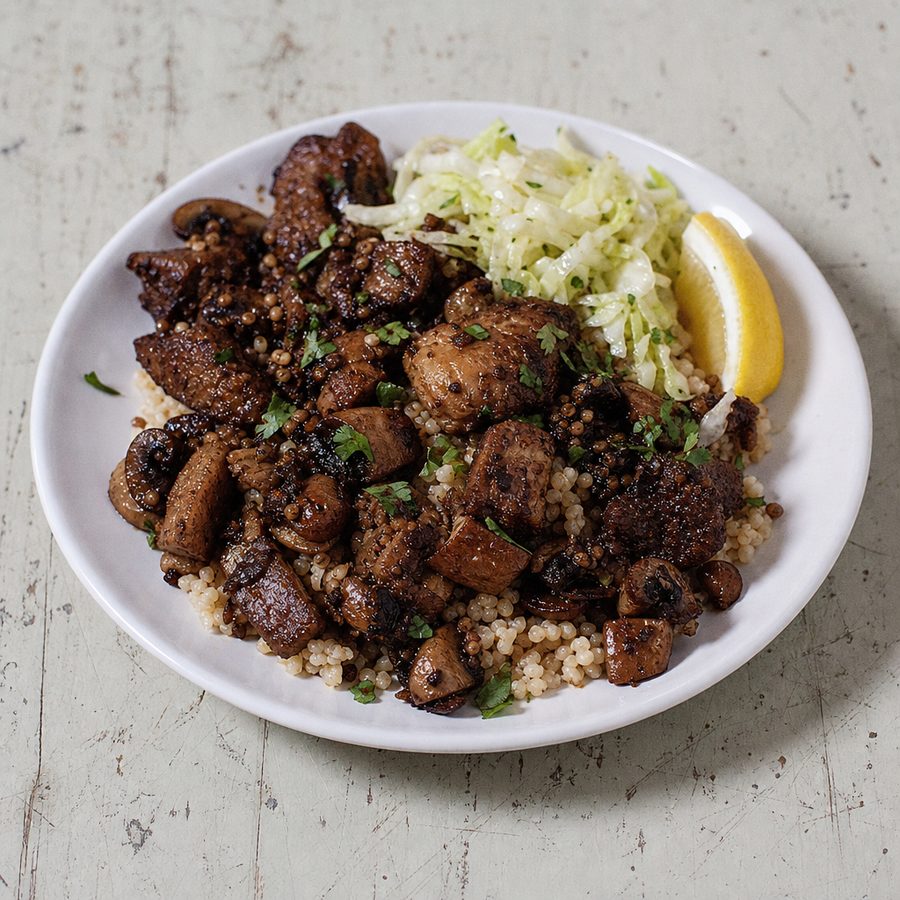
Cubes of pork loin braised with cracked coriander seed and mushrooms until the pan goes syrupy, served over cracked wheat pilaf with a sharp lemon cabbage salad alongside.
Why You'll Love This Recipe
Afelia is the dish that taught me what coriander seed can do when you stop treating it as a background spice. A heaped tablespoon goes in, cracked rather than ground, and it perfumes the whole pan with something citrusy and slightly resinous that you will not get from the powder in a jar. In Cyprus the pork is usually braised in red wine. I use broth with a good slug of red wine vinegar, which gives you the same sharp backbone against the fat of the pork, and the pan reduces down to a glossy dark sauce either way.
The mushrooms are not strictly traditional in the pork version, though Cypriot cooks make mushrooms afelia on their own with the same seasoning, so they are entirely at home here. They also do something useful: they soak up the sauce and stretch the dish, so a pound of pork feeds four generously. Pourgouri, which is cracked wheat toasted in a little oil with onion before the broth goes in, is what is always underneath. It has a nuttier, coarser texture than rice and it holds a sauce far better.
This is a cold-weather dinner in my house, though the cabbage salad keeps it from feeling heavy at any time of year. Cypriot tables almost always have that pile of shredded cabbage with lemon somewhere on them, and it is not a garnish. Eaten together, the sharp cold crunch and the rich braise make sense of each other. Make the afelia a day ahead if you can, because coriander and pork get better acquainted overnight.
Ingredients
- 1 lb boneless pork loin, trimmed and cut into 1-inch cubes
- 10 oz cremini mushrooms, halved, or quartered if large
- 1/2 cup coarse bulgur, which cooks up to about 1 1/4 cups
- 1/2 small white cabbage (about 9 oz), cored and shredded as thin as you can
- 1 small yellow onion, chopped fine
- 1 1/4 cups chicken broth
- A scant 1/2 cup canned crushed tomatoes
- 1 1/2 tbsp olive oil
- 1 1/2 tbsp red wine vinegar
- 1 1/2 tbsp fresh lemon juice, for the cabbage
- 1 heaping tbsp whole coriander seed, cracked under a pan
- 3 garlic cloves, sliced
- 1/4 cup chopped fresh flat-leaf parsley
- 1 tsp coarsely ground black pepper
- 1/4 tsp fine sea salt
Instructions
- Crack the coriander and season the pork: Put the coriander seed on a board and press down on it with the bottom of a heavy pan, rocking until the seeds split into halves and coarse pieces. Do not grind it to powder, since you want to bite into them later. Toss the pork cubes with about two thirds of the cracked seed, the salt, and the black pepper, and leave them while you set everything else up.
- Brown the pork: Heat two teaspoons of the olive oil in a heavy pan over medium-high until it shimmers. Add the pork in a single layer, not touching, and leave it for three minutes until the underside is deep brown. Turn and give it two minutes more, then move it to a plate. Brown in two batches if you need to, since crowded pork steams and stays gray.
- Cook the mushrooms and build the sauce: Add another two teaspoons of oil and the mushrooms to the same pan over medium-high. Leave them alone for three minutes so they color, then stir and cook five minutes more, until the water they release has cooked off and they squeak against the pan. Add the onion, garlic, and the rest of the coriander and cook three minutes, then pour in the vinegar and scrape the pan clean as it hisses and reduces.
- Braise: Return the pork with any juices, add the crushed tomatoes and the broth, and bring it to a simmer. Cover, lower the heat, and cook for twenty five minutes, then uncover and simmer for eight to ten minutes more, until the pork is tender enough to cut with the side of a fork and the liquid has reduced to a dark sauce that just coats everything.
- Make the pourgouri and the cabbage: While the pork braises, warm the last of the oil in a small pot, add the bulgur, and toast it for two minutes until it smells like popcorn. Add one and a quarter cups water and a pinch of salt, bring it to a boil, cover, and cook on the lowest heat for twelve minutes, then let it stand off the heat for five and fork it through. Toss the shredded cabbage with the lemon juice and a pinch of salt and let it sit ten minutes. Serve the pork over the pourgouri with the parsley scattered over and the cabbage alongside.
Variations
- Mushrooms only: Leave the pork out entirely and double the mushrooms for manitaria afelia, which is how many Cypriot cooks serve it during Lent.
- With potatoes: Add a cup of small waxy potatoes, halved, at the start of the braise for a heavier, one-pan version.
- Cinnamon and bay: Add a small piece of cinnamon stick and two bay leaves to the braise for a warmer, more perfumed sauce.
- Yogurt on the side: A spoonful of thick plain yogurt on each plate softens the vinegar and is very good against the coriander.
Storage & Leftovers
The pork keeps four days in a sealed container in the refrigerator and improves for the first two, since the coriander works its way further into the meat overnight. Store the pourgouri separately so it does not absorb the sauce and go pasty.
Reheat the pork covered over low heat with a splash of broth for five to six minutes, stirring once or twice. The pourgouri comes back best in a covered pan with a tablespoon of water, steamed for three minutes and then forked through. Dress the cabbage fresh each time, since lemon makes it weep and go limp within a few hours.
The braise freezes for up to three months in flat, sealed portions. Thaw overnight in the refrigerator and reheat gently in a pan. Cooked bulgur freezes acceptably too, though it is quick enough to make fresh that I rarely bother.
Notes & Tips
- Crack the coriander, do not grind it: Ground coriander disappears into the sauce and tastes dusty. Cracked seed keeps its perfume and gives you those small warm bursts when you bite into one.
- Brown the pork in batches: A crowded pan drops in temperature and the meat releases water instead of searing. Two batches costs five minutes and doubles the flavor of the finished sauce.
- Let the mushrooms sit still: Stirring mushrooms constantly keeps them wet and pale. Three undisturbed minutes on high heat is what gives you the browned edges that stand up to the braise.
- Toast the bulgur first: Two minutes in oil before the water goes in keeps the grains separate and adds a nutty flavor. Untoasted bulgur clumps and tastes flat.
- Dress the cabbage early, serve it soon: Ten minutes in lemon and salt softens the shreds just enough. Left an hour, it goes watery and limp, and the point of it is the crunch.
Nutrition & Mindful Eating
- Pork, mushrooms, bulgur, and a pile of shredded cabbage make this a complete plate rather than a bowl of stew. The meat carries the protein, the bulgur brings whole-grain carbohydrate and fiber underneath the sauce, and the mushrooms and cabbage add bulk and texture for very little on the plate.
- Pork loin is a close-grained, mild cut that browns beautifully and stays tender through a covered braise. It carries a great deal of protein along with thiamin, which pork supplies more generously than nearly any other food.
- Bulgur is wheat that has been parboiled and cracked, so the bran stays on and it cooks in twelve minutes. That intact bran is where its fiber and its nutty flavor both come from, and it holds a sauce far better than a soft grain would.
- Mushrooms cooked hard until they squeak concentrate into something meaty and savory, and they are one of the few foods that make vitamin D when they are grown in the light, which is worth looking for on the label.
- The cabbage on the side is dressed with nothing but lemon and salt, and that cold sharp crunch against a rich braise is the whole reason it is there. Shredding it thin keeps its vitamin C intact in a way cooking would not.
- As you eat, look for the split coriander seeds and notice the perfume they release when you bite one, then take a forkful of the cold cabbage and see how differently the next mouthful of pork tastes.
Frequently Asked Questions
What does afelia actually mean?
It is the Cypriot name for meat or vegetables cooked with cracked coriander seed and wine, and it is applied to pork, mushrooms, and potatoes alike. The coriander is the defining thing rather than the meat, which is why the mushrooms in this pan taste every bit as much like afelia as the pork does.
Can I use red wine?
Yes, and it is the traditional choice. Replace the vinegar and about half the broth with dry red wine, add it after the aromatics, and let it bubble hard for two minutes before the rest of the liquid goes in. The sauce comes out darker and a little rounder.
What can I use instead of bulgur?
Brown rice, farro, or barley all work, cooked according to their own timing. Bulgur is what Cyprus would put on the plate and it is also the fastest of the four, since it is already parboiled and needs only twelve minutes.
My sauce is too thin. What now?
Take the lid off and let it go at a strong simmer for another five minutes. The mushrooms and pork will not suffer. If you are in a hurry, lift the meat out with a slotted spoon first and reduce the liquid on its own over high heat.