
Dijon Tuna Smash in Romaine Spears with Radish
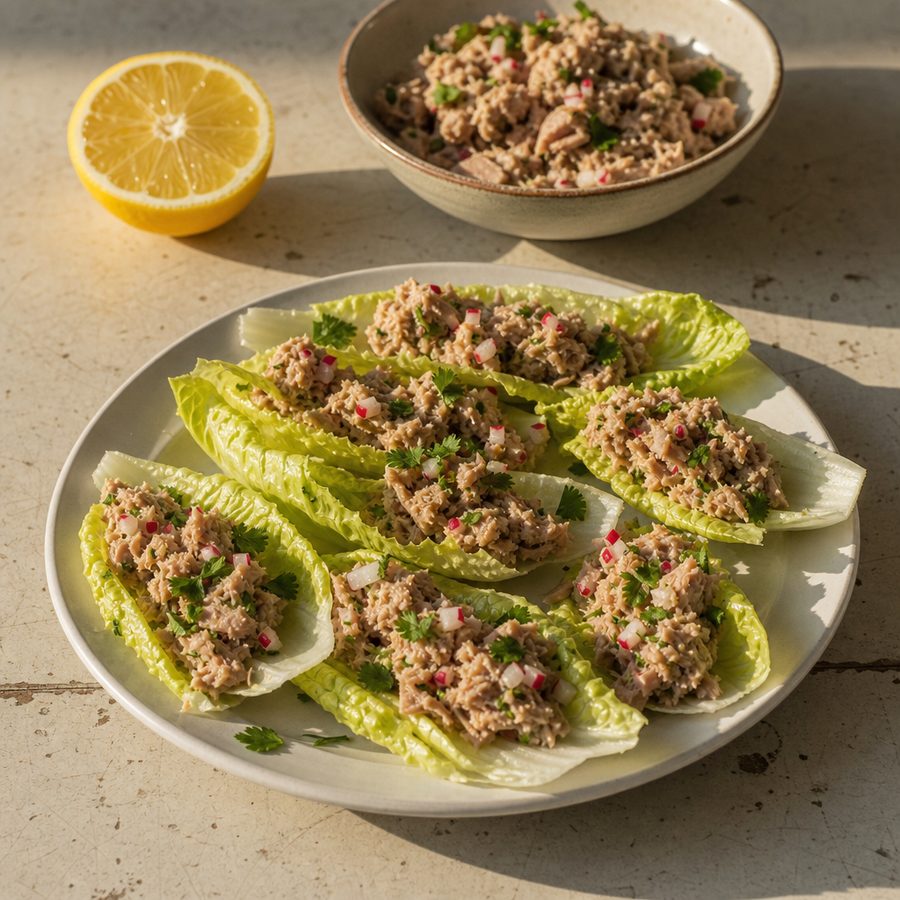
Canned tuna forked apart with dijon, lemon, and garlic-infused oil, sharpened with diced radish and parsley, then spooned into crisp romaine leaves and eaten with your hands.
Why You'll Love This Recipe
Some mornings the only real question is what can be on a plate in ten minutes without turning the stove on, and this is my answer to it. Four cans of tuna, a fork, and whatever sharp things are in the refrigerator drawer. It comes together in the time a kettle takes, it needs no heat at all, and it goes into romaine leaves so you eat it with your hands rather than hunting for a fork on the way out. I make the smash for four and keep it covered, then pull leaves off a romaine heart as I want them across two mornings.
The trick with canned tuna is to stop working it too early. Drain it hard, pressing the liquid out against the lid, then fork it apart into flakes rather than mashing it into a paste. Paste tastes like a filling; flakes still taste like fish. Dijon and lemon juice do the binding and garlic-infused olive oil carries the savory note, so the smash comes out sharp rather than heavy. Diced radish goes in for crunch and its faint pepperiness, and there is a great deal more parsley in this than looks sensible, which is deliberate. Cut the radish small, about the size of a pea, so a little lands in every spoonful rather than arriving as the occasional loud bite.
Romaine is the right leaf because the ribs are stiff enough to carry a spoonful without folding in your fingers, and the snap of that rib against soft flaked fish is most of the pleasure of eating it. Use the pale inner leaves from a heart, which are sturdier and sweeter than the big outer ones. Served this way, a bowl of tuna becomes something you pick up, and that turns out to be a different breakfast entirely. Chives and a last squeeze of lemon go over the top. Three or four filled spears is a serving, and whatever smash is left goes back into the refrigerator for the next morning.
Ingredients
- 4 cans (5 oz each) tuna in water, drained well
- 2 romaine hearts, leaves separated
- 2 tbsp garlic-infused olive oil
- 1 tbsp dijon mustard
- 2 tbsp fresh lemon juice
- 6 radishes, cut into small dice
- 1/2 cup chopped fresh parsley
- 1/4 cup thinly sliced chives, divided
- 1/4 tsp fine sea salt
- 1 tsp freshly ground black pepper
Instructions
- Drain the tuna hard: Open the cans and press the lid down against the fish over the sink until no more water runs out. Tip the tuna into a bowl. Liquid left behind waters down the dressing and softens the leaves later.
- Flake it, do not mash it: Break the tuna apart with a fork into rough flakes, turning the bowl as you go, and stop while the pieces are still recognizable. Twenty seconds of forking is enough.
- Make the dressing: Whisk the dijon mustard, lemon juice, garlic-infused olive oil, salt, and black pepper together in a small bowl until it thickens slightly and looks glossy rather than separated into layers.
- Dress and fold: Pour the dressing over the tuna and fold it through with the fork, then add the diced radish, the parsley, and most of the chives. Fold once or twice more, only until everything is coated.
- Separate and dry the leaves: Pull the leaves off the romaine hearts, keeping the pale sturdy inner ones whole. Rinse and dry them thoroughly, because a wet leaf slides in your hand and thins the dressing where it sits.
- Fill and eat: Spoon the tuna down the rib of each leaf, scatter the remaining chives over the top, and eat them with your hands. Refrigerate whatever smash you are not filling right away.
Variations
- Herb change: Dill or mint in place of the parsley, both of which suit canned fish.
- Crunchier: Add a handful of diced cucumber or jicama with the radish.
- Warm version: Spoon the smash over a cup of warm rice and skip the leaves on a cold morning.
- Seeded: Scatter a teaspoon of everything bagel seasoning or toasted sesame seeds over the filled leaves.
- Brinier: Chop a few kalamata olives into the smash for a saltier, darker version.
Storage & Leftovers
The smash keeps in a sealed container in the refrigerator for 2 days and is at its best on the first. The radish softens by the second morning and the parsley darkens a little, though neither is a problem. Keep the romaine whole and unwashed until you want it, since separated leaves go limp fast.
Pack it for later with the leaves alongside rather than filled. A filled leaf collapses within an hour as the salt draws water out of the romaine, so carry the two separately and put them together at the table. It travels perfectly well with an ice pack for a morning commute.
Nothing here freezes. Canned tuna turns stringy after thawing and romaine goes to water. What you can make ahead is the dressing, which keeps for a week in a jar in the refrigerator, so the second batch of the week takes three minutes rather than ten.
Notes & Tips
- Drain harder than you think: Press the lid against the fish until the can stops dripping. Wet tuna dilutes the dressing and makes a leaf soggy within minutes of filling it.
- Why garlic-infused olive oil: Garlic hands its flavor over to oil, and the part of it that a sensitive gut struggles with never dissolves into fat, so the oil gives a cold dish its savory backbone and nothing else comes along with it.
- Flakes, not paste: Stop forking the tuna while the pieces are still visible. Worked any further it turns into a smooth spread and loses the texture that makes it worth eating.
- Use the inner leaves: The pale ribs from the center of a romaine heart are stiff enough to carry a spoonful. The big floppy outer leaves fold in your fingers and drop it.
- Dry the leaves: Spin them or towel them properly. A wet rib is slippery to hold and thins the dressing where the smash sits.
- Fill them just before you eat: The salt in the dressing pulls water out of the romaine over an hour or so, so keep the leaves and the bowl apart until the last minute.
Nutrition & Mindful Eating
- Tuna, romaine, and a sharp lemon dressing are the whole of this, which is why it takes ten minutes. The fish is the substance and carries the protein, the leaves bring the crunch and the water, and the dressing ties the two of them together.
- Canned tuna is about as simple as protein gets, cooked in the can and ready the moment it is drained, and it brings B12 and selenium with it. Forked into flakes rather than mashed, it keeps the texture of fish rather than turning into a spread.
- Romaine ribs are crisp and full of water, and the pale inner leaves are sweeter than they look. They carry folate and vitamin A, and they are sturdy enough to be the thing you hold, which changes how the whole breakfast eats.
- Radish, parsley, chives, and lemon are the seasoning here and every one of them goes in raw, so the smash tastes sharp and green. Dijon mustard sitting underneath them brings the tang that makes cold fish taste like a dish rather than a can.
- A cold breakfast can hold you as steadily as a hot one when there is this much fish in it, and the fat in the olive oil is part of that. It is the kind of plate you finish and then do not think about again until lunch.
- As you eat, pay attention to the snap of the romaine rib against the soft fish and to the lemon arriving last, and take the few minutes at the counter as a real pause rather than a handover into the day.
Frequently Asked Questions
Can I use something other than tuna?
Canned salmon works the same way and is softer, so fold it more gently. Cooked shredded chicken is good here too, though it wants an extra spoonful of oil and lemon, since it is drier than fish coming straight out of a can.
What other leaves hold up?
Endive spears and the inner leaves of a napa cabbage both carry a spoonful without tearing. Butter lettuce is too soft and folds under the weight. Whatever you use, dry the leaves well or the smash slides off on the way to your mouth.
Can I make it the night before?
Yes, up to 2 days, though the radish loses its crunch. If that matters to you, mix the tuna, dressing, and herbs ahead and stir the diced radish through on the morning you eat it, which takes about a minute.
Does this fit a low-FODMAP breakfast?
It does. Tuna, romaine, radish, and chives are all comfortable, a spoonful of dijon mustard across four servings is fine, and the savory note comes from garlic-infused olive oil rather than garlic itself, so the dressing keeps its backbone.