
Duck Breast over Potatoes Crisped in the Rendered Fat
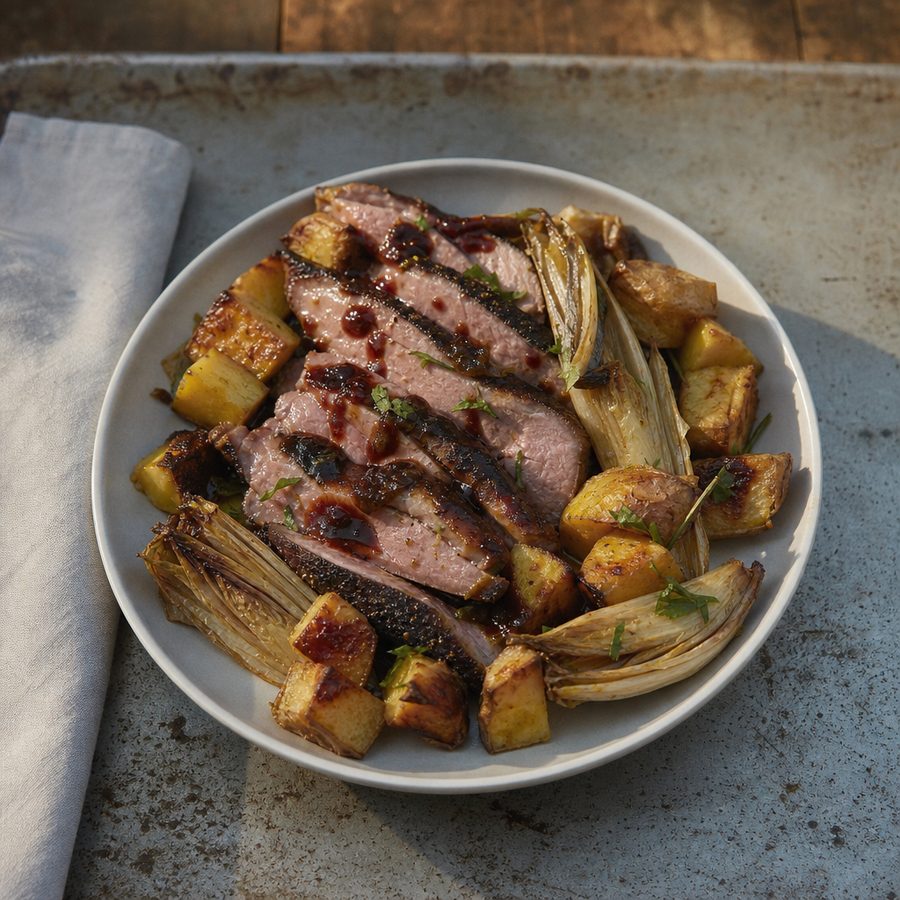
Duck breasts started in a cold pan so the skin renders slowly, the fat poured over roasting yukon golds, and seared endive and an orange glaze finishing the plate.
Why You'll Love This Recipe
Duck has a reputation as restaurant food, which is a shame, because two breasts in a cold skillet is one of the easiest dinners I know. The whole thing turns on patience rather than skill. You put the duck skin-side down in an unheated pan, turn the burner to medium-low, and then spend fifteen minutes doing something else while the fat renders out and the skin turns into a thin brown sheet. I cook this on birthdays and on the odd Tuesday when a good piece of duck follows me home from the market, and it has never once been difficult.
The fat you pour off is the second half of the recipe, so keep a heatproof cup beside the stove. Potatoes go into the oven first in garlic-infused olive oil, then get tossed halfway through in a few spoonfuls of hot duck fat, which is what gives them a shell you can hear. The endive halves go cut-side down into the same skillet after the duck comes out and go bitter and caramelized at the edges. Then the pan sauce: orange juice, balsamic, and broth boiled down to a syrup and finished with cold butter off the heat.
What lands on the table is duck sliced thin against the grain, rosy in the middle with a dark band of crisp skin, over potatoes that have soaked up everything that fell on them. Bitter endive keeps the richness in check, and the orange glaze does what orange has always done for duck. Rest the meat for a full ten minutes before you cut it. Duck breast is dense enough that slicing it early costs you most of the juice, and there is no way to get it back once it is on the board.
Ingredients
- 2 duck breasts, about 12 oz each, skin scored in a crosshatch
- 1 1/2 lb yukon gold potatoes, cut into 1-inch chunks
- 4 heads endive (about 12 oz), halved lengthwise
- 1 orange, juiced (about 1/3 cup), plus 1 tsp grated zest
- 2 tbsp balsamic vinegar
- 1/2 cup chicken broth
- 1 tbsp garlic-infused olive oil
- 1 tbsp cold butter
- 4 sprigs fresh thyme
- 2 tbsp chopped fresh parsley
- 1 tsp coarsely ground black pepper
- 1 1/2 tsp fine sea salt, divided
Instructions
- Score the duck and start the potatoes: Heat the oven to 425°F (220°C). Score the duck skin in a crosshatch about a quarter inch apart, cutting through the fat but not into the meat, and season both sides with 1 teaspoon of the salt and the pepper. Toss the potatoes with the garlic-infused olive oil and the remaining salt and roast them on a sheet pan for 20 minutes.
- Render the skin in a cold pan: Lay the duck skin-side down in a cold heavy skillet and set it over medium-low, since a cold start renders the fat out slowly rather than seizing the skin. Do not move it for 12 to 15 minutes. The fat will pool steadily, so pour it off into a heatproof cup two or three times as it collects, and the skin will end up thin, flat, and deep brown.
- Give the potatoes the fat: Pour 3 tablespoons of the hot duck fat over the potatoes, toss them so every face is coated, and return them to the oven for another 20 to 25 minutes, until the edges are dark gold and a fork goes through the middle with no resistance.
- Finish and rest the duck: Turn the breasts and cook them on the flesh side for 3 to 4 minutes, until a thermometer in the thickest part reads 133°F (56°C) for medium-rare. Move them skin-side up to a board and rest them for a full 10 minutes. They will climb a few degrees while they sit.
- Sear the endive: Pour off all but a tablespoon of the fat, add the thyme sprigs, and lay the endive halves cut-side down in the hot skillet. Cook them for 4 to 5 minutes without moving them, because the color forms only where a cut face is held against hot metal, until they are browned and the layers have softened but still hold together. Lift them out to the platter.
- Build the glaze and slice: Add the orange juice, balsamic, and broth to the skillet and boil hard for 4 to 5 minutes, scraping up the browned bits, until it is syrupy enough to leave a trail behind a spoon. Off the heat, swirl in the cold butter and the orange zest. Slice the duck thin against the grain, lay it over the potatoes, and spoon the glaze on top with the parsley.
Variations
- Root vegetables in the fat: Swap half the potato for parsnip, turnip, or celeriac cut the same size and roast them together.
- Pomegranate finish: Scatter pomegranate seeds over the sliced duck for pops of sharp juice against the glaze.
- Herb crust: Press chopped rosemary and thyme into the flesh side before it goes back in the pan for a more resinous, woodsy plate.
- Peppery greens: Skip the endive and pile watercress or arugula under the hot duck so it wilts from the heat of the meat.
- Five-spice leaning: Rub the flesh side with a pinch each of cinnamon, ground cloves, and coriander before cooking for a warmer, sweeter edge to the meat.
Storage & Leftovers
Duck is best the evening you cook it, but leftovers keep for 3 days. Store the sliced meat, the potatoes, and the glaze in separate containers, since the potatoes go soft under a wet sauce and the crisp skin does not survive a night sitting in it. The endive is fine cold the next day.
Reheat the potatoes in a hot skillet or a 400°F (200°C) oven for 8 minutes so they crisp again. The duck is better warmed through gently in a low oven for 5 minutes, or eaten cold and sliced over greens, which I do more often than reheating it. Warm the glaze separately with a spoonful of water.
The rendered fat is the leftover worth keeping. Strain it into a jar and refrigerate it for up to 3 months, then use it for the next tray of potatoes or for frying eggs. Cooked duck freezes for 2 months, though it firms up on thawing, so save it for a salad rather than a plate.
Notes & Tips
- Why the garlic oil works: Garlic flavor is fat-soluble and the fructans that upset some stomachs are not, so infused oil brings the taste of garlic to the potatoes and leaves the trouble behind in the bottle.
- Start the pan cold: This is the one rule of duck breast. Cold pan, medium-low heat, and 15 minutes of leaving it alone renders the fat out and crisps the skin at the same time.
- Score through the fat only: Cuts a quarter inch apart give the fat a way out. Going into the meat lets the juice run out with it, and the breast goes gray and dry.
- Pour the fat off as it collects: A pool of fat in the pan fries the skin rather than rendering it. Keep the pan shallow and keep the fat, which is the whole reason the potatoes taste like this.
- How it keeps and reheats: Three days in the refrigerator with everything stored separately. Crisp the potatoes in a hot oven and warm the duck gently, or eat the meat cold and sliced.
- Feeding people who are not on the plan: A sliced shallot softened in the duck fat before the glaze goes in makes their sauce a classic one, and the potatoes and duck stay exactly as they are.
Nutrition & Mindful Eating
- The duck, the potatoes, and the endive make sense of each other. The meat is rich and the fat is doing real work, the potatoes catch all of it, and bitter leaves keep the plate from feeling like too much of a good thing.
- Duck breast is closer to red meat than to chicken. It slices into rosy, close-grained pieces, and it carries iron and B12 in the amounts you would expect from beef rather than from a bird.
- Yukon golds have thin skins worth leaving on, and they bring potassium and a good amount of vitamin C, which surprises people who think of potatoes only as starch.
- Endive is pale, tight, and properly bitter, and searing the cut face turns some of that bitterness sweet. Chicories like this one bring fiber along with that edge, and the bitterness itself gets the appetite going before the first bite of meat.
- Orange juice and balsamic boiled down to a syrup are what balance a rich plate, with the zest going in off the heat so the oils in the peel stay sharp rather than turning dull and cooked.
- As you eat, notice how thin the crisped skin has become and how much of the duck ended up in the potatoes underneath, and let a plate this rich be eaten slowly rather than quickly.
Frequently Asked Questions
My skin came out flabby rather than crisp. What went wrong?
The pan was hot when the duck went in. A cold start is what lets the fat melt out slowly before the skin sets, and a hot start seizes the skin immediately with all the fat still trapped under it. Score deeply, start cold, and give it the full 15 minutes.
Can I make this with chicken thighs?
Skin-on, bone-in thighs work with the same method and the same glaze, though they render far less fat, so add a tablespoon of olive oil to the potatoes to make up the difference. Cook them to 175°F (80°C) rather than 133°F (56°C), since dark chicken meat needs to go all the way through.
What if I do not like endive?
Radicchio wedges, halved baby bok choy, or thick slabs of cabbage all sear the same way in the duck fat and give you the same bitter or sweet contrast. Keep the cut side flat against the pan and leave it alone until it browns.
Does this work for a low-FODMAP plan?
It does. Duck, potato, and endive all sit well at these portions, and there is no onion or garlic in the pan. The savory base comes from browned fat and the fond in the skillet, with garlic-infused olive oil on the potatoes for the garlic note.