
Duck Breast with Eggs Fried in the Rendered Fat
Scored duck breasts started in a cold pan and rendered slowly until the skin is thin and glassy, then sliced and served over eggs fried crisp-edged in the fat they gave up.
Why You'll Love This Recipe
Duck taught me more about rendering than any other piece of meat. A breast comes with a layer of fat under the skin that is roughly as thick as the meat is deep, and the entire job is to melt that layer away slowly enough that the skin above it dries and crisps rather than seizing and going tough. Which is why the pan starts cold. Heat comes up gradually under the fat, it liquefies, it runs out, and by the time the skin is browning there is almost nothing left underneath it but a thin brittle sheet. Hurry it, and you get soft fat under leathery skin.
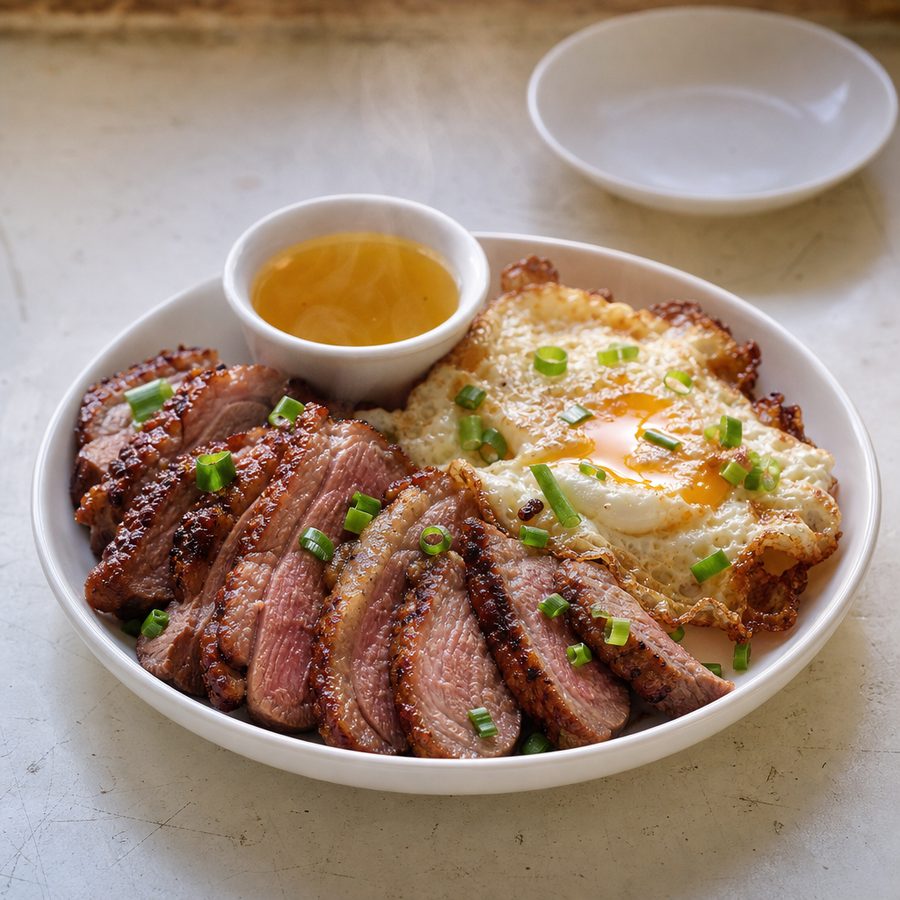
What comes out of the pan is two dishes. The breast slices into fans of rosy meat, denser and more mineral than chicken, closer to a steak in the way it eats, with that crackling edge on every slice. And there is a quarter cup or more of clear golden fat sitting in the skillet, which is far too good to pour away. Eggs cracked straight into it come out with the frilled brown lace around the edges that you only get from frying in something with real flavor, and a loose yolk running into the duck is the whole point of putting them on the same plate.
This is a Saturday night dinner that behaves like a weeknight one. Twenty eight minutes, three things on the shopping list, and most of the cooking time is duck sitting quietly in a pan while you do something else. It is also the dinner I make when I want the week to have one meal in it that feels like an occasion. Duck breasts are not cheap, but four of them feed four people properly, and the jar of fat left over goes into the refrigerator and improves everything you cook for the next month.
Ingredients
- 4 boneless duck breasts, skin on (about 1 1/2 lb)
- 4 large eggs
- 1/2 tsp fine sea salt, divided
Instructions
- Score the skin: Pat the duck breasts dry and lay them skin side up. With a sharp knife, cut a crosshatch through the skin and the fat at roughly half inch intervals, angling the blade so you stop just short of the meat. If you see red, you have gone too deep, and the juice will run out into the pan. Season both sides with half the salt.
- Start them in a cold pan: Lay the breasts skin side down in a dry, cold heavy skillet and only then turn the burner to medium low. Nothing will happen for the first two minutes, which is correct. As the pan warms you will hear a low, steady sizzle begin, and clear fat will start to pool around the meat.
- Render slowly and pour the fat off: Keep them skin down for twelve to fifteen minutes at a gentle sizzle. Two or three times along the way, tip the pan and spoon the accumulated fat into a heatproof bowl, since fat sitting deep around the breast will fry it rather than let it render. The skin is ready when it has shrunk back, gone deep brown, and feels rigid when you press it with tongs.
- Flip, finish, and rest: Turn the breasts over and give them two to three minutes on the meat side, until an instant-read thermometer in the thickest part reads 135°F for medium rare. Move them to a board and let them rest for eight minutes. They will climb a few degrees while they sit, and cutting early will cost you most of the juice.
- Fry the eggs in the duck fat: Return two tablespoons of the reserved fat to the skillet over medium high and let it get hot enough to shimmer. Crack in the eggs and fry for about two minutes, spooning hot fat over the whites, until the edges have frilled up crisp and deep brown and the yolks are still loose. Slice each duck breast across the grain, sprinkle with the remaining salt, and lay it beside an egg.
Variations
- Soft-poached instead of fried: Poach the eggs and set one on each fanned breast so the yolk floods down through the slices rather than sitting alongside.
- Duck fat scrambled eggs: Scramble the eggs slowly in three tablespoons of the rendered fat over low heat for a looser, richer plate.
- Chicken thighs: Skin-on chicken thighs render the same way from a cold pan, though they need to go all the way through to 175°F.
- Crisped skin shards: Cut the skin off after resting, press it flat in the hot pan for two minutes a side until it is glass, and break it over the sliced meat.
Storage & Leftovers
Cooked duck breast keeps three days sealed in the refrigerator and is genuinely good cold, sliced thin straight from the container. Store it whole rather than sliced if you can, since a whole breast holds its juice far better than cut surfaces do.
To reheat, slice it first and warm the slices in a skillet with a spoon of the reserved fat for no more than a minute, or lay them on a plate over a pan of steaming water. Anything longer takes medium rare duck to gray and firm, which is a bad trade. The eggs are best cooked fresh and do not keep.
The rendered fat is the real leftover. Strain it into a clean jar through a fine sieve, cover it, and keep it in the refrigerator for up to six months or in the freezer for a year. It sets pale and firm and is the best thing you can fry an egg or a piece of steak in.
Notes & Tips
- Chill the breasts before scoring: Twenty minutes in the freezer firms the fat layer so the knife travels through it cleanly. Trying to score a soft, room temperature breast is how most people end up cutting into the meat.
- Keep pouring the fat off: A breast sitting in half an inch of its own melted fat is being deep fried, not rendered. Spoon it out every few minutes and the skin dries steadily instead of stalling.
- Press with the tongs: Duck skin contracts as it renders and lifts the center of the breast off the pan. Press down gently once or twice so the whole surface stays in contact with the metal and browns evenly.
- Rest the full eight minutes: This is the window for frying the eggs, which is convenient, and it is also the difference between juice on the plate and juice on the board. Slice across the grain when the time is up.
Nutrition & Mindful Eating
- Duck, eggs, and the fat that links them make this a single dish rather than two things on a plate. The breast brings the deep, mineral, almost steak-like meat, the fat it renders becomes the cooking medium, and the loose yolk runs through the slices and ties the whole plate together.
- Duck breast is a red meat despite coming off a bird, dark and close-grained because those flight muscles work constantly, and that hard use is why it carries more iron than poultry usually does along with a solid load of protein.
- Eggs fried in duck fat come out with a texture you cannot get any other way, whites set firm with a lacy brown frill and a yolk still liquid, and each yolk brings choline and vitamin D that sit almost entirely in that golden center.
- The rendered fat is worth its own bullet. It is largely monounsaturated, the same family of fat that dominates olive oil, and it carries the roasted flavor it picked up from the skin into everything you fry in it afterward.
- Sliced duck eats richer than its portion size suggests, and between the protein in the meat and the fat rendered through it, one breast and one egg makes a plate that holds you comfortably through the evening.
- As you eat, break the yolk over the sliced meat and watch how far it runs, taste a piece of the skin entirely on its own, and let a dinner this short in the making still get a long, unhurried sit at the table.
Frequently Asked Questions
Why start duck in a cold pan?
Because the fat needs time to melt before the skin browns. Duck laid into a hot skillet seizes the skin shut within seconds, trapping a soft layer of fat underneath that never gets out. A cold start gives that layer fifteen minutes of gentle warming, which is what leaves a thin brittle sheet on top.
How far through should duck breast be cooked?
Medium rare, around 135°F pulled from the pan and rising to about 140°F while it rests. Duck is a red meat and eats like one, so treat the breast the way you would a steak. Taken to the temperature you would use for chicken, it goes gray, firm, and noticeably livery.
How deep should the scoring go?
Through the skin and most of the fat, stopping just before the meat. The cuts open channels for the melting fat to escape, so shallow scoring leaves it trapped. Chilling the breasts for twenty minutes first firms the fat and makes it much easier to judge the depth.
My skin came out chewy rather than crisp. What happened?
Almost always heat that was too high too early. If the pan roars from the start, the skin contracts and hardens before the fat below it has melted. Keep the burner at medium low and listen for a quiet, steady sizzle rather than a loud one, and give it the full fifteen minutes.