
Garlic Lime Shrimp with Cauliflower Rice
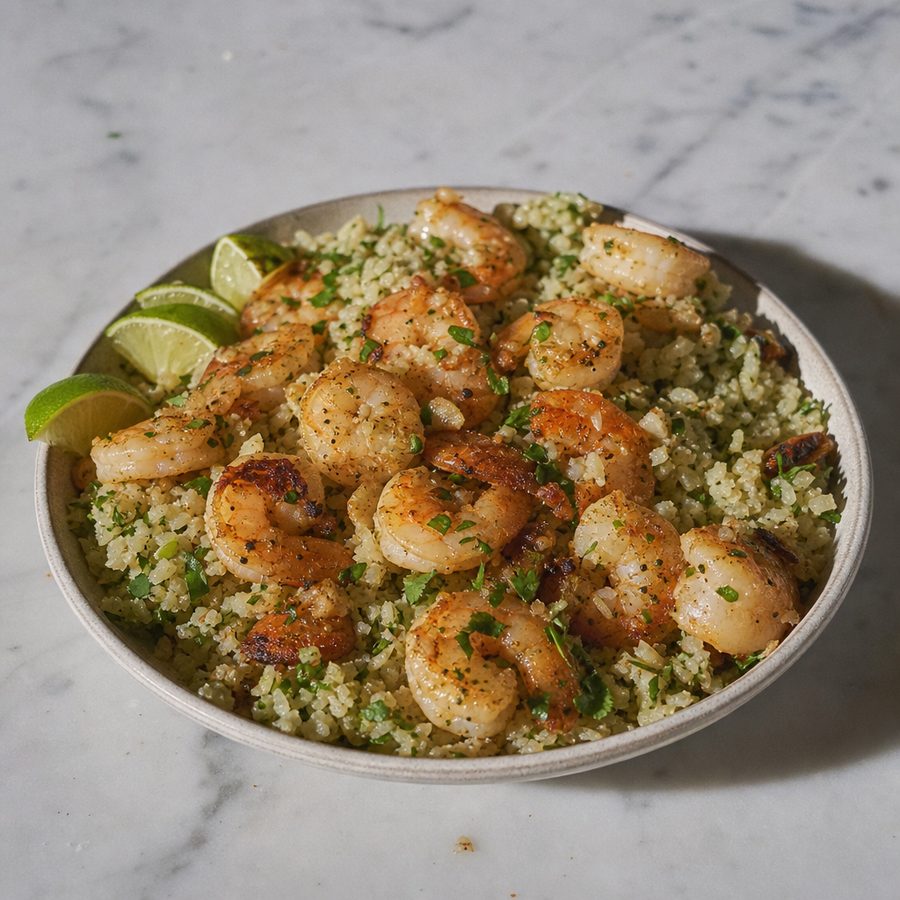
Juicy garlic-lime shrimp over cilantro cauliflower rice, a fast, very-low-carb, high-protein dinner that works for keto, paleo, and Whole30.
Why You'll Love This Recipe
Shrimp with garlic and lime over cauliflower rice, on the table in about fifteen minutes, and most of that is the cauliflower. The shrimp themselves cook in three, which is the thing worth knowing before you start: this is a dinner where the cooking is over almost as soon as it begins, so everything has to be ready before the pan is hot. Shrimp peeled and blotted, garlic minced, lime squeezed, cilantro chopped, all of it standing by the stove. Do that and it really is fifteen minutes. Skip it and the shrimp overcook while you hunt for the lime.
Cook the cauliflower rice first and set it aside, then use the same pan for the shrimp. The garlic goes in thirty seconds ahead of the shrimp rather than with them, because it burns long before shrimp are done. Doing it in that order also means the shrimp land on cauliflower that has already had its water driven off, so the pan juices sit on top where you taste them instead of disappearing into a wet base. Nothing here takes longer than six minutes, so the sequence is the only thing to get right.
Shrimp are almost all protein, so a plate of this leans almost entirely on protein with very little else along for the ride, and cauliflower standing in for rice keeps the rest of the plate mostly vegetable. That combination is why it works as a late dinner: substantial enough to count as a meal, and not so heavy that you are still aware of it at bedtime. If you want the same brightness with baked fish instead, there is our Baked Cod In Tomato-Herb Sauce.
Ingredients
- 1 1/2 lb large shrimp, peeled and deveined
- 6 cups riced cauliflower
- 3 tbsp olive oil, divided
- 5 cloves garlic, minced
- 3 tbsp fresh lime juice
- 1/4 cup chopped cilantro
- 1/2 tsp fine sea salt
- black pepper
Instructions
- Cook the cauliflower rice dry, not steamed: Warm a tablespoon of the olive oil in a large skillet over medium heat and add the riced cauliflower in an even layer. Leave the pan uncovered and stir it every minute or so for five to six minutes, because a lid traps the water it gives off and hands you a wet mash instead of something that eats like rice. It is ready when the pieces are tender, still separate, and just starting to catch a little color. Stir in half the cilantro and a pinch of salt, then tip it into a bowl.
- Blot the shrimp while the pan comes back up to heat: Blot the shrimp thoroughly with paper towel and season them with the salt and a few grinds of pepper. Shrimp hold a lot of water, and ones that were frozen and thawed hold more; wet shrimp dropped into a hot pan steam themselves gray instead of searing. Wipe the skillet out and set it back over medium-high heat while you work, giving it a good 2 minutes, so it is properly hot by the time the second measure of oil goes in.
- Garlic thirty seconds ahead, then shrimp in one layer: Heat the remaining oil in the same pan and add the garlic for thirty seconds only, until it smells sweet and is barely turning gold at the edges. Garlic burns inside a minute at this heat and burnt garlic runs bitter through the entire dish. Add the shrimp in a single layer with space between them and cook two to three minutes a side. They are done when they are pink and opaque all the way through and curled into a loose C; a shrimp curled into a tight O has gone past it.
- Lime off the heat, then straight onto the plates: Take the pan off the burner before the lime juice goes anywhere near it, then toss the shrimp with the juice and the rest of the cilantro in the heat the pan is still holding. Acid added over a live flame boils off the bright top notes and leaves the sour part behind, and it keeps firming shrimp that have already had all the cooking they need. Spoon them over the cauliflower rice with every drop of what is in the pan.
- Taste the plate, not just the shrimp: Cauliflower rice is bland by nature and it takes up a surprising amount of salt, so taste a forkful with both parts of the dish on it before you call this finished. What it usually wants is another squeeze of lime rather than more salt, and it is worth waiting 30 seconds after the first taste before deciding, since salt takes a moment to read on a hot forkful. If the rice still reads flat under well-seasoned shrimp, a pinch of salt scattered directly over the rice fixes it faster than seasoning the whole pan again.
Variations
- Add more vegetables: Diced zucchini or corn can cook with the cauliflower. Add frozen peas off the heat so they thaw without going gray.
- Make it spicy: A minced jalapeno with the garlic, or chipotle powder stirred into the cauliflower rice. Both suit the lime and cilantro better than hot sauce does.
- Make it a burrito bowl: Add black beans, diced avocado, and a spoonful of salsa. The cauliflower rice takes the place of the usual base. The beans are a legume, so this one is no longer paleo or Whole30.
- Change the protein: Scallops cook on almost the same timing. Cubed chicken thigh works too, but give it a head start in the pan.
- Finish it richer: Diced avocado and a crumble of cotija at the table. Neither needs cooking and both make the bowl feel more like dinner.
Storage & Leftovers
Refrigerate leftovers in an airtight container for up to three days. Cooked shrimp are at their best the day they are made and they firm up as they chill, so if you already know there will be leftovers, pull the last few from the pan about thirty seconds early and let the refrigerator finish the job. Keep the shrimp and the cauliflower rice in separate containers where you can, because the rice keeps giving off water.
Reheat this barely, or not at all. The shrimp were done at the two-minute mark and a second round of heat is exactly what turns them rubbery, so the most a leftover portion should get is a covered skillet over low heat for a minute to take the chill off. Cold is a genuine option here too: shrimp and cauliflower rice make a good cold lunch with fresh lime and cilantro over the top.
Freezing suits neither half of this dish. Shrimp that were frozen, thawed, cooked, and frozen a second time come back tough and watery, and cauliflower rice collapses to mush as it thaws. If you want a head start, buy the shrimp frozen and thaw only what you plan to cook that night, and rice the cauliflower in advance, since raw riced cauliflower keeps about three days in the refrigerator.
Notes & Tips
- Pull the shrimp early: Cook them in a single layer and take them out the moment they curl. They go from done to rubbery in under a minute.
- Look for a C, not an O: A shrimp curled into a loose C is cooked through. One curled into a tight O has gone too far.
- Dry the shrimp first: Wet shrimp release water and steam rather than searing, and you lose the browning that carries the garlic.
- Drive the water out of the cauliflower: Cook it uncovered so the moisture leaves. Frozen riced cauliflower especially wants a squeeze in a towel first.
- Garlic gets thirty seconds: Minced garlic scorches fast in a hot pan, and burnt garlic turns the whole dish bitter.
- Lime goes on off the heat: Acid cooked into the pan goes flat, and the shrimp keep firming up while it reduces. Add it once the burner is off.
Nutrition & Mindful Eating
- Shrimp, cauliflower and lime make this quick and bright. The shrimp cook in about the time it takes to warm the pan, the cauliflower catches the garlicky oil, and the lime pulls the two together with a sharp finish.
- Shrimp is firm, sweet and quick-cooking, and it delivers protein dense enough to anchor a plate along with selenium and iodine, two minerals that are far easier to find in the sea than on land.
- Cauliflower riced fine turns golden where it meets the hot pan, sweetening as it browns and keeping just enough bite to hold up under the shrimp, and it carries fiber and vitamin C with it.
- Five cloves of garlic sounds like a lot until you taste it, softening into the oil and perfuming everything it touches, and the lime juice going on off the heat holds its sharpness rather than cooking away.
- A plate of this eats like a proper dinner, with the protein in the shrimp doing most of that work and the olive oil giving it enough richness to stay with you through the evening.
- As you eat, follow the garlic and lime through each forkful and notice how the shrimp give just slightly, and let the meal take longer at the table than it took at the stove.
Frequently Asked Questions
Is shrimp healthy?
Yes, it's high in protein, quick to cook, and a good source of selenium and B12. It's naturally higher in cholesterol, but for most people dietary cholesterol from foods like shrimp has little effect on blood cholesterol.
Is this really Whole30 and keto?
Yes, with no grains, dairy, sugar, or legumes and very low carbs, it fits both. Just use a compliant oil.
Can I use frozen shrimp?
Definitely, thaw them fully and pat dry before cooking so they sear rather than steam.
How long does it keep?
Three days. Reheat it barely if at all, because shrimp toughen the second time they meet heat, so a covered skillet over low for a minute is plenty. It is also very good cold, with fresh lime and cilantro over the top.