
Garlic Shrimp Cauliflower Rice
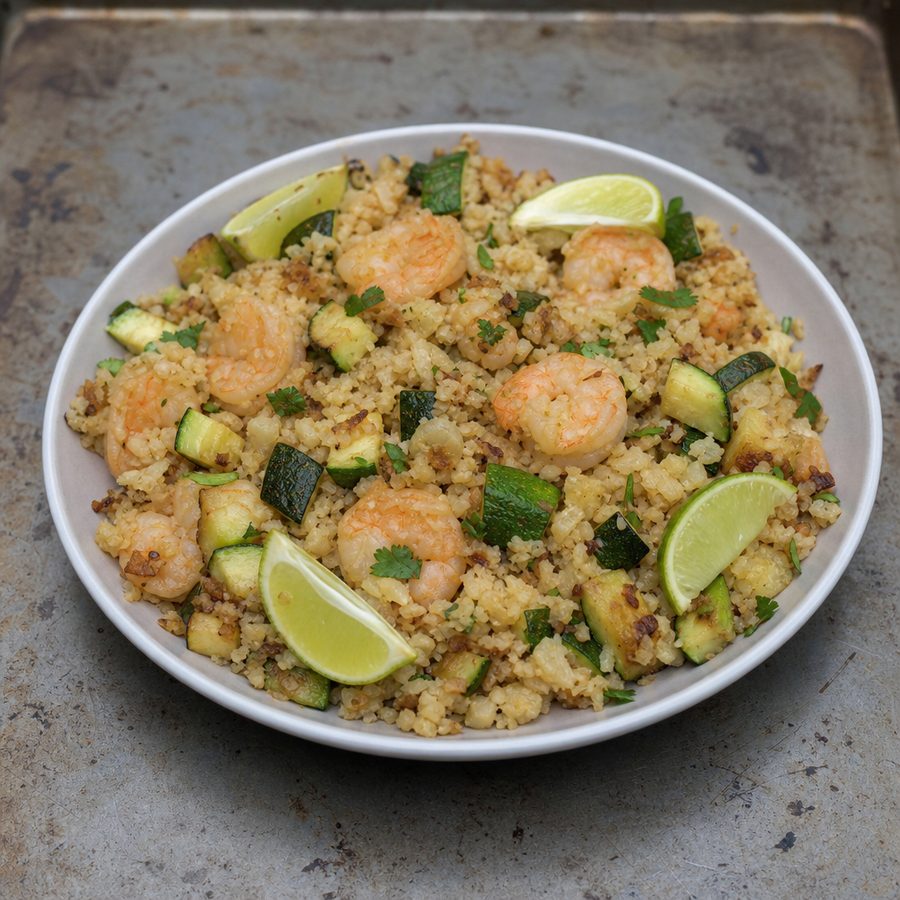
Quick-seared garlic shrimp over golden cauliflower rice with zucchini, brightened with coconut aminos and lime, a fast one-skillet AIP lunch that eats like takeout.
Why You'll Love This Recipe
Shrimp and cauliflower rice with zucchini folded through, seasoned with coconut aminos and lime. Twenty minutes, one skillet, no soy and no grain in it anywhere. What makes it easy is that everything here cooks fast, so the whole dish is a sequence of short bursts rather than anything that needs watching: the shrimp are done in three minutes, the cauliflower in six, and the only real decision is taking the shrimp out before they overstay.
Take the shrimp out the moment they turn opaque and put them back only at the very end. Shrimp are done in about three minutes and the cauliflower needs closer to nine, so anything left in the pan for the whole run is being cooked three times longer than it wanted. The tell is the shape: a loose C is right, a tight closed O has gone too far, and there is no fixing one after that. Two extra seconds with a slotted spoon is the entire cost of getting this right.
Between the shrimp and the vegetables this stays light while still eating like a full dinner, which is a harder combination to land than it sounds. Most light dinners have you rummaging in a cupboard an hour later, and the shrimp is what stops that happening here, since it brings a lot of protein for very little else. The cauliflower and zucchini do the rest, filling the bowl with something that has bulk and fiber rather than starch. Our Baked Cod With Fennel And Thyme takes white fish in a quieter direction.
Ingredients
- 1 lb shrimp, peeled
- 4 cups riced cauliflower
- 1 medium zucchini, diced
- 4 cloves garlic, minced
- 3 tbsp coconut aminos
- 2 tbsp lime juice
- 2 tbsp coconut oil
- 1/4 tsp fine sea salt
Instructions
- Prep everything before the pan goes on: Rice the cauliflower if it is not already riced, dice the zucchini, mince the garlic, and pat the shrimp dry. Do all of it first, because the whole dish runs about fifteen minutes from a cold pan and there is no point in it where you can leave the stove to chop something without losing the shrimp.
- Sear the shrimp, then get them out: Melt a tablespoon of the coconut oil in a large skillet over medium-high heat, add the shrimp and half the garlic, and cook for 2 to 3 minutes, until the shrimp are pink and opaque and curled into a loose C shape. Move them straight to a plate, because they go on cooking in a hot pan and six more minutes alongside the cauliflower is what turns them rubbery.
- Zucchini first, then the cauliflower: Add the remaining oil, the zucchini, and the rest of the garlic, and cook for 3 minutes before stirring in the cauliflower rice and the salt, then cook 5 to 6 minutes more, until tender. The zucchini goes in first so that it has time to soften and pick up a little color; added at the same moment as the cauliflower it is still squeaky and raw when everything else is done.
- Let the cauliflower dry out: Once the cauliflower has softened, leave it spread across the pan without stirring for the last two minutes. Riced cauliflower carries a surprising amount of water, and given a hot dry pan and some stillness it evaporates, so the grains stay separate and dry. Stir it constantly instead and the water stays exactly where it is, which is how you end up with a wet mash.
- Finish with the aminos and lime: Pour in the coconut aminos and the lime juice, return the shrimp along with any juices on the plate, and toss for about 1 minute, just long enough to warm them through and coat everything. The lime goes in at the very end because its brightness cooks off in a hot pan within a couple of minutes, and by then you are adding an acid nobody can taste.
Variations
- Add more vegetables: Snow peas or thin asparagus cook in the same few minutes as the zucchini. Push the shrimp to the side while they go in.
- Make it spicy: Bloom chili flakes in the coconut oil before the shrimp, or stir sriracha into the coconut aminos so the heat coats everything evenly. Both are nightshades, which the autoimmune protocol leaves out.
- Add an egg: Push the cauliflower to one side and scramble an egg in the empty half, then fold it through, which adds egg and takes the dish off the autoimmune protocol. It eats like fried rice at that point.
- Change the protein: Cubed chicken thigh or well-browned extra-firm tofu both work, though tofu is soy and takes the dish off the autoimmune protocol. Either one needs several minutes longer than the shrimp did.
- Serve it in lettuce cups: Spoon it into butter lettuce leaves and eat it with your hands. The cold crunch against the warm filling is the whole point.
Storage & Leftovers
Three to four days, and the shrimp is the part with the short fuse. It is already fully cooked, so anything that reheats it is cooking it a second time and turning it rubbery. If you are making this for lunches on purpose, pull the shrimp a shade early on the night, or keep them separate and drop them in cold.
Reheat the cauliflower rice in a skillet over medium and give it two minutes to drive off the water it let go in the refrigerator, then add the shrimp for the last thirty seconds only. A microwave heats the shrimp fastest and hardest, which is precisely the wrong way round for this dish.
It boxes well for the week with one warning: riced cauliflower goes on releasing water for a day or so, so expect liquid in the bottom of the container. Tip it off rather than stirring it back through, and what you have stays the dish you cooked instead of turning soupy.
Notes & Tips
- Watch the shrimp closely: Shrimp cook in a couple of minutes and turn pink and opaque when done. Any longer and they turn rubbery.
- About coconut aminos: They are a soy-free, lower-sodium seasoning with a gently sweet, savory flavor. If you tolerate soy, an equal amount of tamari also works; it is saltier, so taste before you add any more salt.
- Pat the shrimp dry: Wet shrimp steam instead of searing. A minute with a towel is the difference between browned and pale.
- Cook the cauliflower uncovered: The lid traps steam and you end up with mush. Left open, the water cooks off and the grains stay separate.
- Mind the coconut oil: Unrefined coconut oil smokes sooner than you would expect at high heat. Use refined for a hot pan, or keep the burner at medium-high and no further.
- Sauce goes in last: Coconut aminos and lime added early boil down and soak into the cauliflower, which turns it soggy. They belong in the final minute.
Nutrition & Mindful Eating
- Shrimp, cauliflower and zucchini divide the work. The shrimp bring sweetness and substance, the cauliflower gives the bowl its base and soaks up the pan sauce, and the zucchini keeps everything juicy and tender.
- Shrimp go firm and snappy the moment they turn opaque and are pulled from the heat right there so they do not tighten. They carry protein along with iodine and selenium, two minerals that are hard to find outside the sea.
- Cauliflower rice is exactly what it sounds like, fine pale grains that toast in the hot coconut oil until they smell nutty and go gold at the edges, bringing fiber and vitamin C with that texture.
- Garlic, lime and coconut aminos are where the flavor lives. The aminos turn savory and faintly sweet against the pan, the garlic perfumes the oil, and the squeeze of lime at the end keeps a rich skillet tasting bright.
- Zucchini gives up a little water as it cooks and turns silky, catching the sauce, while the coconut oil holds the whole skillet together with a faint sweetness sitting in the background.
- As you eat, take in the lime and garlic in the steam before the first bite, notice how the shrimp snap against the soft cauliflower, and let this be a real break in the middle of your day.
Frequently Asked Questions
Are coconut aminos AIP-friendly?
Coconut aminos are made from coconut sap and salt, so they replace soy sauce without any soy, gluten, or grains.
Can I use frozen cauliflower rice?
Yes. Cook it straight from frozen and give it a few extra minutes so the excess moisture cooks off and it browns.
How long does it keep?
Three to four days. Reheat the cauliflower rice in a skillet and put the shrimp back only at the very end, because shrimp warmed through properly is shrimp cooked twice.
Can I make it ahead?
Yes, though keep the shrimp apart from the rest if you can. The cauliflower and zucchini reheat happily and the shrimp only toughens each time it is warmed. Cold shrimp stirred into hot cauliflower rice at your desk beats both of them reheated together.