
Ginger Rice Porridge with Bok Choy, Mushrooms, and Sesame
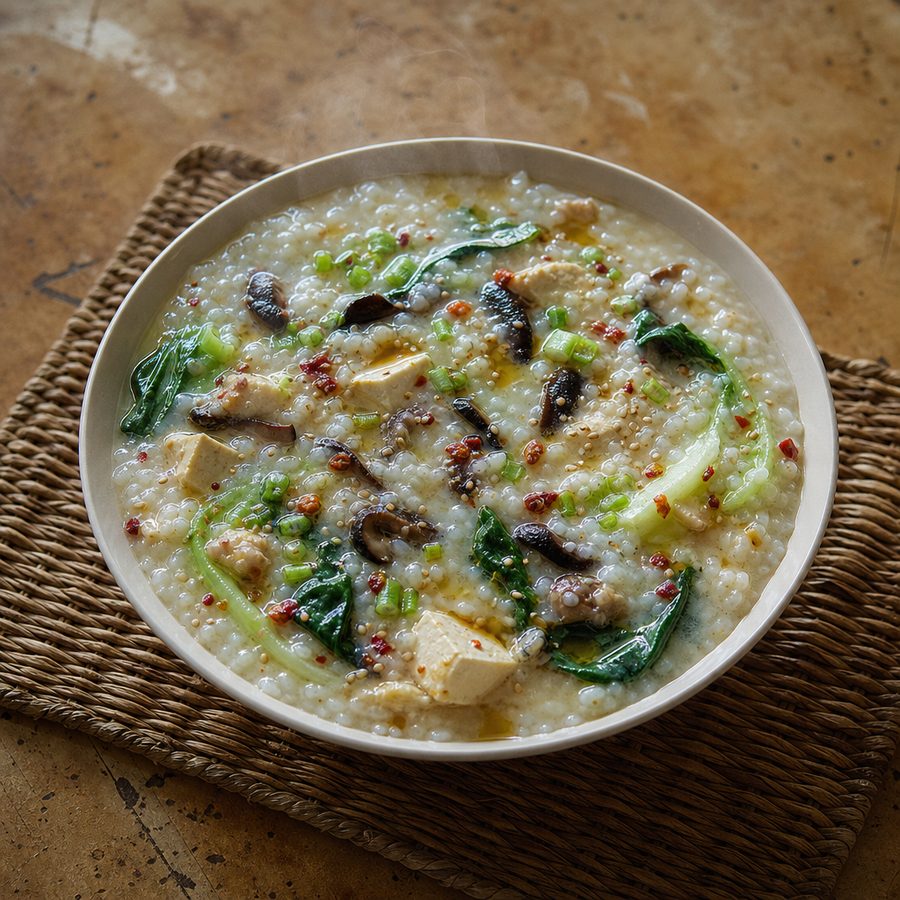
Cooked rice simmered hard with ginger and broth until it breaks down into a loose, silky porridge, with mushrooms, wilted bok choy, and cubes of tofu stirred through and sesame, scallion, and chile over the top.
Why You'll Love This Recipe
Congee usually asks for a couple of hours and a handful of dry rice, and this is the version I make when I want it for lunch on the same day I thought of it. Cooked rice, ideally cold and a day old, collapses in about twenty minutes of steady bubbling because the grains have already been through their swelling and cooling. Stir it now and then, let it catch nothing on the bottom, and it goes from soup with rice in it to a loose, glossy porridge that coats a spoon. Grated ginger rather than sliced is the other key, so its heat runs through every mouthful.
The eating of it is the whole point. It is soft and warm and mild underneath, which is exactly what you want a rice porridge to be, and then everything interesting is on top and stirred in as you go. Scallion, cilantro, toasted sesame seeds, chile flakes, and a shine of sesame oil sit on the surface and get folded in a spoonful at a time, so the flavor changes from bite to bite. The bok choy stems stay crisp against all that softness, and the tofu cubes almost disappear into it.
I make this on rainy days, on days when somebody is getting over something, and often on a Sunday when there is leftover rice in a container and no plan. It is also the most forgiving recipe in this batch, since the porridge takes whatever liquid you give it and you can loosen or thicken it right up to the moment you serve. Doubling the batch costs nothing but a bigger pot, and it becomes tomorrow's lunch with a splash of broth and fresh herbs.
Ingredients
- 3 cups cooked jasmine or other long-grain white rice, cold from the refrigerator
- 5 1/2 cups vegetable broth, plus more if it thickens too far
- 3 tbsp fresh ginger, peeled and finely grated
- 4 garlic cloves, finely minced
- 5 oz shiitake or cremini mushrooms, stems removed and caps thinly sliced
- 6 heads baby bok choy (about 14 oz), halved lengthwise and rinsed between the leaves
- 5 oz firm tofu, drained and cut into 1/2-inch cubes
- 2 tsp avocado oil
- 1 tbsp toasted sesame oil
- 1 tbsp soy sauce
- 1 tbsp fresh lime juice
- 8 scallions, sliced very thin on a slant
- 1 cup cilantro leaves and thin stems, roughly chopped
- 1 1/2 tbsp sesame seeds, toasted in a dry pan
- 1/2 tsp red chile flakes, or more to taste
Instructions
- Brown the mushrooms: Set a heavy pot over medium-high heat, add the avocado oil, and lay the mushroom slices in a single layer. Leave them for two to three minutes without stirring, until the undersides are golden and they smell toasty, then stir and cook one minute more. Add the garlic and half the grated ginger and stir for thirty seconds.
- Break the rice down: Add the cooked rice and the broth, breaking up any clumps with a spoon. Bring it to a boil, then hold it at an active bubble for eighteen to twenty minutes, stirring every few minutes and scraping the bottom of the pot each time. The grains will swell, split, and go fuzzy at the edges, and the liquid will turn from clear to cloudy to thick enough to coat the back of a spoon.
- Judge the consistency: Congee thickens as it stands, so pull it a shade looser than you want to eat it. If it has gone stiff, stir in broth or hot water a quarter cup at a time until it falls slowly off the spoon rather than dropping in a lump. There is no wrong answer here, only your preference.
- Wilt the bok choy and warm the tofu: Stir in the rest of the grated ginger, then lay the bok choy halves cut side down on the surface of the porridge and scatter the tofu cubes around them. Cover the pot and cook on low for three minutes, until the leaves have collapsed and gone glossy dark green while the white stems still snap when you press one.
- Season and load the top: Take the pot off the heat and stir in the soy sauce and the lime juice. Ladle into deep bowls, drizzle each one with sesame oil, then pile on the scallions, cilantro, sesame seeds, and chile flakes. Serve immediately, and tell people to stir their toppings in gradually rather than all at once.
Variations
- Mustard green and chile: Wilt a few handfuls of shredded mustard greens into the pot in place of the bok choy for a peppery, sharper bowl.
- Corn and scallion: Stir a cup of corn kernels in for the last three minutes so the sweet pops play against the soft rice.
- Turmeric and black pepper: Add a teaspoon of ground turmeric with the ginger for a golden porridge, and finish with a heavy grind of black pepper.
- Crisp tofu topping: Pan-fry the tofu cubes in a little oil until golden and scatter them over the top rather than stirring them in, so they stay crisp against the porridge.
Storage & Leftovers
The porridge keeps four days sealed in the refrigerator and sets almost solid when it is cold, which is normal and reverses completely with heat and liquid. Store the toppings separately in a small container so the scallion and cilantro stay green and the sesame seeds stay crisp, since anything scattered on the surface goes soggy overnight.
Reheat it in a saucepan over medium-low with a good splash of broth or water, breaking the block up with a spoon and stirring until it loosens and steams, about five minutes. Expect to add more liquid than you think, sometimes half a cup per portion. Fresh herbs, a fresh drizzle of sesame oil, and a squeeze of lime bring it right back.
It freezes for up to three months in flat, sealed portions, and it is one of the better things to have in the freezer for a day when cooking is beyond you. Thaw overnight in the refrigerator, then reheat with plenty of extra liquid. Leave the bok choy out of anything you plan to freeze and wilt fresh greens into the reheated pot instead.
Notes & Tips
- Use cold rice: Chilled grains are drier and burst more readily in hot liquid. Rice straight from a warm pot stays intact longer and gives you soup rather than porridge.
- Scrape the bottom every few minutes: Starch settles and scorches fast once the porridge thickens. A flat-edged spoon along the base of the pot every three minutes is all the insurance you need.
- Pull it looser than you want it: Congee keeps thickening in the bowl. What looks slightly too thin on the stove will be exactly right by the time it reaches the table.
- Grate the ginger, and add it twice: Grated ginger disperses through the whole pot. Half at the start goes mellow and round, half at the end stays hot and bright, and together they give the bowl its backbone.
Nutrition & Mindful Eating
- The rice, the mushrooms, the bok choy, and the tofu each land in a different place in the bowl. The rice makes it soft and warming, the mushrooms make it savory, the bok choy keeps something green and crunchy in the middle of all that softness, and the tofu gives the spoon a little more to carry.
- Bok choy is one of the quickest greens there is, three minutes from firm to glossy, and it is also one of the most generous with calcium. The white stems hold vitamin C and stay crisp, so you get two textures out of one vegetable.
- Rice simmered down like this releases its starch into the liquid, which is what makes the porridge thick and easy to eat, and it is why congee is the food so many cultures turn to when somebody needs something gentle.
- Tofu is set with a calcium salt and that is where the calcium in these cubes comes from. Cut small and stirred through a mild porridge, it soaks up ginger and sesame and stops the bowl from tasting like rice alone.
- Toasted sesame seeds and sesame oil are the finishing layer, and they carry a nutty richness along with calcium and vitamin E. Scattered on at the table rather than cooked in, their smell hits you before the first spoonful does.
- As you eat, stir the toppings in a little at a time so each spoonful tastes different from the last, and notice how a soft, warm bowl asks you to slow down in a way that a plate of food does not.
Frequently Asked Questions
Can I start from dry rice?
You can, and it makes a smoother porridge, but it takes about an hour and a half of simmering with roughly eight parts liquid to one part rice. This recipe exists for the day you do not have that. Cold cooked rice gets you most of the way there in twenty minutes because the grains have already been cooked and cooled.
Mine went gluey and stiff. What happened?
Either it simmered a few minutes too long or it sat in the pot before serving, and both are easy to fix. Stir in hot broth or water a quarter cup at a time until it slides off the spoon again. Congee is meant to be adjusted at the last minute, so keep a mug of hot liquid nearby when you serve it.
Does the rice have to be day-old?
It helps, since chilled rice is drier and breaks down more cleanly, but freshly cooked rice works if you spread it on a plate for ten minutes to cool and dry a little. Brown rice can be used the same way, though it keeps more of its shape and gives you a chewier, less silky porridge.
What else can go on top?
Almost anything with crunch or bite. Thin ribbons of pickled cucumber, crisp fried shallots, torn basil, a spoonful of chile oil, or shredded nori all work. The porridge underneath is deliberately mild, and the toppings are where you make it your own from one lunch to the next.