
Ginger-Simmered Sardines with Napa Cabbage and Brown Rice
Sardines warmed through in a shallow ginger and soy glaze, spooned over brown rice with napa cabbage, carrot, and snow peas cooked fast in the same pan and finished with toasted sesame.
Why You'll Love This Recipe
Simmering small oily fish in ginger and soy is one of the oldest weeknight moves in Japanese home cooking, and it exists because ginger and soy are exactly what strong-flavored fish wants. The ginger cuts straight through, the soy gives it depth, and a little vinegar keeps the whole thing from going flat. Traditionally you would do this with fresh sardines and a longer simmer. I do it with tinned ones and a two-minute warm-through, which puts the same bowl on the table on a Tuesday and keeps the fish in one piece rather than shredding it.
The vegetables cook in the same pan and take almost no time. Napa cabbage is the one to pay attention to: the thick white ribs need a minute or two of a head start, and then the leafy tops collapse almost instantly. Carrot matchsticks go in with the ribs, snow peas come in at the very end and stay audibly crisp. What you want in the finished bowl is three different textures against soft rice, which is why nothing here is cooked to the same degree.
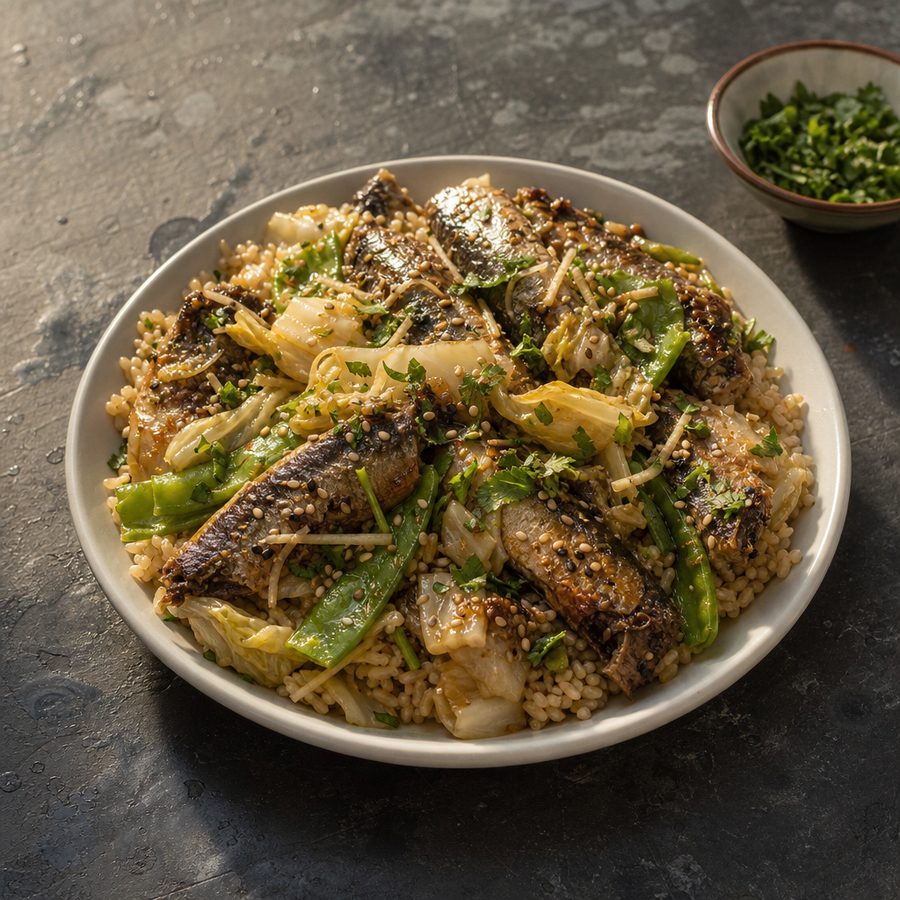
I build the bowls with the rice underneath, the vegetables around the edge, and the sardines laid on top so they stay whole and you can see them. Then everything left in the pan gets poured over, because that dark glaze is the point of the whole exercise. Toasted sesame goes on last. It reheats fine but honestly I rarely have any, and if I do I eat it cold the next day with an extra squeeze of lemon.
Ingredients
- 2 tsp toasted sesame oil
- A 2-inch piece of fresh ginger, peeled and cut into fine matchsticks (about 2 tbsp)
- 6 scallions, cut into 1-inch lengths, white and green parts kept separate
- 1/2 small head napa cabbage (about 1 lb), cut crosswise into 1-inch ribbons
- 2 carrots, cut into thin matchsticks
- 5 oz snow peas, strings pulled off
- 1 tbsp soy sauce
- 1 tbsp cider vinegar
- Three 4 oz cans sardines, drained, soft bones left in
- 2 1/2 cups cooked short-grain brown rice, hot
- 2 1/2 tbsp sesame seeds, toasted in a dry pan until they pop
Instructions
- Toast the sesame seeds: Put the sesame seeds in a dry skillet over medium heat and shake the pan almost constantly for three minutes, until they turn tan and start jumping and popping. Tip them straight into a small bowl, since left in a hot pan they go from perfect to burnt in under a minute.
- Start the ginger: Wipe the pan, add the sesame oil, and set it over medium heat. Add the ginger matchsticks and the scallion whites and cook for about 90 seconds, stirring, until the ginger is fragrant and just beginning to color at the tips.
- Cook the firm vegetables: Add the carrot matchsticks and the thick white ribs of the napa cabbage and cook two minutes over medium-high, stirring, until they lose their stiffness. Then add the leafy green parts of the cabbage and cook two minutes more, until they collapse and turn glossy.
- Make the glaze: Pour in the soy sauce and cider vinegar along with two tablespoons of water. Let it bubble hard for about a minute, tossing, until the liquid has reduced to a few dark spoonfuls that coat the vegetables. Add the snow peas and cook 60 seconds, just until they turn bright and squeak.
- Warm the sardines: Lay the drained sardines on top of the vegetables in a single layer, turn the heat to low, and cover the pan for two minutes. Spoon a little of the glaze over them rather than stirring, which is what keeps them whole. They only need to be heated through.
- Build the bowls: Divide the hot brown rice among four bowls, warming it first if it has been in the refrigerator, because a cold base takes the heat straight out of everything spooned over it. Spoon the vegetables around the edges, lift the sardines on top with a spatula, and pour over every drop left in the pan. Finish with the scallion greens and a heavy scatter of the toasted sesame seeds.
Variations
- With a soft egg: Set a jammy seven-minute egg on each bowl, halved so the yolk runs into the rice.
- Mustard greens: Swap the napa cabbage for mustard greens, which bring a peppery bite that stands up to the ginger.
- Chile and citrus: Add a pinch of cayenne with the ginger and finish with grated lemon zest for a sharper, hotter bowl.
- Cold noodle version: Skip the rice and serve everything over cold buckwheat noodles with the glaze poured over as a dressing.
Storage & Leftovers
This keeps three days in a sealed container in the refrigerator. Store the rice separately from the fish and vegetables if you can, since rice takes on liquid overnight and turns heavy. The glaze goes on tasting good and the ginger, if anything, gets rounder.
Reheat the vegetables and sardines together in a covered skillet over low heat for three or four minutes, or eat the whole thing cold, which I do often. Cold sardines with the ginger glaze on cold rice is a genuinely good lunch and needs nothing done to it beyond a squeeze of lemon.
I would not freeze it. The napa cabbage turns to water on thawing and the sardines fall apart. If you want to get ahead, cook the rice up to four days in advance and cut all the vegetables the night before, which leaves ten minutes of actual cooking.
Notes & Tips
- Separate the cabbage ribs from the leaves: The white ribs take about four minutes and the green leaves take about one. Cut them apart as you slice and add them in two stages, and you get silky leaves and ribs that still have some body.
- Cut the ginger, do not grate it: Fine matchsticks stay visible and give you distinct bursts of ginger in the finished bowl. Grated ginger dissolves into the glaze and you lose the little hits of heat that make this dish what it is.
- Do not stir the fish: Lay the sardines on top, cover, and let steam do the work. A spoon through the pan at this stage turns whole fish into flakes, and half the pleasure is lifting one out intact.
- Reduce before the fish goes in: The glaze should already be sticky and coating the vegetables before the sardines arrive. Adding fish to a watery pan means either loose sauce or overcooked fish while you wait for it to thicken.
Nutrition & Mindful Eating
- Sardines, brown rice, and a pan full of cabbage and snow peas make this a full bowl. The fish carries the protein, the calcium, and the omega-3 fats, the rice gives it a whole-grain base, and the vegetables bring fiber, color, and the crunch that keeps every bite interesting.
- Sardines are small fish meant to be eaten whole with their soft bones, which is exactly where their calcium comes from, and they carry vitamin D and long-chain omega-3 fats in the same mouthful. Three tins across four bowls is what anchors this dish.
- Napa cabbage cooks down to almost nothing and takes the glaze with it, and for a vegetable that turns this silky it holds on to a surprising amount of vitamin C and fiber. Its ribs are where the sweetness is.
- Sesame seeds toasted in a dry pan smell nutty enough to notice from across the room, and they add calcium, copper, and a texture the soft rice needs. Toasting is what unlocks that smell, so it is worth the three minutes.
- Ginger, soy, and a spoonful of vinegar are what make a strong fish taste bright rather than heavy. Ginger has been studied for its gingerols, though at the table what it does is cut cleanly through the richness and make you want the next bite.
- As you eat, look for the ginger matchsticks hiding in the cabbage and notice how the glaze soaks down into the rice, and let a bowl this savory be a reason to sit down properly rather than eat standing up.
Frequently Asked Questions
Do I eat the bones?
Yes, and they are the reason to buy sardines with the bones in. Canning makes them so soft you will not notice them, and they are where most of the calcium in the fish sits. If the tin says boneless, you are getting a milder fish and losing that.
Sardines in oil or in water?
Either. Oil-packed have a rounder flavor and stay a little more tender, water-packed take on the glaze more readily. Drain whichever you buy properly, or the oil or water will thin out the pan sauce you just spent a minute reducing.
Can I use fresh sardines?
Yes, and it is the original. Clean them, lay them in the pan with the ginger and soy plus half a cup of water, and simmer covered for 12 to 15 minutes until the flesh flakes at the backbone. Add the vegetables in the last four minutes.
What if I do not like sardines?
Mackerel is the closest match in this dish and behaves the same way. Canned salmon works too and is much milder. If you are working around fish entirely, cubes of pressed firm tofu browned first and then simmered in the glaze take it well.