
Ginger and Tamari Braised Beef with Daikon and Bok Choy
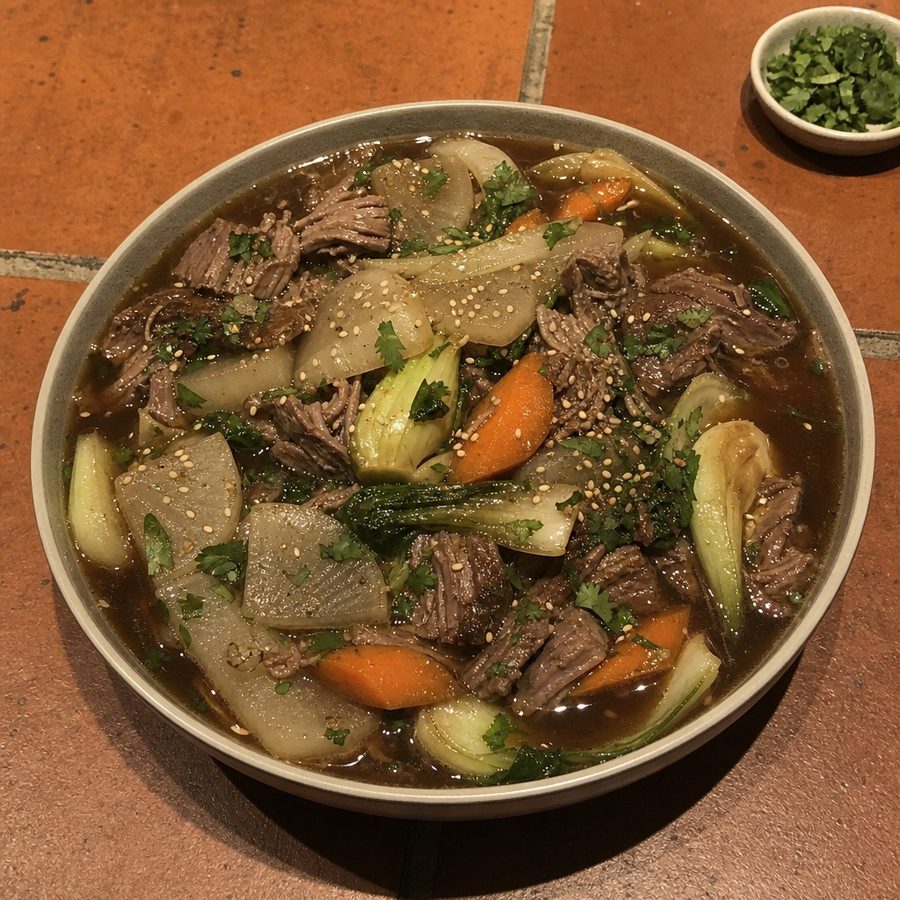
Beef chuck browned hard and braised low in a ginger and tamari broth until it gives way, with daikon and carrot cooked soft and bok choy dropped in at the end.
Why You'll Love This Recipe
Sometimes dinner needs to smell like something other than the Mediterranean. It has the shape of a Japanese nikujaga, which is to say beef, ginger, a salty brown liquid, and time, and almost none of the work happens while you are standing over it. Two hours in a low oven and the chuck is soft enough to give way against the side of a spoon. I start it on a cold weeknight when I am home early enough to brown the meat by six, and it is ready about when the table is set. I make the full amount for the leftovers alone.
Nothing in this pot depends on onion or garlic, and that matters, because both get pulled straight out of a low-FODMAP plan and a braise built on them arrives at your kitchen hollow. What carries it instead is a hard sear on dry beef, a genuinely large amount of sliced ginger going into the hot fat, and tamari and coconut aminos together, which give you salt and a deep fermented sweetness in the same spoonful. Garlic-infused olive oil does the rest of the work. Garlic flavor is fat-soluble and the FODMAPs in garlic are not, so the oil takes the taste with it and leaves the trouble behind in the bulb.
Daikon is the ingredient people leave off the list and should not. It goes in for the last stretch, turns from opaque to translucent, and drinks the broth until it tastes more of the braise than the beef does. The bok choy goes in at the very end, six minutes and no more, so the leaves wilt while the stems stay crisp enough to snap. Then grated ginger and a splash of cider vinegar off the heat, which brings back the sharp top note that two hours of cooking always sands away. Serve it in shallow bowls with plenty of broth. It eats like a full dinner on its own, and it is very good over rice if you keep rice in the house.
Ingredients
- 2 lb boneless beef chuck, cut into 2-inch cubes
- 1 tbsp garlic-infused olive oil
- 1 tbsp toasted sesame oil, divided
- About 2 oz fresh ginger, most of it sliced into thin coins and 1 tbsp finely grated for the finish
- 1/4 cup certified gluten-free tamari
- 3 tbsp coconut aminos
- 1 tbsp maple syrup
- 2 cups beef broth
- 1 lb daikon radish, peeled and cut into 1-inch half moons
- 4 medium carrots, cut into 1-inch pieces on the diagonal
- 6 heads baby bok choy (about 14 oz), halved lengthwise
- 1 tbsp apple cider vinegar
- 1 tbsp sesame seeds, toasted
- 1 tsp freshly ground black pepper
- 1/2 tsp fine sea salt
Instructions
- Season and brown the beef: Pat the cubes thoroughly dry, since a wet surface steams instead of browning, and season them with the salt and the black pepper. Heat the garlic-infused olive oil in a Dutch oven over medium-high until it shimmers, then brown the beef in two batches, about 8 minutes each, turning the pieces only once they release from the pot on their own. Move the browned meat to a bowl and heat the oven to 300°F (150°C).
- Bloom the ginger: Lower the heat to medium and add 2 teaspoons of the sesame oil and all the ginger coins to the fat left in the pot. Stir for about 60 seconds, until the ginger smells sharp and floral and the edges start to color. Do not let it brown past golden, since scorched ginger turns bitter and there is no fixing it afterward.
- Deglaze and braise: Pour in the tamari, the coconut aminos, the maple syrup, and the broth, and scrape the bottom of the pot clean with a wooden spoon. Return the beef and any juices in the bowl, bring it to a bare simmer, cover, and put it in the oven for 90 minutes.
- Add the daikon and carrot: Take the pot out, stir in the daikon and carrot, and push them under the liquid. Cover and return it to the oven for 45 minutes more, until the daikon is translucent and gives no resistance to a knife and the beef pulls apart under a spoon.
- Wilt the bok choy: Set the pot over medium heat on the stove. Lay the bok choy halves cut side down in the broth, cover, and cook for 5 to 6 minutes, until the leaves have wilted and the stems are just tender. Stop there, because any longer and the stems go soft and gray.
- Finish off the heat: Take the pot off the burner and stir in the grated ginger, the cider vinegar, and the last teaspoon of sesame oil. Let it sit for 2 minutes, then taste. It should be salty, sweet, and sharp all at once. Spoon into shallow bowls with plenty of broth and scatter the sesame seeds over the top.
Variations
- More heat: Add a sliced jalapeno with the ginger coins, or a good pinch of cayenne, so the warmth builds under the salt rather than on top of it.
- Citrus finish: Add wide strips of orange zest for the last 20 minutes and a squeeze of the juice off the heat, which suits the ginger better than you would expect.
- Different greens: Swap the bok choy for napa cabbage wedges or a big handful of mustard greens, both of which want about the same few minutes.
- Stovetop version: Keep it on the burner at the barest simmer with the lid ajar for the same total time, checking every half hour that the liquid still covers the meat.
- Richer broth: Use beef bone broth in place of the regular broth for a pot that sets to a soft jelly in the refrigerator and reheats glossier.
Storage & Leftovers
Refrigerated in a sealed container, this keeps for 4 days and improves overnight as the daikon takes on more of the broth. Store the bok choy separately if there is any left, since it goes limp and dull green sitting in warm liquid, and add fresh halves when you reheat.
Reheat gently on the stove over medium-low with a splash of broth or water, about 8 minutes, stirring now and then. Beef chuck that is boiled hard on the second day turns stringy, so keep the surface barely moving. A fresh grating of ginger at the end brings it right back.
It freezes for up to 3 months and is one of the better braises for it. Freeze the beef and daikon together in plenty of broth, leave the bok choy out entirely, and thaw overnight in the refrigerator. Add fresh bok choy and grated ginger while it reheats.
Notes & Tips
- Dry meat browns, wet meat steams: Blot the cubes with paper towels and brown in two unhurried batches. The stuck brown layer on the bottom of the pot is most of the flavor in the finished broth.
- Use more ginger than feels sensible: Two ounces looks like a lot in the pot and tastes like exactly enough after two hours. Long cooking rounds ginger off and mellows it considerably.
- Split the ginger in two: Coins at the start give the broth its warm base note, and a spoonful grated in off the heat gives back the sharpness that the oven takes away.
- Why garlic-infused oil belongs here: The flavor compounds in garlic dissolve into oil and the FODMAPs do not, so an infused oil brings the aroma without the part that causes trouble. Warm it before the meat goes in so it carries through everything after.
- Cut the daikon big: One-inch pieces stay whole and translucent through 45 minutes. Thin slices dissolve and leave you with a cloudy broth and nothing to bite.
- How it keeps and comes back: It holds 4 days and reheats best over low heat with a splash of broth. Add the bok choy fresh each time rather than storing it in the pot.
- For the rest of the household: Anyone not managing their gut can have this over rice with sliced scallion greens and a spoonful of the broth poured over. Keep the scallions in a bowl on the table so the pot itself stays as it is.
Nutrition & Mindful Eating
- The beef, the roots, and the long low heat make this work between them. The meat gives the broth its body, the daikon and carrot soften into that broth and take on its color, and the bok choy at the end keeps a pot this dark from feeling heavy.
- Beef chuck is marbled and full of connective tissue that melts into gelatin over two hours, which is where the glossy broth comes from, and the meat carries iron in the form your body takes up most readily along with B12.
- Daikon turns from crisp and peppery to translucent and mild as it cooks, and it holds a remarkable amount of liquid, so every piece arrives soaked in the braise while staying watery and light in itself.
- Bok choy is two vegetables in one head. The white stems stay crisp and juicy in a few minutes of heat, the dark leaves collapse into the broth, and the green of those leaves is where the vitamin K and folate sit.
- Ginger is doing the loudest work here, first as coins that turn warm and round over a long cook, then grated in at the end where it stays sharp and a little hot at the back of the throat.
- As you eat, take a moment with the daikon, which will taste more of the broth than the beef does, and notice how the ginger arrives at the end of each spoonful rather than the start.
Frequently Asked Questions
Can I use a different cut or a different meat?
Beef short ribs are excellent here and want about 30 minutes longer. Brisket works cut into cubes. Pork shoulder is a good swap at the same weight and timing. Sirloin and other quick-cooking cuts are not worth it, since there is not enough connective tissue in them to give the broth any body.
What if I cannot find daikon?
Peeled turnip or kohlrabi cut the same size behaves almost identically and goes in at the same point. Red radishes work too, though they need only 25 minutes and stay firmer. Whatever you use, cut it big, since small pieces disappear into the broth over 45 minutes.
My broth came out too salty. What happened?
Either the tamari brand was strong or the broth was not the low-sodium kind. Both are salty on their own and they add up over a long covered cook where nothing evaporates. Add half a cup of water and a squeeze more vinegar, and start with 3 tablespoons of tamari next time.
Does this fit a low-FODMAP dinner?
It does. The savory base is browned beef, a lot of ginger, tamari, and coconut aminos rather than onion or garlic, so nothing important is removed when a plan strips those out. Daikon, carrot, and bok choy all sit comfortably at these portions, and garlic-infused olive oil gives back the aroma.