
Goat and Green Plantain Stew with Ginger and Lime
Bone-in goat browned and simmered slowly with ginger, turmeric, and thyme until it falls apart, with green plantain and chayote added late so they keep their shape.
Why You'll Love This Recipe
Goat feeds more of the world than any other red meat, and in most American kitchens it never turns up once. That is worth fixing, and it is easier to buy than people expect. Halal butchers carry it, so do Caribbean, Mexican, Indian, and West African groceries, and it usually comes already cut into stew pieces with the bone left in, often frozen, and often for less than lamb. The bone is a feature rather than a nuisance, since it is what gives this pot its body. I start it on a Sunday when I am home anyway, because the cooking is two hours of doing very little while the kitchen fills up with ginger and thyme.
The one thing that ruins goat is rushing it. It is a hard-working muscle with a lot of connective tissue in it, so at forty minutes it is still rubbery and at ninety it has given way completely, and there is nothing useful in between those two points. Brown the pieces properly first, then keep the pot at a lazy simmer with the lid slightly ajar. Ginger, garlic, and turmeric go in early so they lose their raw edge and turn round, thyme sits underneath everything, and the plantain and chayote wait until the last half hour so they arrive whole rather than dissolved into the broth.
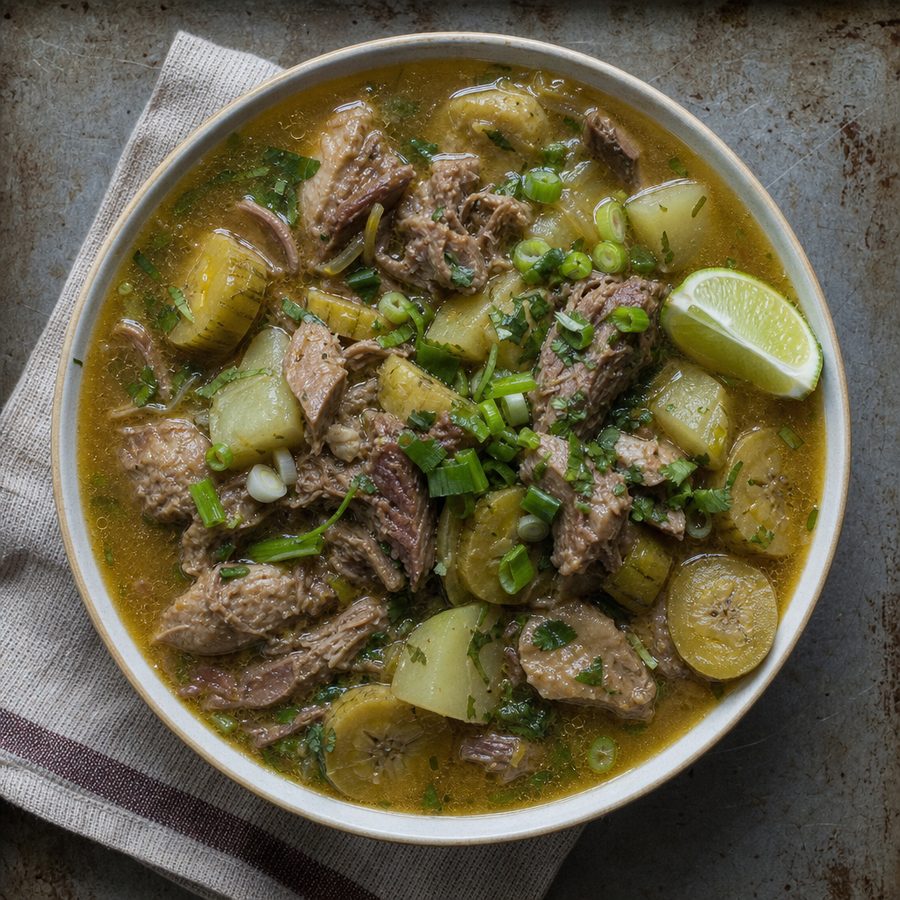
By the end the meat is coming off the bone in shreds, the broth has gone glossy from the collagen, and the plantain has thickened the liquid at the edges. It is a substantial lunch in the best sense, so I portion it into four containers and carry it to work once the weather turns. Lime juice and cilantro go on after the heat is off, and they are what keep two hours of slow cooking from tasting muddy in the bowl. Day two tastes better than day one, and it freezes as well as any stew I make, which is the whole reason it is a lunch.
Ingredients
- 2 lb bone-in goat stew meat (shoulder or leg), cut into 1 1/2-inch pieces
- 2 green plantains, peeled and cut into 1-inch pieces
- 2 chayote (about 12 oz total), peeled, seeded, and cut into 1-inch pieces
- 1 large yellow onion, diced (about 1 cup)
- 4 scallions, sliced, white and green parts kept separate
- 5 cloves garlic, minced
- 2 tbsp grated fresh ginger (a 2-inch piece)
- 1 1/2 tsp ground turmeric
- 1 tbsp fresh thyme leaves, or 6 sprigs
- 2 bay leaves
- 3 cups beef bone broth
- 2 tbsp avocado oil
- 2 tbsp fresh lime juice (about 1 lime)
- 1/4 cup chopped fresh cilantro
- 1 1/2 tsp fine sea salt, divided
Instructions
- Season and brown the goat: Pat the goat pieces dry, since a wet surface steams instead of browning, and season them with half of the salt. Heat the avocado oil in a Dutch oven over medium-high and brown the meat in two batches, about 5 minutes a batch, turning once so both sides take color. Move the pieces to a plate.
- Build the base: Lower the heat to medium and add the onion and the scallion whites. Cook for 4 minutes, scraping the browned bits off the bottom, until the onion is soft. Add the garlic, ginger, and turmeric and cook for 1 minute more, until the pot smells sweet rather than raw.
- Simmer the meat: Return the goat and its juices, add the thyme, bay leaves, and broth, and bring it to a simmer. Set the lid on slightly ajar and cook at the barest bubble for 75 to 90 minutes, until a piece pulls apart under a fork with no resistance. Keep it barely moving, because a hard boil tightens goat rather than relaxing it. Top up with water if the meat is no longer half covered.
- Peel and cut the plantain: While the meat cooks, cut the ends off the plantains and score the skin lengthwise in three places, then lift the peel off in strips with your thumb. A vegetable peeler will not work on a green one. Cut the flesh into 1-inch pieces along with the peeled chayote.
- Add the vegetables: Stir the plantain and chayote into the pot with the rest of the salt and simmer, still barely covered, for 25 to 30 minutes. The plantain is ready when a knife slides in easily and the broth has thickened slightly around it. Fish out the bay leaves and any loose bones.
- Finish: Take the pot off the heat and stir in the lime juice, the cilantro, and the scallion greens. Taste for salt and add a little more lime if the pot tastes heavy. Serve in deep bowls with plenty of the broth.
Variations
- Lamb shoulder: Bone-in lamb shoulder cooks the same way in about an hour and gives you a richer, fattier pot.
- Root vegetables: Use turnip, rutabaga, or taro in place of the chayote when you want the stew heavier and more filling.
- Brighter finish: Grate the zest of the lime into the pot along with the juice for a sharper, more fragrant bowl.
- Greens stirred in: Wilt a few handfuls of collard greens or kale into the broth in the last 5 minutes so there is something dark green in every serving.
- Thicker gravy: Mash a few pieces of the cooked plantain against the side of the pot and stir them back in to thicken the broth.
Storage & Leftovers
This keeps in a sealed container in the refrigerator for up to 4 days and genuinely improves overnight, since the ginger and thyme work through the meat while it sits. Cool it uncovered for about 20 minutes first, then lid it. The broth will set to a soft jelly when cold, which is the collagen doing what it should.
Reheat it in a saucepan over medium-low for 6 to 8 minutes with a splash of water, stirring so the plantain does not stick to the bottom. It also microwaves better than most stews, about 2 minutes covered, because there is nothing crisp in it that you can ruin.
It freezes for up to 3 months. Portion it flat in bags with the broth included and thaw overnight in the refrigerator. Plantain goes slightly softer through a freeze and the chayote softens more than that, so cut both a little larger than you would if you plan to freeze the batch.
Notes & Tips
- Take the bone-in pieces: Boneless goat is easier to eat and makes a thinner pot. The bones are what give the broth its body, and the meat around them stays juicier through a long cook.
- Score the plantain, do not peel it: A green plantain skin will defeat a vegetable peeler. Cut the ends off, run three lengthwise scores through the skin, and lift the strips off with your thumb.
- Keep it at a bare simmer: A hard boil makes goat seize up and stay tight. You want a bubble breaking the surface every second or two and no more.
- Do not add the vegetables early: Plantain and chayote need 25 to 30 minutes and no longer. Put them in with the meat at the start and you will find mush in a gold broth.
- Turmeric stains: It will mark a wooden spoon, a plastic cutting board, and your fingertips. Use metal or glass where you can and wipe the counter down before it sets.
- Lime at the very end: Acid added to a simmering pot goes dull. Off the heat it stays sharp, and it is the thing that makes a rich stew taste finished.
Nutrition & Mindful Eating
- Goat, plantain, and chayote each do a different job in this pot. The meat gives the stew its depth, the plantain gives it starch and thickens the broth as it softens, and the chayote stays mild and juicy so every bowl has something light in it.
- Goat is close-grained and mildly sweet, and the connective tissue running through it is what melts over two hours and gives the broth that glossy feel. The meat carries iron in the form your body takes up most readily, along with B12.
- Green plantain is starchy and firm, far closer to a potato than to the fruit it resembles, and it brings potassium and a resistant starch that feeds the bacteria in your gut. Cut the pieces large so they hold together through the simmer.
- Ginger, turmeric, and thyme go in early and turn warm and round over the long cook, and turmeric is what makes the broth that deep gold color. Curcumin, the compound behind the color, has been studied for its anti-inflammatory effects.
- A bowl of this eats slowly and holds you for a long stretch. The protein in the goat is doing most of that work, and the starch in the plantain gives the meal staying power that broth and meat alone would not have.
- As you eat, taste the lime coming through the ginger, feel how the broth clings to the spoon after a cook that long, and give this bowl your whole lunch break rather than eating it over a keyboard.
Frequently Asked Questions
Where do I buy goat, and what does it taste like?
Halal butchers, Caribbean, Mexican, Indian, and West African markets almost always have it, usually frozen and cut into bone-in stew pieces. It tastes close-grained and mildly sweet, in the neighborhood of lamb but cleaner-tasting and firmer. Ask for shoulder or leg, and take the bone-in pieces rather than boneless.
My goat was still tough after an hour. What now?
Put the lid back on and keep going. Goat has a lot of connective tissue and it needs time rather than higher heat, so another 20 to 30 minutes at a bare simmer will usually get you there. Raising the heat to speed it along tightens the meat and makes it worse.
Can I use a slow cooker?
Yes. Brown the meat and aromatics on the stove first, since that step is most of the flavor, then transfer everything to a slow cooker on low for 6 to 7 hours. Add the plantain and chayote for the last hour so they do not turn to paste.
Does this fit an AIP elimination phase?
It does. There are no grains, legumes, dairy, eggs, nuts, seeds, or nightshades here, and the heat comes from fresh ginger rather than pepper. Check your broth label, since many boxed ones carry pepper or paprika, and use green plantains rather than ripe ones.