
Gochugaru Tempeh with Charred Cabbage and Radish
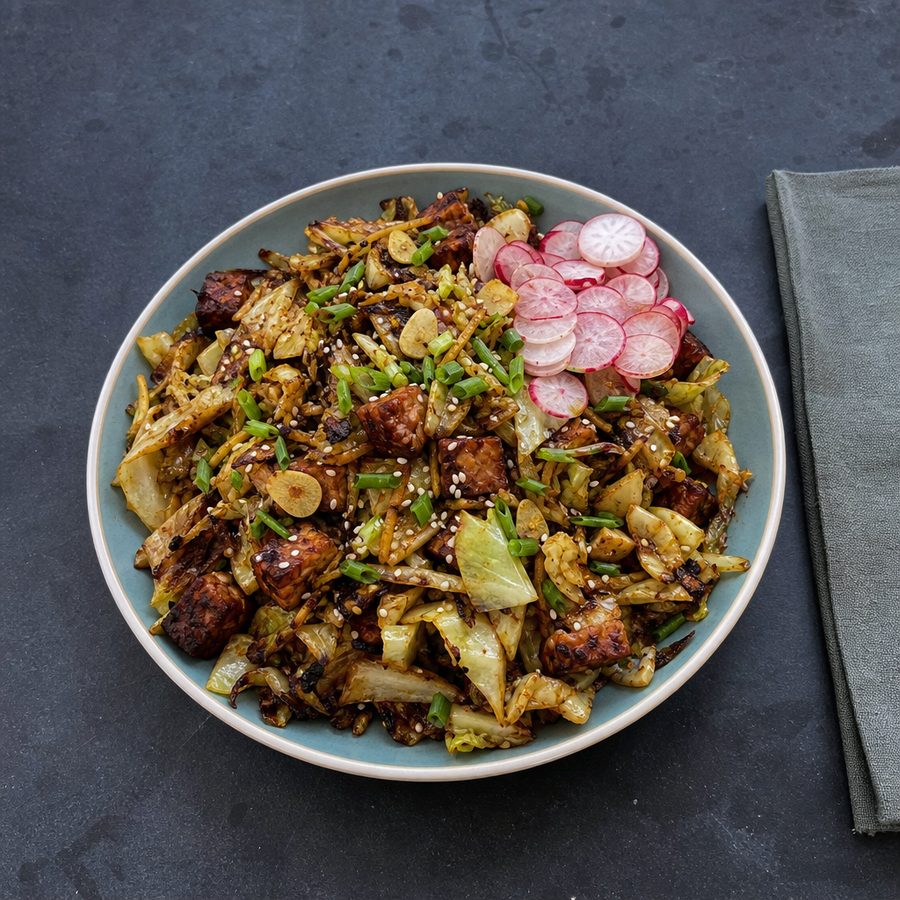
Cubes of tempeh crisped in gochugaru, garlic, and ginger with ribbons of cabbage charred in a dry pan, finished with cold radish slivers tossed in rice vinegar and toasted sesame.
Why You'll Love This Recipe
Half an hour, and a night when I want something with a real edge to it. Gochugaru is the coarse Korean chile flake, and it is a different animal from the fine powdered chiles most of us keep: fruity, sun-dried, more color than heat, and it blooms into oil rather than burning. Tempeh takes to it better than almost anything else I cook, because the cubes are firm and porous and hold a coating instead of shedding it. The cabbage cooks in the same pan and does most of the work of turning this into dinner.
What you want from the cabbage is scorch marks, not softness. Ribbons pressed into a hot dry pan and left alone go dark brown and then black in patches, and those patches taste sweet and faintly smoky in a way that boiled or steamed cabbage never does, while the core of each ribbon stays crisp enough to hear. The tempeh crisps separately in oil so it keeps its crust intact, then everything comes back together with the soy sauce and the vinegar for barely a minute at the end, which is long enough to glaze the whole pan and short enough that nothing loses its crunch.
The radish is the part people are surprised by. Sliced thin and tossed with vinegar while the pan work happens, it goes from peppery and hard to bright and cool in about ten minutes, and it lands on the hot skillet food as a genuine contrast rather than a garnish nobody eats. This is a dish for a weeknight in cold weather, when a bowl of something red and spicy is what you actually want at seven in the evening, and it reheats well enough that I cook the full amount even when there are only two of us at the table.
Ingredients
- 1 lb tempeh (two 8 oz packages), cut into 3/4-inch cubes
- 1 lb green cabbage (about half a small head), cut into 1-inch ribbons
- 8 to 10 radishes (about 9 oz), sliced into thin half moons
- 6 scallions, whites cut into 1-inch lengths and greens thinly sliced
- 4 garlic cloves, thinly sliced
- a 2-inch piece of fresh ginger, peeled and cut into fine matchsticks
- 1 1/2 tbsp gochugaru (Korean coarse chile flakes)
- 2 tbsp soy sauce
- 3 tbsp unseasoned rice vinegar
- 1 tbsp avocado oil
- 1 tbsp toasted sesame oil
- 2 tbsp sesame seeds, toasted in a dry pan until they pop
Instructions
- Dress the radishes first: Slice the radishes into thin half moons and toss them in a small bowl with 2 tbsp of the rice vinegar and the sliced scallion greens. Set them aside on the counter while you cook. They will soften slightly, lose their bite, and turn faintly pink at the edges by the time you need them.
- Char the cabbage in a dry pan: Set a 12-inch cast iron or carbon steel skillet over high heat until a drop of water skitters. Add the cabbage ribbons with no oil, spread them flat, and leave them completely alone for three minutes. When the undersides are spotted black, toss once and give them two minutes more. The cabbage should still be crisp at the core. Tip it onto a plate.
- Crisp the tempeh: Lower the heat to medium-high and add the avocado oil. Put the tempeh cubes in a single layer and leave them for three minutes until the down sides are deep golden, then turn and give them another two to three minutes. Crowding is the enemy here, so use two batches if your pan is smaller than twelve inches.
- Bloom the gochugaru: Push the tempeh to one side, add the sesame oil to the cleared space, and scatter in the garlic, the ginger matchsticks, the scallion whites, and the gochugaru. Stir that little pile for forty five seconds, no longer. The chile should go glossy and smell toasted and slightly sweet. If it smells acrid, the pan is too hot, so pull it off the burner for a moment.
- Bring it together: Return the cabbage to the pan, pour in the soy sauce and the remaining tablespoon of vinegar, and toss everything hard for about a minute so the glaze coats the cubes and the ribbons. Take it off the heat, pile the vinegared radishes and their liquid over the top, and finish with the toasted sesame seeds.
Variations
- Tofu instead of tempeh: Use a pound and a half of pressed firm tofu cut into cubes, and give it an extra minute per side, since tofu browns more slowly than tempeh does.
- Napa cabbage: Swap in napa cut into wide ribbons. It chars faster and goes silkier, so cut the pan time roughly in half and watch it closely.
- More green: Fold two large handfuls of spinach in during the final toss and let it collapse against the hot cabbage.
- Cucumber for radish: Smashed cucumber dressed the same way is the classic partner for a spicy skillet like this, and it brings more water and coolness than radish does.
- Egg on top: Fry an egg per person until the white is set through and the edges are lacy, and set one over each bowl.
Storage & Leftovers
This keeps four days covered in the refrigerator. Store the radishes separately if you can, since they carry on softening in their vinegar and are best while they still snap. The tempeh and cabbage settle overnight and the gochugaru works its way further into both, so day two is arguably better than day one.
Reheat in a dry skillet over medium-high for three or four minutes, spread flat and left still for the first two so the tempeh crisps again. A microwave heats it through, but the cubes go soft and the charred cabbage loses the texture that made it worth charring.
It also eats well cold, straight from the container, which is how I usually finish the last of it. If you want to freeze it, do so before adding the radishes, in flat sealed portions for up to two months, and reheat in a pan from thawed.
Notes & Tips
- Dry pan first, oil later: Cabbage chars properly only in a dry pan. Oil lowers the contact temperature and the ribbons start to steam in their own moisture, which is exactly the texture you are trying to avoid.
- Cut the tempeh generously: Three quarter inch cubes hold a crust and stay tender inside. Cut smaller and you get too much surface, which dries out before the glaze goes on.
- Watch the chile, not the clock: Gochugaru goes from fragrant to burnt in about fifteen seconds. Keep it moving in the oil, and take the pan off the heat the moment it smells toasted.
- Dress the radishes early: They need those ten minutes in vinegar to shed their harshness. Do it before you turn the burner on and they will be exactly right when the skillet is done.
- Add the soy sauce off the boil: It goes in at the very end, when the pan work is finished, so it glazes rather than scorches. Poured onto a screaming hot dry pan it burns and turns bitter fast.
- Toast the sesame seeds yourself: Two minutes in a dry pan over medium heat, shaking constantly until they turn tan and start popping, and the difference in aroma is not subtle.
Nutrition & Mindful Eating
- Tempeh, cabbage, and radish are doing three separate jobs here. The tempeh carries the protein and most of the substance, the charred cabbage brings bulk and fiber for very little carbohydrate, and the vinegared radish keeps a rich, spicy pan from feeling heavy.
- Tempeh is whole soybeans held together by a culture, which is why it has a nutty flavor and a firm bite rather than the softness of other soy foods. That whole-bean structure is where its fiber comes from, and it carries as much protein as most meat by weight.
- Cabbage is mostly water and fiber, so a large pile of it cooks down to a manageable amount on the plate while keeping the crunch. It is a good source of vitamin C, which survives fast dry-pan cooking better than it survives boiling.
- Gochugaru is dried Korean chile, ground coarse, and its deep red color comes from the same carotenoid pigments that give sweet paprika its shade. Blooming it in oil for under a minute is what pulls that color and its fruity aroma into the whole pan.
- Sesame seeds toasted at the end give the dish its finishing aroma, and for something scattered by the spoonful they bring a surprising amount of calcium along with their crunch.
- As you eat, notice how the sweetness of the blackened cabbage sits underneath the chile, and let the cool radish slow you down between bites rather than eating straight through a bowl this spicy.
Frequently Asked Questions
What can I use if I cannot find gochugaru?
Use a mild coarse chile flake such as Aleppo or Maras pepper, in the same amount. Ordinary crushed red pepper is much hotter and much less fruity, so start with a third of the quantity and taste. Gochugaru keeps for a year in the freezer, which is where mine lives once the bag is open.
Does tempeh need steaming before it goes in the pan?
It does not, though some cooks like to steam it for ten minutes to soften the bitterness. I skip that step here because the gochugaru and the vinegar cover any bitter note comfortably, and steaming adds water that then has to be driven off before the cubes will crisp.
My cabbage steamed instead of charring. What went wrong?
Either the pan was not hot enough or there was too much cabbage in it at once. The pan needs to be properly hot before anything touches it, the cabbage needs to be dry, and a pound of ribbons wants a twelve-inch skillet. Char it in two batches rather than crowding one.
Can I make it ahead for lunches?
Yes, and it is one of the better things to pack. Cook the tempeh and cabbage, cool them, and portion them out, then keep the dressed radishes in a small separate container and tip them on at the last minute so they stay bright and crunchy.