
Gochugaru Tofu Stew with Zucchini and Bean Sprouts
A fast red stew of gochugaru bloomed in sesame oil with garlic and ginger, thick with mushrooms, half moons of zucchini, and spoonfuls of firm tofu, finished with bean sprouts wilted in at the end.
Why You'll Love This Recipe
A cold night and twenty nine minutes is all this takes. It borrows the shape of a Korean jjigae, the bubbling red pot that arrives still boiling at the table, and gets there without the fermented pastes that a real jjigae leans on. What does the work instead is gochugaru bloomed in sesame oil at the very start, which pulls the color and the fruity, sun-dried chile flavor into the fat before any liquid goes near it. Skip that step and you get a pale, thin, disappointing soup. Take the thirty seconds and you get a pot the color of a brick.
The tofu goes in torn rather than cubed. Rough edges hold broth the way neat cubes never do, and the craggy faces catch the chile so every piece tastes of the pot rather than of tofu sitting in it. I use firm rather than silken because it survives a simmer, though the softer kind is traditional and lovely if you are gentle with it. The mushrooms are browned first, on their own, in a dry pot before anything wet happens, because that is where the savory depth comes from and it is the one thing you cannot add later. Everything after that is a matter of adding things in the right order and waiting a few minutes.
Bean sprouts are the last thing in and the reason the bowl is not one texture all the way through. Two minutes under a lid in the hot broth is all they need, just enough that they lose their squeak and keep their snap against the soft tofu. In Korea they are cooked far more often than people outside it expect, and they turn a good stew into a generous one for very little money or effort. Make the whole pot even when there are only two of you eating. It reheats beautifully on the stove, and the second bowl is deeper and redder than the first.
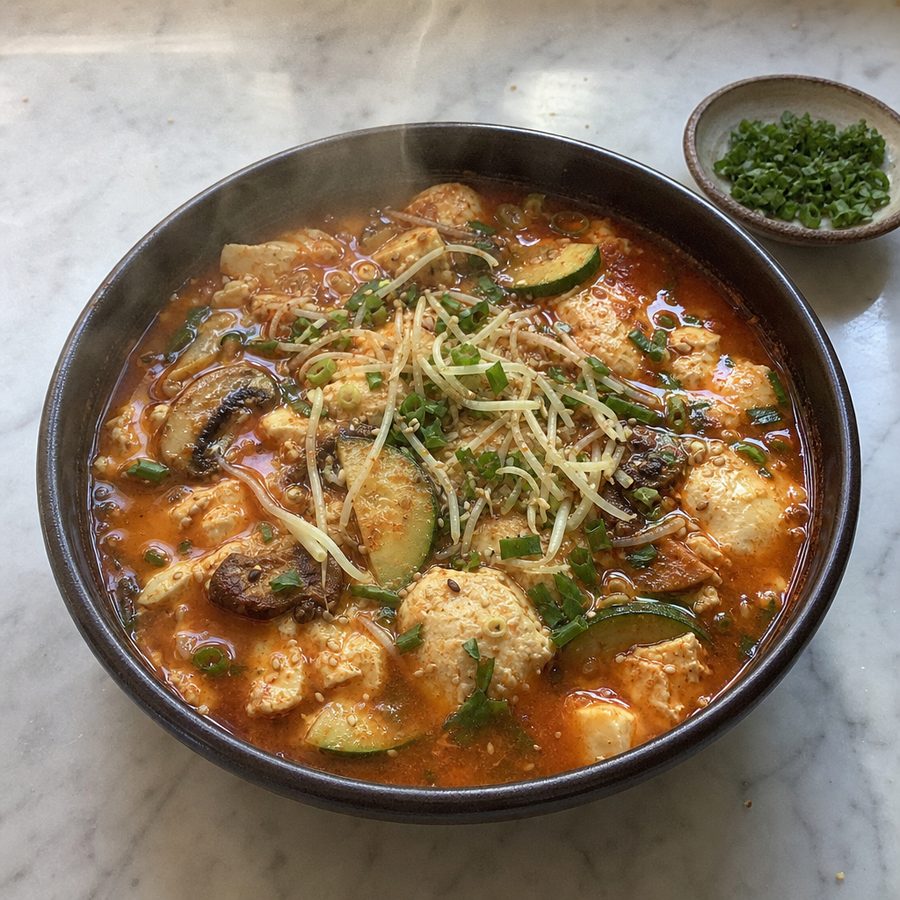
Ingredients
- 1 1/3 lb firm tofu, drained and broken into large rough spoonfuls
- 12 oz mushrooms, cremini or shiitake, stemmed and thickly sliced
- 2 medium zucchini (about 12 oz), quartered lengthwise and cut into half moons
- 4 cups mung bean sprouts (about 9 oz), rinsed and drained
- 6 scallions, cut into 1 1/2-inch lengths, greens reserved for the top
- 5 garlic cloves, minced
- a 1 1/2-inch piece of fresh ginger, peeled and grated
- 2 tbsp gochugaru (Korean coarse chile flakes)
- 1 tbsp toasted sesame oil
- 2 tbsp soy sauce
- 3 cups vegetable broth
- 2 tbsp sesame seeds, toasted
Instructions
- Brown the mushrooms: Set a Dutch oven or a wide heavy pot over medium-high heat with no fat at all. Add the sliced mushrooms and leave them, stirring only every couple of minutes, for about five minutes. They will squeak, release their water, and then start to brown once that water has cooked away. Wait for the browning, since that is the base of the whole pot.
- Bloom the gochugaru: Lower the heat to medium, push the mushrooms aside, and add the sesame oil, the garlic, the grated ginger, the scallion whites, and all the gochugaru. Stir constantly for thirty to forty five seconds. The oil turns deep red and the chile smells toasted and sweet. Do not let it go past that point or it turns bitter.
- Build the broth: Pour in the broth and the soy sauce, scraping the bottom of the pot to lift everything the mushrooms left behind. Bring it to a strong simmer, add the zucchini half moons, and cook for four minutes, until the zucchini is tender at the edge and still firm at the center.
- Add the tofu: Break the tofu into large rough spoonfuls straight over the pot, letting the pieces land where they will. Simmer for four minutes without stirring, so the pieces set and hold together. Nudge them under the broth once with the back of a spoon rather than mixing, since stirring at this point breaks them down into shreds.
- Wilt the sprouts and serve: Scatter the bean sprouts over the surface, cover the pot, and cook for two minutes, until they have collapsed slightly and lost their squeak but still have a snap. Take it off the heat, taste the broth and adjust the soy sauce, then top with the scallion greens and the toasted sesame seeds and bring it to the table hot.
Variations
- Tempeh version: Cube half a pound of tempeh, brown it with the mushrooms, and use it alongside a smaller amount of tofu for a firmer, nuttier pot.
- Leafy: Stir in a few large handfuls of spinach or shredded napa cabbage with the sprouts and let them collapse under the lid.
- Egg dropped in: Crack two eggs into the simmering broth in the last three minutes and cover, so the whites set firmly around the yolks.
- Seafood pot: Add half a pound of shrimp with the tofu and cook until they curl and turn opaque, about three minutes.
- Sharper finish: A tablespoon of rice vinegar stirred in off the heat lifts the whole bowl and cuts the richness of the sesame oil.
Storage & Leftovers
The stew keeps four days in a sealed container in the refrigerator and improves overnight, since the chile and the mushroom flavor go on working their way into the tofu. The bean sprouts do soften, so if you know you are cooking for leftovers, hold half of them back and add them fresh to the reheated portion.
Reheat gently on the stove over medium-low until it steams, five minutes or so, rather than at a hard boil that shreds the tofu. The microwave is fine for a single bowl if you cover it and stop before it erupts.
It freezes for two months, with one caveat: frozen and thawed tofu changes texture completely and comes back spongy and chewy. Some people love that and it is a real Korean preparation in its own right, but if you want the soft pieces you started with, eat this one from the refrigerator rather than the freezer.
Notes & Tips
- Brown the mushrooms dry: Fat added at the start keeps mushrooms from browning until their water has gone. A dry pot gets them there faster and gives you a cleaner, deeper flavor to build on.
- Bloom, do not burn: Thirty to forty five seconds is the whole window for the chile. Keep it moving in the oil, and if the pot looks too hot, lift it off the burner while you stir.
- Tear the tofu, do not cube it: Torn edges hold broth and catch chile. Neat cubes look tidier and taste considerably less interesting in a bowl like this.
- Stop stirring once the tofu is in: It needs four still minutes to firm at the surface. Stir and you will end up with a cloudy broth full of shreds rather than pieces you can lift on a spoon.
- Sprouts go in last, under a lid: Two minutes covered wilts them through without cooking out the snap. Added any earlier they go limp and disappear into the broth.
- Taste before you add more soy sauce: The broth concentrates as it simmers and the mushrooms bring savor of their own. Adjust at the end, when what is in the pot is what you are actually going to eat.
Nutrition & Mindful Eating
- Tofu, mushrooms, and a pot full of vegetables carry this between them. The tofu is where the protein sits, the mushrooms give the broth its savory depth, and the zucchini and bean sprouts turn a soup into something you eat with a spoon and a fork.
- Firm tofu is soybean curd pressed and set with calcium salts, so alongside its protein it brings a genuinely useful amount of calcium, and the torn pieces soak up broth rather than sitting apart from it.
- Mushrooms browned dry before any liquid touches them develop the glutamates that make this broth taste like it simmered far longer than it did, and they carry selenium and B vitamins that are unusual to find in a vegetable.
- Mung bean sprouts cooked briefly keep their snap and add fiber and vitamin C to a bowl that is otherwise soft all the way through, which is most of the reason they belong here.
- Gochugaru is what makes this pot red, and that color comes from the carotenoid pigments in dried chile. Blooming it in sesame oil before the liquid goes in is what carries both the color and the fruity aroma through the whole stew.
- As you eat, notice the steam and the chile aroma coming off the bowl before the first spoonful, and let a stew this hot set the pace so you finish it slowly.
Frequently Asked Questions
Can I use silken tofu?
Yes, and it is closer to the traditional bowl. Spoon it in at the very end, give it two minutes to heat through, and do not stir at all. It will break into soft clouds through the broth, which is lovely, and it means the stew has to go straight from pot to bowl.
How hot is two tablespoons of gochugaru?
Warm rather than fierce. Gochugaru is a mild, fruity chile that is used generously in Korean cooking for color as much as heat, so two tablespoons here reads as a gentle glow. If the only flakes you have are ordinary crushed red pepper, use two teaspoons instead and expect a sharper burn.
Do the bean sprouts have to be cooked?
In this recipe they are, and I would keep it that way. Two minutes under a lid in a simmering pot heats them right through while they still snap, which is both the texture you want and the safe way to serve sprouts to anyone at the table.
Can I make it without the mushrooms?
You can, though you lose the savory floor the whole pot stands on. If you skip them, brown a small diced onion in the sesame oil before the chile goes in, and add an extra tablespoon of soy sauce at the end to make up the depth.