
Greek Baked Trout with Horta and Lemon Potatoes
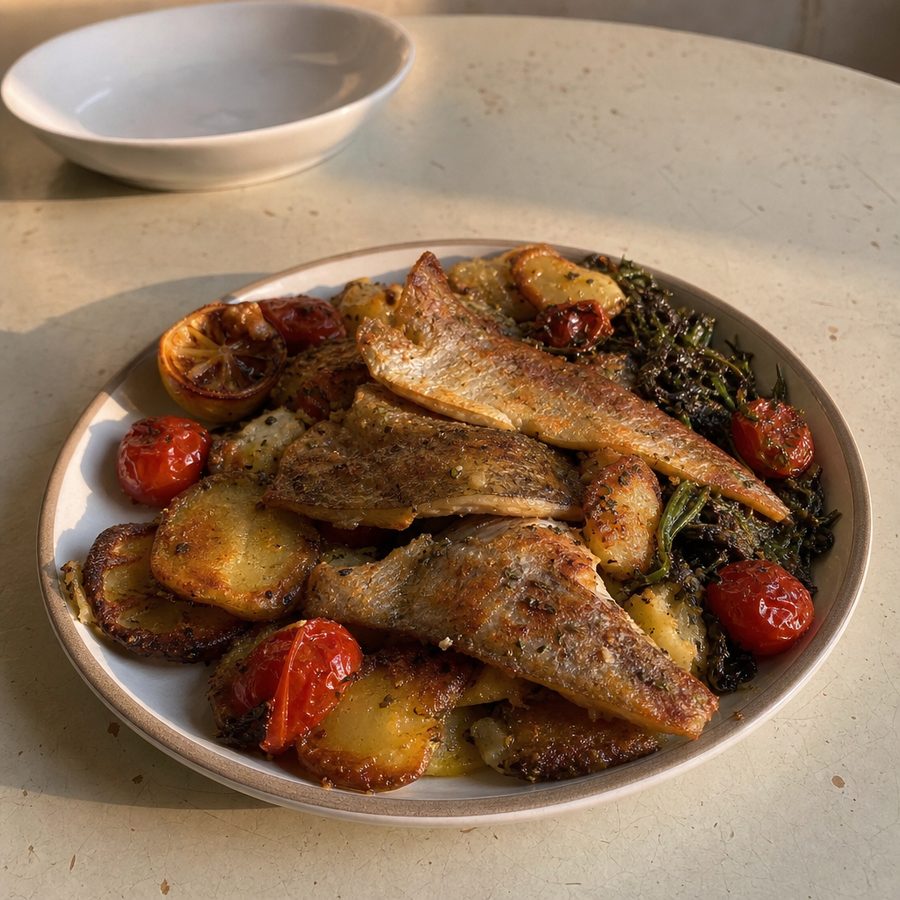
Trout fillets baked over sliced potatoes and cherry tomatoes, with a skillet of garlicky dandelion greens folded through at the end and a great deal of lemon and dried oregano over everything.
Why You'll Love This Recipe
When the fish counter has trout, I let the oven do the work and make this. It is built the way a Greek taverna builds a fish plate, which is to say the fish is the smallest part of it. Potatoes and greens fill the pan, the trout goes on near the end, and lemon and oregano tie the whole thing together. I like it in early spring when dandelion greens are young and the tomatoes are still the small sweet ones, but it holds up all year. The pan comes to the table and people serve themselves, which is most of the appeal on a weeknight.
Eating it is a study in three textures. The potato slices at the bottom of the pan go soft and soaked with oil and tomato juice, the ones at the edges crisp up and curl, and the greens sit somewhere between silky and chewy depending on how thick the stems were. Trout is a delicate fish with a sweet, almost buttery flesh, and it wants only eight or nine minutes in a hot oven. The moment it turns from glossy to matte and the flakes separate under a fork, it is done. Lemon squeezed over the whole pan at the table is not optional, it is the last ingredient.
It belongs on a night when you want a full plate without three pans to wash. Everything is in one dish, the greens can be trimmed and washed the day before, and the potatoes will sit happily in the oven while you deal with everything else in your evening. I make it for company as often as I make it for the two of us, because a whole roasting pan of it looks generous in a way that individual plates never do. Leftovers go into a bowl cold with more lemon and taste like a completely different meal.
Ingredients
- 4 trout fillets, skin on (about 4 oz each, 1 lb total)
- 1 lb Yukon Gold potatoes (about 3 medium), scrubbed and sliced 1/4 inch thick
- 2 bunches dandelion greens (about 14 oz), thick stems trimmed and leaves cut in half crosswise
- 1 1/4 cups cherry tomatoes, halved
- 1 small yellow onion, sliced thin
- 3 tbsp extra-virgin olive oil
- 5 garlic cloves, thinly sliced
- 3 tbsp fresh lemon juice, from about 1 1/2 lemons, plus 1 lemon halved for the pan
- 1 1/2 tsp dried Greek oregano, crumbled between your palms
- 1/3 cup chopped flat-leaf parsley
- 1/2 tsp fine sea salt
- 1/2 tsp coarsely ground black pepper
Instructions
- Start the potatoes: Heat the oven to 425°F. Toss the potato slices and the sliced onion with 2 tablespoons of the olive oil, half the salt, and half the pepper, and spread them in a shallow roasting pan or a large rimmed sheet pan in an overlapping layer no more than two slices deep. Roast for 25 minutes, turning once at the halfway mark, until the edges are brown and a paring knife slides through easily.
- Wash and wilt the greens: While the potatoes roast, wash the dandelion greens in a sink of cold water and lift them out so the grit stays behind. Warm the remaining tablespoon of olive oil in a wide skillet over medium heat, add the sliced garlic, and cook for one to two minutes until it is pale gold. Add the greens still dripping wet, in handfuls, turning each one down before adding the next. Cover and cook four minutes, then uncover and cook two more, until the stems bend easily and the leaves are dark and glossy.
- Build the pan: Pull the potatoes out and scatter the cherry tomatoes over them, then push the wilted greens into the pan in loose piles among the potatoes rather than spread flat, so they do not dry out. Sprinkle with 1 teaspoon of the crumbled oregano and slide the pan back into the oven for 6 minutes, until the tomatoes have split and are leaking into the potatoes.
- Season and add the trout: Pat the trout fillets dry and season them with the remaining salt, pepper, and oregano. Lay them skin side down on top of the potatoes and greens, spacing them apart, and tuck the halved lemon into a corner of the pan cut side down. Spoon a little of the pan oil over each fillet.
- Bake the fish: Return the pan to the oven for 8 to 10 minutes. The trout is ready when the flesh has turned from translucent to opaque and the thickest part flakes when you press it with the back of a fork. A thinner fillet may be done at 7 minutes, so check the smallest one first.
- Finish with lemon and parsley: Take the pan out and let it sit for two minutes. Pour the lemon juice over the potatoes and greens, not over the fish, so it runs underneath and mixes with the pan juices. Scatter the parsley across everything and bring the pan to the table with the roasted lemon halves for squeezing.
Variations
- With olives: Scatter a handful of torn kalamata olives over the pan with the tomatoes for a saltier, more resinous plate.
- Fennel in place of onion: Use a thinly sliced fennel bulb rather than the onion, which turns sweet and anise-scented under the fish.
- Skordalia on the side: Serve with a spoonful of garlic and almond skordalia on each plate, thinned with a little of the hot pan juice.
- Chickpeas in the pan: Add a drained can of chickpeas with the tomatoes so they crisp slightly at the edges and soak up the oregano.
- More heat: Crumble a dried red chile into the garlic oil before the greens go in, which gives the whole pan a low warmth.
Storage & Leftovers
This keeps three days covered in the refrigerator. The potatoes soften further overnight and take on more of the tomato and lemon, and the greens hold their texture better than you would expect. Keep the fish on top of the vegetables rather than mixed in, so it stays in pieces you can lift out whole.
Reheat a portion in a 350°F oven for eight to ten minutes, covered loosely with foil so the fish does not dry. The microwave works if you are in a hurry, though trout goes firm and a little chalky when it is heated fast, so stop while the center is still barely warm.
I do not freeze this one. Potatoes turn grainy and the greens go watery on thawing, and trout loses the tenderness that makes it worth cooking gently in the first place. What you can do ahead is trim and wash the greens up to two days early and keep them rolled in a damp towel in the crisper drawer.
Notes & Tips
- Slice the potatoes evenly: A quarter inch is the number, and a mandoline gets you there faster than a knife. Thick and thin slices in the same pan means some are still firm while others have gone to mush.
- Leave the greens wet: The water clinging to the washed leaves is what steams them tender under the lid. Spun-dry greens fry instead and the stems stay tough.
- Do not spread the greens flat: Piled loosely among the potatoes, they stay moist in the hot oven. Spread in a thin layer, the top leaves go papery in the six minutes they are in there.
- Dry the trout: Fish straight from the wrapper is wet, and wet fish steams rather than roasts. A minute with a paper towel is the difference between bronze edges and pale ones.
- Crumble the oregano in your palms: Rubbing the dried leaves between your hands over the pan breaks them open and releases the smell at once. Dropped in whole they stay woody and quiet.
- Add the lemon juice at the end: Poured over the vegetables off the heat, it stays sharp and cuts the oil. Roasted into the pan from the start it goes flat and slightly bitter.
Nutrition & Mindful Eating
- Trout, dandelion greens, and potatoes each carry a different part of this plate. The fish brings the protein and its own soft richness, the greens bring bitterness and minerals, and the potatoes underneath soak up the oil and tomato juice and make the pan a full dinner rather than a fish course.
- Trout is a freshwater fish with a sweet, fine-flaked flesh and a good amount of the omega-3 fats that oily fish are known for. It also carries vitamin D and B12, and it cooks in under ten minutes, which is why it suits a pan that is otherwise already finished.
- Dandelion greens are the bitter chicory-family leaf Greek cooks call horta, and wilting them slowly in garlic and oil turns that bitterness deep and mineral. They bring calcium along with iron and vitamin K, and the lemon at the end helps your body take up that iron.
- Cherry tomatoes split in the heat and give up their juice into the potatoes, which is where a lot of this dish's flavor lives. Cooking concentrates their lycopene, and the olive oil in the pan is what carries it.
- Crumbled oregano, sliced garlic, parsley, and three tablespoons of lemon are doing all the seasoning here. Between them they cover herb, allium, green, and acid, which is why a pan with so few components tastes finished rather than plain.
- As you eat, notice how the bitterness of the greens keeps shifting as the lemon and the pan juices work through them, and give yourself long enough at the table to feel the meal settle rather than eating it standing over the pan.
Frequently Asked Questions
What if I cannot find dandelion greens?
Escarole is the closest in character and wants the same four to six minutes in the covered pan. Mature curly kale works too, cut small, with an extra three minutes and a splash of water. Both are milder than dandelion, so add an extra squeeze of lemon at the end to bring the sharpness back.
Can I use a whole trout rather than fillets?
Yes, and it is closer to how this is cooked in Greece. Two whole trout, gutted and scaled, need about 20 minutes at 425°F, so put them on the pan when the tomatoes go in rather than at the end. Slash the skin twice on each side and push oregano and lemon slices into the cavity.
The greens tasted harsh. What went wrong?
Usually not enough time under the lid. The last two minutes of the covered wilt are where the sharp edge softens, and greens pulled the moment they look collapsed are still bracing. The other fix is fat and acid: a little more olive oil in the skillet and the full three tablespoons of lemon at the end.
Will another fish work here?
Salmon fillets need about 12 minutes and stand up to the same treatment. Cod is fine as well, though it releases more water into the pan, so give the potatoes an extra five minutes of roasting first so they are properly brown before the fish goes on.