
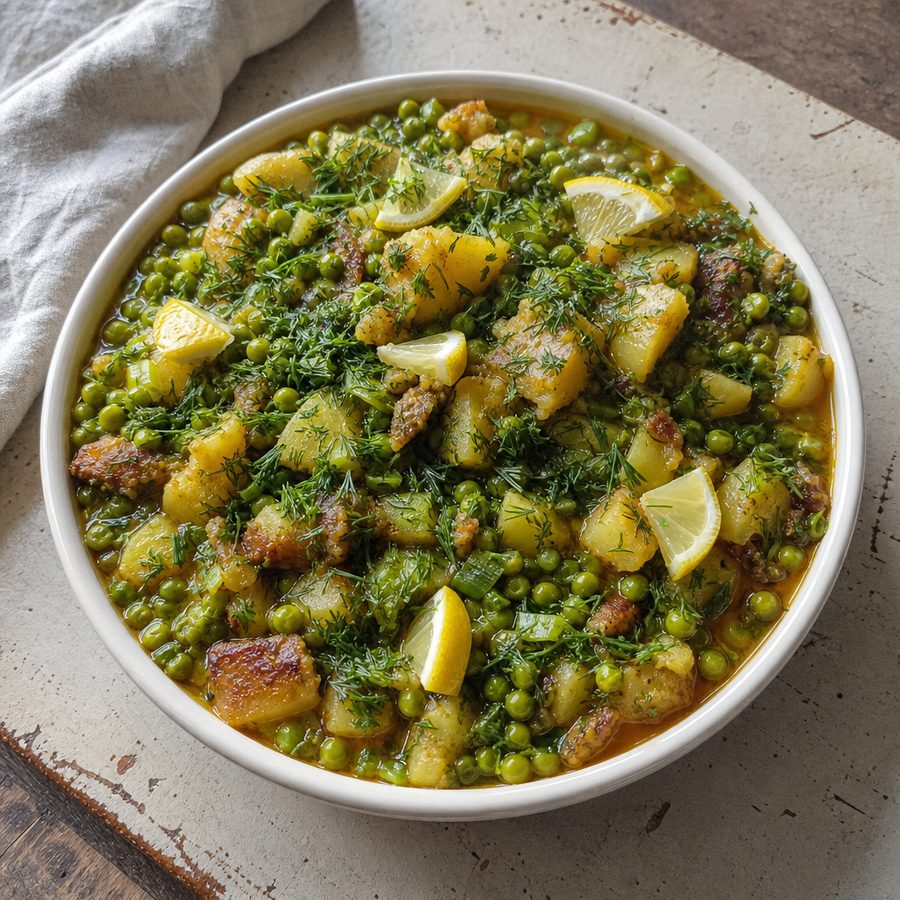
Greek Braised Peas with Dill and New Potatoes
Sweet peas and chunks of gold potato braised slowly in olive oil with scallions, carrot, and a little tomato, finished with a whole bunch of dill and a hard squeeze of lemon.
Why You'll Love This Recipe
This is the dish I make when I want lunch to feel like a meal without standing over a stove and turning things. Greek cooks call this style ladera, which means the vegetables are cooked in olive oil until they give up and go silky, and peas are one of the best candidates for it. The pan does the work. You slice, you stir a few times, and about half an hour later there is a shallow pool of orange, herb-flecked oil at the bottom that you will want to chase around the bowl with a spoon. I use frozen peas on purpose, because they are picked and frozen at their sweetest.
It eats soft and sweet and a little sour, which is a combination I find easy to want at midday. The potatoes are the anchor, and cutting them small means they cook in the same window as everything else and pick up the tomato and lemon rather than sitting there tasting like plain potato. The scallions almost dissolve. The carrots stay just firm enough to notice. And then there is the dill, which goes in off the heat in an amount that looks like a mistake until you taste it, at which point it turns out to be the whole point of the dish.
I make this in a big batch on a Sunday and eat it through the week, and it belongs in the rotation on any day you want something warm that is not heavy. It is good hot, it is arguably better at room temperature, and it is genuinely excellent cold out of the container standing in front of the open refrigerator. In spring I make it with fresh peas and it is a different, greener dish. In February I make it with frozen ones and nobody at my table has ever known the difference.
Ingredients
- 3 tbsp extra virgin olive oil
- 1 medium yellow onion, halved and thinly sliced
- 8 scallions, white and green parts, cut into 1-inch lengths
- 3 garlic cloves, thinly sliced
- 2 medium carrots, cut into thin coins
- 10 oz Yukon Gold potatoes, peeled and cut into 1-inch chunks
- 5 cups frozen peas (about 1 lb 7 oz), straight from the freezer
- 1/2 cup canned crushed tomatoes, no salt added
- 1 packed cup chopped fresh dill, tender stems included
- 1/2 cup chopped flat-leaf parsley
- 2 tbsp lemon juice, plus wedges for the table
- 1/2 tsp coarsely ground black pepper
- 1/4 tsp fine sea salt
Instructions
- Soften the alliums in the oil: Warm the olive oil in a wide, deep skillet or a shallow braising pan over medium heat. Add the sliced onion and the scallion lengths with a pinch of the salt and cook for six to eight minutes, stirring now and then. You want them limp and translucent with no color on them at all, so drop the heat if you hear anything sizzling hard. Add the sliced garlic for the last minute, just until it smells sweet.
- Build the braising base: Stir in the carrot coins, the crushed tomatoes, the black pepper, and the rest of the salt. Let the tomato cook down for two or three minutes until it darkens a shade and stops looking watery. Pour in one cup of water and bring it to a simmer. The liquid should come about halfway up the vegetables, no more, since this is a braise rather than a soup.
- Add the potatoes: Tip in the potato chunks, turn them through the liquid, and cover the pan. Simmer gently for ten minutes. They should be starting to soften at the edges but still hold firm in the center when you poke one with a knife, since they will have another ten minutes ahead of them with the peas.
- Braise the peas: Add the peas straight from the freezer and stir them through. Bring it back to a bare simmer, cover, and cook for ten to twelve minutes, until the peas are completely tender and have gone from bright to a softer olive green. This is not the crisp, snappy pea of a spring salad. Uncover for the last three or four minutes so the liquid reduces to a glossy few tablespoons around the vegetables.
- Finish with dill and lemon: Take the pan off the heat and let it settle for two minutes so the lemon does not cook away. Stir in the dill, the parsley, and the lemon juice all at once. Taste, and add another squeeze if the pan tastes flat. Serve warm or at room temperature, with the oil spooned back over the top and lemon wedges alongside.
Variations
- Peas and artichokes: Add a drained can of quartered artichoke hearts with the potatoes for the classic spring pairing, and rinse them first so they taste of artichoke rather than brine.
- Fennel and orange: Swap the carrot for a thinly sliced fennel bulb and finish with grated orange zest along with the lemon juice for a sweeter, more perfumed pan.
- Green beans in with the peas: Add a couple of handfuls of green beans, cut into 2-inch lengths, at the same time as the potatoes for more chew and a second green vegetable.
- Mint in place of half the dill: Replace half the dill with chopped fresh mint, which pushes the whole dish sweeter and is common in the islands.
- With an egg on top: Slide a soft-cooked egg onto each bowl and break it into the oil. It turns a vegetable lunch into a fuller plate without changing the character of the braise.
Storage & Leftovers
This keeps five days in a sealed container in the refrigerator and improves for at least the first two. The olive oil and the tomato work their way into the potatoes overnight, and the dill mellows into the whole pan rather than sitting on top of it. Store it with the oil, not drained off, since that is where most of the flavor lives.
Reheat it gently in a covered pan over low heat with a splash of water, five or six minutes, stirring once. High heat makes the peas fall apart and turns them gray. It is also completely correct to eat this at room temperature straight from the container, which is how it is most often served in Greece anyway, so do not feel obliged to warm it at all.
It freezes for up to three months in flat sealed portions, though the potatoes come back a little grainier than they went in. Thaw overnight in the refrigerator, warm it slowly, and stir in a handful of fresh dill and a fresh squeeze of lemon before serving. That one step brings a frozen batch most of the way back to day one.
Notes & Tips
- Keep the heat low at the start: The onions and scallions should sweat, not fry. Any browning at this stage gives the finished pan a caramelized edge that fights the clean, sweet flavor you are after.
- Cut the potatoes small: One-inch chunks cook in the same window as the peas. Larger pieces mean you either serve undercooked potato or overcook everything else waiting for them.
- Do not thaw the peas: Frozen peas added straight to a simmering pan hold their shape better than thawed ones, which have already gone soft and tend to break down into mush.
- Use a wide pan: A shallow, wide pan lets the braising liquid reduce to a glaze in the last few minutes. A deep pot traps steam and you end up with pea soup instead.
- Chop the dill just before it goes in: Dill loses its perfume within about twenty minutes of being cut. Chop it while the peas are finishing and it will still smell like a garden when it hits the pan.
- Taste before you reach for more salt: The lemon does a lot of the lifting here. Add the acid first, taste, and you will usually find the pan needs nothing else.
Nutrition & Mindful Eating
- Peas, potatoes, and olive oil are the three things carrying this pan. The peas bring the sweetness and most of the substance, the potato gives it enough body to be lunch, and the olive oil is both the cooking medium and the sauce, which is why the amount looks generous and is meant to.
- Green peas are a legume, and they eat like one. They carry more protein and fiber than their size suggests, which is what makes a bowl of them satisfying in a way that a plate of green vegetables usually is not.
- Dill is treated as a garnish almost everywhere else and used as a vegetable here, by the cupful. At that quantity it is doing real work, both for the clean anise flavor and for the calcium that leafy herbs quietly carry.
- Olive oil is the reason ladera cooking exists. It softens the vegetables into silk over gentle heat, carries the tomato and garlic through everything, and its monounsaturated fat is what makes the last spoonful of liquid in the bowl worth chasing.
- Lemon juice at the end is the hinge the whole dish turns on. Peas cooked this long go very sweet, and a sharp acid stirred in off the heat cuts a clean line through that sweetness and wakes the dill up at the same time.
- As you eat, notice how differently a pea tastes when it has been cooked soft rather than kept snappy, chase the last of the green oil around the bowl with your spoon, and let the meal take longer than it needs to.
Frequently Asked Questions
Can I use fresh peas?
Yes, and in May it is worth it. Shell about three pounds of pods to get what you need, and cut the covered cooking time to six or seven minutes, because fresh peas soften faster than frozen ones. Outside of a short season, frozen peas are sweeter and more reliable, which is why they are written into the recipe.
The peas turned gray and I lost the green. What happened?
Long cooking in an acidic pan does that, and to a degree it is expected here, since ladera vegetables are meant to be cooked well past crisp. What makes it worse is adding the lemon juice early. Keep the acid for the very end, off the heat, and you will land on olive green rather than khaki.
Is a whole cup of dill really right?
It is. Measured packed and chopped, that is roughly one large supermarket bunch, and it goes in off the heat where it stays bright rather than turning grassy. If dill is not a herb you love, start with half and taste, then decide. Half a cup of dill with half a cup of parsley is a gentler version that still works.
What do I serve with it?
A wedge of lemon and a spoon is honestly enough at lunch. If you want to stretch it, crusty bread for the oil at the bottom of the bowl is traditional, and a plain grain such as barley or bulgur alongside turns it into a bigger dinner plate.