
Greek Briam with White Beans, Oregano, and Feta
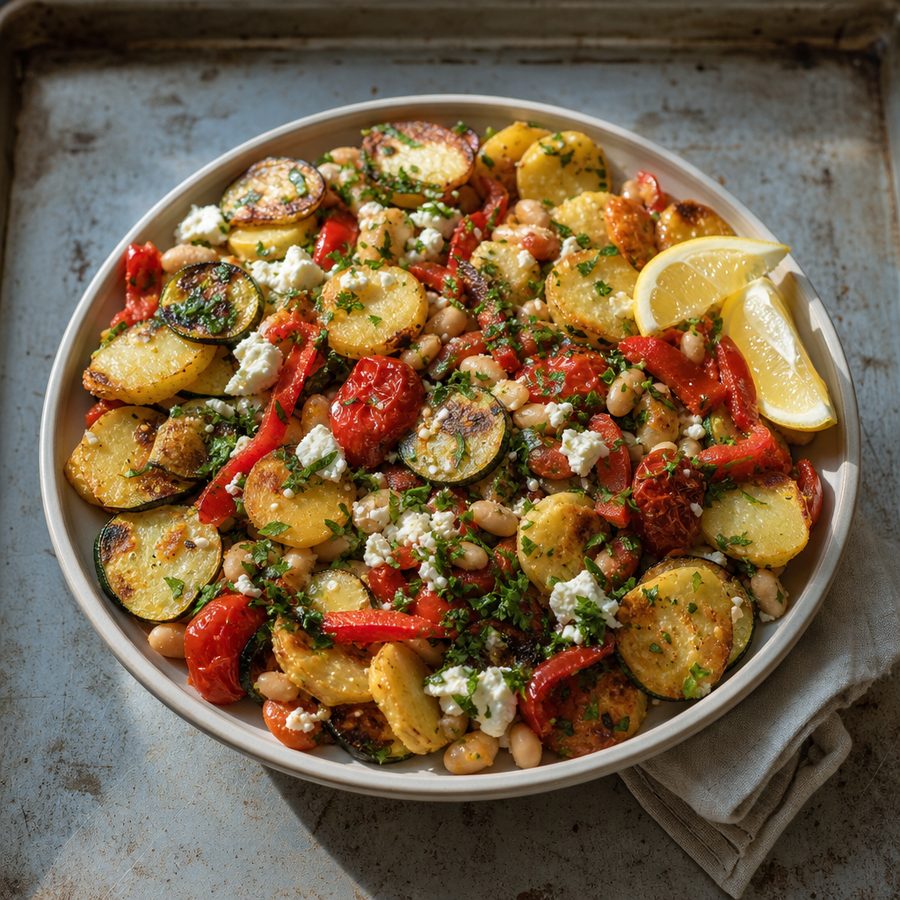
Sliced potatoes, zucchini, peppers, and cherry tomatoes roasted slowly in olive oil with oregano until the edges char, then tossed with white beans and finished with feta, parsley, and lemon.
Why You'll Love This Recipe
Briam is the Greek answer to a hot kitchen and a full vegetable drawer, and the recipe is barely a recipe: slice what you have, coat it in more olive oil than feels reasonable, and roast it until the edges catch. What makes it worth the hour is that the vegetables cook into each other rather than beside each other. The tomatoes break down and baste everything, the potatoes take up that liquid at the bottom and crisp on top, and the onion goes almost sweet enough to eat on its own. I cook it in a single wide pan, uncovered the whole time, because that is where the browning comes from.
It eats soft and rich with sharp edges, which is a combination I never get tired of. You find a bronzed potato rim, then a slice of zucchini that gives way completely, then a burst tomato, then a bean that has gone crisp and golden on one side. Feta goes on while the pan is still hot so it softens without melting, and the lemon and parsley over the top pull everything back from being heavy. It is good straight from the oven and better twenty minutes later, once it has settled and the flavors have found each other.
This is a Sunday cook that pays out all week. It is my standard lunch for the days I know I will not want to think, because it reheats without complaint and is honestly excellent cold, straight from the container while standing in front of the refrigerator. It also stretches: pile it into pita, spoon it over rice, or crack an egg into a well in the middle and put it back in the oven for six minutes. The beans are what make it a meal rather than a side dish.
Ingredients
- 3 medium zucchini (about 1 lb 2 oz), sliced into 1/3-inch rounds
- 3 medium Yukon Gold potatoes (about 14 oz), scrubbed and sliced into 1/4-inch rounds
- 2 1/2 cups cherry tomatoes, halved
- 1 large red bell pepper, seeded and cut into wide strips
- 1 large red onion, halved and sliced into thick half moons
- 1 1/2 cups no-salt-added cannellini beans, drained and rinsed well
- 2 oz feta, crumbled
- 3 1/2 tbsp extra-virgin olive oil, divided
- 4 garlic cloves, thinly sliced
- 2 tsp dried Greek oregano
- 1/3 cup chopped flat-leaf parsley
- 1 1/2 tbsp lemon juice, plus wedges for the table
- 1/2 tsp coarsely ground black pepper
Instructions
- Heat the oven and slice everything: Heat the oven to 400°F. Slice the potatoes about a quarter inch thick and the zucchini a little thicker, since zucchini cooks faster and needs the extra body. Cut the pepper into wide strips, the onion into thick half moons, and halve the cherry tomatoes. Even thickness matters more than neatness.
- Give the potatoes a head start: Toss the potatoes with 1 1/2 tbsp of the oil, half the garlic, and half the oregano and spread them in a single layer in a large roasting pan. Roast for 15 minutes, until they have lost their chalky look and the undersides are starting to color. Potatoes are the slowest thing in the pan and will stay hard if everything goes in at once.
- Add the rest of the vegetables: Toss the zucchini, pepper, onion, and tomatoes with 1 1/2 tbsp more oil, the rest of the garlic and oregano, and the black pepper. Tip them into the pan with the potatoes and turn everything together with your hands so the layers mingle. Spread it out again as evenly as the pan allows and return it to the oven.
- Roast until the edges catch: Roast for 35 minutes, turning the vegetables once at the halfway point with a wide spatula. It is done when the tomatoes have collapsed into a loose sauce, the zucchini is completely tender, and there are dark, blistered edges on the potatoes and the onion. If it looks pale at 35 minutes, give it another 10.
- Fold in the beans: Scatter the cannellini beans over the top, drizzle the last of the oil over them, and return the pan to the oven for 8 to 10 minutes, until the beans are hot through and just starting to crisp and split on their exposed sides. Folding them in earlier turns them to paste.
- Finish hot: Pull the pan out and scatter the feta over while everything is still steaming, so it softens and goes slightly creamy at the edges without melting away. Squeeze the lemon over the top, scatter the parsley, and let it stand for 10 minutes before serving with more lemon at the table.
Variations
- With eggplant: Add a diced eggplant with the zucchini, which is how briam is most often made in Greece and gives the pan a silkier body.
- Baked eggs: Make four wells in the finished pan, crack an egg into each, and return it to the oven for 6 to 8 minutes until the whites set.
- Lemon and dill: Swap the parsley for chopped dill and double the lemon for a sharper, greener finish that leans toward the islands.
- In pita: Pile the leftovers into warm whole grain pita with a spoonful of thick yogurt, which turns a tray of vegetables into a sandwich worth making twice.
Storage & Leftovers
It keeps five days in a sealed container in the refrigerator and is one of the few roasted vegetable dishes that stays good rather than merely edible. The tomato sauce at the bottom keeps everything moist, and the oregano gets stronger overnight. Add the parsley fresh when you serve leftovers, since it goes dark and limp in the cold.
Reheat it spread out on a sheet pan at 400°F for 8 to 10 minutes, which brings the crisp edges back on the potatoes. A skillet over medium-high works too, pressed flat and left alone for the first three minutes. The microwave heats it through but everything softens, and the contrast between the crisp and the soft is most of what makes this dish.
I would not freeze it. Potato goes grainy and zucchini turns to water after a stretch in the freezer, and what comes out is a different and much sadder dish. If you have more than you can eat in five days, blitz the leftovers with a little water into a thick soup and freeze that instead, which works beautifully.
Notes & Tips
- Start the potatoes alone: Fifteen minutes of a head start is the whole difference between a pan of cooked vegetables and a pan with hard potato in it. Everything else in the tray cooks in about half the time a potato slice needs.
- Use the biggest pan you own: Vegetables piled two deep steam in their own moisture and come out pale. You want a single, slightly overlapping layer, and two pans are better than one crowded one.
- Do not cover it: A lid or foil traps steam, and steam is the enemy of every browned edge you are trying to build. Uncovered for the full hour, every time.
- Beans go in at the very end: Ten minutes is enough to heat them and crisp their exposed sides. Any longer in a wet pan and they break down into the sauce.
- Let it rest before you serve it: Ten minutes out of the oven lets the tomato sauce thicken and everything stop spitting. It also lets the feta soften into the vegetables rather than sitting on top of them.
Nutrition & Mindful Eating
- Potato, zucchini, pepper, and tomato roast into one another here, and the beans and feta are what turn a pan of vegetables into lunch. The vegetables bring the bulk and the fiber, the cannellini beans bring plant protein, and the feta brings calcium and the sharp note that makes you keep eating.
- Cannellini beans hold their shape better than most beans, which is why they can go into a hot pan late and come out crisp on one side and creamy inside. They carry fiber and plant protein together, along with folate and iron.
- Cherry tomatoes are the engine of the sauce. Their skins blister and split under dry heat, releasing juice that bastes everything else, and roasting makes the lycopene in them easier for the body to take up than it is in a tomato eaten cold.
- Yukon Gold potatoes have a waxy, buttery flesh that holds together in slices instead of falling apart, and they bring potassium and vitamin C, most of the latter sitting just under a skin that is worth leaving on.
- Greek oregano, sliced garlic, and a hard squeeze of lemon are what keep an hour of roasting from tasting one-note. The oregano goes in early so it perfumes the oil, and the lemon goes on at the very end while the pan is still hot.
- As you eat, look for the contrast the oven built, a crisped potato rim against a slice of zucchini that has gone completely soft, and let that variety keep you at the table a little longer.
Frequently Asked Questions
Do the vegetables really need this much oil?
Yes, and this is a case where the fat is the technique. Olive oil is what conducts heat into the vegetables in a dry oven, and briam without it steams rather than roasts. Greek cooks call this whole family of dishes ladera, which simply means cooked in oil, so the oil is not an addition to the recipe, it is the recipe.
Can I use canned tomatoes?
You can, though the pan comes out wetter and you lose the blistered skins that give the dish its edge. If you go that way, use about a cup of crushed tomatoes, add them at the halfway turn rather than the start, and expect to roast for another ten minutes to drive the liquid off.
What other vegetables work?
Eggplant is the classic addition and goes in with the zucchini. Green beans work, fennel wedges are excellent, and cauliflower browns beautifully. Keep the potato, since it is what makes the dish filling, and keep the tomato, since it is what makes the sauce.
Can I make it ahead for a crowd?
That is the best way to serve it. Roast it up to the point where the beans go in, leave it at room temperature for up to three hours, then finish with the beans and feta for ten minutes in a hot oven right before people sit down. Briam is meant to be eaten warm, not scalding.