
Greek Chicken Stifado with Sweet Onions and Kale
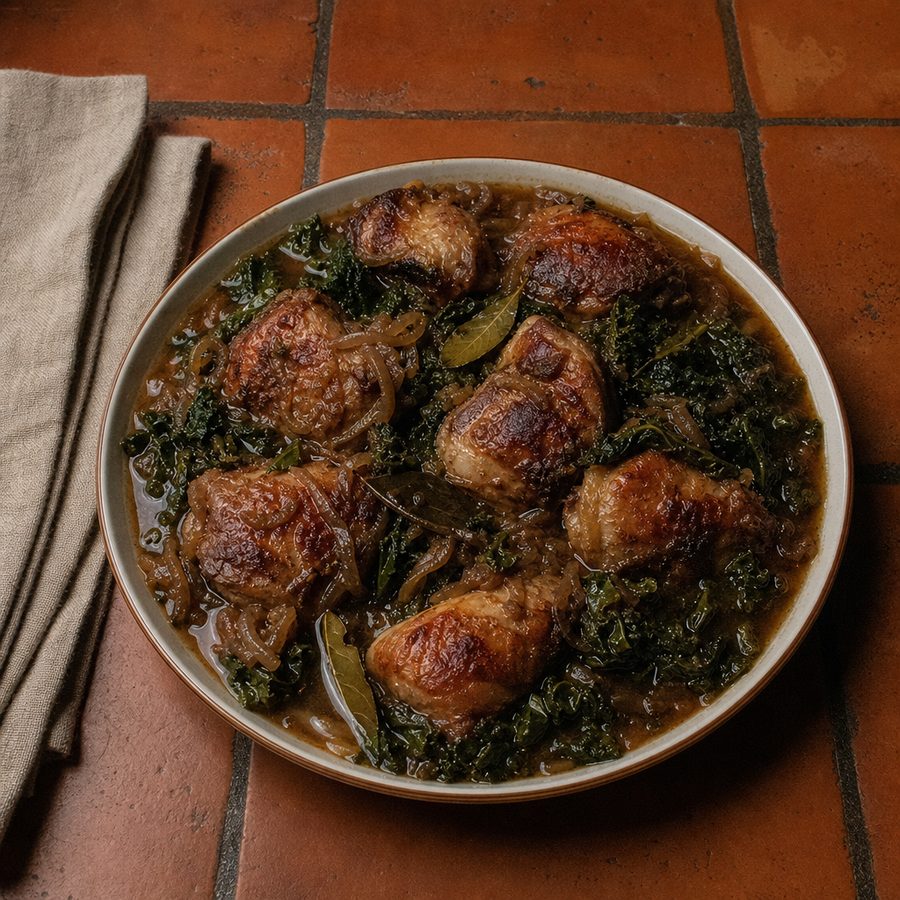
Chicken thighs braised slowly with a great many onions, tomato paste, cinnamon, clove, and bay, finished with a splash of vinegar and a pan of kale wilted into the sauce.
Why You'll Love This Recipe
Stifado is the braise I make when the afternoon is long enough to let a pan sit and do its own work. The Greek versions I grew up eating out of were built on rabbit or beef and a mountain of small onions, and chicken thighs turn out to suit it just as well, since they stay tender through an hour of low heat rather than tightening the way breast meat does. The onions are not a background note here. A full pound of them collapses into a sauce thick enough to coat the back of a spoon, and the cinnamon and clove that go in with them are what makes this taste Greek rather than simply braised.
What surprises people is how savory it stays. Warm spices in a meat pan can tip a dish toward dessert, and the guard against that is the vinegar, which goes in twice: once to lift the browned bits off the bottom, and once more at the end when the sauce is thick and needs waking up. Tomato paste cooked until it darkens gives the sauce its color and a low, roasted depth. By the time the lid comes off, the chicken has taken on the spices, the onions have gone almost jammy, and the pan smells like a taverna kitchen in the hills.
I fold kale in during the last few minutes because a braise this rich wants something green with a little bite left in it. It also makes this one pan rather than two, which is the difference between a Sunday dinner and a Tuesday one. Leftovers are better than the first night, so I make the full amount even when we are only two at the table. Serve it with a spoon, and make sure everybody gets sauce, because that is where all the work went. It belongs in the week on a night when somebody is home early enough to start it, and the rest of the house can wander in and out of the kitchen while it cooks.
Ingredients
- 1 1/4 lb boneless, skinless chicken thighs (about 6 thighs), patted dry
- 3 medium yellow onions (about 1 lb), halved through the root and sliced 1/4 inch thick
- 1 large bunch lacinato kale (about 12 oz), stems stripped and leaves torn into wide pieces
- 4 tbsp tomato paste
- 1 1/4 cups chicken broth
- 2 tbsp extra virgin olive oil
- 5 garlic cloves, smashed and peeled
- 2 tbsp cider vinegar
- 1/2 tsp ground cinnamon, or 1 small cinnamon stick
- 1/8 tsp ground cloves
- 2 bay leaves
- 1 tsp dried Greek oregano
- 1/2 tsp coarsely ground black pepper
- 1/2 tsp fine sea salt
Instructions
- Brown the chicken: Pat the thighs dry and season them with the salt and pepper. Heat the olive oil in a wide, heavy pan over medium-high until it shimmers, then lay in the thighs smooth side down without crowding them. Leave them alone for five to six minutes, until they release easily and the undersides are deep gold, then turn and give them three minutes more. Move them to a plate. They will be nowhere near cooked through, which is correct.
- Melt the onions: Turn the heat to medium, add the sliced onions with a pinch of salt, and cook for twelve to fifteen minutes, stirring every few minutes and scraping the browned chicken residue up off the bottom as the onions release their liquid. You are after softness and color rather than crispness. When they are limp, sweet, and pale gold, stir in the smashed garlic and cook one minute more.
- Cook the tomato paste and spices: Push the onions to one side, add the tomato paste to the bare patch, and let it fry for about ninety seconds, stirring, until it turns brick red and smells toasted. Add the cinnamon, cloves, oregano, and bay leaves, stir everything together, then pour in 1 tbsp of the vinegar and let it hiss and mostly evaporate.
- Braise: Pour in the broth, stir, and return the chicken along with any juices from the plate, tucking the thighs down into the onions so they are two-thirds submerged. Bring it to a bare simmer, cover, and cook over low heat for thirty five to forty minutes, until the chicken pulls apart under gentle pressure from a spoon and an instant-read thermometer reads at least 175°F at the thickest part.
- Finish with kale and vinegar: Uncover, pile the torn kale on top, and press it down into the sauce. Cover again for four minutes, then stir it through and simmer uncovered for another three or four minutes so the sauce reduces around it. Take out the bay leaves, add the remaining 1 tbsp vinegar off the heat, and taste for salt before serving.
Variations
- Mushroom stifado: Brown 12 oz of quartered mushrooms after the chicken and return them for the last fifteen minutes, which gives the sauce another layer of savory depth.
- With green beans: Add a pound of trimmed green beans in place of the kale, giving them twelve minutes under the lid rather than four.
- Feta and walnut finish: Scatter crumbled pasteurized feta and toasted walnuts over each bowl for a salty, crunchy top against the soft onions.
- Warmer and sweeter: Add a quarter teaspoon of allspice with the cinnamon and one bay leaf more, which pushes the pan toward the older, spice-heavy style of stifado.
Storage & Leftovers
Stifado keeps five days in a sealed container in the refrigerator and improves overnight, since the spices go on working their way into the meat while it sits. Store the chicken down in the sauce rather than separately, or the outside of the thighs dries and the whole thing loses its gloss.
Reheat it covered in a saucepan over low heat for eight to ten minutes with a splash of water or broth to loosen the sauce, which thickens considerably as it chills. Stir gently and only once or twice, since the meat is tender enough by day two that vigorous stirring shreds it.
It freezes well for up to three months. Freeze it in flat portions with plenty of sauce around the chicken, thaw overnight in the refrigerator, and reheat on the stove. The kale softens further through freezing, so if you are cooking a batch for the freezer, hold the kale back and wilt it fresh into each portion as you reheat it.
Notes & Tips
- Give the thighs room: Brown them in two batches if your pan is under twelve inches. Crowded chicken steams in its own moisture and never takes on the gold color that flavors the sauce later.
- Fry the tomato paste: Ninety seconds in the hot pan is what turns tomato paste from sharp and metallic into something deep and roasted. Stirred straight into liquid, it never gets there.
- Slice the onions with the grain: Halve them through the root and cut in the same direction as the lines. Slices cut this way hold together through a long braise and go silky rather than stringy.
- Keep the simmer lazy: You want the surface barely moving. A hard bubble tightens the chicken and drives the sauce off before the onions have finished collapsing.
- Save half the vinegar for the end: Acid added at the start builds depth and acid added at the finish tastes bright. Using it in both places is what keeps the cinnamon and clove on the savory side.
- Strip the kale stems: Hold the stem in one hand and pull the leaf away with the other. The stems stay tough in the time the leaves take to go silky.
Nutrition & Mindful Eating
- Chicken thighs, a pound of onions, and a bunch of kale share the work in this pan. The thighs carry the protein and stay juicy through the braise, the onions cook down into a sauce with real body, and the kale keeps the plate green and adds most of the fiber.
- Chicken thigh is a darker, looser-grained cut than breast, which is exactly why it holds up to forty minutes over low heat, and it brings a good amount of protein along with the iron and zinc that darker poultry meat carries.
- Kale folded in at the end keeps some structure rather than dissolving, and the leaves bring fiber along with vitamin K and the vitamin C that survives a short cook in a covered pan better than a long one.
- Onions cooked this slowly turn sweet as their sugars concentrate, and they carry the kind of fiber that feeds the bacteria in your gut, along with quercetin, which is concentrated in the outer layers.
- Cinnamon, clove, bay, and a double hit of cider vinegar are what make this taste like stifado, and the acid at the end is the reason a sauce this sweet still reads savory at the table.
- As you eat, notice the cinnamon and clove sitting underneath the onions rather than on top of them, and let the last few bites be slow ones while you check in on how full you already are.
Frequently Asked Questions
Do I have to use small whole onions?
No. Traditional stifado uses whole pearl or pickling onions kept intact, and they are lovely if you have the patience to peel two pounds of them. Sliced yellow onions give you the same sweetness in a third of the time and melt into a thicker sauce, which is why I build it this way at home.
Can I use chicken breast?
It works but needs a different schedule. Brown the breasts, set them aside while the onions cook, and return them for only the last fifteen minutes of the braise, pulling them at 165°F. Thighs are the better choice here because forty minutes of low heat makes them more tender rather than less.
What can I use if I have no cider vinegar?
Red wine vinegar is the classic choice and is the closest match. Sherry vinegar works beautifully as well. Lemon juice will brighten the pan but does not bring the same depth, so add a little more of it and taste as you go.
The sauce looks thin. What now?
Take the lid off and simmer it hard for five minutes with the chicken pushed to one side. Onion sauces thicken quickly once the steam has somewhere to go. If it is still loose, mash a few onion slices against the side of the pan with the back of a spoon and stir them through.