
Greek Fasolakia: Green Beans and Potatoes Braised with Tomato and Dill
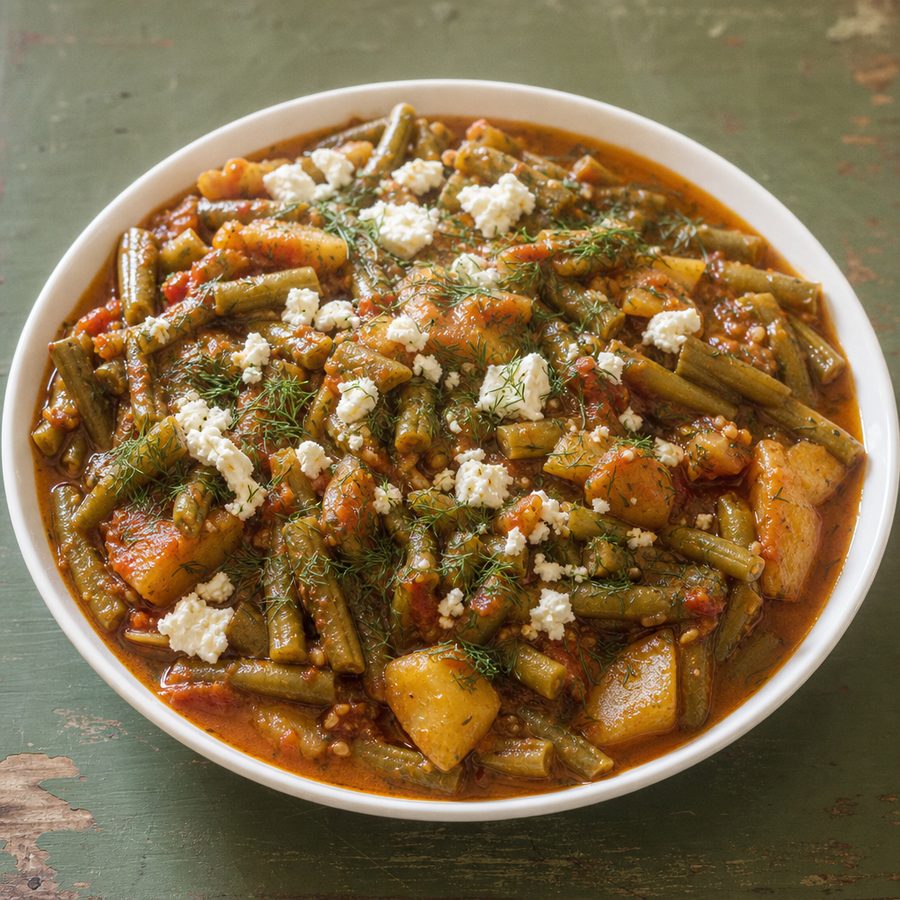
Green beans and potato wedges cooked down slowly in olive oil, onion, and crushed tomato until the beans are completely soft, finished with a great deal of dill, lemon, and a crumble of feta.
Why You'll Love This Recipe
Every so often somebody tells me green beans should be blanched for four minutes and shocked in ice water, and I agree, except for here. This is a ladera, one of the Greek dishes cooked in a generous amount of olive oil until the vegetables give in completely, and the whole pleasure of it is beans that have gone limp and silky and taste of the sauce they cooked in. There is no crunch anywhere and none is wanted. If you have only ever eaten green beans crisp, this will be a surprise, and in my experience a welcome one.
The sauce builds itself. Onions go into the oil first and cook until they are sweet rather than just soft, then garlic and dried oregano for a minute, then crushed tomatoes and the beans and potatoes with a splash of water. From there it is a long, quiet simmer with the lid ajar, and the liquid slowly reduces while the potatoes shed enough starch to give body. What is left at the end is not soupy. It is beans and potatoes coated in a thick red sauce with olive oil sitting bright on the surface, which is exactly how you want it.
In Greece this is a summer lunch, eaten warm or at room temperature with bread and a piece of cheese, and that is still the best way to serve it. I use half the dill in the pot and half over the top, so you get the cooked version and the fresh version in the same bite. The feta is a small amount deliberately, crumbled over at the table where it stays cool and sharp against the warm beans, and a squeeze of lemon at the very last moment wakes up the whole pan.
Ingredients
- 1 3/4 lb green beans, stem ends snapped off, halved if very long
- 3 small Yukon Gold potatoes (about 12 oz), scrubbed and cut into thick wedges
- 1 1/4 cups no-salt-added crushed tomatoes
- 1 large yellow onion, halved and thinly sliced
- 3 1/2 tbsp extra-virgin olive oil
- 1 1/2 oz feta, crumbled
- 1/2 cup chopped fresh dill, divided
- 1 1/2 tbsp lemon juice, plus wedges for the table
- 4 garlic cloves, thinly sliced
- 1/4 cup chopped flat-leaf parsley
- 1 1/2 tsp dried Greek oregano
- 1/4 tsp fine sea salt
- 1/2 tsp freshly ground black pepper
Instructions
- Prepare the vegetables: Snap the stem ends off the green beans and halve any that are longer than your finger. Scrub the potatoes and cut them into wedges about the thickness of two fingers, leaving the skins on. Slice the onion into thin half moons and the garlic into slivers.
- Sweeten the onion: Warm the olive oil in a wide Dutch oven or deep skillet over medium heat and add the onion with the salt. Cook for eight minutes, stirring occasionally, until the slices are limp, glassy, and just starting to take on color at the edges. This is where the sweetness in the finished sauce comes from, so do not rush it.
- Bloom the garlic and oregano: Add the garlic, oregano, and black pepper and stir for one minute, until the garlic smells sweet and the oregano is fragrant. Keep it moving so the garlic does not brown, which would turn it bitter in a dish that cooks this long.
- Add everything and settle in: Stir in the crushed tomatoes, the green beans, the potato wedges, half the dill, and 3/4 cup water. Bring it to a simmer, then lower the heat, set the lid on askew, and leave it for 35 to 40 minutes. Stir gently two or three times along the way and add a splash of water if the pan looks dry.
- Cook it until it gives: It is ready when a bean flops over limply when lifted on a spoon and a potato wedge takes no pressure at all from a knife. The sauce should be thick enough to hold a spoon track for a second, with olive oil showing at the surface. If it is still loose, uncover and simmer five minutes more.
- Finish off the heat: Take the pan off the burner and stir in the lemon juice and the remaining dill. Let it stand for ten minutes, which lets the sauce settle and the herbs relax into it. Scatter the parsley and crumbled feta over the top and serve warm or at room temperature, with lemon wedges.
Variations
- With zucchini: Add two zucchini cut into thick half moons for the last fifteen minutes, which is how the dish is often made at the height of summer.
- Cinnamon and bay: Drop a small piece of cinnamon stick and a bay leaf in with the tomatoes for a warmer, more wintery version of the same braise.
- Mint rather than dill: Swap the dill for chopped fresh mint, added entirely off the heat, for a sharper and more perfumed finish.
- With eggs on top: Make four wells in the finished beans, crack an egg into each, cover, and cook over low heat for six minutes until the whites set.
Storage & Leftovers
This keeps five days in a sealed container in the refrigerator and is one of those dishes people make on purpose the day before. The beans cannot get any softer than they already are, so nothing is lost overnight, and the sauce tastes rounder on the second day. Hold back the feta and the last of the dill until you serve.
Reheat it gently in a covered pan over low heat with a spoonful of water, or do what I usually do and let it come to room temperature on the counter for half an hour. Cold from the refrigerator the olive oil is stiff and the dish tastes muted, so give it time either way.
It freezes reasonably well for up to two months, though the potatoes turn a little grainy. Freeze it in flat portions, thaw overnight in the refrigerator, and reheat with a splash of water and a fresh squeeze of lemon to bring it back.
Notes & Tips
- Use more olive oil than feels usual: The oil is an ingredient in a ladera, not a cooking medium. It carries the tomato and coats the beans, and a thin film of it on the surface at the end is the sign you did it right.
- Cook the onion properly first: Eight minutes of patience turns the onion sweet, and that sweetness is doing the work sugar would do in a lesser sauce. Rushed onions leave the tomato tasting sharp for the rest of the cook.
- Lid on askew: A fully covered pot traps steam and you end up with soup. A lid set at an angle lets just enough moisture escape, so the sauce thickens while the beans stay submerged.
- Split the dill: Half goes in early and dissolves into the sauce, half goes in at the end and stays green and grassy. Using it all at once gives you one note where you could have two.
- Wait ten minutes before serving: Straight off the heat everything tastes separate. Ten minutes standing lets the oil and tomato come together, and it is also when the dish settles to the temperature it tastes best at.
Nutrition & Mindful Eating
- Green beans, potatoes, tomato, and olive oil are the whole architecture of this pan. The beans give it bulk and fiber, the potatoes give it body and a little starch to hold the sauce, the tomatoes bring the acidity and color, and the olive oil carries all of it.
- Green beans cooked this long turn silky and take on everything around them, and they hold onto vitamin K, vitamin C, and a soft fiber that suits people who find crunchier vegetables hard going.
- Potatoes cooked in their skins keep more of their potassium, and gold varieties have a waxy, buttery flesh that softens without falling apart entirely. The starch they shed is what thickens the sauce.
- Tomatoes cooked down in olive oil release more of their lycopene, the pigment behind their color, and fat in the pan is what helps you absorb it. That is one of the happier accidents of cooking vegetables in olive oil.
- A half cup of dill is not a garnish at that quantity, it is a herb doing real work, sweet and faintly anise, and it comes with a bit of calcium and iron along with the flavor that makes people ask what is in this.
- As you eat, notice how completely different a bean tastes when it has given up its snap, and let the warm, unhurried texture of this bowl slow the pace of the meal down with it.
Frequently Asked Questions
Should the beans really be this soft?
Yes, and that is the whole point of a ladera. Long cooking in olive oil is a Greek tradition, not an accident of timing, and it turns green beans silky and lets them absorb the tomato and the oil. Crisp-tender beans in this sauce taste like two separate things sharing a plate.
Can I use frozen green beans?
You can, and they work better here than in almost any other recipe, since the texture you are heading for is soft anyway. Add them straight from the freezer and give the pan an extra five minutes. Skip thawing, which just makes them watery.
What can I serve alongside it?
In Greece this comes to the table with bread for the sauce and not much else. A bowl of barley or farro underneath turns it into a fuller plate, and it is also very good next to a couple of eggs fried in olive oil.
Can I make it without the potatoes?
You can, though the sauce will be thinner, since the potato starch is what gives it body. If you leave them out, simmer uncovered for the last ten minutes to reduce the liquid, and consider adding a handful of orzo or a spoonful of tomato paste in their place.