
Greek Split Pea Soup with Tahini, Lemon, and Arugula
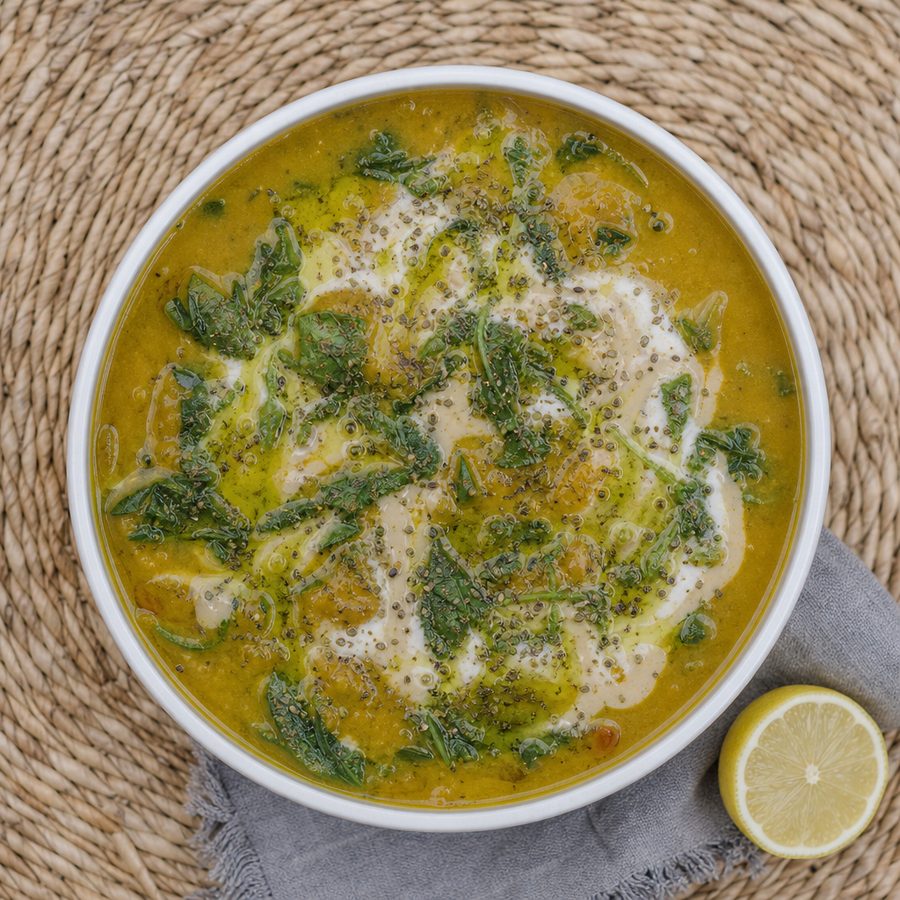
Yellow split peas blended into a thick golden soup, loosened with tahini whisked into lemon and hot broth, with peppery arugula wilted in at the last second and oregano oil over the top.
Why You'll Love This Recipe
Santorini has been growing split peas in volcanic soil for a very long time, and the dish they make with them, fava, is served as a thick warm puree with lemon and chopped onion over the top. This is that idea loosened into a soup and pushed toward the tahini bottle, which is a Greek move as well, since tahini and lemon carry the Lenten soups on the islands. Cooked split peas from a batch in the refrigerator make it a twenty five minute lunch. From dry they need forty minutes on their own, which is a different sort of day.
What I like is the texture. Half the pot gets blended and half stays whole, so it is creamy underneath with soft peas still rolling around in it. The tahini is the thing that makes people ask. Whisked with lemon and hot broth before it goes anywhere near the pot, it emulsifies into the soup rather than sitting on top of it, and it brings a toasted sesame flavor that sits somewhere between savory and rich. The arugula arrives peppery and green and goes in so late that it barely cooks, which is the point of it. You want one bright, sharp thing lying across a bowl that is otherwise soft and golden all the way down.
This is my desk lunch through the winter, made on Sunday and eaten out of a jar for three days after. It thickens as it sits, which I have stopped fighting, since a thicker version eaten with a fork over greens is good in its own right. I make it in the spring too, when the arugula at the market is young and hot enough to taste like pepper, and then I put twice as much in. It is a good soup to build a week around, because the pot of split peas underneath it will also become a dip, a bed for a piece of fish, or the same soup again with cumin in it, and none of those days taste like the one before.
Ingredients
- 2 3/4 cups cooked yellow split peas, from a pouch or a batch made ahead
- 1 3/4 cups plain Greek yogurt, left out on the counter while you cook
- 6 tbsp tahini, well stirred
- 5 packed cups arugula (about 5 oz)
- 2 1/4 cups vegetable broth
- 1 large yellow onion, finely chopped
- 4 garlic cloves, minced
- 1 1/2 tsp dried Greek oregano
- 3 tbsp lemon juice, from 1 large lemon, plus wedges for the table
- 1 1/2 tbsp olive oil, divided
- 3/4 tsp coarsely ground black pepper
- 1/4 tsp fine sea salt
Instructions
- Soften the onion: Warm 1 tbsp of the olive oil in a large saucepan over medium heat. Add the onion with the salt and cook for five minutes, stirring, until it is soft and translucent with a few golden edges. Add the garlic and the black pepper and stir for thirty seconds, until you can smell the garlic but before it colors, since garlic taken past golden turns bitter and the whole pot carries it.
- Simmer the split peas: Add the cooked split peas and the broth and bring to a simmer. Cook for six to seven minutes, stirring occasionally and scraping the bottom, until the peas have slumped and the liquid has thickened around them. It should look like a loose porridge at this stage.
- Blend half the pot: Take the pan off the heat. Run an immersion blender through about half the soup in short bursts, leaving plenty of whole peas behind, or transfer two cups to a blender and stir it back in. You are after a thick, creamy base with texture still in it rather than a smooth puree, because whole peas are what stop this eating like baby food.
- Whisk the tahini, lemon, and yogurt: In a bowl, whisk the tahini with the lemon juice. It will seize and go stiff and pale, which is what tahini always does the moment acid hits it. Whisk in the yogurt, then ladle in a cup of the hot soup in a thin stream, whisking constantly, until it is smooth and pourable. Pour it back into the pan and stir it through off the heat, since yogurt stirred into a simmering pot splits.
- Wilt the arugula and finish with oregano oil: Stir the arugula into the hot soup in two handfuls and let it stand for a minute, until the leaves darken and go limp but still look like leaves. Warm the remaining olive oil with the oregano in a small pan for twenty seconds, until it smells like a hillside, and spoon it over the bowls with lemon wedges alongside.
Variations
- Santorini style: Skip the blending, keep the pot thick, and top each bowl with finely chopped onion and a hard pour of olive oil, which is how fava is served on the island.
- With capers and olives: Scatter a spoonful of rinsed capers and a few torn kalamata olives over each bowl for a saltier, sharper finish.
- Roasted garlic: Blend a whole head of roasted garlic into the soup for something sweeter, mellower, and considerably more fragrant.
- Warm spice: Add a teaspoon of cumin with the garlic, which takes the soup east toward the Turkish coast.
- With an egg on top: Set a hard-cooked egg, quartered, on each bowl for a heartier lunch that eats like a full plate.
Storage & Leftovers
It keeps five days in a sealed container in the refrigerator and thickens a lot as it cools, since split peas and tahini both keep setting up. Thin it with broth or water when you reheat, or eat the thick version with a fork and call it a puree, which is closer to how Santorini serves it anyway.
Reheat over medium-low, stirring often, and pull it off as soon as it steams. It is thick enough to catch on the bottom of a pan and scorch, and the yogurt in it will separate at a boil. In the microwave, cover it and go in one-minute bursts at half power, stirring between each.
Freeze it before the yogurt and tahini go in, for up to three months. Cook the pot through the blending stage, cool it, and freeze it flat in portions. Thaw overnight, reheat, and whisk the tahini, lemon, and yogurt in fresh, along with the arugula, which does not survive the freezer at all.
Notes & Tips
- Blend half, not all: A fully smooth soup here tastes flat in the mouth. Leaving whole peas in gives every spoonful something to work on and keeps it from reading as baby food.
- Stir the tahini jar properly: The oil separates and sits on top, and a spoonful taken off the surface behaves completely differently from one taken off the bottom. Stir it all the way down before you measure.
- Lemon before yogurt: Whisk the acid into the tahini first and let it seize, then add the yogurt. Doing it in the other order gives you a grainier finish.
- Warm the oregano, do not fry it: Twenty seconds in warm oil off the burner is enough to open the herb. Any longer and dried oregano turns dusty and bitter.
- Add the arugula off the heat: It only needs the residual warmth. Cooked properly it stays peppery and dark green, and cooked a minute too long it turns gray and tastes of nothing.
- Season at the end: Tahini, lemon, and yogurt all move the balance, so hold most of your judgment until they are in and then adjust the pepper and the acid.
Nutrition & Mindful Eating
- Split peas, tahini, yogurt, and arugula each pull in a different direction here. The peas give the soup its body and most of its fiber, the tahini brings a toasted richness along with calcium, the yogurt carries protein into the broth itself, and the arugula lands sharp and green on top of all of it.
- Yellow split peas cook down into something creamy on their own, which is why this needs no thickener, and their soluble fiber is the sort that makes a bowl of soup sit like a real lunch rather than a light one.
- Tahini is ground sesame and nothing else, and sesame is one of the richest plant sources of calcium there is, so a few tablespoons whisked through the pot changes both the flavor and what the bowl is carrying.
- Arugula tastes hot and peppery because of the mustard compounds in it, the same family that gives horseradish its bite, and it wilts into the soup with a good deal of calcium and vitamin K along for the ride.
- Lemon juice and dried oregano do the finishing work, the acid cutting through the sesame richness and the oregano warmed in oil giving the whole bowl the smell of a Greek hillside in summer.
- As you eat, notice the moment the lemon cuts through the sesame and the pepper of the arugula arrives behind it, and let the bowl warm your hands for a minute before you start rather than eating it standing up.
Frequently Asked Questions
Can I start from dry split peas?
Yes, and they are worth cooking in a batch. One cup of dry yellow split peas with four cups of water and a bay leaf takes about forty minutes at a low simmer and gives you roughly what this recipe calls for. Done ahead, they turn this into a twenty five minute soup.
Why did my tahini seize when I added the lemon?
That is the correct behavior. Tahini tightens and turns pale the moment acid or water hits it, then loosens again as you add more liquid. Push through it, keep whisking, and add the hot broth slowly. It will come back glossy and smooth.
Can I use red lentils?
You can, though the soup goes softer and sweeter and loses the whole peas rolling through it. Red lentils also cook from dry in about fifteen minutes, so that version can be made in one pot from scratch inside half an hour.
What can I use in place of arugula?
Baby kale, torn escarole, or watercress all work, added the same way at the end. Choose something with a bit of bitterness or pepper to it, since the soup underneath is soft and round and wants something sharp lying across it.