
Greek Yogurt Chicken Salad
A lightened-up chicken salad made creamy with Greek yogurt instead of mayo, high in protein, low in carb, and great in lettuce cups or over greens.
Why You'll Love This Recipe
Chicken salad bound with Greek yogurt and lemon instead of mayonnaise. The swap is not a compromise, it is a different bowl. Yogurt is tangy where mayonnaise is rich, so the lemon, the Dijon, and the dill all come forward instead of sitting underneath a blanket of oil, and the salad tastes of its seasonings rather than of its binder. It changes what the bowl is built on, too: two thirds of a cup of Greek yogurt over three cups of shredded chicken means the binder brings more protein rather than oil, which is what makes this a lunch you can eat standing at the counter and not think about again until dinner.
The Dijon is doing quiet work in the background. Mustard holds the yogurt and the lemon juice together so the dressing stays creamy through four days in the refrigerator instead of breaking into curds and a puddle, and it rounds off the sharp front edge of the lemon at the same time. One tablespoon is enough to change the whole bowl, and you will not taste it as mustard; you will notice its absence if you leave it out, because the salad tastes thinner and separates sooner.
Chicken and yogurt together make this one of the higher-protein lunches on the site, and fifteen minutes in the refrigerator improves it, since the dressing needs that long to work into the meat rather than sitting on it. It also keeps three days, which makes it worth doubling on a Sunday. If you would rather cook the chicken fresh, our Chicken & Veggie Stir-Fry (Paleo & Whole30) does that.
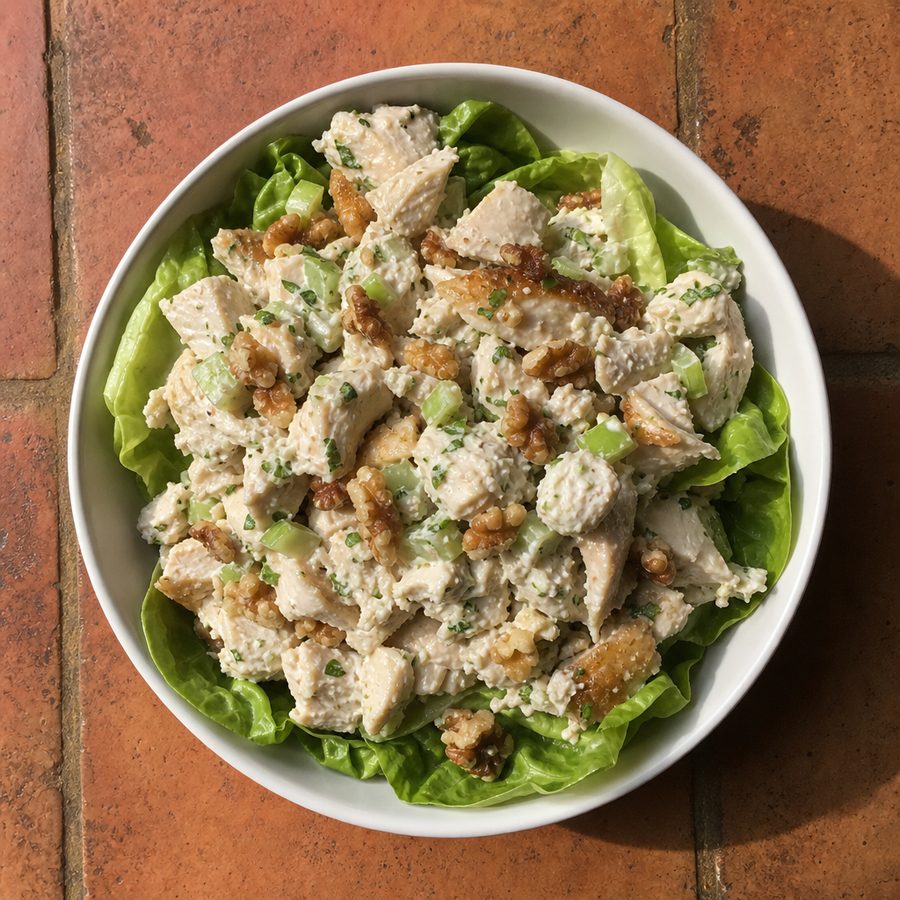
Ingredients
- 3 cups cooked shredded chicken
- 2/3 cup plain Greek yogurt
- 2 celery stalks, finely diced
- 1/4 cup diced red onion
- 1/4 cup chopped walnuts
- 2 tbsp lemon juice
- 1 tbsp Dijon mustard (contains mustard)
- 1 tsp dried dill
- 1/4 tsp fine sea salt
- black pepper
- lettuce leaves for serving
Instructions
- Mix the dressing first and taste it on its own: Stir the Greek yogurt, lemon juice, Dijon, dill, salt, and pepper together in the bottom of a large bowl until it is smooth and glossy. Taste it before any chicken goes near it. It should read a shade sharper and saltier than you want the finished salad to be, because three cups of shredded chicken and a cup of vegetables are about to dilute all of it. The Dijon is not only there for flavor: mustard holds the yogurt together and keeps it from breaking into curds and liquid a day later.
- Take the bite out of the red onion: Put the diced red onion in a small bowl of cold water for ten minutes while you shred the chicken, then drain it and pat it dry. Raw red onion keeps getting stronger in a dressed salad, and by Wednesday it can be the only thing you taste. A short soak pulls out the harsh sulfur compounds and leaves the sweetness and the color behind, which is the part you wanted from it in the first place.
- Fold it together rather than stirring it: Add the shredded chicken, the celery, the drained onion, and the walnuts to the bowl and fold them through the dressing with a spatula, turning from the bottom up until every shred carries some. Stirring hard shreds the chicken further into fibers and gives you a paste; folding keeps the pieces long enough that it still eats like chicken. Chop the walnuts to about the size of the diced celery so they spread through the bowl instead of turning up whole in one unlucky bite.
- Chill it fifteen minutes, then season it again: Cover the bowl and put it in the refrigerator for fifteen minutes if you have them. Two things happen in that time: the dried dill rehydrates in the yogurt and stops tasting dusty, and the whole bowl comes down to serving temperature. Cold mutes both salt and acid, so a salad that tasted right on the counter can taste flat straight out of the refrigerator. Taste it cold and adjust with salt, pepper, or another squeeze of lemon then, not before.
- Serve it cold, in something that will hold it: Spoon it into lettuce cups, pile it over greens, or spread it on whole-grain crackers or toast. Butter lettuce and little gem hold a scoop without tearing, and romaine works if you use the wide inner leaves. A serving is about three quarters of a cup, which sits well on a generous cup of loose leaves. If it is going to work with you, pack the salad and the lettuce in separate containers so the leaves are still crisp at noon.
Variations
- Add more vegetables: Diced apple, halved grapes, or chopped cucumber all lighten it. Cucumber weeps, so stir it in just before serving rather than the night before.
- Make it dairy-free: A thick unsweetened plant yogurt stands in for the Greek yogurt. Coconut-based is the thickest, soy-based keeps the protein closest.
- Change the crunch: Pecans or almonds work in place of the walnuts, and toasted sunflower seeds work if nuts are out of the question.
- Make it spicy: A spoonful of harissa or a pinch of cayenne stirred into the dressing spreads the heat through everything instead of leaving it in one bite.
- Change the herb: Fresh tarragon or chives in place of the dried dill. Use about three times as much fresh as dried.
Storage & Leftovers
This one arrives already assembled, so there is nothing to hold back. Press it into an airtight container, get it into the refrigerator within two hours of mixing, and eat it inside four days. Cooked chicken and a yogurt dressing are both on the short list of foods that do not forgive a warm counter, so if the bowl has sat out through a long lunch, put it back cold rather than leaving it until evening.
It loosens as it sits. Salt draws water out of the celery and the red onion, and the yogurt gives up a little whey on top of that, so day three looks noticeably wetter than day one. Pour off what has gathered, stir in a spoonful of fresh yogurt, and taste for salt again, because the liquid you just poured away took some of the seasoning with it.
Freezing is the one thing that does not work. Thawed yogurt splits into curds and water that no amount of stirring puts back together, and the celery comes out limp. If you want a head start on a future week, freeze the cooked chicken by itself in three-cup portions, which is exactly one batch, and mix the salad fresh; it takes about ten minutes once the chicken has thawed.
Notes & Tips
- It is better on day two: The dill and Dijon need a few hours in the fridge to spread through the yogurt.
- Use chicken you already have: A rotisserie bird or leftover roast shreds in a couple of minutes, and that is what makes this a fifteen minute lunch.
- Shred rather than cube: Shredded chicken catches and holds the dressing. Neat cubes shed it and leave a puddle in the bowl.
- Dice the celery and onion fine: Large pieces read as raw onion in a bite. A fine dice disappears into the dressing and just tastes like seasoning.
- Tame the red onion: If raw onion is sharp to you, soak the diced onion in cold water for a few minutes and drain it before it goes in.
- Flexible swap: No onion? You can leave it out, or swap in a little chopped celery or chives.
Nutrition & Mindful Eating
- Chicken, yogurt and the chopped vegetables come together into something creamy that still has bite. The yogurt binds it, the celery and onion keep it crisp, and the lemon runs through the whole bowl so it tastes fresh rather than heavy.
- Cooked chicken shredded by hand takes up dressing better than neatly cubed pieces do, and it brings the complete protein that turns a bowl of salad into a lunch that counts.
- Greek yogurt is strained until it is thick enough to hold a spoon upright, which is where the body of this dressing comes from, and it carries protein and live cultures in with its clean tang.
- Walnuts add a soft crunch and a faint bitterness that keeps the creaminess in check, and they are one of the few plant foods that carry omega-3 fats.
- Celery and red onion are chopped small so their crunch turns up in every bite, and the lemon squeezed over them keeps the onion tasting sharp and bright rather than harsh.
- As you eat, feel the cold creaminess against the crunch of celery and walnut, and take the lunch sitting down so you can tell when you have had enough of it.
Frequently Asked Questions
Is Greek yogurt a good swap for mayo?
Yes, it keeps the salad creamy while adding protein and cutting the fat, with a pleasant tang. Use full-fat yogurt if you want it richer.
Why is this good on a GLP-1?
It's soft, protein-dense, and satisfying in a small portion, easy to eat when your appetite is limited but you still need protein.
How long does it keep?
Four days in an airtight container, and it changes across them rather than going off all at once. Expect it to loosen by day three as the celery and the onion give up water. Pour that liquid off, stir in a spoonful of fresh yogurt, and check the salt again before you pack it.
Can I make it ahead?
Yes, and it is better on day two than on day one, once the dill and the Dijon have worked through the whole bowl. Make it the night before. Hold the walnuts back and stir them in at the last minute if you want them crisp, since they soften in the dressing, and keep any lettuce in its own container.