
Green Couscous with Asparagus, Edamame, and Mint
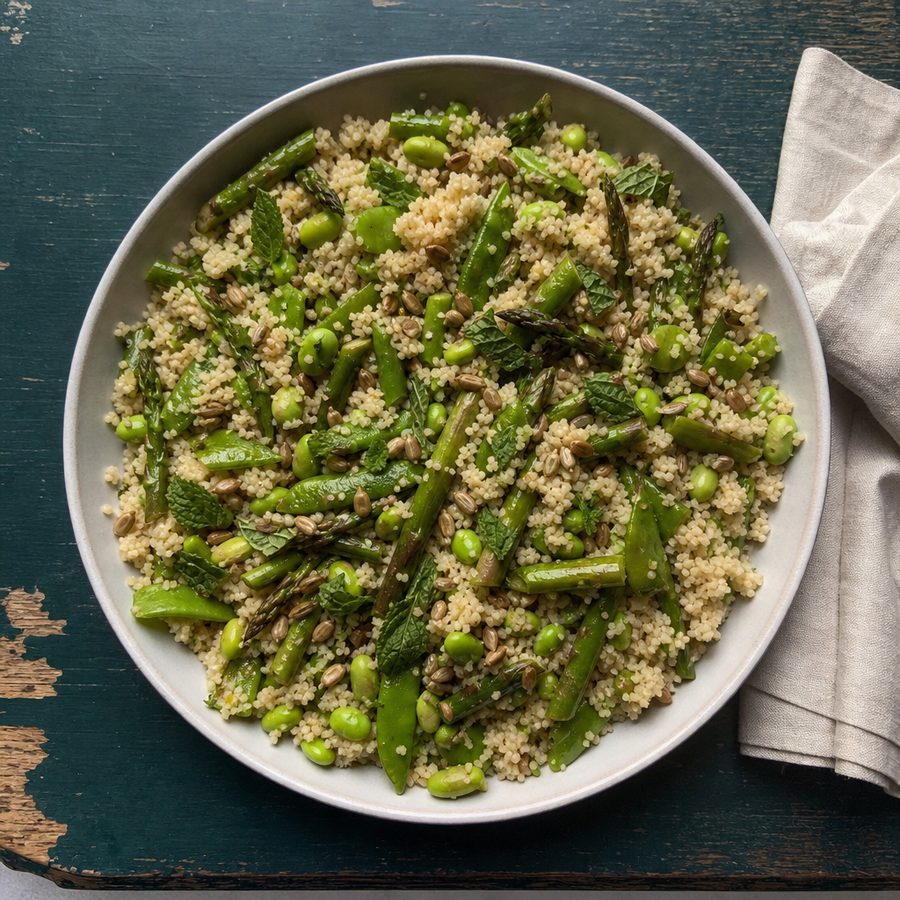
Whole wheat couscous steamed under a lid and forked through with blanched asparagus, snap peas, edamame, torn mint, lemon, and toasted sunflower seeds.
Why You'll Love This Recipe
April is when asparagus is suddenly everywhere and I have had enough of root vegetables. It is on the table in about twenty minutes and most of that is waiting for water to boil. Couscous is the fastest starch there is: it does not really cook so much as swell under a lid, which means the only heat you have to manage is a pot of water for the green things and a dry pan for the seeds. I make it for supper on a warm evening and then eat the leftovers cold out of the refrigerator the next day.
The vegetables are all blanched in the same pot, in the order of how long they take, and pulled the moment they turn bright. Asparagus goes in first for two minutes, then the snap peas and edamame for one more, and everything is drained together and spread out to stop cooking. That last step matters. Piled in a colander they hold their own heat and keep cooking into something olive-drab and sad. Spread out on a tray they stay squeaky and vivid, which is the entire character of the dish.
What makes it eat like a dinner rather than a side is the sheer quantity of green in the bowl. There is very nearly as much vegetable as grain, and the edamame gives it enough body to hold you. Herbs go in at the end and go in generously, more than feels reasonable, because the mint and the parsley are ingredients here rather than a garnish. Grated raw garlic in the dressing keeps a bite. Serve it warm, room temperature, or cold, and it is good every way.
Ingredients
- 1 1/2 cups dry whole wheat couscous (about 4 1/2 cups once steamed)
- 1 bunch asparagus (about 12 oz), woody ends snapped off, cut into 1-inch batons
- 8 oz snap peas, strings pulled, halved on the diagonal
- 1 1/2 cups shelled frozen edamame
- 4 scallions, thinly sliced
- 1 packed cup fresh mint leaves, torn
- 1 cup flat-leaf parsley leaves, roughly chopped
- 3 tbsp raw sunflower seeds
- 2 1/2 tbsp lemon juice, plus the zest of 1 lemon
- 2 tbsp olive oil
- 3 cloves garlic, finely grated
- 1/2 tsp coarsely ground black pepper
- 1/4 tsp fine sea salt
Instructions
- Steep the couscous: Put the couscous in a large heatproof bowl with the salt, the lemon zest, and a teaspoon of the olive oil, and stir. Pour over enough boiling water to cover it by half an inch, cover the bowl tightly with a plate, and leave it alone for ten minutes. Do not stir it while it steams.
- Toast the sunflower seeds: While the couscous swells, put the sunflower seeds in a dry skillet over medium heat. Shake the pan often for three to four minutes, until they turn golden and start smelling toasted. Tip them onto a plate at once so they stop cooking.
- Blanch the green vegetables: Bring a pot of water to a rolling boil. Add the asparagus and cook two minutes, then add the snap peas and the edamame and cook one minute more. Everything should be bright green and still squeaky. Drain and spread it out on a sheet pan in a single layer to stop the cooking.
- Mix the dressing: Whisk the lemon juice, the remaining olive oil, the grated garlic, and the black pepper together in a small bowl until it looks cloudy and slightly thickened. Grating the garlic rather than chopping it is what lets it dissolve instead of sitting in hot little pieces.
- Fork the couscous loose: Uncover the bowl and run a fork through the couscous in long strokes, lifting and separating rather than stirring, until there are no clumps left and it looks fluffy. Pour half the dressing over while it is still warm so the grains drink it in.
- Bring it together: Fold in the blanched vegetables, the scallions, the parsley, and most of the mint, then add the rest of the dressing and toss until everything is coated. Taste and add more lemon if it needs lifting. Scatter the toasted sunflower seeds and the remaining mint over the top just before it goes to the table.
Variations
- Preserved lemon: Chop a tablespoon of preserved lemon rind into the dressing for a deeper, rounder citrus flavor.
- Dill and cucumber: Swap the mint for fresh dill and fold through a diced cucumber for a cooler, crunchier bowl.
- Toasted sesame: Use sesame seeds in place of the sunflower seeds and finish with a teaspoon of toasted sesame oil.
- Green peas and radish: Add a cup of green peas with the snap peas and a handful of sliced radishes raw at the end.
- Chile and scallion oil: Warm a pinch of cayenne in the olive oil with the sliced scallions before it goes into the dressing.
Storage & Leftovers
This keeps four days in a sealed container in the refrigerator and it is one of the rare dinners that is genuinely as good cold. The couscous keeps absorbing the dressing overnight, so the grains taste more lemony on day two than they did on day one.
The herbs are the thing that fades. Mint darkens after a day and parsley goes limp, so if you know you are eating it later in the week, hold back half of both and stir them through fresh at the last minute. A squeeze of lemon does the same reviving job.
I do not freeze it. Blanched asparagus and snap peas turn soft and stringy when they thaw, and the point of the dish is that they still squeak. If you want to work ahead, blanch the vegetables and mix the dressing a day early and keep them separate.
Notes & Tips
- Cover the couscous tightly: Steam is what cooks it. A plate pressed onto the rim of the bowl works better than a loose sheet of foil, and ten undisturbed minutes beats any amount of stirring.
- Spread the vegetables out to cool: A hot pile in a colander keeps cooking itself for another three minutes. A sheet pan stops it dead and keeps the color.
- Snap the asparagus, do not cut it: Bend each spear near the base and it breaks exactly where the woody part ends. Cutting to a line means either chewy stems or wasted spear.
- Dress the couscous warm: Warm grains absorb dressing; cold ones let it pool at the bottom of the bowl. Half the dressing goes in the moment you fork it loose.
- Tear the mint, do not chop it: A knife bruises mint and turns the cut edges dark within minutes. Torn leaves stay green and smell stronger.
- Be generous with the herbs: Two full cups of leaves sounds like a lot until you fold them in and they disappear. They are a vegetable in this bowl, not a decoration.
Nutrition & Mindful Eating
- Couscous, edamame, and a pile of blanched green vegetables give this bowl its three layers. The grain makes it a dinner, the edamame brings the protein and the body, and the asparagus and snap peas keep it fresh enough to eat on a warm night.
- Edamame are young soybeans picked before the starch sets, which is why they stay sweet and firm, and they carry more protein than anything else in this bowl along with folate and fiber.
- Asparagus is at its best cooked for about two minutes, long enough to turn vivid and no longer. That brief blanch keeps the folate and the vitamin K in the spear rather than in the cooking water, and it is also the only way to keep the snap.
- Whole wheat couscous is durum wheat rolled into tiny grains, so it swells under a lid in ten minutes and still brings the bran along with it, which is where its fiber comes from.
- Mint, parsley, lemon zest, and raw grated garlic are what make this taste like more than the sum of its parts. Two cups of soft herbs is a real amount of green in a bowl, and the raw garlic keeps an edge that cooking would have rounded off.
- As you eat, notice the squeak of the snap peas against the soft grains and how the mint arrives last, and let this be a meal you sit down for rather than one you carry around.
Frequently Asked Questions
What can I use instead of couscous?
Bulgur behaves almost identically and steeps in about fifteen minutes. Quinoa works and gives a firmer bite. If you want something that is not a wheat grain at all, cooked white or brown rice folded through the same dressing does the job, though you lose the fluffiness.
My couscous came out clumpy and heavy.
Two culprits. Too much water, which leaves it wet and gluey, so add just enough to cover by half an inch. Or stirring it with a spoon at the end, which mashes the grains together. Use a fork and long lifting strokes and it separates.
Can I use frozen vegetables?
Frozen edamame is what I use, and frozen peas work well too, dropped in for the last thirty seconds. Frozen asparagus is the one to avoid, since it goes soft in the freezer and will never squeak again no matter how briefly you cook it.
Is this enough for a whole dinner?
It is, for four people, and the edamame is doing most of that work. If you are feeding big appetites, add a second cup of edamame or a can of drained white beans, both of which fold in without changing the character of the bowl.