
Grill-Pan Mackerel with Charred Zucchini and Warm Farro
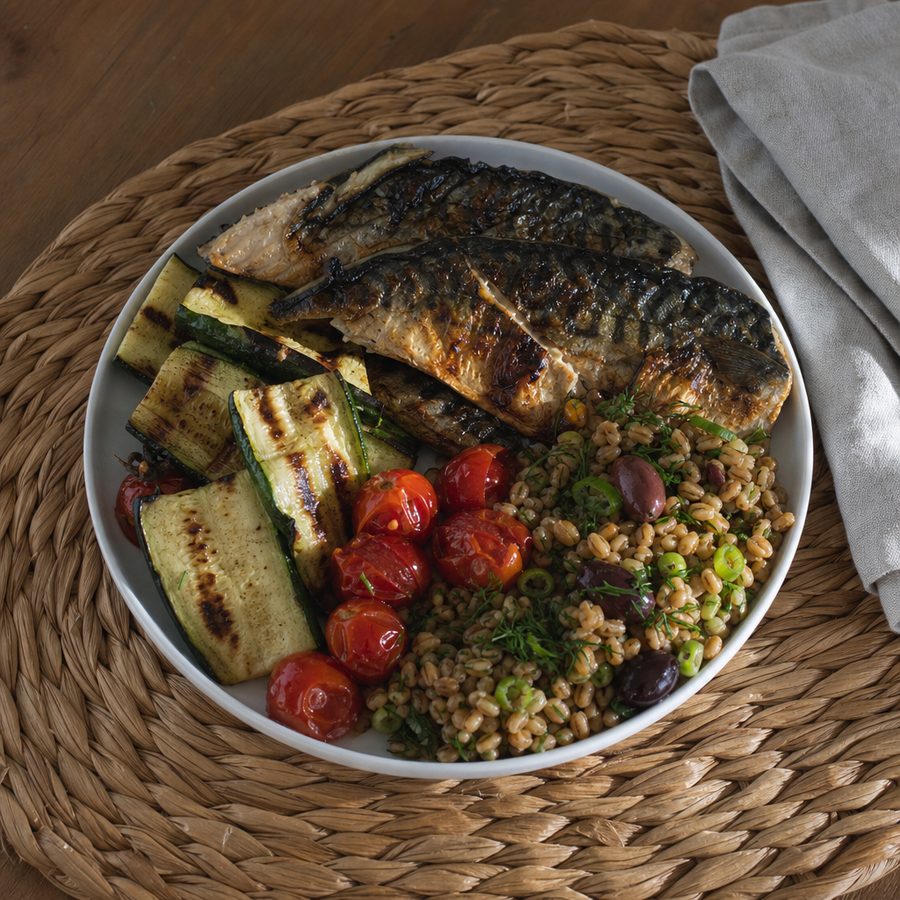
Mackerel fillets seared skin down on a ridged grill pan, with zucchini planks charred alongside and warm farro tossed with blistered tomatoes, olives, dill, and lemon.
Why You'll Love This Recipe
I keep mackerel fillets in the freezer for nights when I have not planned anything, because they thaw in a bowl of cold water in about fifteen minutes and ask almost nothing of you afterward. A ridged pan browns them in six minutes flat, and while that is happening the zucchini is charring on the other half of the pan and the farro is warming with garlic and lemon. This is a Tuesday dinner that tastes like something you ate outdoors on a holiday, and it is finished before the kitchen has had time to get untidy. If mackerel is new to you, this is the way in.
Mackerel is an oily fish, and that matters twice here. It browns beautifully, because the fat sitting under the skin renders down into the ridges and crisps them, so you do not need a coating of any kind. And it wants acid, a great deal of it, which is why lemon goes on the fish, into the farro, and over the zucchini. Cook it skin down and leave it alone. Mackerel fillets are thin, they turn over exactly once, and two minutes on the flesh side is usually all they need before the center goes opaque and starts to flake.
What lands on the plate has three textures going at once: hot crackling skin, smoky zucchini gone soft in the middle, and farro that stays chewy no matter how much dressing it takes on. I make this most in late summer when tomatoes are worth eating, though halved cherry tomatoes blistered hard in the pan are good all year and give up their juice into the grain. Put lemon wedges on the table and let people squeeze more over the top. There is enough on the plate that nobody asks what else is coming, and it holds up if dinner runs late.
Ingredients
- 4 mackerel fillets (about 1 lb 5 oz total), skin on, pin bones pulled
- 2 medium zucchini (about 1 lb), cut lengthwise into 1/3-inch planks
- 2 1/4 cups cooked farro, from about 3/4 cup quick-cooking pearled farro
- 1 1/2 cups cherry tomatoes (about 9 oz), halved
- 3 tbsp olive oil, divided
- 3 tbsp lemon juice, from 2 lemons, the squeezed halves kept for the pan
- 4 scallions, thinly sliced on an angle
- 1/4 cup kalamata olives, pitted and torn in half
- 1/2 cup flat-leaf parsley, roughly chopped
- 1/3 cup fresh dill, chopped, stems and all
- 4 cloves garlic, 3 grated and 1 halved
- 1 tsp dried oregano, crumbled between your fingers
- 3/4 tsp coarsely cracked black pepper
- 1/4 tsp fine sea salt
Instructions
- Warm the farro and build the dressing: Put the cooked farro in a wide bowl. Whisk 2 tbsp of the olive oil with the lemon juice, the grated garlic, the oregano, the black pepper, and the salt, then pour about two thirds of it over the warm grain and toss. Rub the cut side of the halved garlic clove around the inside of a serving platter and set it aside.
- Get the pan properly hot: Set a ridged cast iron grill pan over medium-high heat for three to four minutes, until a drop of water skitters and vanishes on contact. A pan that is merely warm will stick to fish skin and tear it. Open a window or turn the fan on now rather than later.
- Char the zucchini: Brush the zucchini planks with the remaining olive oil and lay them on the pan in one layer. Cook for three minutes without moving them, until dark bars have printed across the underside, then turn and give them two to three minutes more. They should bend when you lift them but still hold their shape. Move them to the platter.
- Blister the tomatoes: Lay the halved cherry tomatoes cut side down on the same pan along with the squeezed lemon halves. Leave them for two minutes, until the cut faces are dark and the skins have loosened and split. Tip the tomatoes and any juice into the farro and fold them through.
- Sear the mackerel: Pat the fillets dry, season them, and lay them skin down on the hot pan. Press each one flat with a spatula for the first ten seconds so the skin stays in contact with the metal. Cook for four minutes without touching them, until the skin releases on its own and the flesh has turned pale two thirds of the way up. Turn once and give them ninety seconds to two minutes more, to 145°F at the thickest part.
- Bring it together: Fold the scallions, parsley, dill, and olives through the farro and spoon it onto the platter with the zucchini. Set the fillets on top skin side up so the skin stays crisp, spoon over the last of the lemon dressing, and squeeze a charred lemon half across the whole thing at the table.
Variations
- Peppers on the pan: Char a red bell pepper cut into wide strips alongside the zucchini and fold it into the farro with the tomatoes.
- White beans in place of the grain: Warm a can of drained cannellini beans in the lemon dressing for a softer, quicker base that takes five minutes less.
- More heat: Add a pinch of cayenne to the dressing and scatter thinly sliced jalapeno over the fish at the end.
- Yogurt underneath: Spread the platter with a cup of thick yogurt whisked with grated garlic before the farro goes on, so every forkful picks up something cool.
- Toasted walnuts: Scatter a handful of roughly chopped toasted walnuts over the finished plate for a bit of crunch against the soft zucchini.
Storage & Leftovers
The farro and zucchini keep three days in a sealed container in the refrigerator and honestly improve overnight, since the grain goes on absorbing the lemon and the tomato juice. Store the fish separately, because mackerel gives off a strong smell that will move into anything sharing a box with it.
Cooked mackerel keeps two days and is best eaten cold, flaked over the leftover farro with more lemon and a fresh handful of dill. If you want it warm, give it three minutes in a 300°F oven rather than the microwave, which pushes the oil out and makes the fish taste tired.
I would not freeze this one. Mackerel that has been cooked and then frozen comes back soft and fishy, and the zucchini turns to water on thawing. If you want a head start, cook the farro and make the lemon dressing up to three days ahead and keep them in separate jars.
Notes & Tips
- Dry the fish, then dry it again: Skin that is even slightly damp steams rather than crisps. Blot both sides with paper towel right before the fillets go on, not five minutes earlier.
- Press for the first ten seconds: Mackerel fillets curl as the skin tightens. A spatula held flat across the fish for a moment settles it and gives you an even brown from end to end.
- Dress the farro warm: A warm grain takes on lemon and olive oil the whole way through. Dressed cold, the same farro tastes seasoned only on the outside.
- Do not crowd the grill pan: Zucchini planks laid edge to edge will steam each other and go gray. Two batches with room between them take an extra three minutes and taste like a different vegetable.
- Char the spent lemon halves: Cut side down on the hot pan for two minutes, and the juice inside turns sweeter and rounder. It is the best thirty seconds of work in the recipe.
- Taste before you add salt: The olives bring their own, and the dressing concentrates as it sits on the warm grain. Season at the very end, once everything is folded together.
Nutrition & Mindful Eating
- The fish, the grain, and the charred vegetables each carry a different part of this plate. Mackerel brings the protein and the rich, savory center, farro gives it chew and slow whole-grain carbohydrate, and the zucchini and tomatoes keep the whole thing bright.
- Mackerel is one of the oiliest fish at the counter, which is why it crisps so readily and why it carries omega-3 fats and vitamin D in real quantity. That fat is also what keeps the flesh moist through a hard, fast sear.
- Farro is a whole wheat grain with the bran still on, so it holds its shape and its chew even after it sits in dressing, and that intact bran is where its fiber comes from.
- Zucchini is mostly water, which is exactly why it works over high heat: the water cooks off, the sugars caramelize into those dark bars, and what is left tastes sweet and concentrated while still bringing potassium along.
- Lemon, dill, oregano, and torn olives are what make this taste like a coastline. The acid cuts the richness of the fish, the herbs go in at the last second so they stay green, and the olives put a salty, briny note against all that sweet charred zucchini.
- As you eat, notice how the crackle of the skin gives way to fish that is soft underneath, and let the lemon and dill pull you back for a second forkful more slowly than the first.
Frequently Asked Questions
I cannot find mackerel. What else works on the grill pan?
Spanish mackerel, bluefish, or sardines all behave the same way, because they are oily fish with skin that crisps. Trout fillets work too and cook a minute faster. A firm white fish like halibut is fine but needs a well-oiled pan, since there is less fat under the skin to keep it from sticking.
The skin tore when I turned the fish. What went wrong?
Almost always an impatient turn. Fish skin glues itself to hot metal and then releases on its own once it has crisped, usually around the four minute mark. If the spatula meets resistance, give it another thirty seconds and try again. A pan that was not hot enough at the start is the other common cause.
Can I use a different grain?
Yes. Cooked barley, bulgur, or brown rice all take the dressing well, and barley is the closest match for the chew. Whatever you use, dress it while it is still warm, because a warm grain drinks up lemon and olive oil in a way that a cold one simply will not.
Is this too strong for people who say they do not like fish?
Mackerel is assertive, so I would not hide that. What softens it is the acid, and this plate carries a lot: lemon in the dressing, lemon on the fish, tomato juice through the farro, and olives. If you are cooking for someone cautious, start them on a smaller piece and give them the charred lemon half.