
Ground Beef and Kohlrabi Hash with Thyme
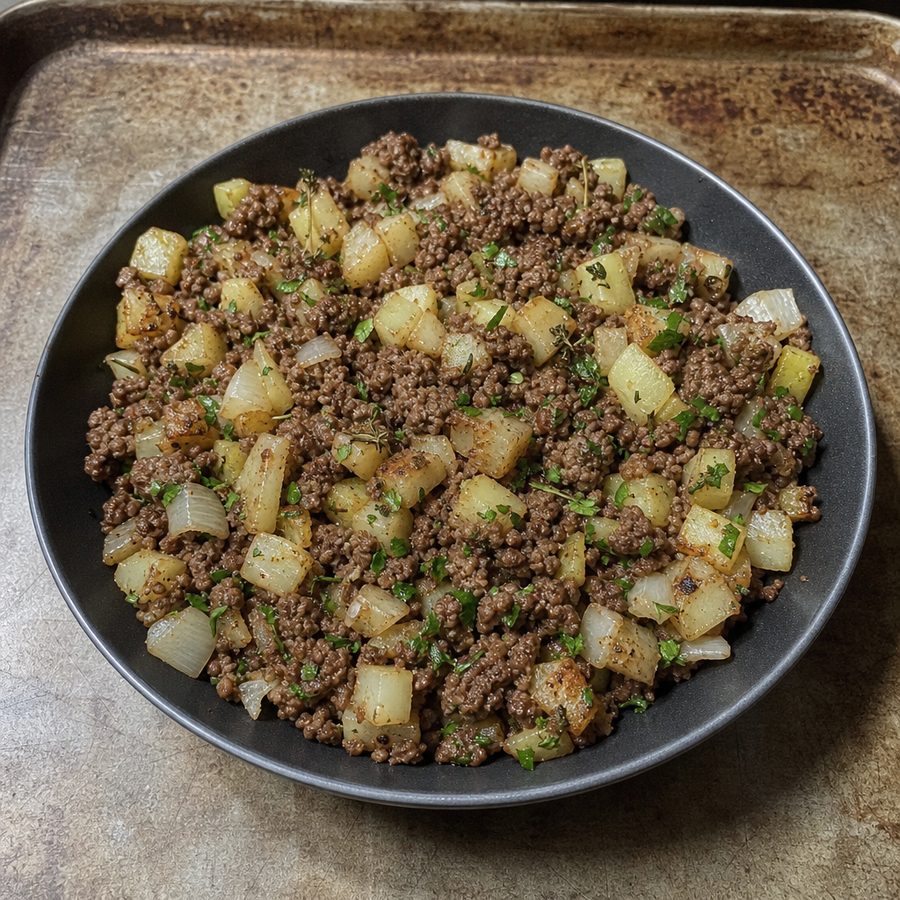
Browned ground beef folded through crisp-edged kohlrabi and sweet onion, seasoned with thyme and finished with parsley for a savory skillet breakfast.
Why You'll Love This Recipe
Some people have never once wanted fruit at seven in the morning. It is a hash in the old sense, meat and a root vegetable browned hard in one pan, and it takes about 25 minutes from a cold stove. I reach for it on the mornings when the day ahead is long and lunch is going to be late, and on the weekends when someone else in the house wants something that smells like cooking. If you are working through an elimination phase and missing your potatoes, this is the pan that fills that space without a nightshade anywhere in it.
Kohlrabi is the reason to try this. It looks like a small green spaceship and most people walk straight past it, but peeled and cubed it browns beautifully and holds its shape instead of going to mush, and it tastes like the sweet part of a broccoli stem. Give the cubes a hot pan and leave them alone, and the cut faces caramelize while the middles turn tender and juicy. The beef browns separately so it can build a real crust rather than steaming in its own liquid, and the fond it leaves behind is what the broth lifts off the pan at the end.
Thyme and beef belong together, and a tablespoon of the fresh leaves goes in early so the oil carries the flavor through everything. The vinegar at the end is the part people leave out and then wonder why the pan tastes flat, since a small amount of acid makes rich beef taste like itself rather than like fat. What you end up with is a genuinely savory plate with a serious amount of protein in it, plus the fiber from the kohlrabi underneath, which is the combination that carries a morning rather than getting you to ten and quitting.
Ingredients
- 1 1/4 lb ground beef (85/15)
- 2 large kohlrabi bulbs (about 1 lb), peeled and cut into 1/2-inch cubes
- 1 medium yellow onion, diced
- 3 cloves garlic, minced
- 1 1/2 tbsp olive oil
- 1 tbsp fresh thyme leaves, or 1 tsp dried
- 1/4 cup beef broth
- 2 tsp apple cider vinegar
- 3 tbsp chopped fresh parsley
- 3/4 tsp fine sea salt, divided
Instructions
- Prep the vegetables: Cut the woody base and the stems off the kohlrabi and peel it deeply with a knife, since the outer layer is tough and a vegetable peeler leaves it behind. Cut the bulbs into half-inch cubes and dice the onion.
- Brown the beef: Heat a large skillet over medium-high. Add the ground beef in large clumps with a quarter teaspoon of the salt and leave it undisturbed for 4 minutes so a crust forms, then break it up and cook 4 minutes more until no pink remains and the pieces are browned. Lift the beef into a bowl, leaving the fat behind.
- Brown the kohlrabi: Add the olive oil to the same pan and let it heat until it shimmers. Add the kohlrabi in a single layer with another quarter teaspoon of salt and cook without stirring for 5 minutes, until the undersides are golden. Toss and cook 6 to 8 minutes more, until the cubes are tender enough for a knife to slide through.
- Add the onion, garlic, and thyme: Stir in the onion and cook for 3 minutes until it softens and turns translucent at the edges. Add the garlic and thyme and cook for 45 seconds, just until the garlic smells sweet rather than raw.
- Deglaze and combine: Pour in the broth and scrape the browned bits off the bottom of the pan with a wooden spoon. Return the beef and any juices to the skillet, add the remaining salt, and cook for 2 minutes until the liquid has almost gone.
- Finish: Take the pan off the heat, stir in the vinegar, and scatter the parsley over the top. Taste and adjust the salt, then serve straight from the skillet while the edges are still crisp.
Variations
- Lamb and rosemary: Swap the beef for ground lamb and the thyme for rosemary when you want the pan richer and more herbal.
- Greens folded in: Wilt a few large handfuls of kale or collards into the pan with the broth so there is something dark green in every bite.
- Apple and sage: Add a diced apple with the onion and use sage in place of thyme for a sweeter, more autumnal skillet.
- Root mix: Use half kohlrabi and half rutabaga or turnip if kohlrabi is hard to find where you shop.
- Bigger plate: Serve it with sliced avocado on the side, which adds enough fat to carry you through a long morning.
Storage & Leftovers
This keeps in a sealed container in the refrigerator for up to 4 days and is one of the few breakfasts that improves overnight, since the thyme and the beef fat work their way through the kohlrabi while it sits. Cool it uncovered for 20 minutes before you put the lid on.
Reheat in a dry skillet over medium-high for 4 to 5 minutes, spread out and left alone for the first 2 so the kohlrabi picks its edges back up. The microwave will heat it through in 90 seconds, but everything comes out uniformly soft and you lose the browning you built.
This one does freeze, which is unusual for a hash. Portion it flat in bags, freeze for up to 3 months, and thaw overnight in the refrigerator. Kohlrabi holds its shape through freezing far better than potato does, though the texture softens a little.
Notes & Tips
- Peel the kohlrabi deeply: There is a fibrous layer under the skin that stays tough no matter how long you cook it. Take it off with a paring knife rather than a peeler.
- Let the beef sit still: Stirring ground meat the moment it hits the pan is the reason most hash tastes gray. Four undisturbed minutes builds the crust the whole dish rests on.
- Cook in sequence, not together: One skillet, two stages. It costs a bowl and about 3 minutes and it is the difference between browned and boiled.
- Cut the cubes evenly: Kohlrabi is dense, so a half-inch cube cooks in 12 minutes while a one-inch cube takes twice that. Uneven cuts give you burnt corners and raw centers.
- Do not skip the vinegar: Two teaspoons off the heat is what stops a beef-heavy pan from tasting flat. You will not taste vinegar, you will taste the beef more clearly.
- Save the kohlrabi leaves: If the bulbs come with greens attached, chop them and stir them in with the garlic. They cook like collards and taste of the same sweet stem.
Nutrition & Mindful Eating
- Beef and kohlrabi make an unexpectedly good pair. The meat brings the richness and the substance, the kohlrabi brings sweetness and fiber, and the onion and thyme cooked into the same fat tie the two together so the skillet eats as one thing.
- Ground beef carries iron in the form the body takes up most readily, along with zinc and B12, and it is the reason a plate of this eats like a real meal rather than a stop on the way to a snack.
- Kohlrabi is a cabbage-family vegetable that grows as a bulb, and it holds a surprising amount of vitamin C for something you cook this hard. The fiber in it is what keeps a meat-heavy skillet feeling balanced.
- Onion softened slowly in beef fat turns sweet rather than sharp, and it brings the sort of fiber that feeds the bacteria in your gut. Cooking it this thoroughly is also what makes it sit gently on people who find raw onion difficult.
- Thyme, parsley, and a spoonful of cider vinegar are the whole seasoning, and the acid at the end is what makes the beef taste clearly of itself. Herbs this assertive mean you reach for the salt less than you expect to.
- As you eat, let the crisp browned edges and the tender middles register as two different things, and check in around halfway down the bowl to see whether you are already more satisfied than you expected.
Frequently Asked Questions
What does kohlrabi taste like?
Mild, sweet, and faintly like a broccoli stem, with a texture between an apple and a turnip. Cooked this way it is closer to a roasted root vegetable than to a cabbage. If you cannot find it, turnip, celeriac, or rutabaga all brown the same way at the same weight.
Can I use a different meat?
Yes. Ground lamb makes it richer and suits the thyme, ground turkey makes it milder and will want an extra tablespoon of oil in the pan, and ground bison browns faster than beef so watch it. Keep the weight the same in every case.
Why brown the beef separately?
Meat and vegetables released into the same pan at the same time produce enough liquid to steam each other, and you get gray beef and pale kohlrabi. Cooking them in sequence in the same skillet gives you a crust on both and takes about 3 extra minutes.
Does this fit an AIP elimination phase?
It does. There are no grains, legumes, dairy, eggs, nuts, seeds, or nightshades here, and the seasoning is thyme, garlic, onion, vinegar, and salt rather than a spice blend. Check that your broth carries no pepper or paprika, since many boxed ones do.